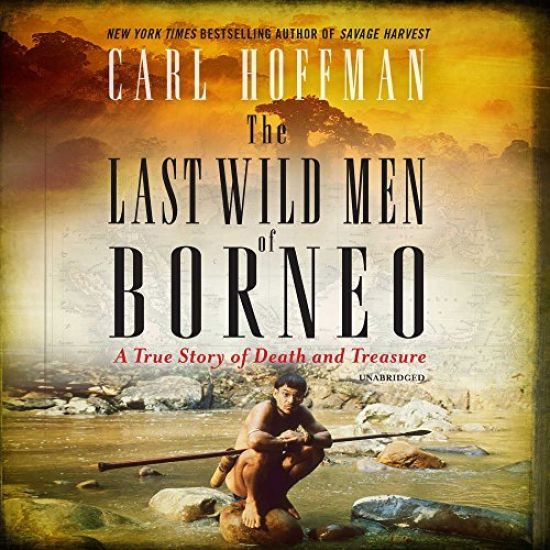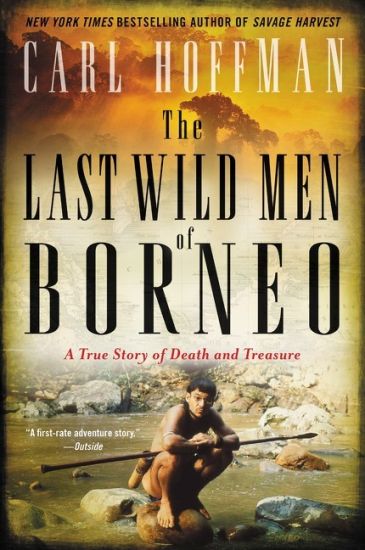
A 2019 EDGAR AWARDS NOMINEE (BEST FACT CRIME) - A BANFF MOUNTAIN BOOK AWARDS FINALISTTwo modern adventurers sought a treasure possessed by the legendary "Wild Men of Borneo." One found riches. The other vanished forever into an endless jungle. Had he shed civilization--or lost his mind? Global headlines suspected murder. Lured by these mysteries, New York Times bestselling author Carl Hoffman journeyed to find the truth, discovering that nothing is as it seems in the world's last Eden, where the lines between sinner and saint blur into one.In 1984, Swiss traveler Bruno Manser joined an expedition to the Mulu caves on Borneo, the planet's third largest island. There he slipped into the forest interior to make contact with the Penan, an indigenous tribe of peace-loving nomads living among the Dayak people, the fabled "Headhunters of Borneo." Bruno lived for years with the Penan, gaining acceptance as a member of the tribe. However, when commercial logging began devouring the Penan's homeland, Bruno led the tribe against these outside forces, earning him status as an enemy of the state, but also worldwide fame as an environmental hero. He escaped captivity under gunfire twice, but the strain took a psychological toll. Then, in 2000, Bruno disappeared without a trace. Had he become a madman, a hermit, or a martyr?American Michael Palmieri is, in many ways, Bruno's opposite. Evading the Vietnam War, the Californian wandered the world, finally settling in Bali in the 1970s. From there, he staged expeditions into the Bornean jungle to acquire astonishing art and artifacts from the Dayaks. He would become one of the world's most successful tribal-art field collectors, supplying sacred works to prestigious museums and wealthy private collectors. And yet suspicion shadowed this self-styled buccaneer who made his living extracting the treasure of the Dayak: Was he preserving or exploiting native culture?As Carl Hoffman unravels the deepening riddle of Bruno's disappearance and seeks answers to the questions surrounding both men, it becomes clear saint and sinner are not so easily defined and Michael and Bruno are, in a sense, two parts of one whole: each spent his life in pursuit of the sacred fire of indigenous people. The Last Wild Men of Borneo is the product of Hoffman's extensive travels to the region, guided by Penan through jungle paths traveled by Bruno and by Palmieri himself up rivers to remote villages. Hoffman also draws on exclusive interviews with Manser's family and colleagues, and rare access to his letters and journals. Here is a peerless adventure propelled by the entwined lives of two singular, enigmatic men whose stories reveal both the grandeur and the precarious fate of the wildest place on earth.
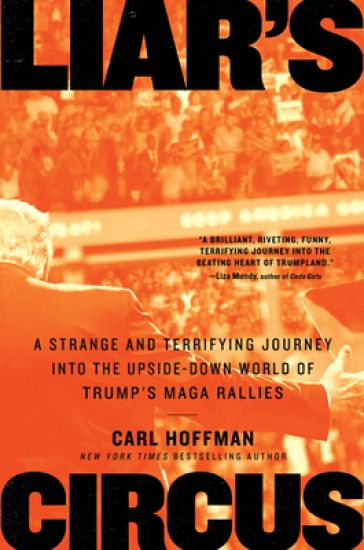
"A brilliant, riveting, funny, terrifying journey into the beating heart of Trumpland."--Liza Mundy, author of Code GirlsIn this daring work of immersive journalism, New York Times bestselling author Carl Hoffman journeys deep inside Donald Trump's rallies, providing a definitive portrait of the strange and powerful tribe that forms the former president's base.Hoffman, who has written about the most dangerous and remote corners of the world, pierced this alternate society, welcomed in and initiated into its rites and upside-down beliefs, and finally ushered to its inner sanctum. Equally freewheeling and profound, Liar's Circus tracks the MAGA faithful across five thousand miles of the American heartland during a crucial arc of the Trump presidency stretching from the impeachment saga to the dawn of the coronavirus pandemic that ended the rallies as we know them.Trump's rallies are a singular and defining force in American history--a kind of Rosetta stone to understanding the Age of Trump. Yet while much remarked upon, they are, in fact, little examined, with the focus almost always on Trump's latest outrageous statement. But who are the tens of thousands of people who fill these arenas? What do they see in Trump? And what curious alchemy--between leader and adoring crowd--happens there that might explain Trump's rise and powerful hold over both his base and the GOP?To those on the left, the rallies are a Black Mass of American politics at which Trump plays high priest, recklessly summoning the darkest forces within the nation. To the MAGA faithful, the rallies are a form of pilgrimage, a joyous ceremony that like all rituals binds people together and makes them feel a part of something bigger than themselves. Both sides would acknowledge that this traveling roadshow is the pressurized, combustible core of Trump's political power, a meeting of the faithful where Trump is unshackled and his rhetoric reaches its most extreme, with downstream consequences for the rest of the nation.To date, no reporter has sought to understand the rallies as a sociological phenomenon examined from the bottom up. Hoffman has done just this. He has stood in line for more than 170 hours with Trump's most ardent superfans and joined them at the very front row; he has traveled from Minnesota to Texas, Louisiana, Mississippi, and New Hampshire immersing himself in their culture. Liar's Circus is a revelatory portrait of Trump's America, from one of our most intrepid journalists.
Indonesian Ferry Sinks. Peruvian Bus Plunges Off Cliff. African Train Attacked by Mobs. Whenever he picked up the newspaper, Carl Hoffman noticed those short news bulletins, which seemed about as far from the idea of tourism, travel as the pursuit of pleasure, as it was possible to get. So off he went, spending six months circumnavigating the globe on the world's worst conveyances: the statistically most dangerous airlines, the most crowded and dangerous ferries, the slowest buses, and the most rickety trains. The Lunatic Express takes us into the heart of the world, to some its most teeming cities and remotest places: from Havana to Bogot on the perilous Cuban Airways. Lima to the Amazon on crowded night buses where the road is a washed-out track. Across Indonesia and Bangladesh by overcrowded ferries that kill 1,000 passengers a year. On commuter trains in Mumbai so crowded that dozens perish daily, across Afghanistan as the Taliban closes in, and, scariest of all, Los Angeles to Washington, D.C., by Greyhound. The Lunatic Express is the story of traveling with seatmates and deckmates who have left home without American Express cards on conveyances that don't take Visa, and seldom take you anywhere you'd want to go. But it's also the story of traveling as it used to be -- a sometimes harrowing trial, of finding adventure in a modern, rapidly urbanizing world and the generosity of poor strangers, from ear cleaners to urban bus drivers to itinerant roughnecks, who make up most of the world's population. More than just an adventure story, The Lunatic Express is a funny, harrowing and insightful look at the world as it is, a planet full of hundreds of millions of people, mostly poor, on the move and seeking their fortunes.
Two modern adventurers sought a treasure possessed by the legendary "Wild Men of Borneo." One found riches. The other vanished forever into an endless jungle. Had he shed civilization--or lost his mind? Global headlines suspected murder. Lured by these mysteries, New York Times bestselling author Carl Hoffman journeyed to find the truth, discovering that nothing is as it seems in the world's last Eden, where the lines between sinner, saint and myth converge.In 1984, Swiss traveler Bruno Manser joined an expedition to the Mulu caves on Borneo, the planet's third largest island. There he slipped into the forest interior to make contact with the Penan, an indigenous tribe of peace-loving nomads living among the Dayak people, the fabled "Headhunters of Borneo." Bruno lived for years with the Penan, gaining acceptance as a member of the tribe. However, when commercial logging began devouring the Penan's homeland, Bruno led the tribe against these outside forces, earning him status as an enemy of the state, but also worldwide fame as an environmental hero. He escaped captivity under gunfire twice, but the strain took a psychological toll. Then, in 2000, Bruno disappeared without a trace. Had he become a madman, a hermit, or a martyr?American Michael Palmieri is, in many ways, Bruno's opposite. Evading the Vietnam War, the Californian wandered the world, finally settling in Bali in the 1970s. From there, he staged expeditions into the Bornean jungle to acquire astonishing art and artifacts from the Dayaks. He would become one of the world's most successful tribal-art field collectors, supplying sacred works to prestigious museums and wealthy private collectors. And yet suspicion shadowed this self-styled buccaneer who made his living extracting the treasure of the Dayak: Was he preserving or exploiting native culture?As Carl Hoffman unravels the deepening riddle of Bruno's disappearance and seeks answers to the questions surrounding both men, it becomes clear saint and sinner are not so easily defined and Michael and Bruno are, in a sense, two parts of one whole: each spent his life in pursuit of the sacred fire of indigenous people. The Last Wild Men of Borneo is the product of Hoffman's extensive travels to the region, guided by Penan through jungle paths traveled by Bruno and by Palmieri himself up rivers to remote villages. Hoffman also draws on exclusive interviews with Manser's family and colleagues, and rare access to his letters and journals. Here is a peerless adventure propelled by the entwined lives of two singular, enigmatic men whose stories reveal both the grandeur and the precarious fate of the wildest place on earth.
A brilliant, riveting, funny, terrifying journey into the beating heart of Trumpland. --Liza Mundy, author of Code GirlsIn this daring work of immersive journalism, based on hundreds of hours of reporting, Carl Hoffman, who has written about the most dangerous and remote corners of the world, journeys deep inside Donald Trump's rallies, seeking to understand the strange and powerful tribe that forms the president's base. Hoffman pierced this alternate society, welcomed in and initiated into its rights and upside-down beliefs, and finally ushered to its inner sanctum. Equally freewheeling and profound, Liar's Circus tracks the MAGA faithful across five thousand miles of the American heartland during a crucial arc of the Trump presidency stretching from the impeachment saga to the dawn of the coronavirus pandemic that ended the rallies as we know it. Trump's rallies are a singular and defining force in American history--a kind of Rosetta stone to understanding the Age of Trump. Yet while much remarked upon, they are, in fact, little examined, with the focus almost always on Trump's latest outrageous statement. But who are the tens of thousands of people who fill these arenas? What do they see in Trump? And what curious alchemy--between president and adoring crowd--happens there that might explain Trump's rise and powerful hold over both his base and the GOP?To those on the left, the rallies are a Black Mass of American politics at which Trump plays high priest, recklessly summoning the darkest forces within the nation. To the MAGA faithful, the rallies are a form of pilgrimage, a joyous ceremony that like all rituals binds people together and makes them feel a part of something bigger than themselves. Both sides would acknowledge that this traveling roadshow is the pressurized, combustible core of Trump's political power, a meeting of the faithful where Trump is unshackled and his rhetoric reaches its most extreme, with downstream consequences for the rest of the nation.To date, no reporter has sought to understand the rallies as a sociological phenomenon examined from the bottom up. Hoffman has done just this. He has stood in line for more than 170 hours with Trump's most ardent superfans and joined them at the very front row; he has traveled from Minnesota to Texas, Louisiana, Mississippi, and New Hampshire immersing himself in their culture. Publishing in the heart of the 2020 election cycle, Liar's Circus is a fresh and revelatory portrait of Trump's America, from one of our most talented journalists.
Es ist ratsam, wichtige Rechtsvorschriften vor deren Inkrafttreten zu testen: hinsichtlich ihrer Wirkung und Vollzugseignung. Gute Verstandlichkeit und hinreichende Fachlichkeit erhohen gleichermassen die Akzeptanz durch die Normanwender und -adressaten.Das Umweltrecht ruckt zunehmend in den Mittelpunkt der modernen Rechtsetzung. Mit dem Gesetz uber die Umweltvertraglichkeitsprufung (UVPG 1989) wurde die EG-Richtlinie von 1985 in bundesdeutsches Recht umgesetzt. Fur den praktischen Vollzug waren nun auch konkrete Durchfuhrungsvorschriften zu entwerfen. Bundestag und Bundesrat forderten einen vollzugsorientierten Test der neuen Vorschriften in einem Planspiel. Dessen Entwurf, Durchfuhrung und Ergebnis werden hier vorgestellt. Auf der Grundlage von realen Fallen wurden von 40 Praktikern die Vorschriftenentwurfe in drei parallelen Planspielen uberpruft. Mit Hilfe dieses Testverfahrens konnten viele Hinweise zur Verbesserung der Entwurfe und mehrere Empfehlungen zur Optimierung der Verwaltungspraktikabilitat gegeben werden."
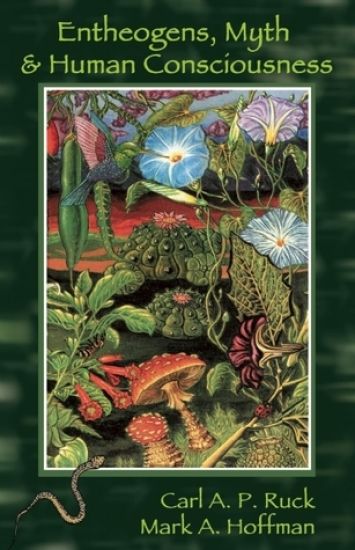
ENTHEOGENS, MYTH AND HUMAN CONSCIOUSNESS is a much needed accessible exploration into the role of psychoactive sacraments - entheogens - in religion, mythology, and history, and also includes most treatments of the subject focus on modern scientific research, psychotherapy, are auto-bibliographic accounts, or are agenda-driven or otherwise naive and myopic. A great mystery of altered states of consciousness and species development is expanding with new archeological and anthropological discoveries. Religious story telling (myth) is a timeless journey. Surprisingly it's not about truth. It's about finding one's self in the midst of the discovery of the "Other." It is the story of what is separate and unknown that creates self-consciousness. Our entire life consists ultimately in the discovery of the "Other," which gives meaning to the discovery of the self. The arts and language are the fossil remnants scattered on our path. ENTHEOGENS, MYTH AND HUMAN CONSCIOUSNESS discusses the influence of psychoactive substances on consciousness, human evolution and mystical experiences. It explores how religion, mythology, art and culture stem from entheogenic consciousness and why it's important to us today. "Entheogens, or psychoactive sacraments, have a long, storied history that has played an essential role in the evolution of consciousness, mythology, culture, religion, art - and even history and politics. ENTHEOGENS, MYTH AND HUMAN CONSCIOUSNESS outlines this suppressed - yet seminal - undercurrent of history, giving examples of the role of entheogens from the primal shamanic religions through, the historical religions, esoteric mystical traditions including the Mystery Religions, alchemy and Freemasonry, and into contemporary expressions. Authors Ruck and Hoffman draw upon decades of research and personal experience in discussing the best documented examples of historically important entheogenic evidences, various ongoing threads of research and speculation to muse upon the 'meaning' of it all..." Our hominid ancestors experienced a spiritual wakening at the very dawn of consciousness that set them apart from the other creatures of our planet. It was a journey to another realm induced by a special food that belonged to the gods. This was a plant that was animate with the spirit of deity. It was an entheogen. It was the visionary vehicle for the trip of the first shaman. The story was told over and over again until it achieved the perfect form of a myth. The realm was imagined as a topographical place, the outer limit of the cosmos, the fiery empyrean, or its geocentric opposite, our own planet Gaia. Myths multiplied over time, but they always preserved this primordial truth. These myths provide a road map, a scenario, if you can read them, for whoever today wants to follow. However, it is not an easy journey, and it is also fraught with many dangers, of getting lost, of finding no return. Access to the entheogens is now largely prohibited or strictly licensed. The restrictions constitute an infringement of cognitive freedom, limiting the further evolution of human potential into productive creative imagination and experiences that lie beyond the normal, the traditional province of shamans, who can understand the speech of plants and animals, change shape at will, and journey, both physically and in the spirit, to distant exotic realms. In addition, religions have staked out territorial claims to this realm of spiritual consciousness. They have colonized it, identified it with their god, often reserving the access for their own elite. Similarly, trade in drugs, both medicinal and illegal, has colonized the etheogens, making them only chemicals, rationally depriving them of their spirit. ENTHEOGENS, MYTH AND HUMAN CONSCIOUSNESS is a guide for the curious that provides a historical overview of the role that entheogens have played in the development of our unique supremacy as a species and offers also pathways and advice for reconnecting with the primordial sources of nature's power. ENTHEOGENS, MYTH AND HUMAN CONSCIOUSNESS investigates the role entheogens have played in the evolution of humankind's attempt to define reality in a context of metaphysical or theological dimensions. Although other botanical intoxicants will be considered (cannabis, daphne, opium, Syrian rue, datura, mandrake), none, with the possible exception of mandrake, seem to have lent themselves so readily to metaphoric personifications, which make this the subject for a course on mythology. The source of humankind's fascination and repulsion for fungi, indeed, leads to a fundamental consideration of the psychological nature of mankind's fascination or awareness of what in the categorization of religions is termed animism and rituals of ecstatic shamanism. In addition, the linking of bread and wine as sacramental foods is due to parallel concepts of controlled fungal growth as a simulacrum of the cosmos itself. The goal is not so much to acquire factual knowledge of this vast subject, but to open up pathways for reflection upon the basic nature of human existence and consciousness. The narrative is the awesome history of discovery and the findings of ancient rituals that meld into twentieth-century controversy and criticism of psychedelics. The future of humanity and the direction of twenty-first century brain science is challenged as well as our sense of social convention. Entheogens have been deemed be prohibited controlled substances and as such is an infringement of cognitive freedom. Whatever the danger of potential abuse, the substance is not the fault, but the user. The hammer is not guilty, but the carpenter who misuses it because of deficient training. In order to exonerate the executioner in Classical antiquity, the axe was brought to trial and found guilty. The prohibition has drastically retarded the investigation into the therapeutic potential of proscribed drugs, including their efficacy in curing addiction. Some of these substances also offer the potential for accessing levels of cognition and consciousness beyond the ordinary, the traditional provenance of mystics and shamans, like bilocation, clairvoyance, and zoomorphism.
K. Hofmann; Ernst Wilke; Hermann Backhaus; Otto Berg; Heinrich Von Boul; Emil Duhme; Robert Fellinger; Bruno Fetkenheuer; Adolf Franke; M. Friese; Hans Gerdien; Carl Haase
Dieser Buchtitel ist Teil des Digitalisierungsprojekts Springer Book Archives mit Publikationen, die seit den Anfängen des Verlags von 1842 erschienen sind. Der Verlag stellt mit diesem Archiv Quellen für die historische wie auch die disziplingeschichtliche Forschung zur Verfügung, die jeweils im historischen Kontext betrachtet werden müssen. Dieser Titel erschien in der Zeit vor 1945 und wird daher in seiner zeittypischen politisch-ideologischen Ausrichtung vom Verlag nicht beworben.
Die Kontraktlogistik wird oft als Königsdisziplin der Logistikdienstleistungen bezeichnet. Mit jährlichen Steigerungsraten von circa 20 Prozent verfügt sie über das derzeit größte Umsatzpotenzial aller Logistikdienstlesitungsbereiche und stellt somit eine ernstzunehmende Alternative zur klassischen TUL-Logistik (Transport, Umschlag, Lagerung) dar. Unter dem Begriff Kontraktlogistik werden Geschäfte zusammengefasst, die mehrere logistische Funktionen integrieren, basierend auf einer langfristigen, arbeitsteiligen und vertraglich geregelten (per Kontrakt) Kooperation zwischen einem Industrie- und Handelsunternehmen und einem Logistikdienstleister. Das Handbuch Kontraktlogistik, herausgegeben von Jürgen Weber, Wolfgang Stölzle, Erik Hofmann und Carl Marcus Wallenburg ist das erste Grundlagenwerk zur Kontraktlogistik. Alle aktuell relevanten Managementthemen der Kontraktlogistik werden auf hohem Niveau aufbereitet sowie komprimiert und strukturiert zur Verfügung gestellt. Namhafte Logistikprofessoren und Praktiker großer Player der Kontraktlogistik sind die Autoren der einzelnen Beiträge dieses Sammelbandes.