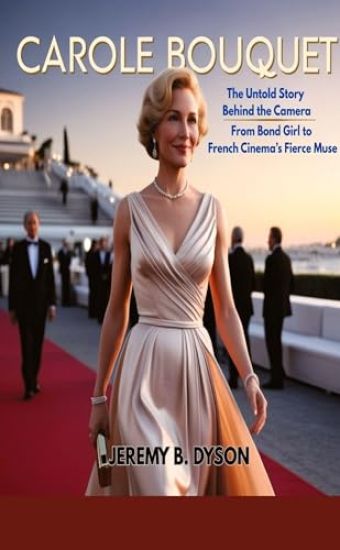
She has graced the red carpets of Cannes, captivated audiences as a Bond girl, and redefined elegance as the face of Chanel No. 5 - but Carole Bouquet's true story is even more compelling than the images the world knows. In Carole Bouquet: The Untold Story Behind the Camera - From Bond Girl to French Cinema's Fierce Muse, author Jeremy B. Dyson delivers the first comprehensive portrait of the actress who has spent over four decades balancing international fame with an unshakable sense of self. From her Parisian youth and groundbreaking debut with legendary director Luis Bu uel, to her C sar-winning performances and enduring presence in French and global cinema, Bouquet's journey is one of artistry, resilience, and reinvention. Drawing on meticulous research, exclusive interviews, and vivid narrative detail, this biography goes beyond glamour to reveal the intelligence, discipline, and fierce independence behind the beauty. Dyson explores how Bouquet navigated the demanding worlds of film and fashion while keeping her personal life on her own terms - crafting a career that is as much about what she chose not to do as what she embraced. Both an intimate character study and a sweeping history of the eras and industries she has influenced, this is the definitive account of Carole Bouquet's life, legacy, and the quiet power that has made her an icon of French culture
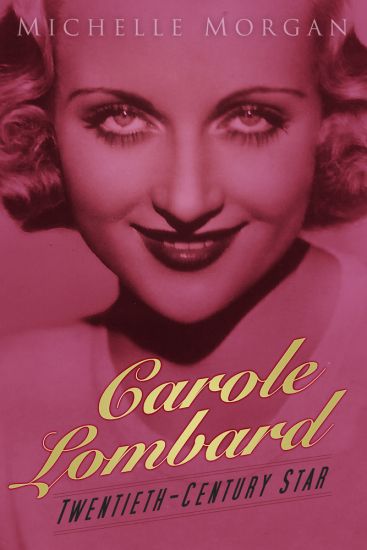
Carole Lombard was the very opposite of the typical 1930s starlet. A no-nonsense woman, she worked hard, took no prisoners and had a great passion for life. As a result, she became Hollywood’s highest-paid star. From the outside, Carole’s life was one of great glamour and fun, yet privately she endured much heartache. As a child, her mother moved Carole and her brothers across the country away from their beloved father. Carole then began a film career, only to have it cut short after a devastating car accident. Picking herself back up, she was rocked by the accidental shooting of her lover; a failed marriage to actor William Powell; and the sorrow of infertility during her marriage to Hollywood’s King, Clark Gable. Lombard marched forward, promising to be positive. Sadly her life was cut short in a plane crash so catastrophic that pieces of the aircraft are still buried in the mountain today. In Carole Lombard, bestselling author Michelle Morgan accesses previously unseen documents to tell the story of a woman whose remarkable life and controversial death continues to enthral.
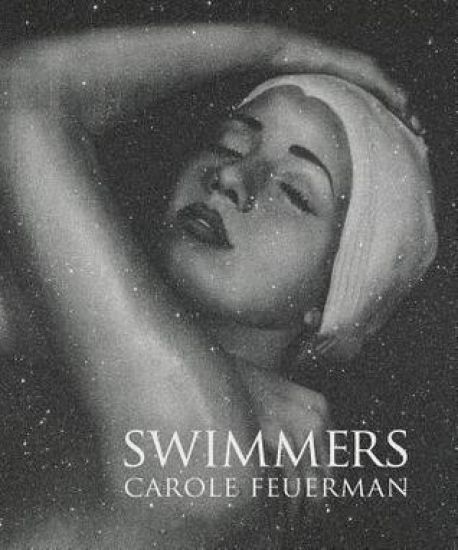
Realist sculptor Carole A. Feuerman's human-figure sculptures express a refreshing perspective on the mundane but intensely personal activities of modern life. Her powers of observation and versatility find unique expression through various materials that include marble, bronze, vinyl, and painted resins, while she incorporates both ancient and contemporary methods in the creation of her works. Swimmers: By Carole A. Feuerman is a shimmering glimpse at transitory, contemplative moments in time, often captured in a veil of clear resin that replicates tumbling water droplets. In this new collection of Feuerman's work, her printwork and treatment of the figure on paper is also explored for the first time. In his astute and insightful essay, John Yau describes Feuerman's exquisitely rendered subjects as being "caught in a moment of transition that radiates an intense eroticism." Her figures seem capable of thought, evoking an inward life that invites our speculation while revealing a mysterious provocative chasm between the figures and the viewer. Feuerman's sculpture and prints provide us with a fleeting glimpse into private and isolated environments - women stepping out of the shower, in the rain, or swimming - that suggest a meditative bliss. Feuerman museum retrospectives have included exhibitions at The State Hermitage in St. Petersburg, Russia; The Palazzo Strozzi Foundation in Florence, Italy; and the Circulo de Bellas Artes in Madrid, among others. Her work is featured in public, private, and corporate collections, including Grounds for Sculpture, Trenton, NJ; the El Paso Museum of Art, El Paso, Texas; the Bass Museum of Art, Miami Beach, FL; and art-st-urban, Lucerne, Switzerland. Her large-scale Olympic Swimmer was featured in the Olympic Fine Arts exhibition at the 2008 Summer Games in Beijing.
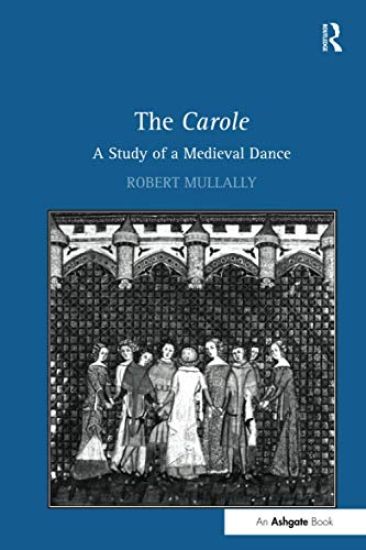
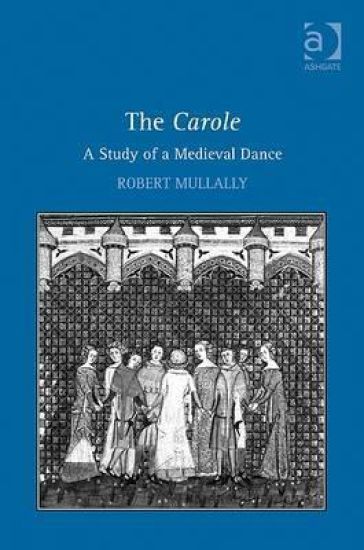
The carole was the principal social dance in France and England from c. 1100 to c. 1400 and was frequently mentioned in French and English medieval literature. However, it has been widely misunderstood by contributors in recent citations in dictionaries and reference books, both linguistic and musical. The carole was performed by all classes of society - kings and nobles, shepherds and servant girls. It is described as taking place both indoors and outdoors. Its central position in the life of the people is underlined by references not only in what we might call fictional texts, but also in historical (or quasi-historical) writings, in moral treatises and even in a work on astronomy. Dr Robert Mullally's focus is very much on details relevant to the history, choreography and performance of the dance as revealed in the primary sources. This methodology involves attempting to isolate the term carole from other dance terms not only in French, but also in other languages. Mullally's groundbreaking study establishes all the characteristics of this dance: etymological, choreographical, lyrical, musical and iconographical.
The carole was the principal social dance in France and England from c. 1100 to c. 1400 and was frequently mentioned in French and English medieval literature. However, it has been widely misunderstood by contributors in recent citations in dictionaries and reference books, both linguistic and musical. The carole was performed by all classes of society - kings and nobles, shepherds and servant girls. It is described as taking place both indoors and outdoors. Its central position in the life of the people is underlined by references not only in what we might call fictional texts, but also in historical (or quasi-historical) writings, in moral treatises and even in a work on astronomy. Dr Robert Mullally's focus is very much on details relevant to the history, choreography and performance of the dance as revealed in the primary sources. This methodology involves attempting to isolate the term carole from other dance terms not only in French, but also in other languages. Mullally's groundbreaking study establishes all the characteristics of this dance: etymological, choreographical, lyrical, musical and iconographical.
An Outsider's Inside Perspective Though I have not experienced in my own family the difficult path that Ron has traveled with Carole, my time serving dementia residents and their families has provided me with an outsider's perspective of the long good-bye that Ron has both lovingly and sadly presented to the readers of the The Carole Poems. By the time a loved one suffering from dementia transitions from a family caregiver to my "neighborhood" of dementia residents, the residents are shadows of who they were prior to dementia. Outwardly, the residents appear familiar to family and friends, but the residents' memories are confused or lost, and their personalities and behavior can be erratic, even dangerous to themselves and others. While loved ones often describe to me a resident's past, I find myself wondering what it would have been like to meet a resident prior to dementia, since all I experience is the present. My hope is each resident's family is able to experience some level of peace during the time their loved one is a resident of the neighborhood. - Michelle Shirley Residential Dementia Coordinator Greenfield Senior Living Schwenksville, PA Ron tells a true love story in these reflections on the end of his wife Carole's life, and how their shared love throughout the process continues to sustain him. - Burton Ginsberg, D.O. Family Physician Schwenksville Family Practice
Becoming Carole Lombard: Stardom, Comedy and Legacy is a historical critique of the development and reception of Carole Lombard’s stardom from the classical Hollywood period to present day. Based on original archival research, Olympia Kiriakou combines theoretically informed textual analyses of Lombard’s performances and star image across different media (biographies, publicity materials, photography and film) with a critical engagement of the cultural, economic, social and industrial conditions that shaped her stardom. Sitting at the intersection of feminist film theory, star studies and comedy theory, this work presents Lombard as a case study to challenge the screwball canon and existent academic discourse about female physical comedy and the alleged “delicate” female body. In doing so, it formulates a new historical approach to understanding gender, femininity, and identity in Hollywood comedies of the 1930s. Moreover, this is the first research of its kind to offer a comprehensive understanding of Lombard’s stardom beyond her associations with the screwball comedy genre.
"Rabbi Carole L. Meyers was a wonderful, inspiring, provocative and brilliant speaker. She brought the lessons of the Torah to life and made them contemporary, understandable and powerful. She was also funny and self-effacing, and had a smile that could outshine the eternal light. In short, she had a profound impact as a moral and spiritual leader, and when she left us, no one had better prepared their congregation to cope with the magnitude of its loss." --Adam B. Schiff, Member Of Congress
Becoming Carole Lombard: Stardom, Comedy and Legacy is a historical critique of the development and reception of Carole Lombard’s stardom from the classical Hollywood period to present day. Based on original archival research, Olympia Kiriakou combines theoretically informed textual analyses of Lombard’s performances and star image across different media (biographies, publicity materials, photography and film) with a critical engagement of the cultural, economic, social and industrial conditions that shaped her stardom. Sitting at the intersection of feminist film theory, star studies and comedy theory, this work presents Lombard as a case study to challenge the screwball canon and existent academic discourse about female physical comedy and the alleged “delicate” female body. In doing so, it formulates a new historical approach to understanding gender, femininity, and identity in Hollywood comedies of the 1930s. Moreover, this is the first research of its kind to offer a comprehensive understanding of Lombard’s stardom beyond her associations with the screwball comedy genre.
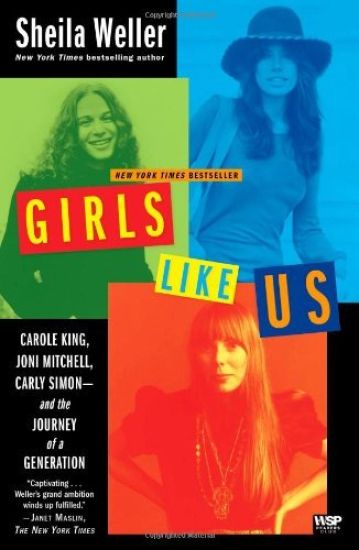
A groundbreaking and "captivating" (The New York Times) biography of three of America's most important musical artists--Carole King, Joni Mitchell, and Carly Simon--charts their lives as women at a magical moment in time. Carole King, Joni Mitchell, and Carly Simon remain among the most enduring and important women in popular music. Each woman is distinct. Carole King is the product of outer-borough, middle-class New York City; Joni Mitchell is a granddaughter of Canadian farmers; and Carly Simon is a child of the Manhattan intellectual upper crust. They collectively represent, in their lives and their songs, a great swath of American girls who came of age in the late 1960s. Their stories trace the arc of the now mythic sixties generation--female version--but in a bracingly specific and deeply recalled way, far from clich . The history of the women of that generation has never been written--until now, through their resonant lives and emblematic songs. Filled with the voices of many dozens of these women's intimates, who are speaking in these pages for the first time, this alternating biography reads like a novel--except it's all true, and the heroines are famous and beloved. Sheila Weller captures the character of each woman and gives a balanced portrayal enriched by a wealth of new information. Girls Like Us is an epic treatment of midcentury women who dared to break tradition and become what none had been before them--confessors in song, rock superstars, and adventurers of heart and soul.
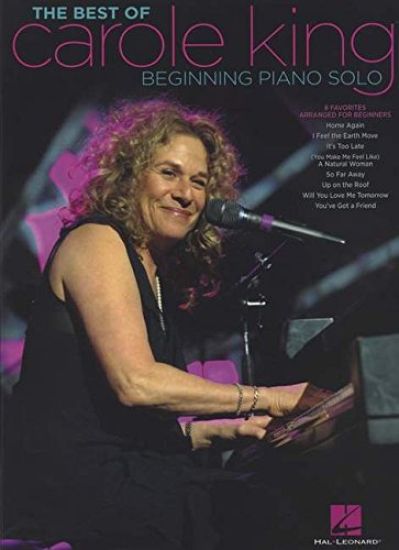
Eight Carole King classics arranged for beginning pianists: Home Again - I Feel the Earth Move - It's Too Late - (You Make Me Feel Like) A Natural Woman - So Far Away - Up on the Roof - Will You Love Me Tomorrow (Will You Still Love Me Tomorrow) - You've Got a Friend.
*Includes pictures. *Includes Lombard and Gable's quotes about their lives and careers. *Comprehensively analyzes their film careers. *Includes a bibliography for further reading. "The only reason they come to see me is that I know that life is great - and they know I know it." - Clark Gable "Carole Lombard's tragic death means that something of gaiety and beauty have been taken from the world at a time they are needed most." - Errol Flynn The 1930s were also a time in which Hollywood boasted an unprecedented array of famous leading men. Gary Cooper, Cary Grant, James Stewart, and Fred Astaire were just a handful of the A-list stars of the decade, and it is in this context that the achievements of Clark Gable are particularly remarkable. Best known for his role in Gone With the Wind (1939), Gable reached the ranks of the Hollywood elite well before the end of the decade through acting in films such as It Happened One Night (1934) and Mutiny on the Bounty (1935). Gable had a unique appeal that captivated Depression-era audiences; while Cary Grant offered a sophisticated charm and Fred Astaire was tied to the musical genre, Gable brought an air of sophistication that was less comical than that of Grant and appealed to both genders, unlike Astaire. At a time when so many Americans were financially destitute, Gable managed to appear classy without coming across as snobbish. At the same time, his virile masculinity was not overly macho or misogynist. For these reasons, Gable was able to captivate male and female viewers alike, and his mass appeal was a driving force behind the commercial success of Gone With the Wind, possibly the most beloved Hollywood film ever made. As iconic director John Huston once stated, "Clark Gable was the only real he-man I've ever known, of all the actors I've met." Even if Gable is perhaps less widely-known than Grant or Astaire among 21st century audiences, examining the effect he had on viewers during the 1930s and 1940s allows a better understanding of Hollywood during its Golden Age. In conjunction with that, his career served as a sort of response to his upbringing and cultural background. In fact, there was a significant gap between his glamorous roles on the movie screen and the real-life adversity he faced from an early age. Gable faced great challenges throughout his entire career, from the death of his biological mother to the death of wife Carol Lombard in 1942. As with any famous actor, he was the recipient of great fortune, yet it is important to recognize that his many opportunities did not preclude him from experiencing great pain and tragedy. On January 16, 1942, just a few weeks after Pearl Harbor brought the United States into World War II, the nation suffered what were considered the first civilian deaths of the war when a plane crashed into the side of a mountain southwest of Las Vegas. Aboard the plane were 15 servicemen, but the plane was also carrying one of Hollywood's biggest stars: actress Carole Lombard. Although Lombard's death and her marriage to Gone With the Wind star Clark Gable have overshadowed her career, her untimely death in 1942 cut short the life of one of Hollywood's most prominent stars at the time. In fact, Lombard's platinum look and her unique mannerisms had helped her become the biggest star of the screwball genre by the end of the 1930s, and her movies were so successful that she was the highest paid actress in Hollywood by the start of the 1940s. As English critic Graham Greene said of her, "Platinum blonde, with a heart-shaped face, delicate, impish features and a figure made to be swathed in silver lam , Lombard wriggled expressively through such classics of hysteria as Twentieth Century and My Man Godfrey." Indeed, despite dying at the age of 33, the American Film Institute recognized her as one of the biggest film icons of the 20th century.