Lessons, resources, and annotated answer keys for instructors at all levels in teaching copyright law.The teaching of copyright and related concepts can easily be overwhelming to instructors who are experts in their field but may have little to no detailed understanding of copyright law. They require reliable, accessible information to coach students on copyright-related matters. Teaching Copyright: Practical Lesson Ideas and Instructional Resources provides explicit guidance based on U.S. copyright law in the teaching of copyright and related concepts to learners at schools, colleges, and universities. Instructors are supported with time-saving resources such as lesson templates, scenarios, practice activities, and a downloadable test question bank.Additionally, Bloom’s Taxonomy labels lessons, activities, and assessment items to enable an appropriately diverse set of learning for students. Instead of reducing copyright to simple recall, the lessons and information in this text will help instructors develop higher-level thinking about copyright and assist them in measuring learners’ abilities not just to remember, but also to analyze and evaluate copyright dilemmas.
The biological world operates on a multitude of scales - from molecules to cells to tissues to organisms to ecosystems. Throughout all these levels runs a common thread: the communication and onward passage of information - from cell to cell, from organism to organism and, ultimately, from generation to generation. But how does this information - no more than a static repository of data - come alive to govern the processes that constitute life? The answer lies in the concerted action of molecular components which cooperate through a series of carefully-regulated processes to bring the information in our genome to life. These components and processes lie at the heart of one of the most fascinating subjects to engage the minds of scientists today: molecular biology. Molecular Biology: Principles of Genome Function offers a fresh, distinctive approach to the teaching of molecular biology. It is an approach that reflects the challenge of teaching a subject that is in many ways unrecognizable from the molecular biology of the 20th century - a discipline in which our understanding has advanced immeasurably, but about which many questions remain to be answered. It is written with several guiding themes in mind: - A focus on key principles provides a robust conceptual framework on which students can build a solid understanding of the discipline; - An emphasis on the commonalities that exist between the three kingdoms of life, and the discussion of differences between the three kingdoms where such differences offer instructive insights into molecular processes and components, gives students an accurate depiction of our current understanding of the conserved nature of molecular biology, and the differences that underpin biological diversity; - An integrated approach demonstrates how certain molecular phenomena have diverse impacts on genome function by presenting them as themes that recur throughout the book, rather than as artificially separated topics At heart, molecular biology is an experimental science, and a central element to the understanding of molecular biology is an appreciation of the approaches taken to yield the information from which concepts and principles are deduced. Yet there is also the challenge of introducing the experimental evidence in a way that students can readily comprehend. Molecular Biology responds to this challenge with Experimental Approach panels, which branch off from the text in a clearly-signposted way. These panels describe pieces of research that have been undertaken, and which have been particularly valuable in elucidating different aspects of molecular biology. Each panel is carefully cross-referenced to the discussion of key molecular biology tools and techniques, which are presented in a dedicated chapter at the end of the book. Beyond this, Molecular Biology further enriches the learning experience with full-colour, custom-drawn artwork; end-of-chapter questions and summaries; relevant suggested further readings grouped by topic; and an extensive glossary of key terms. Among the students being taught today are the molecular biologists of tomorrow; these individuals will be in a position to ask fascinating questions about fields whose complexity and sophistication become more apparent with each year that passes. Molecular Biology: Principles of Genome Function is the perfect introduction to this challenging, dynamic, but ultimately fascinating discipline.
Food has the power to bring people together. No matter who you are, where you live or your culture, having a meal together creates special moments and memories.Take inspiration from Carole's recipes bringing flavours from South Africa, Canada and Australia.Carole believes that cooking and sharing food brings people together. It should be fun, an experience and creative. She cooks with passion and love and you can taste it in her food. Carole's Kitchen Capers has delicious dishes for any night of the week, from soups and salads to mains, sides and savoury snacks.Carole enjoys creating meals with the ingredients she has in her pantry and encourages you to do the same.
Food has the power to bring people together. No matter who you are, where you live or your culture, having a meal together creates special moments and memories.Take inspiration from Carole's recipes bringing flavours from South Africa, Canada and Australia.Carole believes that cooking and sharing food brings people together. It should be fun, an experience and creative. She cooks with passion and love and you can taste it in her food. Carole's Kitchen Capers has delicious dishes for any night of the week, from soups and salads to mains, sides and savoury snacks.Carole enjoys creating meals with the ingredients she has in her pantry and encourages you to do the same.
Jane Eisner traces the professional accomplishments and personal challenges of pop icon Carole King, exploring her unique contribution to American music Carole King’s extraordinary career has defined American popular music for more than half a century. Born in New York City in 1942, she shaped the soundtrack of 1960s teen culture with such songs as “Will You Love Me Tomorrow,” one of many Brill Building classics she wrote with her first husband, Gerry Goffin. She was a leading figure in the singer-songwriter movement of the 1970s, with dozens of Billboard Hot 100 hits and music awards—her 1971 album Tapestry won a record four Grammys. Yet she struggled to reconcile her fame with her roles as a wife and mother and retreated to the backwoods of Idaho, only to emerge in recent years as a political activist and the subject of the Tony-winning Broadway show Beautiful: The Carole King Musical. Journalist and author Jane Eisner places King’s life in historical and cultural context, revealing details of her humble beginnings in postwar Jewish Brooklyn, the roots of her musical genius, her four marriages, and her anguish about public life. Drawing on numerous interviews as well as historical and contemporary sources, this book brings to life King’s professional accomplishments, her personal challenges, and her lasting contributions to the great American songbook.
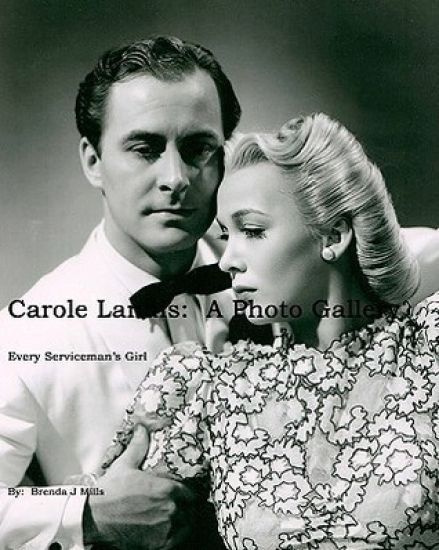
Carole Lombard was among the most commercially successfuly and admired film personalities in Hollywood in the 1930s. Carole Lombard includes a biography which brings to life this vivacious, unconventional woman, who showed fortitude in the face of personal hardships such as the automobile accident that scarred her face at age eighteen. The bibliography that follows is comprehensive in scope, the most ambitious to date; it contains citations for anonymous and attributed magazine articles, books, and films. Full text reprints of a revealing interview for Motion Picture magazine and her only published article provide interesting views of Lombard. The never before published Civil Aeronautics Board investigative report of the airplane crash in which she died, fifteen previously unpublished photographs, and detailed examination of many articles, biographies, and film history books that deal with some aspect of her life and/or career make this bio-bibliography an excellent resource.
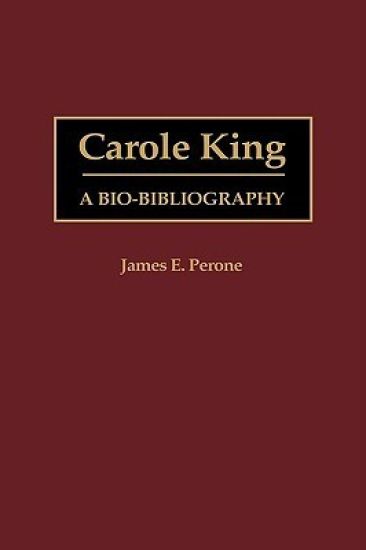
Carole King's early compositional work in the 1970s paved the way for many women songwriters of popular music. Among her best-known compositions are You've Got a Friend, Up on the Roof, Will You Love Me Tomorrow? and (You Make Me Feel Like) A Natural Woman. This reference encompasses Carole King's musical career from her compositions in the early 1960s through the 1990s, including her recently composed My One True Friend for the film One True Thing and Anyone at All for the film You've Got Mail. A brief biography of Carole King, which includes a critical analysis of her music, precedes an extensive discography of 1,275 recording entries and bibliography sections.Popular music scholars, along with Carole King fans, will appreciate this detailed source of available research materials on Carole King. The discography is divided into three sections: a performance discography, a miscellaneous discography, and a composition discography. Separate bibliographies cover writings, such as reviews, that focus on King's recordings, a general bibliography, and a brief bibliography of electronic resources. A filmography and videography are also included.
Developed and perfected over fifteen years, Carole Maggio's revolutionary program combats the signs of aging-by diminishing the appearance of fine lines and improving muscle tone-naturally. Filled with dramatic before-and-after photos that illustrate the effectiveness of Facercise, this easy-to-follow book will help anyone achieve visible results-in less than a week.Diminish puffiness around the eyesShorten and narrow the noseSmooth the chin, neck, and jawlineImprove skin color and toneLift eyebrowsRecontour the cheeksMake lips fuller and more firm
Carole Pateman’s writings have been innovatory precisely for their qualities of engagement, pursued at the height of intellectual rigour. This book draws from her vast output of articles, chapters, books and speeches to provide a thematic yet integrated account of her innovations in political theory and contributions to the politics of policy-making. The editors have focused on work in three key areas:DemocracyPateman’s perspective is rooted in a practical perspective, enquiring into and speculating about forms of participation over and above the ‘traditional’ exclusions through which representative systems have been variously constructed over time. Her work pushes hard on theorists and politicians who make easy assumptions about apathy and public opinion, who bracket off the workplace and the home, and who see politics only in partisan activity, voter behaviour and governmental policy.WomenPateman’s innovatory and still-cited work on participation antedates the feminist revolution in political theory and many of the practical struggles that developed through the later 1970s. While woman-centred, her concerns were always worked through larger conceptions of social class, economic advantage, power differentials, ‘liberal’ individualism and contracts including marriage. Her feminism was innovative in political theory, and within feminism itself. As a feminist Pateman defies categorization, and her concepts of ‘the sexual contract’ and ‘Wollstonecraft’s dilemma’ are canonical.WelfarePateman’s innovation here is an integration of welfare issues – in particular the proposals for a ‘basic income’ or for a ‘capital stake’ – into her broad but always rigorous conception of democracy. This is argued through in terms of citizenship, taken as the result of a social contract. In that way Pateman puts liberalism itself through an imminent critique, drawing in the practicalities and risks of life in late capitalist societies. Her theory as always is political, taking in neo-liberal attacks on ‘welfare states’ and the stark realities of international inequalities. Pateman’s career achievements in democratic and feminist theory are brought productively to bear on debates that would otherwise occur in more limited, and less provocative, academic and political contexts.
Carole is left a rather unusual present - a camel called Umberto. It's great to ride him to school and everyone loves him, even if he is rather smelly. But looking after a real camel can cause a lot of problems. Perhaps Carole should find him a more suitable home.
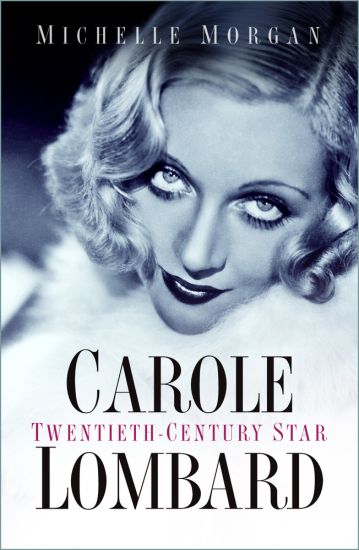
‘An entertaining and lucid biography’ - We Are CultCarole Lombard was the very opposite of the typical 1930s starlet. A no-nonsense woman, she worked hard, took no prisoners and had a great passion for life. As a result, she became Hollywood’s highest-paid star.From the outside, Carole’s life was one of great glamour and fun, yet privately she endured much heartache. As a child, she was moved across the country, away from her beloved father. She then began a film career, only to have it cut short after a devastating car accident. After she picked herself back up, she was rocked by the accidental shooting of her lover; a failed marriage to actor William Powell; and the sorrow of infertility during her marriage to Hollywood’s King, Clark Gable. Carole marched forward, determined to be positive – only for her life to be cut short in a plane crash so catastrophic that pieces of the aircraft are still buried in the mountain today.In Carole Lombard, bestselling author Michelle Morgan tells the story of a woman whose remarkable life and controversial death continues to enthral.
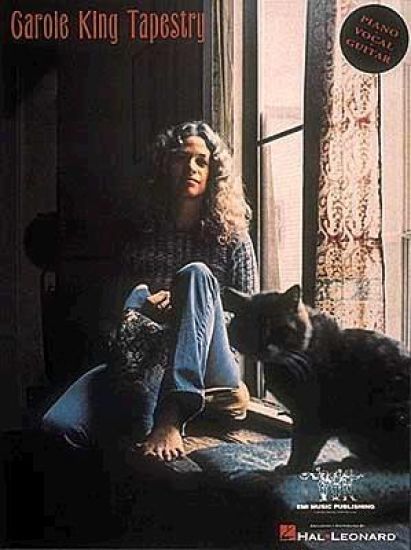
(Piano/Vocal/Guitar Artist Songbook). Matching folio to the classic album now available through Hal Leonard. Songs include: I Feel the Earth Move * It's Too Late * (You Make Me Feel Like) A Natural Woman * You've Got a Friend * and more.
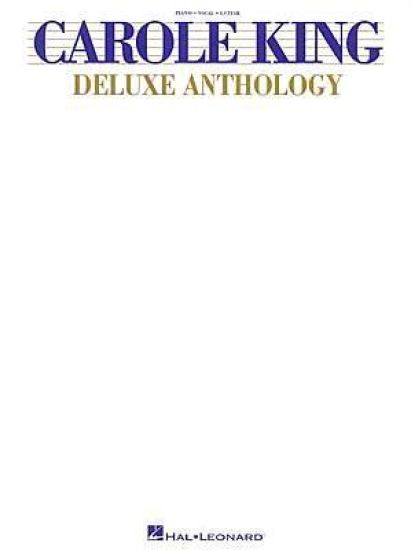
(Piano/Vocal/Guitar Artist Songbook). A comprehensive collection of 70 of her hits, including: Been to Canaan * I Feel the Earth Move * It's Too Late * (You Make Me Feel Like) A Natural Woman * One Fine Day * Smackwater Jack * Some Kind of Wonderful * Up on the Roof * Will You Love Me Tomorrow? * You Light Up My Life * You've Got a Friend * and more.