Charles Alexander Eastman (born Hakadah and later named Oh ye S'a; February 19, 1858 - January 8, 1939) was a Santee Dakota physician educated at Boston University, writer, national lecturer, and reformer. In the early 20th century, he was "one of the most prolific authors and speakers on Sioux ethnohistory and American Indian affairs." 1] Eastman was of Santee Dakota, English and French ancestry. After working as a physician on reservations in South Dakota, he became increasingly active in politics and issues on Native American rights, he worked to improve the lives of youths, and founded thirty-two Native American chapters of the Young Men's Christian Association (YMCA). He also helped found the Boy Scouts of America. He is considered the first Native American author to write American history from the Native American point of view.
harles Alexander Eastman (born Hakadah and later named Oh ye S'a; February 19, 1858 - January 8, 1939) was a Santee Dakota physician educated at Boston University, writer, national lecturer, and reformer. In the early 20th century, he was "one of the most prolific authors and speakers on Sioux ethnohistory and American Indian affairs." 1] Eastman was of Santee Dakota, English and French ancestry. After working as a physician on reservations in South Dakota, he became increasingly active in politics and issues on Native American rights, he worked to improve the lives of youths, and founded thirty-two Native American chapters of the Young Men's Christian Association (YMCA). He also helped found the Boy Scouts of America. He is considered the first Native American author to write American history from the Native American point of view.Eastman was named Hakadah at his birth in Minnesota; his name meant "pitiful last" in Dakota. Eastman was so named because his mother died following his birth. He was the last of five children of Wakantakawin, a mixed-race woman also known as Winona (meaning "First-Born Daughter" in the Dakota language) or Mary Nancy Eastman. 1] She and Eastman's father, a Santee Dakota named Wak-anhdi Ota (Many Lightnings), lived on a Santee Dakota reservation near Redwood Falls, Minnesota.
Charles Alexander Eastman (born Hakadah and later named Oh ye S'a; February 19, 1858 - January 8, 1939) was a Santee Dakota physician educated at Boston University, writer, national lecturer, and reformer. In the early 20th century, he was "one of the most prolific authors and speakers on Sioux ethnohistory and American Indian affairs." 1] Eastman was of Santee Dakota, English and French ancestry. After working as a physician on reservations in South Dakota, he became increasingly active in politics and issues on Native American rights, he worked to improve the lives of youths, and founded thirty-two Native American chapters of the Young Men's Christian Association (YMCA). He also helped found the Boy Scouts of America. He is considered the first Native American author to write American history from the Native American point of view.
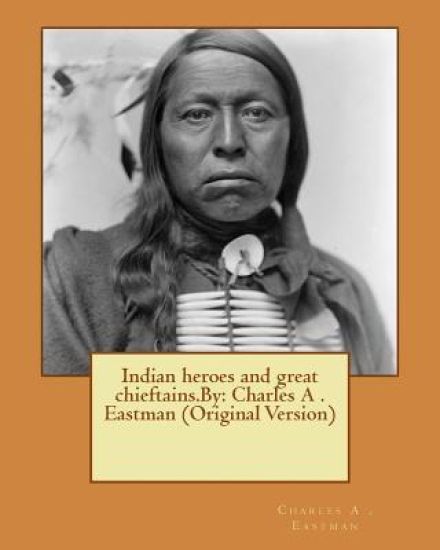
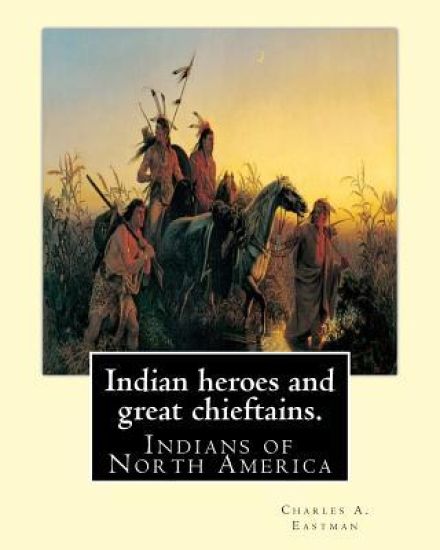
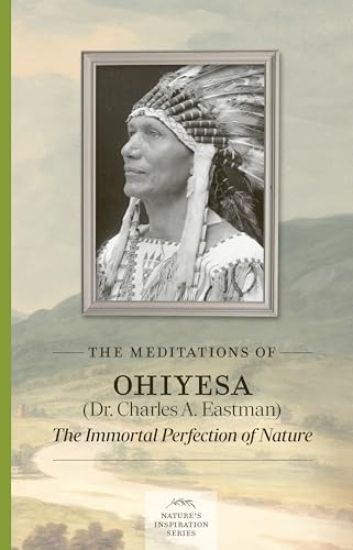
INDIAN HEROES AND GREAT CHIEFTAINS provides biographical sketches of 15 great Native American leaders, mostly Sioux, including portraits of Crazy Horse, Sitting Bull, and Spotted Tail. Eastman traces their historical importance to both white and Native peoples. Charles Eastman (Ohiyesa) was born in 1858 of Dakota (Minnesota Sioux) parents on the Santee Reservation near Redwood Falls, Minnesota. After his mother died and his father was captured during the Minnesota Sioux Uprising, his grandparents raised Eastman. His father found him when Charles was 15 years old and he began school. Graduating from Dartmouth in 1887 he continued on and got his MD from Boston University." Charles Alexander Eastman (born Hakadah and later named Oh ye S'a; February 19, 1858 - January 8, 1939) was a Santee Dakota physician educated at Boston University, writer, national lecturer, and reformer. In the early 20th century, he was "one of the most prolific authors and speakers on Sioux ethnohistory and American Indian affairs." 1] Eastman was of Santee Dakota, English and French ancestry. After working as a physician on reservations in South Dakota, he became increasingly active in politics and issues on Native American rights, he worked to improve the lives of youths, and founded thirty-two Native American chapters of the Young Men's Christian Association (YMCA). He also helped found the Boy Scouts of America. He is considered the first Native American author to write American history from the Native American point of view. Eastman was named Hakadah at his birth in Minnesota; his name meant "pitiful last" in Dakota. Eastman was so named because his mother died following his birth. He was the last of five children of Wakantakawin, a mixed-race woman also known as Winona (meaning "First-Born Daughter" in the Dakota language) or Mary Nancy Eastman. 1] She and Eastman's father, a Santee Dakota named Wak-anhdi Ota (Many Lightnings), lived on a Santee Dakota reservation near Redwood Falls, Minnesota.
Charles Alexander Eastman (born Hakadah and later named Oh ye S'a; February 19, 1858 - January 8, 1939) was a Santee Dakota physician educated at Boston University, writer, national lecturer, and reformer. In the early 20th century, he was "one of the most prolific authors and speakers on Sioux ethnohistory and American Indian affairs." 1] Eastman was of Santee Dakota, English and French ancestry. After working as a physician on reservations in South Dakota, he became increasingly active in politics and issues on Native American rights, he worked to improve the lives of youths, and founded thirty-two Native American chapters of the Young Men's Christian Association (YMCA). He also helped found the Boy Scouts of America. He is considered the first Native American author to write American history from the Native American point of view.
SCRAPS, the full title being Scientific Charles Recalls a Poetic Stevenson, written by Charles Alexander Stevenson, was an idea the author had recalling and correcting some impressions of his cousin Robert Louis Stevenson and of life in Edinburgh and the Scottish Borders, in the 19th century. Much has been published about RLS as a writer, however here we have a first hand account from his cousin, of the young man, his family, within the context of the environment in which he was brought up. Charles Stevenson provides an intimate and authentic description of this Scottish writer in his early years before he became famous. In the latter part of his life, Charles Stevenson, despite his failing health, remained determined that the manuscript of his compiled recollections should be completed as a published book. With the help of his daughter, May (Evelyn Mary Yeoman), he was able to dictate his thoughts, which she would transcribe each day prior to his corrections and amendments. The process ended on Charles' death in 1950 and it is only now that this project has finally come to fruition.
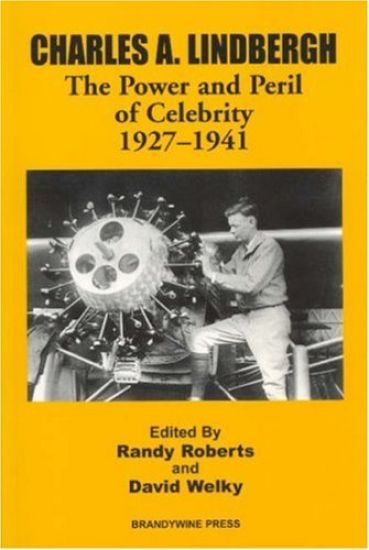
Charles Lindbergh was the biggest celebrity of the first half of the twentieth century, and the first to be exposed to the full and unrelenting glare of the modern mass media. His name and face were everywhere - on movie screens, on the radio, in books, in magazines, in newspapers - after his transatlantic flight suddenly transformed the quiet and shy young Minnesotan into a national icon. In 1927, Americans hailed their new hero as both an apostle of modernity and a bastion of traditional values. When his baby was kidnapped and killed during the lowest days of the Great Depression, the nation wondered whether it was a sign of its moral shortcomings. As World War II broke out in Europe, Lindbergh became one of the first to use his celebrity to promote a cause. His impassioned speeches against American involvement in the war illuminate the intense debate over intervention in the late 1930s. Using documents culled from a variety of sources, Roberts and Welky explore the significance observers found in Charles Lindbergh at the height of his fame and examine the power and peril of modern celebrity. In doing so, they add depth to our understanding of American interwar culture.
Charles Alexander Eastman (born Hakadah and later named Oh ye S'a; February 19, 1858 - January 8, 1939) was a Santee Dakota physician educated at Boston University, writer, national lecturer, and reformer. In the early 20th century, he was "one of the most prolific authors and speakers on Sioux ethnohistory and American Indian affairs." 1] Eastman was of Santee Dakota, English and French ancestry. After working as a physician on reservations in South Dakota, he became increasingly active in politics and issues on Native American rights, he worked to improve the lives of youths, and founded thirty-two Native American chapters of the Young Men's Christian Association (YMCA). He also helped found the Boy Scouts of America. He is considered the first Native American author to write American history from the Native American point of view.
Title: Journal of a Tour in 1870 sic] or 1791 by Charles A. Elton, aged 12, etc.Publisher: British Library, Historical Print EditionsThe British Library is the national library of the United Kingdom. It is one of the world's largest research libraries holding over 150 million items in all known languages and formats: books, journals, newspapers, sound recordings, patents, maps, stamps, prints and much more. Its collections include around 14 million books, along with substantial additional collections of manuscripts and historical items dating back as far as 300 BC.The HISTORY OF TRAVEL collection includes books from the British Library digitised by Microsoft. This collection contains personal narratives, travel guides and documentary accounts by Victorian travelers, male and female. Also included are pamphlets, travel guides, and personal narratives of trips to and around the Americas, the Indies, Europe, Africa and the Middle East. ++++The below data was compiled from various identification fields in the bibliographic record of this title. This data is provided as an additional tool in helping to insure edition identification: ++++ British Library Elton, Charles Abraham; c. 1850 13 p.; 4 . 10360.k.57.
This work has been selected by scholars as being culturally important and is part of the knowledge base of civilization as we know it.This work is in the public domain in the United States of America, and possibly other nations. Within the United States, you may freely copy and distribute this work, as no entity (individual or corporate) has a copyright on the body of the work.Scholars believe, and we concur, that this work is important enough to be preserved, reproduced, and made generally available to the public. To ensure a quality reading experience, this work has been proofread and republished using a format that seamlessly blends the original graphical elements with text in an easy-to-read typeface.We appreciate your support of the preservation process, and thank you for being an important part of keeping this knowledge alive and relevant.




![Journal of a Tour in 1870 [sic] or 1791 by Charles A. Elton, Aged 12, Etc.](/covers/9781241508326.jpg)