Kirjojen hintavertailu. Mukana 12 390 323 kirjaa ja 12 kauppaa.

Kirjahaku

Etsi kirjoja tekijän nimen, kirjan nimen tai ISBN:n perusteella.

1000 tulosta hakusanalla Charles B. Roth

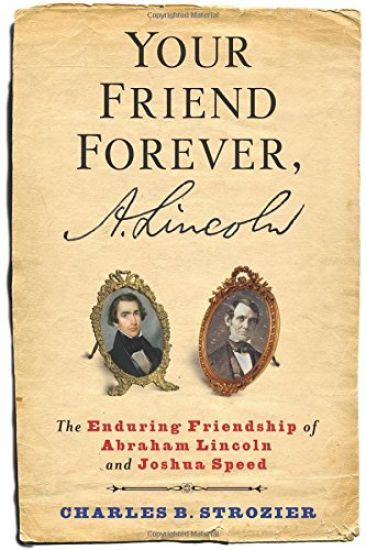
Your Friend Forever, A. Lincoln

Your Friend Forever, A. Lincoln

Charles B. Strozier

Columbia University Press
2018
pokkari
On April 15, 1837, a "long, gawky" Abraham Lincoln walked into Joshua Speed's dry-goods store in Springfield, Illinois, and asked what it would cost to buy the materials for a bed. Speed said seventeen dollars, which Lincoln didn't have. He asked for a loan to cover that amount until Christmas. Speed was taken with his visitor, but, as he said later, "I never saw so gloomy and melancholy a face." Speed suggested Lincoln stay with him in a room over his store for free and share his large double bed. What began would become one of the most important friendships in American history. Speed was Lincoln's closest confidant, offering him invaluable support after the death of his first love, Ann Rutledge, and during his rocky courtship of Mary Todd. Lincoln needed Speed for guidance, support, and empathy. Your Friend Forever, A. Lincoln is a rich analysis of a relationship that was both a model of male friendship and a specific dynamic between two brilliant but fascinatingly flawed men who played off each other's strengths and weaknesses to launch themselves in love and life. Their friendship resolves important questions about Lincoln's early years and adds significant psychological depth to our understanding of our sixteenth president.
Elliptic Cohomology

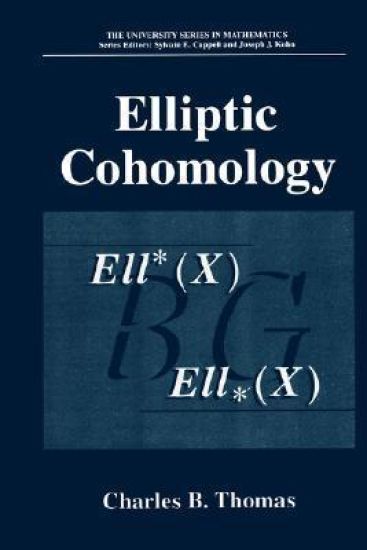
Elliptic Cohomology

Charles B. Thomas

Kluwer Academic/Plenum Publishers
1999
sidottu
Elliptic cohomology is an extremely beautiful theory with both geometric and arithmetic aspects. The former is explained by the fact that the theory is a quotient of oriented cobordism localised away from 2, the latter by the fact that the coefficients coincide with a ring of modular forms. The aim of the book is to construct this cohomology theory, and evaluate it on classifying spaces BG of finite groups G. This class of spaces is important, since (using ideas borrowed from `Monstrous Moonshine') it is possible to give a bundle-theoretic definition of EU-(BG). Concluding chapters also discuss variants, generalisations and potential applications.
And I Haven't Had a Bad Day Since

And I Haven't Had a Bad Day Since

Charles B Rangel

St. Martins Press-3PL
2008
pokkari
In this inspiring and often humorous memoir, the outspoken Democratic congressman from Harlem now the chairman of the powerful House Ways and Means Committee tells about his early years on Lenox Avenue, being awarded a Bronze Star and a Purple Heart for wounds sustained in a horrific Korean War battle (the last bad day of his life, he says), and his many years in Congress. A charming, natural storyteller, Rangel recalls growing up in Harlem, where from the age of nine he always had at least one job, including selling the legendary Adam Clayton Powell's newspaper; his group of streetwise sophisticates who called themselves Les Garcons; and his time in law school a decision made as much to win his grandfather's approval as to establish a career. He recounts as well his life in New York politics during the 1960s and the grueling civil rights march from Selma to Montgomery. With New York street smarts, Rangel is a tough liberal and an independent thinker, but also a collegial legislator respected by Democrats and Republicans alike who knows and honors the House's traditions. First elected to Congress in 1970, Rangel served on the House Judiciary Committee during the hearings on the articles of impeachment of President Nixon, helped found the Congressional Black Caucus, and led the fight in Congress to pressure U.S. corporations to divest from apartheid South Africa. Best of all, this is a political memoir with "heart," the story of a life filled with friends, humor, and accomplishments. Charles Rangel is one of a kind, and this is the story of how he became the celebrated person and politician he is today. He opens his memoir with a preface about the 2006 elections and an outline of his goals as chairman of Ways and Means. From day one he wants to put the public first so that more Americans can say they haven't had a bad day since."
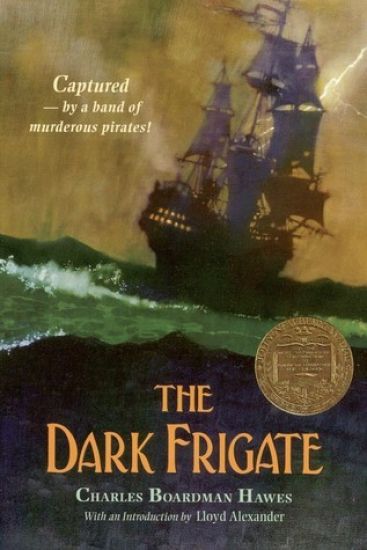
The Dark Frigate

The Dark Frigate

Charles B. Hawes

Little, Brown Company
1996
nidottu
In seventeenth century England, a terrible accident forces orphaned Philip Marsham to flee London in fear for his life. Bred to the sea, he signs on with the "Rose of Devon," a dark frigate bound for the quiet shores of Newfoundland.Philip's bold spirit and knowledge of the sea soon win him his captain's regard. But when the "Rose of Devon" is seized in midocean by a devious group of men plucked from a floating wreck, Philip is forced to accompany these "gentlemen of fortune" on their murderous expeditions. Like it or not, Philip Marsham is now a pirate--with only the hangman awaiting his return to England.With its bloody battles, brutal buccaneers, and bold, spirited hero, this rousing tale will enthrall young listeners in search of seafaring adventure.
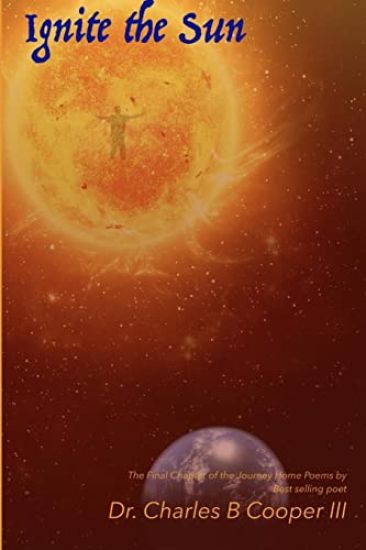
Ignite the Sun

Ignite the Sun

Charles B Cooper

Lulu.com
2018
pokkari
The Journey Home series concludes is the masterful book "Ignite the Sun". The entire journey has been one of discovering not just who this author is, but also who he should be. The Truth he has stumbled on and so carefully put down on paper should give us all cause to reflect on our own lives and become better people. During this book, the poet reflects on his time working for a government agency in Washington DC, What life is like inside the city, The comedic poems offering relationship advice to the next generation. He then takes on his characteristic reflective tones considering artwork, feelings, and emotions. The final poem of the book, "Broken" is one for the ages, grabbing the reader by the mind and ending with the simple expression, "I Love You."
The Little Book of Big Dividends

The Little Book of Big Dividends

Charles B. Carlson; Terry Savage

John Wiley Sons Inc
2010
sidottu
Everyone needs to invest, but where do you invest during bear markets? The massive stock declines over the past year have eroded savings, but this doesn't mean you should stuff your money under a mattress. It needs to be put to work getting some return so that it will grow. Smart investors will turn to high dividend paying stocks to get a stable and growing stream of income. Dividend investing-that provides an income beyond any gain in the share price-may be the investor's best weapon. Dividends are safe, largely reliable, and maybe at the their cheapest levels in many years. While the best paying dividend stocks of recent years, such as financials, took a huge beating in 2008, opportunities will abound in 2010 and beyond-if you know where to look. In The Little Book of Big Dividends, dividend stock expert Chuck Carlson presents an action plan for dividend-hungry investors. You'll learn about the pitfalls, how to find the opportunities, and will learn how to construct a portfolio that generates big, safe dividends easily through the BSD (Big, Safe Dividends) formula. If you're a bit adventurous, Carlson has you covered, and will teach you how to find big, safe dividends in foreign stocks, preferred stocks, ETFs, real estate investment trusts, and more. Contains the simple tools, strategies, and recommendations for finding big, safe dividendsHelps you put a complete portfolio together that pays dividends every monthShow you the top dividend paying stocks with their dividend payment dates It doesn't get any easier than this, and in these turbulent times, you can't afford to ignore the power of dividends. Read The Little Book of Big Dividends and gain a better perspective of how you can protect yourself for the future.
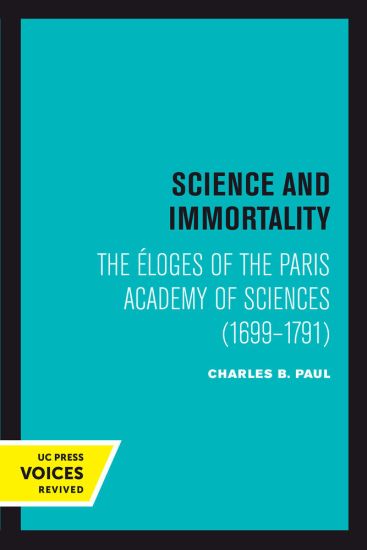
Science and Immortality

Science and Immortality

Charles B. Paul

University of California Press
2018
pokkari
From the eighteenth century until as recently as World War II, the natural scientist was depicted as a kind of moral superhero: objective, modest, ascetic, and selflessly dedicated to the betterment of humanity. What accounts for the widespread diffusion of this myth? In Science and Immortality, Charles B. Paul provides a partial explanation. The modern ideology of the scientist as disinterested seeker after truth arose partly through the transformation of an ancient literary form—the commemoration of heroes. In 1699 Bernard de Fontenelle, as Secretary of the Paris Academy of Sciences, inaugurated the tradition of the éloge, or eulogy, in honor of members of the Academy. The moral qualities that had once been attributed to the idealized Stoic philosopher were transferred in the eulogies to the "natural philosopher," or scientist. The over two hundred éloges composed between 1699 and 1791 by Fontenelle and his successors—Mairan, Fouchy, and Condorcet—served as a powerful device for the popularization of science. It was the intention of the secretaries, though, not only to exhibit the natural scientist as a modern-day hero but also to present a truthful record of scientific activity in France. Paul examines the éloges both as a literary form that used rhetorical and stylistic devises to reconcile these two conflicting goals and as a collective biography of a new breed of savants—one that already contained the seed of the conflict between self-image and reality embedded in the modern scientific enterprise. A unique history of science in eighteenth-century France, Science and Immortality illuminates the record in the éloges of the professionalization of some sciences and the maturation of others, the recognition of their utility to society and the state, and the widening trust in science as the remedy to economic restriction and political absolutism. Paul's thorough catalog of the éloges, extensive bibliography, and translations of representative éloges make this book an essential source for scholars in the field. This title is part of UC Press's Voices Revived program, which commemorates University of California Press’s mission to seek out and cultivate the brightest minds and give them voice, reach, and impact. Drawing on a backlist dating to 1893, Voices Revived makes high-quality, peer-reviewed scholarship accessible once again using print-on-demand technology. This title was originally published in 1980.
Science and Immortality

Science and Immortality

Charles B. Paul

University of California Press
2024
sidottu
From the eighteenth century until as recently as World War II, the natural scientist was depicted as a kind of moral superhero: objective, modest, ascetic, and selflessly dedicated to the betterment of humanity. What accounts for the widespread diffusion of this myth? In Science and Immortality, Charles B. Paul provides a partial explanation. The modern ideology of the scientist as disinterested seeker after truth arose partly through the transformation of an ancient literary form—the commemoration of heroes. In 1699 Bernard de Fontenelle, as Secretary of the Paris Academy of Sciences, inaugurated the tradition of the éloge, or eulogy, in honor of members of the Academy. The moral qualities that had once been attributed to the idealized Stoic philosopher were transferred in the eulogies to the "natural philosopher," or scientist. The over two hundred éloges composed between 1699 and 1791 by Fontenelle and his successors—Mairan, Fouchy, and Condorcet—served as a powerful device for the popularization of science. It was the intention of the secretaries, though, not only to exhibit the natural scientist as a modern-day hero but also to present a truthful record of scientific activity in France. Paul examines the éloges both as a literary form that used rhetorical and stylistic devises to reconcile these two conflicting goals and as a collective biography of a new breed of savants—one that already contained the seed of the conflict between self-image and reality embedded in the modern scientific enterprise. A unique history of science in eighteenth-century France, Science and Immortality illuminates the record in the éloges of the professionalization of some sciences and the maturation of others, the recognition of their utility to society and the state, and the widening trust in science as the remedy to economic restriction and political absolutism. Paul's thorough catalog of the éloges, extensive bibliography, and translations of representative éloges make this book an essential source for scholars in the field. This title is part of UC Press's Voices Revived program, which commemorates University of California Press’s mission to seek out and cultivate the brightest minds and give them voice, reach, and impact. Drawing on a backlist dating to 1893, Voices Revived makes high-quality, peer-reviewed scholarship accessible once again using print-on-demand technology. This title was originally published in 1980.