Kirjojen hintavertailu. Mukana 11 342 296 kirjaa ja 12 kauppaa.

Kirjahaku

Etsi kirjoja tekijän nimen, kirjan nimen tai ISBN:n perusteella.

1000 tulosta hakusanalla Charles Hibbert Tupper

Charles Wesley: A Reader

Charles Wesley: A Reader

Charles Wesley

Oxford University Press Inc
2000
nidottu
This is an anthology of the writings of Charles Wesley. Best known for his hymns, such as `Hark! the Herald Angels Sing', and `Jesus, Lover of My Soul', Charles was the younger brother of John Wesley and the co-founder of Methodism. Despite his importance in the history of Protestantism, there is no collection of his writings in print, and indeed, little work has been done specifically on Charles in the last two generations. Tyson presents a chronologically arranged selection of the journals, sermons, letters, hymns, and poems in such a way as to both outline Wesley's life and illuminate the leading elements of his thought.
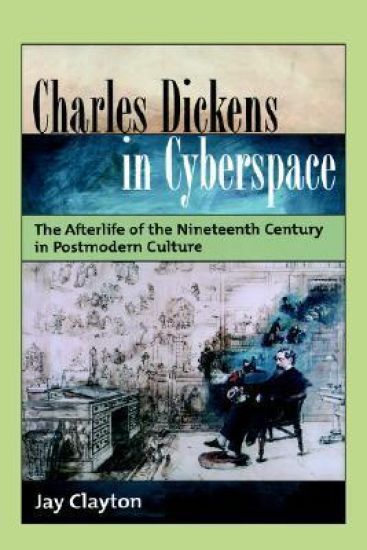
Charles Dickens in Cyberspace

Charles Dickens in Cyberspace

Jay Clayton

Oxford University Press Inc
2003
sidottu
Charles Dickens in Cyberspace opens a window on a startling set of literary and scientific links between contemporary American culture and the nineteenth-century heritage it often repudiates. Surveying a wide range of novelists, scientists, filmmakers, and theorists from the past two centuries, Jay Clayton traces the concealed circuits that connect the telegraph with the Internet, Charles Babbage's Difference Engine with the digital computer, Frankenstein's monster with cyborgs and clones, and Dickens' life and fiction with all manner of contemporary popular culture--from comic books and advertising to recent novels and films. In the process, Clayton argues for two important principles: that postmodernism has a hidden or repressed connection with the nineteenth-century and that revealing those connections can aid in the development of a historical cultural studies. In Charles Dickens in Cyberspace nineteenth-century figures--Jane Austen, Charles Darwin, Charles Dickens, Thomas Hardy, Henry James, Ada Lovelace, Joseph Paxton, Mary Shelley, and Mary Somerville--meet a lively group of counterparts from today: Andrea Barrett, Greg Bear, Peter Carey, Hélène Cixous, Alfonso Cuarón, William Gibson, Donna Haraway, David Lean, Richard Powers, Salman Rushdie, Ridley Scott, Susan Sontag, Neal Stephenson, Bruce Sterling, and Tom Stoppard. The juxtaposition of such a diverse cast of characters leads to a new way of understanding the "undisciplined culture" the two eras share, an understanding that can suggest ways to heal the gap that has long separated literature from science. Combining storytelling and scholarship, this engaging study demonstrates in its own practice the value of a self-reflective stance toward cultural history. Its personal voice, narrative strategies, multiple points of view, recursive loops, and irony emphasize the improvisational nature of the methods it employs. Yet its argument is serious and urgent: that the afterlife of the nineteenth century continues to shape the present in diverse and sometimes conflicting ways.
Charles Dickens in Cyberspace

Charles Dickens in Cyberspace

Jay Clayton

Oxford University Press Inc
2006
nidottu
Charles Dickens in Cyberspace opens a window on a startling set of literary and scientific links between contemporary American culture and the nineteenth-century heritage it often repudiates. Surveying a wide range of novelists, scientists, filmmakers, and theorists from the past two centuries, Jay Clayton traces the concealed circuits that connect the telegraph with the Internet, Charles Babbage's Difference Engine with the digital computer, Frankenstein's monster with cyborgs and clones, and Dickens' life and fiction with all manner of contemporary popular culture--from comic books and advertising to recent novels and films. In the process, Clayton argues for two important principles: that postmodernism has a hidden or repressed connection with the nineteenth-century and that revealing those connections can aid in the development of a historical cultural studies. In Charles Dickens in Cyberspace nineteenth-century figures--Jane Austen, Charles Darwin, Charles Dickens, Thomas Hardy, Henry James, Ada Lovelace, Joseph Paxton, Mary Shelley, and Mary Somerville--meet a lively group of counterparts from today: Andrea Barrett, Greg Bear, Peter Carey, Hélène Cixous, Alfonso Cuarón, William Gibson, Donna Haraway, David Lean, Richard Powers, Salman Rushdie, Ridley Scott, Susan Sontag, Neal Stephenson, Bruce Sterling, and Tom Stoppard. The juxtaposition of such a diverse cast of characters leads to a new way of understanding the "undisciplined culture" the two eras share, an understanding that can suggest ways to heal the gap that has long separated literature from science. Combining storytelling and scholarship, this engaging study demonstrates in its own practice the value of a self-reflective stance toward cultural history. Its personal voice, narrative strategies, multiple points of view, recursive loops, and irony emphasize the improvisational nature of the methods it employs. Yet its argument is serious and urgent: that the afterlife of the nineteenth century continues to shape the present in diverse and sometimes conflicting ways.
The British Academy/The Pilgrim Edition of the Letters of Charles Dickens: Volume 9: 1859-1861
This ninth volume presents about 1,100 letters, many unpublished, from the years 1859 to 1861. It records Dickens's writing of two major novels, A Tale of Two Cities and Great Expectations, both published weekly in All the Year Round: the letters give an unusual insight into the inspiration for both. It also shows him planning planning and writing a substantial amount of the three Christmas numbers of this period, `A Haunted House', `A Message from the Sea', and `Tom Tiddler's Ground'. He expends great energy in establishing All the Year Round, to succeed Household Words, and during 1860 writes the first fourteen of his Uncommercial Traveller series. During these three years he gives two provincial tours of readings, in addition to readings in London. He spends a considerable part of his time at Gad's Hill, relying on his daughter Mamie and sister-in-law Georgina Hogarth to act as hostesses; the All the Year Round office becomes his London base. Ellen Ternan continues to act, though with diminishing success; in January 1859 Dickens almost certainly buys a long lease of 2 Houghton Place, Ampthill Square, for the Ternan family.
The British Academy/The Pilgrim Edition of the Letters of Charles Dickens: Volume 10: 1862-1864
This volume presents 918 letters, 435 previously unpublished, for the years 1862 to 1864. Our Mutual Friend, Dickens's main work in the period, comes out monthly from 30 April 1864 to 31 October 1865, illustrated by Marcus Stone, son of Dickens's old friend, the painter Frank Stone; a series of new letters to him shows the immense care Dickens took over his illustrations. The three All the Year Round Christmas numbers, "Somebody's Luggage", "Mrs. Lirriper's Lodgings" and "Mrs. irriper's Legacy", take up much of his energies and are highly successful. Public readings do not occupy so much of his time as in the last volume; but he completes his second provincial tour in January 1862; gives two series weekly in London; and reads for charity in both Rochester and Paris. He declines an offer of £10,000 for an eight months' reading tour in Australia. Gad's Hill plays an increasingly major part in his life: he entertains many of his friends there and makes constant improvements to it. But there is no other period in which he pays so many visits to France, generally alone. The deliberately mystifying language he uses about these visits suggests he was seeing Ellen Ternan either in Paris or Boulogne or both, but there is no evidence to prove it. Long letters to his Swiss friend, W. W. F. de Cerjat, testify to his concern with public issues; several show how much he hated the American Civil War.
The British Academy/The Pilgrim Edition of the Letters of Charles Dickens: Volume 11: 1865-1867
This eleventh volume presents 1158 letters, many previously unpublished or published only in part, for the years 1865 to 1867. Dickens's main work in the period is the completion of the monthly parts of Our Mutual Friend (final part 31 October 1865, for November); unusually, it comes out in two volumes (January and November 1865) during the period of its run. The three All the Year Round Christmas numbers, `Doctor Marigold's Prescriptions', `Mugby Junction', and `No Thoroughfare' (written jointly with Wilkie Collins) are again highly successful. He remains in high demand as chairman of a varied collection of public charitable dinners: they include charities to which he was constantly faithful, such as the Newsvendors' Benevolent Institution and the Royal General Theatrical Fund; but he also presides, for the only time, at the Annual Dinner of the Dramatic, Equestrian, and Musical Sick Fund Association (14 February 1866) and - at the instigation of Charley Dickens, a keen oarsman and Committee member - at the Dinner of the Metropolitan Rowing Club (7 May 1866), making a particularly brilliant speech. The first reference to his swollen left foot, attributed by him to frost-bite, comes in February 1865; but the most dramatic event in this volume is the railway accident at Staplehurst, Kent, on 9 June 1865, in which he is involved on returning from a short visit to France, accompanied by Ellen Ternan and her mother. The frontispiece shows him helping the injured and dying. He gives two provincial reading tours managed by George Dolby of Chappell & Co., in 1866 and 1867, besides frequent readings in London. After a Farewell Dinner to him in London, with Lord Lytton in the Chair, he sails on 9 November 1867 from Liverpool to Boston, to begin his American tour of 75 readings.
The Pilgrim Edition of the Letters of Charles Dickens: Volume 6: 1850-1852
This volume presents 1,592 letters, 668 of them previously unpublished, for the years 1850 to 1852. This was a time of great activity for Dickens, who completed the serial publication of David Copperfield, began work on Bleak House, successfully established the weekly Household Words (in which his own serial A Child's History of England appeared), and wrote about 100 articles and stories for the journal, including many uncollected pieces. In April 1851 he and Sir Edward Bulwer Lytton founded the Guild of Literature and Art, a scheme to help writers and artists. He also suffered a number of personal blows: the deaths of his father, his baby daughter Dora, and two of his close friends, Richard Watson and Alfred D'Orsay; there was also anxiety over the illness of his wife Catherine.
The Pilgrim Edition of the Letters of Charles Dickens: Volume 7: 1853-1855
This volume presents 1,251 letters, 447 previously unpublished, for the years 1853 to 1855; it also includes, as a substantial Appendix of Addenda, over 280 letters of the years 1831 to 1852 which came to light too late for earlier volumes. The period is one of activity remarkable even for Dickens. Besides the continuous editing of Household Words (where his Hard Times appears as a weekly serial), he is still at work on Bleak House until August 1853 and in 1855 is writing the early numbers of Little Dorrit. He manages and acts in children's plays in his little Tavistock House theatre on Twelfth Night, and later takes the leading part in Wilkie Collins's drama The Lighthouse with great effect. Work with Miss Coutts and the troublesome inmates of her `Home' increases, and readings for charity have begun. The Crimean war and the government's mismanagement receive much comment in letters and satirical articles, and lead to one exceptional venture into political life with a speech for the Administrative Reform Association. But his long and happy periods of residence in France with his family encourage a more detached view, and he also revisits Switzerland and Italy on a two-month tour with Collins and the painter Augustus Egg. Friends and family still dominate his personal life, but for a few weeks long-past emotions are revived when he hears from his old love Maria Beadnell, now a middle-aged Mrs Winter.
The British Academy/The Pilgrim Edition of the Letters of Charles Dickens: Volume 8: 1856-1858
This eighth volume presents about 1,500 letters many of them unpublished, from the years 1856 to 1858. This period includes several major changes in Dickens's public and private life, notably in 1858 when he separates from his wife and starts a new career of paid readings from his works. But throughout 1856 and part of 1857, his main preoccupation is the writing of his monthly serial Little Dorrit; for much of 1856 he continues to reside happily in France with his family, both in Boulogne and Paris, giving racy accounts of its theatres and his meetings with writers and artists. At his own amateur theatricals in 1857, his great success in Wilkie Collins's The Frozen Deep has lasting consequences; at the close of his work for the Douglas Jerrold Fund, the play is repeated with professional actresses, including three members of the Ternan family. Later rumours of his relations with a young actress (Ellen Ternan) provoke him to an ill-advised public statement which leads to a breach with his publishers and with one of his closest friends, Mark lemon. Finally, he embarks on the first of many strenuous reading tours, giving 85 readings in over 40 towns, all within three months. His usual activities are not neglected: he makes many speeches for good causes, and continues to edit Household Words (and its successor All the Year Round), with help from his friend and assistant editor Wills. Throughout, there is new material, both in the letters and in the editors' annotation, with some fresh interpretation of controversial matters.
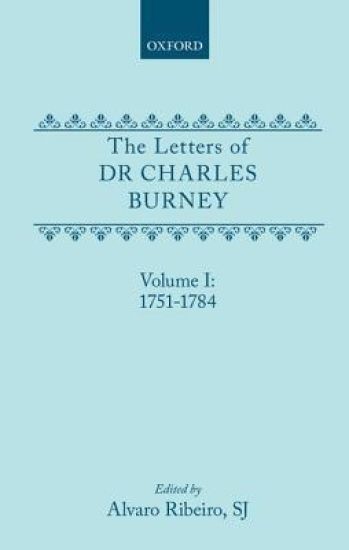
The Letters of Dr Charles Burney: Volume I: 1751-1784
The letters of the great eighteenth-century historian of music and man of letters, Dr Charles Burney (1726-1814), friend of Samuel Johnson and Joseph Haydn, are here collected and published in chronological order for the first time. This initial instalment of a projected four-volume edition of the Letters, edited from manuscript and other sources, opens with the earliest surviving letter, written in 1751 when Burney was an obscure country organist. It concludes in December 1784 with the death of Samuel Johnson. These are the letters of the active years which saw Burney's remarkable rise to the head of his chosen profession, music. They chronicle his musical travels in Europe, and his literary activities as a scholar and author of the Continental Tours, the first two volumes of his famous History of Music, and the Commemoration of Handel, written at the behest of George III. They also document Burney's membership in the celebrated literary coterie at Streatham, and the emergence as a novelist of his daughter Fanny, whose Evelina and Cecilia appeared in these years.
Charles James Fox

Charles James Fox

L. G. Mitchell

Oxford University Press
1992
sidottu
Charles James Fox was one of the most colourful figures in eighteenth-century politics. Notorious for the excesses of his private life, he was at the same time one of the leading politicians of his generation, dominating the Whig party and polite society. As the political rival of Pitt the Younger and the intellectual rival of Edmund Burke, his views on the major issues of the day - the American War of Independence, the French Revolution, parliamentary reform - formed the character of Whiggery in his own time and for years to come. Fox's historical reputation has been hotly disputed. Some have hailed him as one of the founding fathers of Radicalism, others have dismissed him as an irritating and irresponsible impediment to the statesmanship of Pitt. L. G. Mitchell's scholarly biography shows that in many ways Fox was a politician through circumstance, not inclination. Dr Mitchell analyses the ties of kinship and friendship which to an astonishing degree dictated Fox's politics, and offers striking new assessments of Whiggery and its most potent personality. This penetrating and readable study reveals the man and his mind, and sets Fox firmly within the political and social context of the late eighteenth century.
Charles the Second

Charles the Second

Ronald Hutton

Clarendon Press
1989
sidottu
This is the first scholarly biography of the king who is remembered by the English with more popular affection than almost any other. Covering his entire life, it takes in his colourful years as a prince and as an exiled monarch during the Civil War and Interregnum, in addition to his later career as effective ruler of three kingdoms. A unique feature of Ronald Hutton's authoritative study is the attention given to Charles's reign over Scotland and Ireland, as well as England, giving us the first united history of the British Isles in this period. The work is based throughout on all the known surviving sources, some of which have never been used before. This lively and comprehensive biography fills an important gap in Stuart historiography, and will be indispensable to anyone interested in the period.
The Sermons of Charles Wesley

The Sermons of Charles Wesley

Charles Wesley

Oxford University Press
2001
sidottu
Charles Wesley (1707-1788) is widely recognized as one of the greatest writers of the English hymn. The importance of Charles, however, extends well beyond his undoubted poetic abilities, for he is a figure of central importance in the context of the birth and early growth of Methodism, a movement which today has a worldwide presence. It was Charles and not John who first started the Oxford 'Holy Club' from which the ethos and structures of organised Methodism were eventually to emerge. It was Charles rather than John who first experienced the 'strange warming of the heart' that characterised the experience of many eighteenth-century evangelicals; and in the early years it was Charles no less than John who sought to spread, mainly through his preaching, the evangelical message across England, Wales, and Ireland. Eye witness testimony suggests that Charles was a powerful and effective preacher whose homiletic work and skill did much to establish and further the early Methodist cause. In this book this other side of Charles Wesley is brought clearly into focus through the publication, for the first time, of all of the known Charles Wesley sermon texts. In the four substantial introductory chapters a case is made for the inclusion of the 23 sermons here presented and there is discussion also of the significant text-critical problems that have been negotiated in the production of this volume. Other chapters present a summary of Charles's life and preaching career and seek to show by example how the sermons, no less than the hymns, are significant vehicles for the transmission of Charles's message. This book hence makes a plea for a reassessment of the place of Charles Wesley in English Church history and argues that he deserves to be recognised as more than just 'The Sweet Singer of Methodism'.
Charles I and the People of England

Charles I and the People of England

David Cressy

Oxford University Press
2015
sidottu
The story of the reign of Charles I - through the lives of his people. Prize-winning historian David Cressy mines the widest range of archival and printed sources, including ballads, sermons, speeches, letters, diaries, petitions, proclamations, and the proceedings of secular and ecclesiastical courts, to explore the aspirations and expectations not only of the king and his followers, but also the unruly energies of many of his subjects, showing how royal authority was constituted, in peace and in war - and how it began to fall apart. A blend of micro-historical analysis and constitutional theory, parish politics and ecclesiology, military, cultural, and social history, Charles I and the People of England is the first major attempt to connect the political, constitutional, and religious history of this crucial period in English history with the experience and aspirations of the rest of the population. From the king and his ministers to the everyday dealings and opinions of parishioners, petitioners, and taxpayers, David Cressy re-creates the broadest possible panorama of early Stuart England, as it slipped from complacency to revolution.