Kirjojen hintavertailu. Mukana 11 244 527 kirjaa ja 12 kauppaa.

Kirjahaku

Etsi kirjoja tekijän nimen, kirjan nimen tai ISBN:n perusteella.

1000 tulosta hakusanalla Charles Laborde

Charles Dickens: A Life

Charles Dickens: A Life

Claire Tomalin

Penguin Publishing Group
2012
nidottu
Award-winning Claire Tomalin, author of A Life of My Own, sets the standard for sophisticated and popular biography, having written lives of Jane Austen, Samuel Pepys, and Thomas Hardy, among others. Here she tackles the best recognized and loved man of nineteenth-century England, Charles Dickens; a literary leviathan whose own difficult path to greatness inspired the creation of classic novels such as Great Expectations, David Copperfield, Oliver Twist, and Hard Times. From his sensational public appearances to the obsessive love affair that led him to betray, deceive, and break with those closest to him, Charles Dickens: A Life is a triumph of the biographer's craft, a comedy that turns to tragedy in a story worthy of Dickens' own pen.
Charles Darwin's Life With Birds

Charles Darwin's Life With Birds

Clifford B. Frith

Oxford University Press Inc
2016
sidottu
Much of Charles Darwin's groundbreaking work as an evolutionary biologist stemmed from his study of birds. It is universally acknowledged that Darwin's observation of bird groups and species like the Galapagos finches, mockingbirds, and rock doves was critical to the development of his theories on natural selection, evolution, and sexual selection. The significant number of diverse birds that Darwin covered in his published works represents a most substantial ornithological contribution. His major books alone contain reference to and consideration of almost 500 bird species, as well as interesting and pertinent discussion of over 100 ornithological topics. "Charles Darwin's Birds" is a comprehensive treatment of Darwin's work as an ornithologist. Clifford Frith discusses every ornithological topic and bird species that Darwin researched, providing a complete historical survey of his published writing on birds. Through this, we learn how Darwin became an increasingly skilled and eventually exceptional ornithologist, and how his relationships grew with contemporary scientists like John Gould. It examines how Darwin was influenced by birds, and how the major themes of his research developed through his study of them. The book also features 4 appendices, which contain brief accounts of every bird species Darwin wrote about, basic ornithological information about each of the species, and a listing of where the species appears in Darwin's work.
Charles Munch

Charles Munch

Holoman D. Kern

Oxford University Press Inc
2015
nidottu
A mesmerizing figure in concert, Charles Munch was celebrated for his electrifying public performances. He was a pioneer in many arenas of classical music—establishing Berlioz in the canon, perfecting the orchestral work of Debussy and Ravel, and leading the world to Roussel, Honegger, and Dutilleux. A pivotal figure, his accomplishments put him on a par with Arturo Toscanini and Leonard Bernstein. In Charles Munch, D. Kern Holoman provides the first full biography of this giant of twentieth-century music, tracing his dramatic survival in occupied Paris, his triumphant arrival at the Boston Symphony Orchestra, and his later years, when he was a leading cultural figure in the United States, a man known and admired by Presidents Truman, Eisenhower, and Kennedy. He turned to conducting only in middle age, after two decades as a violinist and concertmaster, a background which gave him special insight into the relationship between conductor and orchestra. At the podium, his bond with his musicians unleashed something in them and in himself. "A certain magic took wing that amounts to the very essence of music in concert," the author writes, as if "public performance loosed the facets of character and artistry and poetry otherwise muffled by his timidity and simple disinclination to say much." In concert, Munch was arresting, even seductive, sweeping his baton in an enormous arch from above his head down to his knee. Yet as Holoman shows, he remained a lonely, even sad figure, a widower with no children, a man who fled admirers and avoided reporters. With groundbreaking research and sensitive, lyrical writing, Charles Munch penetrates the enigma to capture this elusive musical titan.
Charles S. Peirce's Phenomenology

Charles S. Peirce's Phenomenology

Richard Kenneth Atkins

Oxford University Press Inc
2019
sidottu
No reasonable person would deny that the sound of a falling pin is less intense than the feeling of a hot poker pressed against the skin, or that the recollection of something seen decades earlier is less vivid than beholding it in the present. Yet John Locke is quick to dismiss a blind man's report that the color scarlet is like the sound of a trumpet, and Thomas Nagel similarly avers that such loose intermodal analogies are of little use in developing an objective phenomenology. Charles Sanders Peirce (1839-1914), by striking contrast, maintains rather that the blind man is correct. Peirce's reasoning stems from his phenomenology, which has received little attention as compared with his logic, pragmatism, or semiotics. Peirce argues that one can describe the similarities and differences between such experiences as seeing a scarlet red and hearing a trumpet's blare or hearing a falling pin and feeling a hot poker. Drawing on the Kantian idea that the analysis of consciousness should take as its guide formal logic, Peirce contends that we can construct a table of the elements of consciousness, just as Dmitri Mendeleev constructed a table of the chemical elements. By showing that the elements of consciousness fall into distinct classes, Peirce makes significant headway in developing the very sort of objective phenomenology which vindicates the studious blind man Locke so derides. Charles S. Peirce's Phenomenology shows how his phenomenology rests on his logic, gives an account of Peirce's phenomenology as science, and then shows how his work can be used to develop an objective phenomenological vocabulary. Ultimately, Richard Kenneth Atkins shows how Peirce's pioneering and distinctive formal logic led him to a phenomenology that addresses many of the questions philosophers of mind continue to raise today.
Charles Williams and C. S. Lewis

Charles Williams and C. S. Lewis

Paul S. Fiddes

Oxford University Press
2021
sidottu
This study of the literary relationship between Charles Williams and C. S. Lewis during the years 1936-1945 focuses on the theme of 'co-inherence' at the centre of their friendship. The idea of 'co-inherence' has long been recognized as an important contribution of Williams to theology, and had significant influence on the thought of Lewis. This account of the two writers' conviction that human persons 'inhere' or 'dwell' both in each other and in the triune God reveals many inter-relationships between their writings that would otherwise be missed. It also shows up profound differences between their world-views, and a gradual, though incomplete, convergence onto common ground. Exploring the idea of co-inherence throws light on the fictional worlds they created, as well as on their treatment (whether together or separately) of a wide range of theological and literary subjects: the Arthurian tradition, the poetry of William Blake and Thomas Traherne, the theology of Karl Barth, the nature of human and divine love, and the doctrine of the Trinity. This study draws for the first time on transcriptions of Williams' lectures from 1932 to 1939, tracing more clearly the development and use of the idea of co-inherence in his thought than has been possible before. Finally, an account of the use of the word 'co-inherence' in English-speaking theology suggests that the differences that existed between Lewis and Williams, especially on the place of analogy and participation in human experience of God, might be resolved by a theology of co-inherence in the Trinity.
Charles Bonnet, Analytical Essay on the Faculties of the Soul
In the course of the eighteenth century, understanding human cognitive life came to be construed as something to be explored in terms of the physiology of the sensory organs, the nerves, and the brain: a form of naturalization that effectively moved cognition out of the realm of philosophy as it had traditionally been understood. Bonnet's Analytical Essay on the Faculties of the Soul was at the forefront of these developments, and this is its first English translation. Drawing on his earlier work in natural history--he was the leading entomologist of his era--he approaches problems of the nature of the mind via the physiology and anatomy of the brain and sensory systems. His approach is one of 'reverse engineering', starting from an organic statue without faculties, and investigating how it would need to be modified to produce a human being. Bonnet takes up a position that cuts across the standard understanding of the period as a clash between materialism and dualism. While his approach was rigorously naturalistic and physiological, this did not lead him to reject the notion of a soul. Instead, he argues that, in order to make sense of their sensory abilities, we need to attribute a soul to animals as well as human beings. At the same time, he argues that if personal immortality is to be possible, it can be conceived along the lines of insect metamorphosis, which shows how different biological forms can harbour a single identity.
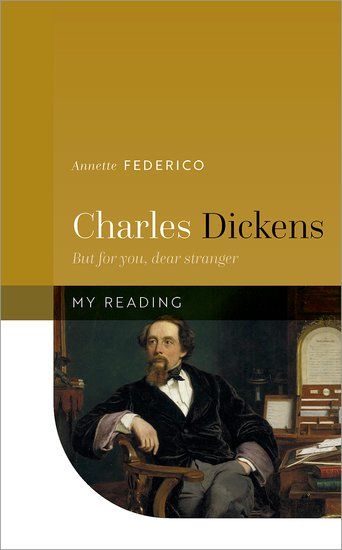
Charles Dickens

Charles Dickens

Annette Federico

Oxford University Press
2022
sidottu
A personal approach to Dickens's art that pays attention to what magnetizes Federico or strikes her as newly relevant to our own world, and to her life, as she explores what Dickens' works are emotionally about. Dickens's first concern in all his fiction is with people's feelings and their imaginations. Everything else--the social criticism, the satire, the comedy--flows from that spring. How does a person begin to imagine, to enter vividly into the life he or she has been given, and into the lives of others? How does someone change, how do they love, give their trust, look forward to the future? These questions make their way into all of Dickens's novels, including the four discussed in this contribution to the My Reading series: Oliver Twist (1837-39), David Copperfield (1849-50), Little Dorrit (1855-57), and A Tale of Two Cities (1859). Consistent with the aims of the series, this book takes a personal approach to Dickens's art. Federico follows her own responses, paying attention to what magnetizes her or strikes her as newly relevant to our own world, and to her life. What is the story emotionally about? This becomes the important question as she reads through Dickens's works. It is the question that opens the door to her own memories, her own stories, as she grows from being an innocent reader of Dickens to a more critical, professionalized one--while still listening confidentially to what Dickens has to teach her about hope, love, and the limits of knowledge.
Charles Wesley: A Reader

Charles Wesley: A Reader

Charles Wesley

Oxford University Press Inc
2000
nidottu
This is an anthology of the writings of Charles Wesley. Best known for his hymns, such as `Hark! the Herald Angels Sing', and `Jesus, Lover of My Soul', Charles was the younger brother of John Wesley and the co-founder of Methodism. Despite his importance in the history of Protestantism, there is no collection of his writings in print, and indeed, little work has been done specifically on Charles in the last two generations. Tyson presents a chronologically arranged selection of the journals, sermons, letters, hymns, and poems in such a way as to both outline Wesley's life and illuminate the leading elements of his thought.
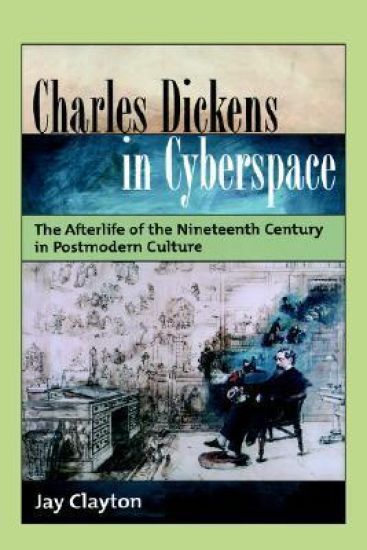
Charles Dickens in Cyberspace

Charles Dickens in Cyberspace

Jay Clayton

Oxford University Press Inc
2003
sidottu
Charles Dickens in Cyberspace opens a window on a startling set of literary and scientific links between contemporary American culture and the nineteenth-century heritage it often repudiates. Surveying a wide range of novelists, scientists, filmmakers, and theorists from the past two centuries, Jay Clayton traces the concealed circuits that connect the telegraph with the Internet, Charles Babbage's Difference Engine with the digital computer, Frankenstein's monster with cyborgs and clones, and Dickens' life and fiction with all manner of contemporary popular culture--from comic books and advertising to recent novels and films. In the process, Clayton argues for two important principles: that postmodernism has a hidden or repressed connection with the nineteenth-century and that revealing those connections can aid in the development of a historical cultural studies. In Charles Dickens in Cyberspace nineteenth-century figures--Jane Austen, Charles Darwin, Charles Dickens, Thomas Hardy, Henry James, Ada Lovelace, Joseph Paxton, Mary Shelley, and Mary Somerville--meet a lively group of counterparts from today: Andrea Barrett, Greg Bear, Peter Carey, Hélène Cixous, Alfonso Cuarón, William Gibson, Donna Haraway, David Lean, Richard Powers, Salman Rushdie, Ridley Scott, Susan Sontag, Neal Stephenson, Bruce Sterling, and Tom Stoppard. The juxtaposition of such a diverse cast of characters leads to a new way of understanding the "undisciplined culture" the two eras share, an understanding that can suggest ways to heal the gap that has long separated literature from science. Combining storytelling and scholarship, this engaging study demonstrates in its own practice the value of a self-reflective stance toward cultural history. Its personal voice, narrative strategies, multiple points of view, recursive loops, and irony emphasize the improvisational nature of the methods it employs. Yet its argument is serious and urgent: that the afterlife of the nineteenth century continues to shape the present in diverse and sometimes conflicting ways.
Charles Dickens in Cyberspace

Charles Dickens in Cyberspace

Jay Clayton

Oxford University Press Inc
2006
nidottu
Charles Dickens in Cyberspace opens a window on a startling set of literary and scientific links between contemporary American culture and the nineteenth-century heritage it often repudiates. Surveying a wide range of novelists, scientists, filmmakers, and theorists from the past two centuries, Jay Clayton traces the concealed circuits that connect the telegraph with the Internet, Charles Babbage's Difference Engine with the digital computer, Frankenstein's monster with cyborgs and clones, and Dickens' life and fiction with all manner of contemporary popular culture--from comic books and advertising to recent novels and films. In the process, Clayton argues for two important principles: that postmodernism has a hidden or repressed connection with the nineteenth-century and that revealing those connections can aid in the development of a historical cultural studies. In Charles Dickens in Cyberspace nineteenth-century figures--Jane Austen, Charles Darwin, Charles Dickens, Thomas Hardy, Henry James, Ada Lovelace, Joseph Paxton, Mary Shelley, and Mary Somerville--meet a lively group of counterparts from today: Andrea Barrett, Greg Bear, Peter Carey, Hélène Cixous, Alfonso Cuarón, William Gibson, Donna Haraway, David Lean, Richard Powers, Salman Rushdie, Ridley Scott, Susan Sontag, Neal Stephenson, Bruce Sterling, and Tom Stoppard. The juxtaposition of such a diverse cast of characters leads to a new way of understanding the "undisciplined culture" the two eras share, an understanding that can suggest ways to heal the gap that has long separated literature from science. Combining storytelling and scholarship, this engaging study demonstrates in its own practice the value of a self-reflective stance toward cultural history. Its personal voice, narrative strategies, multiple points of view, recursive loops, and irony emphasize the improvisational nature of the methods it employs. Yet its argument is serious and urgent: that the afterlife of the nineteenth century continues to shape the present in diverse and sometimes conflicting ways.
The British Academy/The Pilgrim Edition of the Letters of Charles Dickens: Volume 9: 1859-1861
This ninth volume presents about 1,100 letters, many unpublished, from the years 1859 to 1861. It records Dickens's writing of two major novels, A Tale of Two Cities and Great Expectations, both published weekly in All the Year Round: the letters give an unusual insight into the inspiration for both. It also shows him planning planning and writing a substantial amount of the three Christmas numbers of this period, `A Haunted House', `A Message from the Sea', and `Tom Tiddler's Ground'. He expends great energy in establishing All the Year Round, to succeed Household Words, and during 1860 writes the first fourteen of his Uncommercial Traveller series. During these three years he gives two provincial tours of readings, in addition to readings in London. He spends a considerable part of his time at Gad's Hill, relying on his daughter Mamie and sister-in-law Georgina Hogarth to act as hostesses; the All the Year Round office becomes his London base. Ellen Ternan continues to act, though with diminishing success; in January 1859 Dickens almost certainly buys a long lease of 2 Houghton Place, Ampthill Square, for the Ternan family.
The British Academy/The Pilgrim Edition of the Letters of Charles Dickens: Volume 10: 1862-1864
This volume presents 918 letters, 435 previously unpublished, for the years 1862 to 1864. Our Mutual Friend, Dickens's main work in the period, comes out monthly from 30 April 1864 to 31 October 1865, illustrated by Marcus Stone, son of Dickens's old friend, the painter Frank Stone; a series of new letters to him shows the immense care Dickens took over his illustrations. The three All the Year Round Christmas numbers, "Somebody's Luggage", "Mrs. Lirriper's Lodgings" and "Mrs. irriper's Legacy", take up much of his energies and are highly successful. Public readings do not occupy so much of his time as in the last volume; but he completes his second provincial tour in January 1862; gives two series weekly in London; and reads for charity in both Rochester and Paris. He declines an offer of £10,000 for an eight months' reading tour in Australia. Gad's Hill plays an increasingly major part in his life: he entertains many of his friends there and makes constant improvements to it. But there is no other period in which he pays so many visits to France, generally alone. The deliberately mystifying language he uses about these visits suggests he was seeing Ellen Ternan either in Paris or Boulogne or both, but there is no evidence to prove it. Long letters to his Swiss friend, W. W. F. de Cerjat, testify to his concern with public issues; several show how much he hated the American Civil War.
The British Academy/The Pilgrim Edition of the Letters of Charles Dickens: Volume 11: 1865-1867
This eleventh volume presents 1158 letters, many previously unpublished or published only in part, for the years 1865 to 1867. Dickens's main work in the period is the completion of the monthly parts of Our Mutual Friend (final part 31 October 1865, for November); unusually, it comes out in two volumes (January and November 1865) during the period of its run. The three All the Year Round Christmas numbers, `Doctor Marigold's Prescriptions', `Mugby Junction', and `No Thoroughfare' (written jointly with Wilkie Collins) are again highly successful. He remains in high demand as chairman of a varied collection of public charitable dinners: they include charities to which he was constantly faithful, such as the Newsvendors' Benevolent Institution and the Royal General Theatrical Fund; but he also presides, for the only time, at the Annual Dinner of the Dramatic, Equestrian, and Musical Sick Fund Association (14 February 1866) and - at the instigation of Charley Dickens, a keen oarsman and Committee member - at the Dinner of the Metropolitan Rowing Club (7 May 1866), making a particularly brilliant speech. The first reference to his swollen left foot, attributed by him to frost-bite, comes in February 1865; but the most dramatic event in this volume is the railway accident at Staplehurst, Kent, on 9 June 1865, in which he is involved on returning from a short visit to France, accompanied by Ellen Ternan and her mother. The frontispiece shows him helping the injured and dying. He gives two provincial reading tours managed by George Dolby of Chappell & Co., in 1866 and 1867, besides frequent readings in London. After a Farewell Dinner to him in London, with Lord Lytton in the Chair, he sails on 9 November 1867 from Liverpool to Boston, to begin his American tour of 75 readings.
The Pilgrim Edition of the Letters of Charles Dickens: Volume 6: 1850-1852
This volume presents 1,592 letters, 668 of them previously unpublished, for the years 1850 to 1852. This was a time of great activity for Dickens, who completed the serial publication of David Copperfield, began work on Bleak House, successfully established the weekly Household Words (in which his own serial A Child's History of England appeared), and wrote about 100 articles and stories for the journal, including many uncollected pieces. In April 1851 he and Sir Edward Bulwer Lytton founded the Guild of Literature and Art, a scheme to help writers and artists. He also suffered a number of personal blows: the deaths of his father, his baby daughter Dora, and two of his close friends, Richard Watson and Alfred D'Orsay; there was also anxiety over the illness of his wife Catherine.