

Kirjahaku
Etsi kirjoja tekijän nimen, kirjan nimen tai ISBN:n perusteella.
1000 tulosta hakusanalla Charles R. DeMers Phd

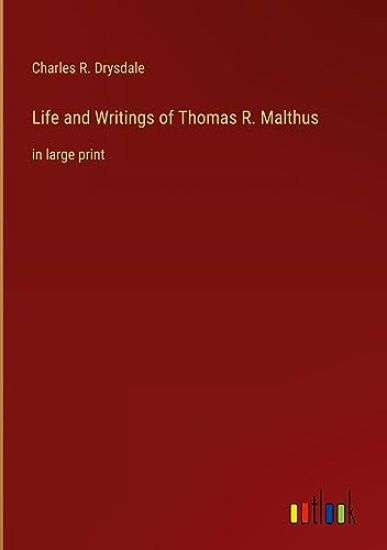

Reproduction of the original. The publishing house Megali specialises in reproducing historical works in large print to make reading easier for people with impaired vision.

Reproduction of the original. The publishing house Megali specialises in reproducing historical works in large print to make reading easier for people with impaired vision.

Life and Writings of Thomas R. Malthus, has been regarded as significant work throughout human history, and in order to ensure that this work is never lost, we have taken steps to ensure its preservation by republishing this book in a contemporary format for both current and future generations. This entire book has been retyped, redesigned, and reformatted. Since these books are not made from scanned copies, the text is readable and clear.

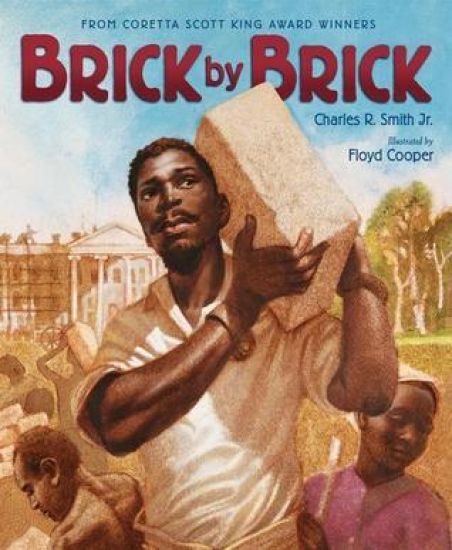
The compelling true story behind the building of the White House, a powerful part of history rarely taught. From Coretta Scott King Award winners Charles R. Smith Jr. and Floyd Cooper.The home of the United States president was built by many hands, including those of slaves, who undertook this amazing achievement long before there were machines to do those same jobs. Stirring and emotional, Floyd Cooper's stunning illustrations bring to life the faces of those who endured hard, brutal work when the profit of their labor was paid to the master, not the slave. The fact that many were able to purchase their freedom after earning money from learning a trade speaks to the strength of those individuals. They created this iconic emblem of America, brick by brick.Includes an insightful author's note and a list of selected resources.
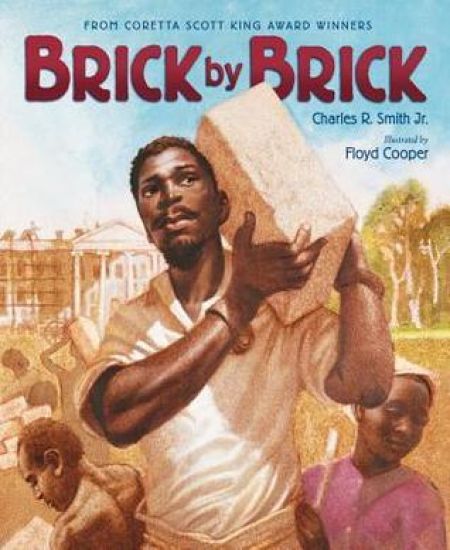
The compelling true story behind the building of the White House, a powerful part of history rarely taught. From Coretta Scott King Award winners Charles R. Smith Jr. and Floyd Cooper.The home of the United States president was built by many hands, including those of slaves, who undertook this amazing achievement long before there were machines to do those same jobs. Stirring and emotional, Floyd Cooper's stunning illustrations bring to life the faces of those who endured hard, brutal work when the profit of their labor was paid to the master, not the slave. The fact that many were able to purchase their freedom after earning money from learning a trade speaks to the strength of those individuals. They created this iconic emblem of America, brick by brick.Includes an insightful author's note and a list of selected resources.
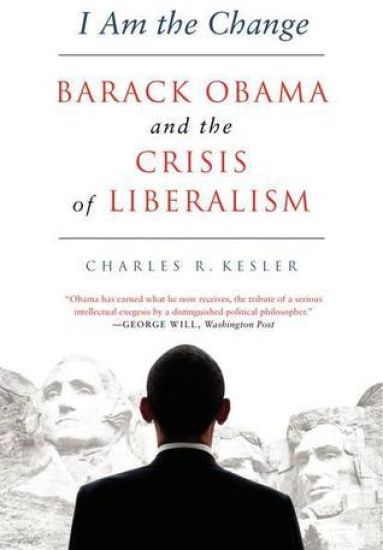
Is Barack Obama the last liberal president? In I Am the Change, Charles Kesler, a leading conservative scholar, educator, and journalist, offers a sophisticated analysis of the president's political thought, based on Obama's own words and writings, to demonstrate that he represents either a new birth of liberalism...or its demise. Kesler's writing is a potent mixture of philosophy, journalism, psychology, and history--seasoned with a delightful, razor-sharp wit--as he takes a greatly underestimated chief executive seriously and explores American liberalism in crisis.

Groundwater Science, Third Edition covers physical and chemical aspects of groundwater science, with emphasis on applications in the hydrologic cycle and in water supply, including contamination, mining, and construction issues. This interdisciplinary text weaves important methods and applications from the disciplines of physics, chemistry, mathematics, geology, biology, and environmental science, introducing the mathematical modeling of groundwater flow and contaminant transport. This fully updated edition includes all new case studies, expanded ancillary materials (including software), and expanded problems. The book is a valuable resource for students and instructors in the geosciences, environmental sciences, and civil engineering with a focus on hydrology and hydrogeology.

The Syrian Jihad: Al-Qaeda, the Islamic State and the Evolution of an Insurgency
Charles R. Lister
Oxford University Press
2016
nidottu
The eruption of the anti-Assad revolution in Syria has had many unintended consequences, among which is the opportunity it offered Sunni jihadists to establish a foothold in the heart of the Middle East. That Syria's ongoing civil war is so brutal and protracted has only compounded the situation, as have developments in Iraq and Lebanon. Ranging across the battlefields and international borders have been dozens of jihadi Islamist fighting groups, of which some coalesced into significant factions such as Jabhat al Nusra and the Islamic State. This book assesses and explains the emergence since 2011 of Sunni jihadist organizations in Syria's fledgling insurgency, charts their evolution and situates them within the global Islamist project. Unprecedented numbers of foreign fighters have joined such groups, who will almost certainly continue to host them. Thus, external factors in their emergence are scrutinized, including the strategic and tactical lessons learned from other jihadist conflict zones and the complex interplay between Al-Qaeda and the Islamic State and how it has influenced the jihadist sphere in Syria. Tensions between and conflict within such groups also feature in this indispensable volume.

Wall Street is an unending source of legend-and nightmares. It is a universal symbol of both the highest aspirations of economic prosperity and the basest impulses of greed and deception. Charles R. Geisst's Wall Street is at a chronicle of the street itself-from the days when the wall was merely a defensive barricade built by Peter Stuyvesant to the latest highs and lows. It is also an engaging economic history of the United States, a tale of profits and losses, enterprising spirits, and key figures that transformed America into the most powerful economy in the world. The book traces many themes, like the move of industry and business westward in the early 19th century, the rise of the great Robber Barons, and the growth of industry from the securities market's innovative financing of railroads, major steel companies, and Bell's and Edison's technical innovations. And because "The Street" has always been a breeding ground for outlandish characters with brazen nerve, no history of the stock market would be complete without a look at the conniving of ruthless wheeler-dealers and lesser known but influential rogues. This updated edition covers the slow recovery following the lowest points of the Great Recession and the tensions of regulation. Geisst illustrates the cyclical nature of Wall Street as recent crises are strikingly reminiscent of past economic failings. As Wall Street and America have changed irrevocably after the crisis, Charles R. Geisst offers the definitive chronicle of the relationship between the two, and the challenges and successes it has fostered that have shaped our history.
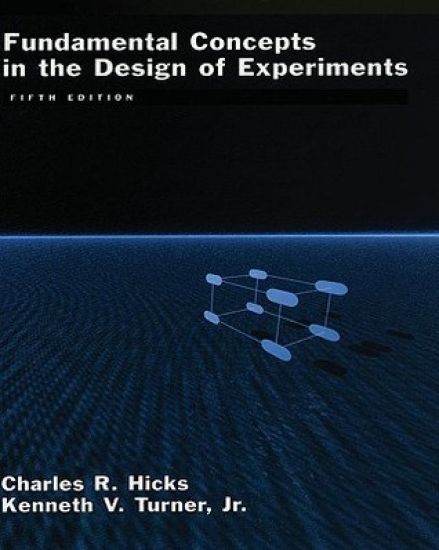
Fundamental Concepts in the Design of Experiments
Charles R. Hicks; Kenneth V. Turner
Oxford University Press Inc
1999
sidottu
This text is a solid revision and redesign of Charles Hicks's comprehensive fourth edition of Fundamental Concepts in the Design of Experiments. It covers the essentials of experimental design used by applied researchers in solving problems in the field. It is appropriate for a variety of experimental methods courses found in engineering and statistics departments. Students learn to use applied statistics for planning, running, and analysing an experiment. The text includes 350+ problems taken from the author's actual industrial consulting experiences to give students valuable practice with real data and problem solving. About 60 new problems have been added for this edition. SAS (Statistical Analysis System) computer programs are incorporated to facilitate analysis. There is extensive coverage of the analysis of residuals, the concepts of resolution in fractional replications, the Plackett-Burman designs, and Taguchi techniques. The new edition will place a greater emphasis on computer use, include additional problems, and add computer outputs from statistical packages like Minitab, SPSS, and JMP. The book is written for anyone engaged in experimental work who has a good background in statistical inference. It will be most profitable reading to those with a background in statistical methods including analysis of variance. This text is suitable for senior undergraduate/graduate level students in mathematics, statistics, or engineering. It is appropriate for a variety of experimental methods courses found in engineering and statistics deparmtents -- majors in this course are usually in applied statistics; non-majors, in industrial and electrical engineering, or education and life sciences.

Social Deviance and Crime
Charles R. Tittle; Raymond Paternoster
Oxford University Press Inc
2000
sidottu
Social Deviance and Crime unites two topics that are usually separated: the study of social deviance and the study of criminal behavior. Traditionally, the study of deviance introduces students to various types of deviance, giving the impression that these are distinct acts requiring equally distinct and unique explanations. The study of crime has followed virtually the same path. Criminology textbooks usually describe a series of criminal acts, one at a time, fostering the impression that these acts have only one thing in common--they are all violations of the criminal law. As a result, treatment of deviance and crime in most texts has proceeded along two different and parallel tracts, with little or no convergence. In Social Deviance and Crime, Tittle and Paternoster contend that acts of social deviance and criminality share important conceptual ground: both are types of behaviors that are socially disapproved, and specific acts differ mainly in the degree to which they are disapproved. The authors argue that social disapproval is an important characteristic that links apparently diverse behaviors (religious and sexual deviance, organized crime, youth gangs, drug use, serial murder, etc.). This book differs significantly from other texts in the way it bridges deviance and crime within a single conceptual and explanatory framework. Social Deviance and Crime's approach is also unique. Texts in criminology and deviance often adopt either an "interactionist/constructionist" or a "substantive" perspective. This book treats deviance as an integrated concept, differentiated chiefly by how well deviant/criminal enterprises are organized. The authors describe and analyze different types of deviant/criminal acts according to an ascending scale created by combining nine different features of organization. The text then explores theories and explanations about how deviance takes place, how it develops, and why it is maintained. Also included is a discussion of variations in the distribution/rate of deviant acts within society, and how theory can and cannot account for these known variations. Tittle and Paternoster interweave conceptual and empirical material together, giving students an opportunity to understand the impact of theory on research. Every chapter features Deviance in Everyday Life boxes. Here, the authors provide vivid, real-world examples of deviance, deviance organization, and attempts by society to "do something about" deviance.

Many scholars of American government believe representative democracy is failing more systematically than even the recent spectacle of political extremism suggests. Unprecedented levels of elite polarization, severe partisan gerrymandering, weakened party institutions, easing of restrictions on campaign finance, and other forces-all in the context of rising levels of economic inequality-produce dysfunction that subverts healthy political competition. A gridlocked U.S. Congress offers few solutions to broadly recognized public problems. Legislation favors the interests of elites when they conflict with those of the majority. In his 2022 Berkeley Tanner Lectures, Charles Beitz examines the narrative of dysfunction by reading the literature of political science as democratic theory. The narrative raises two questions. First, are symptoms documented by political scientists really failures? What norms of democratic representation do they infringe? This is a problem of diagnosis. Second, what would successful democratic representation look like? This is a problem of prescription. Beitz's book explores both. The literatures of political scientists, constitutional lawyers, and democratic theorists on norms of democratic representation tend to cross too seldom. They do not agree about the meaning of fair and effective representation. One might look to democratic theory for insight, but for the most part it has been too remote from political practice to illuminate the problems of America's recent institutional history. Beitz's lectures bring the theory of democratic representation into closer contact with its troubled American practice. Emphasizing the constructive role that competition can play in democratic politics, they aim to articulate systemic norms for fair and effective democratic representation through critical engagement with the findings of scholars who have studied it in the wild. The volume includes commentaries by a political scientist, Martin Gilens; a constitutional lawyer, Pamela S. Karlan; and a political theorist, Jane Mansbridge. Their commentaries elaborate themes in the lectures and pose critical questions. Charles Beitz responds in a concluding comment.

The Biology of Coral Reefs
Charles R.C. Sheppard; Simone Davy; Graham M. Pilling; Nicholas Graham
Oxford University Press
2017
sidottu
Coral reefs represent the most spectacular and diverse marine ecosystem on the planet as well as a critical source of income for millions of people. However, the combined effects of human activity have led to a rapid decline in the health of reefs worldwide, with many now facing complete destruction. Their world-wide deterioration and over-exploitation has continued and even accelerated in many areas since the publication of the first edition in 2009. At the same time, there has been a near doubling in the number of scientific papers that have been written in this short time about coral reef biology and the ability to acclimate to ocean warming and acidification. This new edition has been thoroughly revised and updated, incorporating the significant increase in knowledge gained over the last decade whilst retaining the book's focus as a concise and affordable overview of the field. The Biology of Coral Reefs provides an integrated overview of the function, physiology, ecology, and behaviour of coral reef organisms. Each chapter is enriched with a selection of 'boxes' on specific aspects written by internationally recognised experts. As with other books in the Biology of Habitats Series, the emphasis in this book is on the organisms that dominate this marine environment although pollution, conservation, climate change, and experimental aspects are also included. Indeed, particular emphasis is placed on conservation and management due to the habitat's critically endangered status. A global range of examples is employed which gives the book international relevance.

The Biology of Coral Reefs
Charles R.C. Sheppard; Simone Davy; Graham M. Pilling; Nicholas Graham
Oxford University Press
2017
nidottu
Coral reefs represent the most spectacular and diverse marine ecosystem on the planet as well as a critical source of income for millions of people. However, the combined effects of human activity have led to a rapid decline in the health of reefs worldwide, with many now facing complete destruction. Their world-wide deterioration and over-exploitation has continued and even accelerated in many areas since the publication of the first edition in 2009. At the same time, there has been a near doubling in the number of scientific papers that have been written in this short time about coral reef biology and the ability to acclimate to ocean warming and acidification. This new edition has been thoroughly revised and updated, incorporating the significant increase in knowledge gained over the last decade whilst retaining the book's focus as a concise and affordable overview of the field. The Biology of Coral Reefs provides an integrated overview of the function, physiology, ecology, and behaviour of coral reef organisms. Each chapter is enriched with a selection of 'boxes' on specific aspects written by internationally recognised experts. As with other books in the Biology of Habitats Series, the emphasis in this book is on the organisms that dominate this marine environment although pollution, conservation, climate change, and experimental aspects are also included. Indeed, particular emphasis is placed on conservation and management due to the habitat's critically endangered status. A global range of examples is employed which gives the book international relevance.

Charles Ortloff provides a new perspective on archaeological studies of the urban and agricultural water supply and distribution systems of the major ancient civilizations of South America, the Middle East, and South-East Asia, by using modern computer analysis methods to extract the true hydraulic/hydrological knowledge base available to these peoples. His many new revelations about the capabilities and innovations of ancient water engineers force us to re-evaluate what was known and practised in the hydraulic sciences in ancient times. Given our current concerns about global warming and its effect on economic stability, it is fascinating to observe how some ancient civilizations successfully coped with major climate change events by devising defensive agricultural survival strategies, while others, which did not innovate, failed to survive.

The international doctrine of human rights is one of the most ambitious parts of the settlement of World War II. Since then, the language of human rights has become the common language of social criticism in global political life. This book is a theoretical examination of the central idea of that language, the idea of a human right. In contrast to more conventional philosophical studies, the author takes a practical approach, looking at the history and political practice of human rights for guidance in understanding the central idea. The author presents a model of human rights as matters of international concern, whose violation by governments can justify international protective and restorative action ranging from intervention to assistance. He proposes a schema for justifying human rights and applies it to several controversial cases-rights against poverty, rights to democracy, and the human rights of women. Throughout, the book attends to some main reasons why people are sceptical about human rights, including the fear that human rights will be used by strong powers to advance their national interests. The book concludes by observing that contemporary human rights practice is vulnerable to several pathologies and argues the need for international collaboration to avoid them.