Kirjojen hintavertailu. Mukana 11 244 527 kirjaa ja 12 kauppaa.

Kirjahaku

Etsi kirjoja tekijän nimen, kirjan nimen tai ISBN:n perusteella.

747 tulosta hakusanalla Cherokee Hatcher

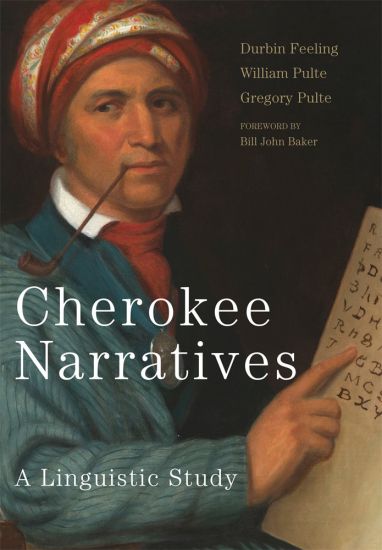
Cherokee Narratives

Cherokee Narratives

Durbin Feeling; William Pulte; Gregory Pulte; Bill John Baker

University of Oklahoma Press
2018
sidottu
The stories of the Cherokee people presented here capture in written form tales of history, myth, and legend for readers, speakers, and scholars of the Cherokee language. Assembled by noted authorities on Cherokee, this volume marks an unparalleled contribution to the linguistic analysis, understanding, and preservation of Cherokee language and culture.Cherokee Narratives spans the spectrum of genres, including humor, religion, origin myths, trickster tales, historical accounts, and stories about the Eastern Cherokee language. These stories capture the voices of tribal elders and form a living record of the Cherokee Nation and Eastern Band of Cherokee Indians' oral tradition. Each narrative appears in four different formats: the first is interlinear, with each line shown in the Cherokee syllabary, a corresponding roman orthography, and a free English translation; the second format consists of a morpheme-by-morpheme analysis of each word; and the third and fourth formats present the entire narrative in the Cherokee syllabary and in a free English translation. The narratives and their linguistic analysis are a rich source of information for those who wish to deepen their knowledge of the Cherokee syllabary, as well as for students of Cherokee history and culture. By enabling readers at all skill levels to use and reconstruct the Cherokee language, this collection of tales will sustain the life and promote the survival of Cherokee for generations to come.
Cherokee Narratives

Cherokee Narratives

Durbin Feeling; William Pulte; Gregory Pulte; Bill John Baker

University of Oklahoma Press
2019
nidottu
The stories of the Cherokee people presented here capture in written form tales of history, myth, and legend for readers, speakers, and scholars of the Cherokee language. Assembled by noted authorities on Cherokee, this volume marks an unparalleled contribution to the linguistic analysis, understanding, and preservation of Cherokee language and culture.Cherokee Narratives spans the spectrum of genres, including humor, religion, origin myths, trickster tales, historical accounts, and stories about the Eastern Cherokee language. These stories capture the voices of tribal elders and form a living record of the Cherokee Nation and Eastern Band of Cherokee Indians' oral tradition. Each narrative appears in four different formats: the first is interlinear, with each line shown in the Cherokee syllabary, a corresponding roman orthography, and a free English translation; the second format consists of a morpheme-by-morpheme analysis of each word; and the third and fourth formats present the entire narrative in the Cherokee syllabary and in a free English translation. The narratives and their linguistic analysis are a rich source of information for those who wish to deepen their knowledge of the Cherokee syllabary, as well as for students of Cherokee history and culture. By enabling readers at all skill levels to use and reconstruct the Cherokee language, this collection of tales will sustain the life and promote the survival of Cherokee for generations to come.
Cherokee Medicine, Colonial Germs

Cherokee Medicine, Colonial Germs

Paul Kelton

University of Oklahoma Press
2018
nidottu
How smallpox, or Variola, caused widespread devastation during the European colonization of the Americas is a well-known story. But as historian Paul Kelton informs us, that's precisely what it is: a convenient story. In Cherokee Medicine, Colonial Germs Kelton challenges the ""virgin soil thesis,"" or the widely held belief that Natives' lack of immunities and their inept healers were responsible for their downfall. Eschewing the metaphors and hyperbole routinely associated with the impact of smallpox, he firmly shifts the focus to the root cause of indigenous suffering and depopulation - colonialism writ large; not disease. Kelton's account begins with the long, false dawn between 1518 and the mid-seventeenth century, when sporadic encounters with Europeans did little to bring Cherokees into the wider circulation of guns, goods, and germs that had begun to transform Native worlds. By the 1690s English-inspired slave raids had triggered a massive smallpox epidemic that struck the Cherokees for the first time. Through the eighteenth century, Cherokees repeatedly responded to real and threatened epidemics - and they did so effectively by drawing on their own medicine. Yet they also faced terribly destructive physical violence from the British during the Anglo-Cherokee War (1759-1761) and from American militias during the Revolutionary War. Having suffered much more from the scourge of war than from smallpox, the Cherokee population rebounded during the nineteenth century and, without abandoning Native medical practices and beliefs, Cherokees took part in the nascent global effort to eradicate Variola by embracing vaccination. A far more complex and nuanced history of Variola among American Indians emerges from these pages, one that privileges the lived experiences of the Cherokees over the story of their supposedly ill-equipped immune systems and counterproductive responses. Cherokee Medicine, Colonial Germs shows us how Europeans and their American descendants have obscured the past with the stories they left behind, and how these stories have perpetuated a simplistic understanding of colonialism.
Cherokee Civil Warrior

Cherokee Civil Warrior

W. Dale Weeks

UNIVERSITY OF OKLAHOMA PRESS
2023
sidottu
For the Cherokee Nation, the Civil War was more than a contest between the Union and the Confederacy. It was yet another battle in the larger struggle against multiple white governments for land and tribal sovereignty. Cherokee Civil Warrior tells the story of Chief John Ross as he led the tribe in this struggle. The son of a Scottish father and mixed-blood Indian mother, John Ross served the Cherokee Nation in a public capacity for nearly fifty years, thirty-eight as its constitutionally elected principal chief. Historian W. Dale Weeks describes Ross’s efforts to protect the tribe’s interests amid systematic attacks on indigenous culture throughout the nineteenth century, from the forced removal policies of the 1830s to the exigencies of the Civil War era. At the outset of the Civil War, Ross called for all Cherokees, slaveholding and nonslaveholding, to remain neutral in a war they did not support—a position that became untenable when the United States withdrew its forces from Indian Territory. The vacated forts were quickly occupied by Confederate troops, who pressured the Cherokees to align with the South. Viewed from the Cherokee perspective, as Weeks does in this book, these events can be seen in their proper context, as part of the history of U.S. “Indian policy,” failed foreign relations, and the Anglo-American conquest of the American West. This approach also clarifies President Abraham Lincoln’s acknowledgment of the federal government’s abrogation of its treaty obligation and his commitment to restoring political relations with the Cherokees—a commitment abruptly ended when his successor Andrew Johnson instead sought to punish the Cherokees for their perceived disloyalty. Centering a Native point of view, this book recasts and expands what we know about John Ross, the Cherokee Nation, its commitment to maintaining its sovereignty, and the Civil War era in Indian Territory. Weeks also provides historical context for later developments, from the events of Little Bighorn and Wounded Knee to the struggle over tribal citizenship between the Cherokees and the descendants of their former slaves.
Cherokee Power Volume 22

Cherokee Power Volume 22

Kristofer Ray

UNIVERSITY OF OKLAHOMA PRESS
2023
sidottu
In 1754 South Carolina governor James Glen observed that the Tennessee River “has its rise in the Cherokee Nation and runs a great way through it.” While noting the “prodigious” extent of the corridor connecting the Tennessee, Ohio, and Wabash River valleys—and the Cherokees’ “undoubted” ownership of this watershed—Glen and other European observers were much less clear about the ambitions and claims of European empires and other Indigenous polities regarding the North American interior. In Cherokee Power, Kristofer Ray brings long-overdue clarity to this question by highlighting the role of the Overhill Cherokees in shaping imperial and Indigenous geopolitics in seventeenth- and eighteenth-century America. As Great Britain and France eyed the Illinois country and the Tennessee, Ohio, and Wabash River valleys for their respective empires, the Overhill Cherokees were coalescing and maintaining a conspicuous presence throughout the territory. Contrary to the traditional narrative of westward expansion, the Europeans were not the drivers behind the ensuing contest over the Tennessee corridor. The Overhills traded, negotiated, and fought with other Indigenous peoples along this corridor, in the process setting parameters for European expansion. Through the eighteenth century, the British and French struggled to overcome a dissonance between their visions of empire and the reality of Overhill mobility and sovereignty—a struggle that came to play a crucial role in the Anglo-American revolutionary debate that dominated the 1760s and 1770s. By emphasizing Indigenous agency in this rapidly changing world, Cherokee Power challenges long-standing ideas about the power and reach of European empires in eighteenth-century North America.
Cherokee Power Volume 22

Cherokee Power Volume 22

Kristofer Ray

UNIVERSITY OF OKLAHOMA PRESS
2023
nidottu
In 1754 South Carolina governor James Glen observed that the Tennessee River “has its rise in the Cherokee Nation and runs a great way through it.” While noting the “prodigious” extent of the corridor connecting the Tennessee, Ohio, and Wabash River valleys—and the Cherokees’ “undoubted” ownership of this watershed—Glen and other European observers were much less clear about the ambitions and claims of European empires and other Indigenous polities regarding the North American interior. In Cherokee Power, Kristofer Ray brings long-overdue clarity to this question by highlighting the role of the Overhill Cherokees in shaping imperial and Indigenous geopolitics in seventeenth- and eighteenth-century America. As Great Britain and France eyed the Illinois country and the Tennessee, Ohio, and Wabash River valleys for their respective empires, the Overhill Cherokees were coalescing and maintaining a conspicuous presence throughout the territory. Contrary to the traditional narrative of westward expansion, the Europeans were not the drivers behind the ensuing contest over the Tennessee corridor. The Overhills traded, negotiated, and fought with other Indigenous peoples along this corridor, in the process setting parameters for European expansion. Through the eighteenth century, the British and French struggled to overcome a dissonance between their visions of empire and the reality of Overhill mobility and sovereignty—a struggle that came to play a crucial role in the Anglo-American revolutionary debate that dominated the 1760s and 1770s. By emphasizing Indigenous agency in this rapidly changing world, Cherokee Power challenges long-standing ideas about the power and reach of European empires in eighteenth-century North America.
Cherokee Nation Citizenship

Cherokee Nation Citizenship

Aaron Kushner

UNIVERSITY OF OKLAHOMA PRESS
2025
sidottu
For the Cherokee Nation of Oklahoma, citizenship is an active way of life. In this, Aaron Kushner contends, it differs from the general American understanding of citizenship as a statement. Cherokee Nation Citizenship is Kushner’s exploration of legal citizenship in the Cherokee Nation, how the law has developed and changed over time, and what lessons this living idea and its history hold for Americans, Native and non-Native alike. The first political history of Cherokee Nation citizenship laws, Kushner’s book challenges American presumptions about Indigenous politics and historical development, even as it encourages a rethinking of what citizenship is and does. The Cherokee Nation’s understanding of citizenship is complex, encompassing legal entitlements and privileges but also notions of identity, belonging, and cultural practice. Kushner traces the evolution of this concept from 1710 to the birth of the Cherokee Republic with its first constitution in the early 1800s through the 2017 federal court decision that required the Cherokee Nation to extend full citizenship benefits to African American Freedmen. His account documents major shifts in the Cherokee Nation’s articulation of citizenship—changes introduced by the 1866 treaty that followed the Civil War, the allotment era of the late 1800s and early 1900s, and the Nation’s new constitution in the 1970s. The idea of Gadugi, which translates as “coordinated work for the common good,” is a foundational thread running through this history—an element that has helped the Cherokee Nation sustain itself, Kushner suggests, and that embodies a sense of responsibility and resilience that non-Native Americans can learn from.
Cherokee Civil Warrior

Cherokee Civil Warrior

W. Dale Weeks

UNIVERSITY OF OKLAHOMA PRESS
2024
nidottu
For the Cherokee Nation, the Civil War was more than a contest between the Union and the Confederacy. It was yet another battle in the larger struggle against multiple white governments for land and tribal sovereignty. Cherokee Civil Warrior tells the story of Chief John Ross as he led the tribe in this struggle. The son of a Scottish father and mixed-blood Indian mother, John Ross served the Cherokee Nation in a public capacity for nearly fifty years, thirty-eight as its constitutionally elected principal chief. Historian W. Dale Weeks describes Ross’s efforts to protect the tribe’s interests amid systematic attacks on indigenous culture throughout the nineteenth century, from the forced removal policies of the 1830s to the exigencies of the Civil War era. At the outset of the Civil War, Ross called for all Cherokees, slaveholding and nonslaveholding, to remain neutral in a war they did not support—a position that became untenable when the United States withdrew its forces from Indian Territory. The vacated forts were quickly occupied by Confederate troops, who pressured the Cherokees to align with the South. Viewed from the Cherokee perspective, as Weeks does in this book, these events can be seen in their proper context, as part of the history of U.S. “Indian policy,” failed foreign relations, and the Anglo-American conquest of the American West. This approach also clarifies President Abraham Lincoln’s acknowledgment of the federal government’s abrogation of its treaty obligation and his commitment to restoring political relations with the Cherokees—a commitment abruptly ended when his successor Andrew Johnson instead sought to punish the Cherokees for their perceived disloyalty. Centering a Native point of view, this book recasts and expands what we know about John Ross, the Cherokee Nation, its commitment to maintaining its sovereignty, and the Civil War era in Indian Territory. Weeks also provides historical context for later developments, from the events of Little Bighorn and Wounded Knee to the struggle over tribal citizenship between the Cherokees and the descendants of their former slaves.
Cherokee Land Lottery, Containing a Numerical List of the Names of the Fortunate Drawers in Said Lottery, with an Engraved Map of Each District
The upwards of 20,000 persons listed in this work were fortunate drawers in the 1832 (sixth and last) Land Lottery held in the original Cherokee County, Georgia. Cherokee County would ultimately become the parent county for all or part of twenty-five contemporary Georgia counties. In many instances, the basis for qualification is given in abbreviated form after the drawer's name. Veterans of the Revolutionary War and their widows and orphans, as well as veterans and their widows and orphans of the War of 1812, are indicated.
Cherokee Heritage Trails Guidebook

Cherokee Heritage Trails Guidebook

Riggs Brett H.

The University of North Carolina Press
2003
nidottu
A guidebook to the homeland of the Eastern Band of Cherokee Indians living in North Carolina, Georgia, and Tennessee offers information on Cherokee culture, history, and sacred places as well as scenic drives and featured sites.
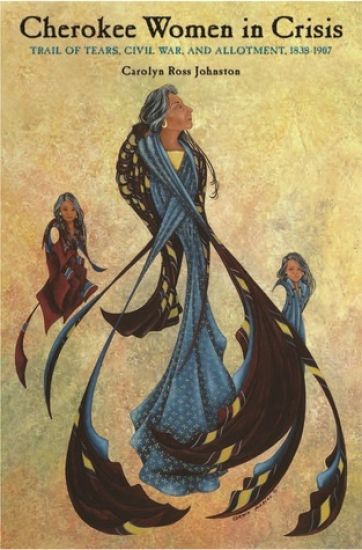
Cherokee Women in Crisis

Cherokee Women in Crisis

The University of Alabama Press
2003
sidottu
In this study centering on the Cherokee Nation, we learn that three key historical events in the 19th and early 20th centuries - removal, the Civil War and allotment of their lands - forced a radical renegotiation of gender roles and relations in Cherokee society.
Cherokee Women in Crisis

Cherokee Women in Crisis

The University of Alabama Press
2003
nidottu
In this study centering on the Cherokee Nation, we learn that three key historical events in the 19th and early 20th centuries - removal, the Civil War and allotment of their lands - forced a radical renegotiation of gender roles and relations in Cherokee society.
Cherokee Removal

Cherokee Removal

University of Georgia Press
1992
pokkari
In the hope of avoiding removal from their much coveted homelands in the Southeast, the Cherokees began to adopt broad aspects of Anglo-American culture in the early nineteenth century. Despite their general acquiescence to government policies and their efforts to fulfill the expectations of white philanthropists, the Cherokees ultimately fared worse than less acculturated native peoples in similar circumstances. In 1838 Cherokees in Georgia, Tennessee, and North Carolina were forced at gunpoint to leave their homes, farms, schools, and churches. Their demoralizing journey to a reservation in the Oklahoma Territory—during which thousands died or were killed—came to be known as the Trail of Tears.The first interdisciplinary survey of Cherokee removal, this volume brings together essays by eight prominent scholars (including three of Cherokee descent) in the fields of history, geography, sociology, and law. They address such topics as Cherokee politics, class structure, and land-use patterns before the removal; Andrew Jackson's Indian policies; Cherokee population losses; the effects of removal on the few Cherokees allowed to remain in North Carolina; and the Cherokees' immediate and long-term problems following their relocation.The most current general work on the causes and effects of the Cherokee removal, this volume is certain to stimulate the continuing debate on United States Indian policy and to encourage further study.
Cherokee Editor

Cherokee Editor

University of Georgia Press
1996
pokkari
This volume collects most of the writings published by the accomplished Cherokee leader Elias Boudinot (1804?-1839). Founding editor of the Cherokee Phoenix, Boudinot is the most ambiguous and puzzling figure in Cherokee history. Although he first struggled against the removal of his people from their native Southeast, Boudinot later reversed his position and signed the Treaty of New Echota, an action that cost him his life.Together with Theda Perdue's biographical introduction and in-depth annotations, these letters, articles, pamphlets, and editorials document the stages of Boudinot's religious, philosophical, and political growth, from his early optimism that the Cherokees could completely assimilate into white society to his call for a separate nation of "civilized" Cherokees.
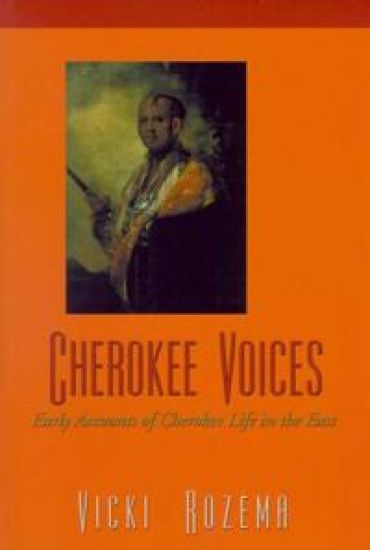
Cherokee Voices

Cherokee Voices

Vicki Rozema

John F Blair Publisher
2002
pokkari
From the time they established formal ties with Great Britain in 1730, the Cherokees had a rocky relationship with white settlers. They found grounds for dispute over trade practices, territorial control, and the complicated loyalties among the various Indian tribes and European powers. Over the years, the Cherokees struggled to maintain their ancient traditions as the tribe was assimilated into the white man’s culture. Cherokee Voices uses the participants’ own words to tell the story of early Cherokee life. The selections were gathered from journals, treaty records, and correspondence written by Cherokees or by Europeans or Americans who knew them. The excerpts begin with the 1730 visit of Alexander Cuming, who appointed an “emperor” for the Cherokees. Touching on matters as varied as the Cherokees’ oral tradition, their village life, their ball games, their treaties with white settlers, their famous Cherokee Phoenix newspaper, and their education in Christian mission schools, the chapters take readers from when the Cherokees were dependent on European trade to when they became self-sufficient farmers and tradesmen. Unlike most books about the Cherokees, written in the third person by authors who lived years after the events, this one recognizes that no one can speak more eloquently of their lives, trials, and customs than the people themselves. Vicki Rozema is the author of Footsteps of the Cherokees: A Guide to the Eastern Homelands of the Cherokee Nation and Voices from the Trail of Tears. The first edition of Footsteps of the Cherokees received an Award of Merit from the Tennessee Historical Commission in 1996. Also an acclaimed photographer, she is a history professor at the University of Tennessee.
Cherokee Recipes, Cooking Tips & Lore
This cookbook is the first in a series to be published, one for each of the Five Civilized Tribes, the Cherokee Nation, the Creek Muskogee Nation, the Choctaw Nation, the Chickasaw Nation and the Seminole Nation. This publication would like to thank the Five Civilized Tribes Museum in Muskogee, OK for their assistance with this book and will recommend each reader to visit the Museum for an interesting tour of Native American Culture