Kirjojen hintavertailu. Mukana 12 390 323 kirjaa ja 12 kauppaa.

Kirjahaku

Etsi kirjoja tekijän nimen, kirjan nimen tai ISBN:n perusteella.

1000 tulosta hakusanalla Christa Muths

Nachdenken über Christa T

Nachdenken über Christa T

Christa Wolf

SUHRKAMP VERLAG
2007
pokkari
Nachdenken über Christa T. begründete den Weltruhm Christa Wolfs und gehört zu den wichtigsten Werken der deutschsprachigen Nachkriegsliteratur. Mit nur 36 Jahren stirbt Christa T. an Leukämie. Ihre ehemalige Schulkameradin und Studienfreundin erinnert sich an sie: an eine Frau, die der Forderung nach Anpassung ihre Phantasie, ihr Gewissen und vor allem ihre Sehnsucht nach Selbstverwirklichung entgegensetzt.
Christa Wolf Und Sowjetrußland 1945-1991

Christa Wolf Und Sowjetrußland 1945-1991

Tanja Walenski

Peter Lang AG
1999
nidottu
Die Publikation untersucht zwei weithin unerforschte Aspekte der Biographie und des Werkes der Schriftstellerin Christa Wolf: Zum einen ihr Bild von der Sowjetunion von Stalin bis Gorbacev, das sie sich auf Reisen und in Bekanntschaften mit Russen gemacht hat, zum anderen die Rezeption ihres Werkes in der UdSSR im gleichen Zeitraum. Beide Aspekte werden in ihrer Entwicklung und Wandlung nachgezeichnet. Die Studie fragt auch, welche Bedeutung russische und sowjetische Schriftsteller fur Wolfs Werk hatten, und verfolgt konkrete komparatistische Ansatze. Im Ergebnis wird hervorgehoben, dass die UdSSR fur die Autorin zeitlebens einen zentralen Bezugspunkt bildete. Der Anhang bietet erstmals ein umfangreiches chronologisches Verzeichnis der Schriften Wolfs in russischer Sprache sowie ein alphabetisches Verzeichnis der sowjetischen literaturkritischen Texte zu Christa Wolf."
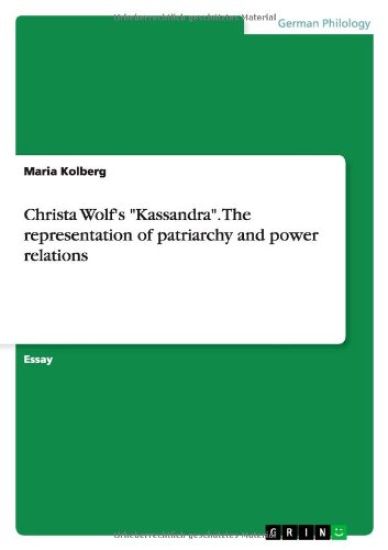
Christa Wolf's Kassandra. the Representation of Patriarchy and Power Relations
Essay from the year 2011 in the subject German Studies - Modern German Literature, grade: 1,5, University of Nottingham (School of Cultures, Languages and Area Studies), course: Recent Women's Writing, language: English, abstract: Cassandra - a modern woman in ancient times. The East-German writer Christa Wolf publishes the story about the Trojan king's daughter Cassandra, who is judged to be unseen although being blessed with the gift of prophecy in 1983. The story is told retrospectively by the dying Cassandra waiting in front of the "L wentor" for her execution in Agamemnon's castle. Throughout the story, one can figure out a re-creation process of herself and a development from a silent female object into a conscious subject. Similarly to Christa Wolf, who tried to achieve a certain self-understanding as a woman author while writing the narrative (Kuhn, p. 186). In addition, there are some suppositions that Wolf criticises in Cassandra the political structure of the former GDR. Even the characters represent political entities. Priam, in that sense, stands for the social state, Hecuba for the party and Eumelus for the State Security Service (Kuhn, p. 184). Furthermore, it is a "feminist critique of literature and society" (Kuhn, p. 178) and describes a radical social change from matriarchy to patriarchy on the basis of the ancient myth of Cassandra. For this purpose, Wolf uses the male figures partly to correct the exclusion of women in the ancient models by Aeschylus and Homer. In these dramas women were depicted as dependent objects. In Christa Wolf's famous Frankfurter Poetik-Vorlesung in 1982, she speaks about questions which might arise by the reader. More specifically, in A Letter, her fourth lecture on poetics, Wolf disapproves the constant exclusion of female writers in the history of literature and in society. Wolf declares in her essay that an essential characteristic of the origins of the Greek epic] is the] amalgamation of patriarchy, property,
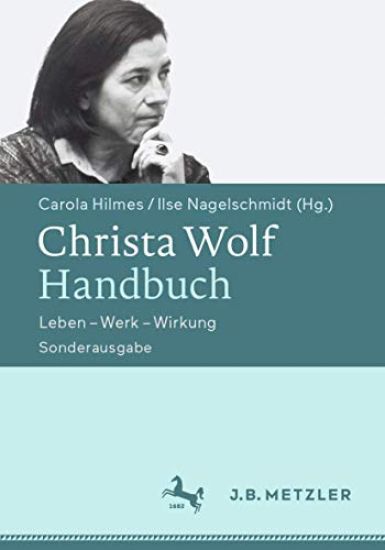
Christa Wolf-Handbuch

Christa Wolf-Handbuch

Springer-Verlag Berlin and Heidelberg GmbH Co. KG
2020
nidottu
Das Handbuch informiert über Leben, Werk und Wirkung von Christa Wolf (1929 2011), der engagierten Intellektuellen und wichtigsten gesamtdeutschen Autorin mit Werken wie „Der geteilte Himmel“, „Kindheitsmuster“, „Kassandra“ und „Medea“. Wolfs Entwicklung von der Literaturkritikerin, die bis in die Mitte der 1960er Jahren dem Sozialistischen Realismus anhing, zu einer Schriftstellerin der subjektiven Authentizität, die in ihren Texten ein dichtes Gewebe von Bezügen herstellt, wird anhand von detaillierten Werk- und Werkgruppenbeschreibungen deutlich. Auch die Essays, Vorträge, Reden, Interviews und Tagebücher sowie die Briefwechsel werden vorgestellt, außerdem die Kontexte von Wolfs Schaffen, die deutsch-deutsche und die internationale Rezeption.
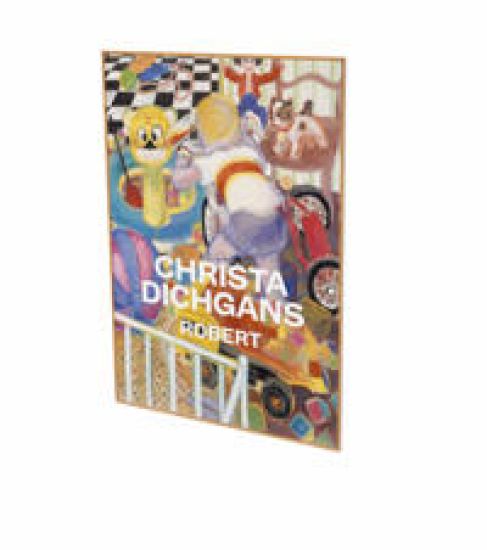
Christa Dichgans: Robert

Christa Dichgans: Robert

Christa Dichgans; Angela Stief

SNOECK VERLAGSGESELLSCHAFT MBH
2023
pokkari
Christa Dichgans lived in a male-dominated world: her first marriage to Karl Horst H dicke was followed 1972 by a marriage to the renowned Galerist Rudolf Springer in Berlin. She had friendship with Markus L pertz and A. R. Penck, and she assisted Georg Baselitz during his professorhip in the 1980s at Berlin's Academy of Fine Arts. The German painter princes, as they were later known, artists who over the course of their careers became important figures in Germany and taught figurative expression to the younger generation of the Junge Wilde (Youg Wild Ones), were indispensable dialogue partners for Christa Dichgans. The artist described her role at the time thusly: In the 1960s, no man felt threatened by me. Men thought I was pretty and spooky, but they didn't really take my art seriously. Her early works, which were long consigned to the shadows, already bore the germ of a pictorial formula that was to make the artist one of Germany's most important Pop art figures and in no way inferior to Capitalist Realists such as Sigmar Polke, Gerhad Richter, Konrad Lueg, and Manfred Kuttner.