Kirjojen hintavertailu. Mukana 11 627 463 kirjaa ja 12 kauppaa.

Kirjahaku

Etsi kirjoja tekijän nimen, kirjan nimen tai ISBN:n perusteella.

1000 tulosta hakusanalla Christian Rümelin

Christian Ethics

Christian Ethics

D. Stephen Long

Oxford University Press
2010
nidottu
This Very Short Introduction to Christian ethics introduces the topic by examining its sources and historical basis. D. Stephen Long presents a discussion of the relationship between Christian ethics, modern, and postmodern ethics, and explores practical issues including sex, money, and power. Long recognises the inherent difficulties in bringing together 'Christian' and 'ethics' but argues that this is an important task for both the Christian faith and for ethics. Arguing that Christian ethics are not a precise science, but the cultivation of practical wisdom from a range of sources, Long also discusses some of the failures of the Christian tradition, including the crusades, the conquest, slavery, inquistions, and the Galileo affair. Placing them in the context of the theory and practice of ethics and their historical persepctive, he notes the challenges they raise for Christian ethics. He concludes with a discussion of their implications in the modern era, considering how this affects our lives in the present age. ABOUT THE SERIES: The Very Short Introductions series from Oxford University Press contains hundreds of titles in almost every subject area. These pocket-sized books are the perfect way to get ahead in a new subject quickly. Our expert authors combine facts, analysis, perspective, new ideas, and enthusiasm to make interesting and challenging topics highly readable.
Christian Identity, Jews, and Israel in 17th-Century England
Christian Identity, Jews, and Israel in 17th-Century England is a cultural history of seventeenth-century England. It assesses the complexity and fluidity of Christian identity from the reign of Elizabeth I and the early Stuart kings through the English Revolution, and into the Restoration, when the English Church and monarchy were restored. Throughout this tumultuous period, which included debate about readmission of the Jews, England was preoccupied with Jews and Israel. As the Reformation sharpened national identity and prompted reconsideration of the relation of Christianity to Judaism, English people showed intense interest in Jewish history and Judaism and appropriated biblical Israel's history, looking to the narratives in the Hebrew Bible, even as reformed Christianity was thought to be purged of Jewish elements. There was an unstable, shifting mix of identification and opposition, affinity and distance, in English attitudes towards Jews - a mix that held positive possibilities for Jewish/Christian relations as well as negative. Grounded in archival research, this book analyzes writings ranging from those of Foxe and Hooker to Milton and Dryden, from sermons to lyrics, from church polemic to proposals for legal and economic reform. Literary texts discussed include Herrick's Hesperides, Vaughan's Silex Scintillans, Bunyan's Grace Abounding, Milton's major prose and poems, and Dryden's Annus Mirabilis and Absalom and Achitophel. Attention is also paid to publications associated with James I, Charles I, and Cromwell, and writings by and about such figures as William Prynne, Gerrard Winstanley, Margaret Fell, George Fox, Menasseh Ben Israel, and self-proclaimed prophets such as John Rogers, Abiezzer Coppe, and Anna Trapnel.
Christian Doctrine from the Bible to the Present
Christianity has always been a "creedal" religion in that it has always been theological. It was rooted in the theological tradition of ancient Israel, which was unifi ed by its historical credos and declaratory affi rmations of faith. No pre-theological era has been discovered in the New Testament or in the history of the Christian community. From the beginning Christianity has been theological, involving men in theological refl ection and calling them to declarations of faith. A non-theological Christianity has simply never endured, although such has been attempted, for instance, by individual seers in the sixteenth century and also by collaborators with totalitarian ideologies in the twentieth century.The creeds presented here range from the ancient faith of the Hebrews and the creed-like formulas of the New Testament to the Barmen declaration of 1934 (framed by the Christians in Germany who faced the threat of Nazism) and the Batak Creed of 1951 (in which Indonesian Christians gave authentic expression to their religious belief in the idiom of their own culture. All the creeds are in some sense "offi cial," and every major division of Christendom is represented, including the Younger Churches. The volume ends with the messages of the most important assemblies dealing with the Ecumenical Movement.This single volume, containing all the major theological affi rmations of the Christian community, is a source book for the study of Christian theology. It comprises a record of the Church's interpretation of the Bible in the past and an authoritative guide to its interpretation on the present. Indeed, it is a guide to an understanding of the Christian interpretation of life.
Christian Celebration:The Mass

Christian Celebration:The Mass

J.D. Crichton

Geoffrey Chapman
1992
nidottu
This text covers changes in the Mass since publication in 1971, including the 1985 reprint revisions (notably Eucharistic Prayers and Eucharistic Prayers from Masses with children). It also describes the rites of the Church in the context of their theological and historical background and in relation to pastoral practice. It is aimed at theology students, students on liturgy courses especially those following the syllabus for liturgical formation issued by the Liturgy Office and all those seeking a deeper understanding of the Mass.
Christian Socialism

Christian Socialism

Philip Turner

JAMES CLARKE CO LTD
2022
nidottu
Christian Socialism arose in England in the mid-nineteenth century as a response to the philosophy of 'political economy'. Seeking a reform of the moral underpinnings of society, not simply institutional change or nationalisation, it refuted the assumption that people are essentially selfish, competitive individuals seeking nothing but personal happiness. Although they did not deny the presence of selfishness, its proponents believed that the social nature of humankind lies deeper than such egotism and conflict, and pursued a society built on this belief. Less prominent now than at the time of its inception, Christian Socialism nevertheless continues into the twenty-first century, its goal nothing less than a new society built upon the virtues of equality, fellowship, cooperation, service and justice. Philip Turner's careful exposition traces the history of this strand of Anglican political thought and restores confidence in its message for the future.
Christian Gnosis

Christian Gnosis

Ferdinand Christian Baur; Roger Hodgson

JAMES CLARKE CO LTD
2023
nidottu
Ferdinand Christian Baur's Die Christliche Gnosis, first published in 1835, is considered by many to be the most important book on Gnosticism published in the nineteenth century and is a pivotal work within Baur's canon. Baur's unique thesis of a link between ancient and modern religious philosophy, as well as his conception of Gnosticism - developed through dialogues with his predecessors and contemporaries - consolidate Christian Gnosis as an important contribution to Christian theology. In this seminal work, written over a hundred years before the manuscript discovery at Nag Hammadi, Baur classifies the gnostic systems in terms of how they conceive the relationship of Christianity to Judaism and paganism, describing them in detail. He then goes on to describe the criticism of and reaction to gnosis in church history, before contending with the modern religious philosophy of his time, discussing Boehme, Schelling, Schleiermacher and Hegel. Christian Gnosis is Baur's first great religio-historical study, and Robert Brown's masterful translation ensures the work is as impactful today as it was on its first publication.
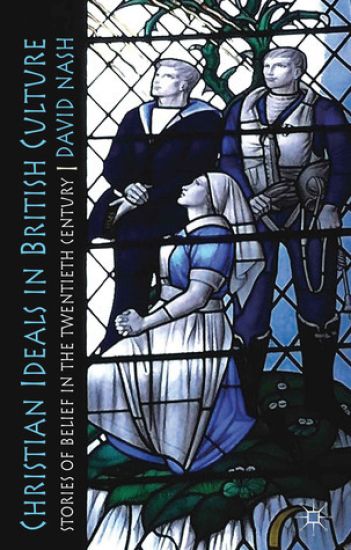
Christian Ideals in British Culture

Christian Ideals in British Culture

D. Nash

Palgrave Macmillan
2013
sidottu
This book offers a challenge to conventional histories of secularisation by focusing upon the importance of central religious narratives. These narratives are changed significantly over time, but also to have been invested with importance and meaning by religious individuals and organisations as well as by secular ones.
Christian Memories of the Maccabean Martyrs

Christian Memories of the Maccabean Martyrs

D. Joslyn-Siemiatkoski

Palgrave Macmillan
2009
sidottu
This book examines texts and materials, ranging from the eastern Mediterranean to northwestern Europe, related to the Maccabean martyrs. Joslyn-Siemiatkoski demonstrates that Christian thinkers constructed memories of the Maccabean martyrs that simultaneously appropriated Jewish traditions and obscured the Jewish origins of Christianity.
Christian Sorcerers on Trial

Christian Sorcerers on Trial

Columbia University Press
2020
sidottu
In 1829, three women and three men were paraded through Osaka and crucified. Placards set up at the execution ground proclaimed their crime: they were devotees of the “pernicious creed” of Christianity. Middle-aged widows, the women made a living as mediums, healers, and fortune-tellers. Two of the men dabbled in divination; the third was a doctor who collected books in Chinese on Western learning and Christianity.This was a startling development. No one in Japan had been identified and punished as a Christian for more than a century, and now, avowed devotees of the proscribed sect had appeared in the very heart of the realm. Just decades before the arrival of Perry’s black ships and the fall of the Tokugawa shogunate, the incident reignited fears of Christians as evil sorcerers, plotting to undermine society and overthrow the country.Christian Sorcerers on Trial offers annotated translations of a range of sources on this sensational event, from the 1827 arrest of the alleged Christians through the case’s afterlife. The protagonists’ testimonies relate with striking detail their life histories, practices, and motivations. The record of deliberations in Edo and communications between Osaka and Edo officials illuminate the operation of the Tokugawa system of criminal justice. Retellings of the incident show how the story was transmitted and received. Translated and put in context by Fumiko Miyazaki, Kate Wildman Nakai, and Mark Teeuwen, the sources provide students and scholars alike with an extraordinarily rich picture of late Edo social life, religious practices, and judicial procedures.
Christian Sorcerers on Trial

Christian Sorcerers on Trial

Columbia University Press
2020
pokkari
In 1829, three women and three men were paraded through Osaka and crucified. Placards set up at the execution ground proclaimed their crime: they were devotees of the “pernicious creed” of Christianity. Middle-aged widows, the women made a living as mediums, healers, and fortune-tellers. Two of the men dabbled in divination; the third was a doctor who collected books in Chinese on Western learning and Christianity.This was a startling development. No one in Japan had been identified and punished as a Christian for more than a century, and now, avowed devotees of the proscribed sect had appeared in the very heart of the realm. Just decades before the arrival of Perry’s black ships and the fall of the Tokugawa shogunate, the incident reignited fears of Christians as evil sorcerers, plotting to undermine society and overthrow the country.Christian Sorcerers on Trial offers annotated translations of a range of sources on this sensational event, from the 1827 arrest of the alleged Christians through the case’s afterlife. The protagonists’ testimonies relate with striking detail their life histories, practices, and motivations. The record of deliberations in Edo and communications between Osaka and Edo officials illuminate the operation of the Tokugawa system of criminal justice. Retellings of the incident show how the story was transmitted and received. Translated and put in context by Fumiko Miyazaki, Kate Wildman Nakai, and Mark Teeuwen, the sources provide students and scholars alike with an extraordinarily rich picture of late Edo social life, religious practices, and judicial procedures.
Christian Basics

Christian Basics

Duncan Heaster

Lulu.com
2020
nidottu
Christian Basics is a devotional commentary on every chapter of the New Testament, bringing out various aspects of what it is, to be a Christian. It complements Duncan Heaster's earlier book, Bible Basics, but develops the practical meaning of understanding true Bible teachings. Christian Basics is part of the popular "Bible Companion" app which is currently one of the world's most popular free Bible apps.
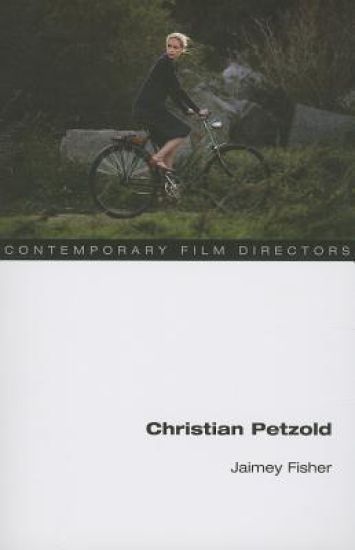
Christian Petzold

Christian Petzold

Fisher Jaimey

University of Illinois Press
2013
sidottu
In eleven feature films across two decades, Christian Petzold has established himself as the most critically celebrated director in contemporary Germany. The best-known and most influential member of the Berlin School, Petzold's career reflects the trajectory of German film from 1970s New German Cinema to more popular fare in the 1990s and back again to critically engaged and politically committed filmmaking.In the first book-length study on Petzold in English, Jaimey Fisher frames Petzold's cinema at the intersection of international art cinema and sophisticated genre cinema. This approach places his work in the context of global cinema and invites comparisons to the work of directors like Pedro Almodovar and Rainer Werner Fassbinder, who repeatedly deploy and reconfigure genre cinema to their own ends. These generic aspects constitute a cosmopolitan gesture in Petzold's work as he interprets and elaborates on cult genre films and popular genres, including horror, film noir, and melodrama. Fisher explores these popular genres while injecting them with themes like terrorism, globalization, and immigration, central issues for European art cinema. The volume also includes an extended original interview with the director about his work.
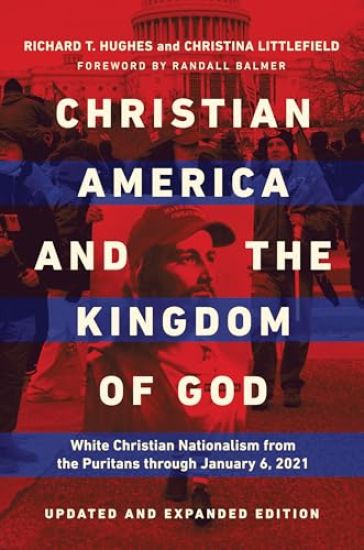
Christian America and the Kingdom of God

Christian America and the Kingdom of God

Richard T. Hughes; Christina Littlefield; Randall Balmer

UNIVERSITY OF ILLINOIS PRESS
2025
sidottu
The myth of a Christian America fuels a powerful political force sure of its moral superiority and intent on implementing a Christian nationalist agenda. Richard T. Hughes and Christina Littlefield draw on discussions of civil religion and forms of nationalism to explore the complex legal and cultural arguments for a Christian America. The authors also provide an in-depth examination of the Bible’s words on the “chosen nation” and “kingdom of God” that Christian nationalists quote to support the idea of the US as a Christian nation. A timely new edition of the acclaimed work, Christian America and the Kingdom of God spotlights how the centuries-long pursuit of a Christian America has bred an aggressive white Christian nationalism that twists faith, unleashes unchristian behavior, and threatens the nation.
Christian Sisterhood, Race Relations, and the YWCA, 1906-46

Christian Sisterhood, Race Relations, and the YWCA, 1906-46

Nancy Robertson

University of Illinois Press
2010
nidottu
As the major national biracial women's organization, the Young Women's Christian Association (YWCA) provided a unique venue for women to respond to American race relations during the first half of the twentieth century. In Christian Sisterhood, Race Relations, and the YWCA, 1906-46, Nancy Marie Robertson shows how women of both races employed different understandings of "Christian sisterhood" in their responses. Although the YWCA was segregated at the local level, African American women were able to effectively challenge white women over YWCA racial policies and practices. Robertson argues that from 1906 through 1946, many white women in the association went from seeing segregation as compatible with Christianity and democracy to regarding it as a contradiction of those values. These struggles laid the groundwork for the subsequent civil rights movement. Her analysis relies not only on a large body of records documenting YWCA women at the national and local levels, but also on autobiographical accounts and personal papers from women associated with the YWCA, including Dorothy Height, Lugenia Burns Hope, Alice Dunbar-Nelson, Abby Aldrich Rockefeller, and Lillian Smith.A volume in the series Women in American History, edited by Anne Firor Scott, Susan Armitage, Susan K. Cahn, and Deborah Gray White
Christian America and the Kingdom of God

Christian America and the Kingdom of God

Richard T. Hughes; Brian McLaren

University of Illinois Press
2012
nidottu
The idea of the United States as a Christian nation is a powerful, seductive, and potentially destructive theme in American life, culture, and politics. And yet, as Richard T. Hughes reveals in this powerful book, the biblical vision of the "kingdom of God" stands at odds with the values and actions of an American empire that sanctions war instead of peace, promotes dominance and oppression instead of reconciliation, and exalts wealth and power instead of justice for the poor and needy. With extensive analysis of both Christian scripture and American history from the founding of the republic to the present day, Christian America and the Kingdom of God illuminates the devastating irony of a "Christian America" that so often behaves in unchristian ways.
Christian Wolff

Christian Wolff

Michael Hicks; Christian Asplund

University of Illinois Press
2012
nidottu
In this first interpretive narrative of the life and work of Christian Wolff, Michael Hicks and Christian Asplund trace the influences and sensibilities of a contemporary composer's atypical career path and restless imagination. Written in full cooperation with Wolff, including access to his papers, this volume is a much-needed introduction to a leading avant-garde composer still living, writing music, and speaking about his own work. Wolff has pioneered various compositional and notational idioms, including overtly political music, indeterminacy, graphic scores, and extreme virtuosity. Trained as a classicist rather than a musician, Wolff has never quite had both feet in the rarefied world of contemporary composition. Yet he's considered a "composer's composer," with a mind ensconced equally in ancient Greek tragedy and experimental music and an eccentric and impulsive compositional approach that eludes a fixed stylistic fingerprint. Hicks and Asplund cover Wolff's family life and formative years, his role as a founder of the New York School of composers, and the context of his life and work as part of the John Cage circle, as well as his departures from it. Critically assessing Wolff's place within the experimental musical field, this volume captures both his eloquence and reticence and provides insights into his broad interests and activities within music and beyond.
Christian Petzold

Christian Petzold

Jaimey Fisher

University of Illinois Press
2013
nidottu
In eleven feature films across two decades, Christian Petzold has established himself as the most critically celebrated director in contemporary Germany. The best-known and most influential member of the Berlin School, Petzold's career reflects the trajectory of German film from 1970s New German Cinema to more popular fare in the 1990s and back again to critically engaged and politically committed filmmaking.In the first book-length study on Petzold in English, Jaimey Fisher frames Petzold's cinema at the intersection of international art cinema and sophisticated genre cinema. This approach places his work in the context of global cinema and invites comparisons to the work of directors like Pedro Almodovar and Rainer Werner Fassbinder, who repeatedly deploy and reconfigure genre cinema to their own ends. These generic aspects constitute a cosmopolitan gesture in Petzold's work as he interprets and elaborates on cult genre films and popular genres, including horror, film noir, and melodrama. Fisher explores these popular genres while injecting them with themes like terrorism, globalization, and immigration, central issues for European art cinema. The volume also includes an extended original interview with the director about his work.