Drawing on the experience of some of the foremost experts in the field, this easy-to-use and affordable pocket reference includes a wealth of information relating to solar energy and solar energy technologies. Topics covered range from solar angles, sun path diagrams, solar radiation and radiative properties of materials through to thermal collectors, thermal energy storage, photovoltaics and daylighting. The book also includes conversion factors and constants and is peppered throughout with helpful illustrations, equations and explanations. Anyone with an interest in solar energy, including professional architects and engineers, home builders, academic researchers, students and energy consultants will find a host of answers in this book – a practical assimilation of data, fundamentals and guidelines for application.
Democracy and political parties go hand in hand. Strong parties are fundamental for advancing, stabilizing, and improving democratic governance. But how exactly do political parties relate to, and contribute to, the survival of presidential administrations? Since 1979, over twenty Latin American chief executives had been forced out of office, without a democratic breakdown—a phenomenon known as "presidential failure." Why Presidents Fail offers a nuanced assessment of how political parties influence how and when executives weather political crises and unrest. Christopher A. Martínez takes a close look at how different factors come into play to explain why some presidents complete their terms in office without incident, others barely make it to the end after stumbling upon crisis after crisis, and some are forced out or impeached before their term is finished. Drawing on a novel theoretical approach, an original database on presidential scandals and anti-government demonstrations, regression (survival analysis) models, country case studies, and interviews with more than one hundred country specialists and top-level politicians, Why Presidents Fail provides an innovative, comprehensive assessment of how political parties influence presidential survival and contributes fresh ideas to the debates on the stability of presidential governments.
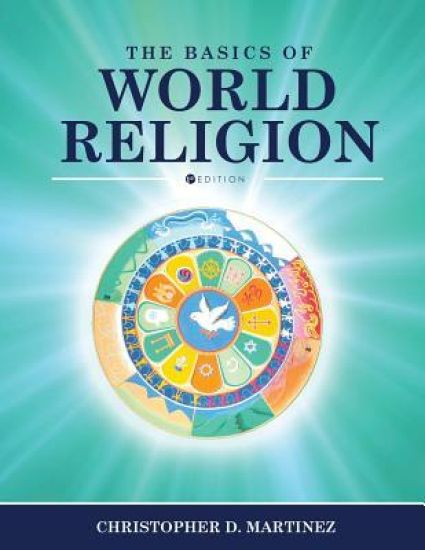
The Basics of World Religion is uniquely designed to introduce students to fundamental concepts in world religion. The text provides the critical information students need to grasp the basics of religion and build upon that knowledge in more advanced courses.The text begins with an introduction to religion as a concept, practice, and academic discipline, and outlines the four key types of religion and major world religions. The proceeding chapter addresses various aspects and types of ancient and indigenous religions including shamanism, divination and astrology, creation stories, and more. Dedicated chapters explore branches, belief systems, common myths, and holidays of Islam, Judaism, Christianity, Hinduism, Buddhism, Jainism, Daoism, Confucianism, Shinto and Korean religion, and Sikhism. The book concludes with a chapter that outlines new and emerging religions. Throughout, students are exposed to illustrations and photos of religious rituals, figures, and houses of worship in the United States to bring the content to life.Lively, humorous, and engaging in its presentation of material, The Basics of World Religion is an ideal resource for introductory undergraduate courses in religion.
The Basics of World Religion is uniquely designed to introduce students to fundamental concepts in world religion. The text provides the critical information students need to grasp the basics of religion and build upon that knowledge in more advanced courses. The text begins with an introduction to religion as a concept, practice, and academic discipline, and outlines the four key types of religion and major world religions. The proceeding chapter addresses various aspects and types of ancient and indigenous religions including shamanism, divination and astrology, creation stories, and more. Dedicated chapters explore branches, belief systems, common myths, and holidays of Islam, Judaism, Christianity, Hinduism, Buddhism, Jainism, Daoism, Confucianism, Shinto and Korean religion, and Sikhism. The book concludes with a chapter that outlines new and emerging religions. Throughout, students are exposed to illustrations and photos of religious rituals, figures, and houses of worship in the United States to bring the content to life. Lively, humorous, and engaging in its presentation of material, The Basics of World Religion is an ideal resource for introductory undergraduate courses in religion.Christopher D. Martinez holds a Ph.D. in adult education and a master's degree in religious studies. He has traveled the world studying religions and collecting artifacts. Dr. Martinez has also applied key learning strategies and developed curriculum for several colleges and universities. He is an adjunct faculty member in the Department of Religion at St. Petersburg College. Dr. Martinez is the author of Survival Guide for the End of the World, a guidebook on how to survive the end-of-times scenarios of the world's great religions.
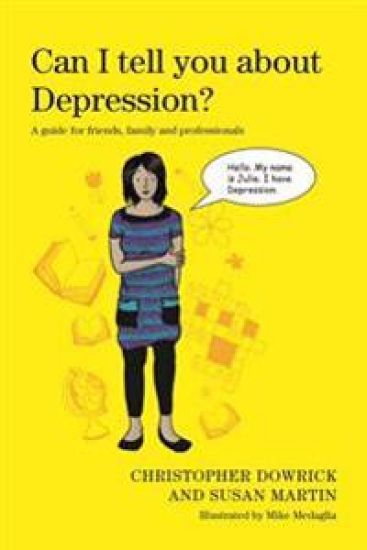
Part of the Reading Well scheme. 35 books selected by young people and health professionals to provide 13 to 18 year olds with high-quality support, information and advice about common mental health issues and related conditions.Meet Julie - a women who suffers from periods of depression. Julie and her family help readers to understand what depression is, what it is like to feel depressed and how it can affect their family life. She explains how coping with depression can sometimes be very difficult but there is support and help available that can relieve the feelings of depression.This illustrated book is an ideal introduction to depression - a condition that can be particularly difficult for children to understand. It is suitable for readers aged 7 upwards and shows family, friends and anyone who knows someone affected by depression how they can offer support.
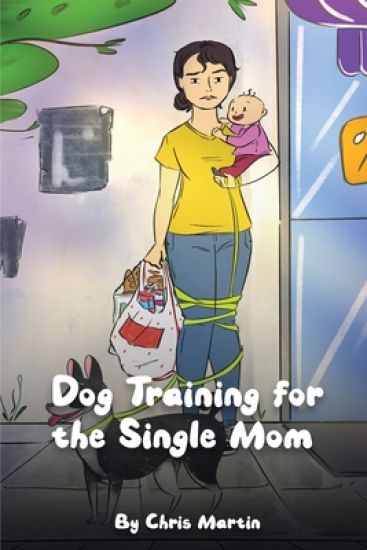
Chris Martin (no, not from Coldplay) grew up in a small southern town on the center border between North Carolina and Virginia in a small town named Eden.His first dog was an English Springer Spaniel named Poke, but soon after Poke crossed the Rainbow Bridge, Chris began a lifelong fascination with the American Pitbull Terrier, a fascination which has lasted for almost 40 years. At 45, Chris decided it was time to make a change in his career and soon after created Dogs Anonymous Dog Training LLC.
See how Rhode Island's hard-shell clam industry came about and remains as popular as ever to this day.Steamships once plied the waters of Narragansett Bay, carrying thousands of guests to feasts of clams prepared in every way imaginable at scenic spots like Rocky Point and Crescent Park. After hurricanes and pollution destroyed Rhode Island's soft-shell clam and oyster beds, the quahog became the state's favorite bivalve, and Rhode Islanders took to their automobiles and drove to the beach for clam cakes and chowder at the shacks and chowder houses that carried on the old traditions. Quahogging remains a major business in Rhode Island, where men and women continue to make a living from the sea. The long lines at take-out windows attest that the future of Rhode Island's clam shacks is secure as they successfully balance changing tastes with time-honored recipes.
Steamships once plied the waters of Narragansett Bay, carrying thousands of guests to feasts of clams prepared in every way imaginable at scenic spots like Rocky Point and Crescent Park. After hurricanes and pollution destroyed Rhode Island s soft-shell clam and oyster beds, the quahog became the state s favorite bivalve, and Rhode Islanders took to their automobiles and drove to the beach for clam cakes and chowder at the shacks and chowder houses that carried on the old traditions. Quahogging remains a major business in Rhode Island, where men and women continue to make a living from the sea. The long lines at take-out windows attest that the future of Rhode Island s clam shacks is secure as they successfully balance changing tastes with time-honored recipes."
Publisher's Note: Products purchased from Third Party sellers are not guaranteed by the publisher for quality, authenticity, or access to any online entitlements included with the product.Select the most appropriate drug in any clinical situation--quickly and easilyDeveloped for use at the point of care, Pharmacotherapy Bedside Guide helps you decide which pharmacotherapy to employ in specific clinical situations. Comprised exclusively of quick-hit tables and algorithms, this carryanywhere companion tells you what treatment the evidence suggests for each illness or disorder. It also details essential drug information, such as benefits, risks, adverse reactions, dosage, interactions with other drugs, and responses. Conveniently organized by specialty and disorder rather than drug, Pharmacotherapy Bedside Guide will prove invaluable when treating patients.
Many assume that a person's right to education terminates with high school, and that higher education is a luxury addition. The conversation about education changes in palpable ways once we focus on higher education rather than the education we ordinarily think that citizens are due when they are children and teenagers. We see more talk about competition for university places, standardized testing, and elite admissions. We parse out the differences between the benefits of education for the individual and the burdens of public financial support for such an education. The move from educational provision for children to educational provision for adults marks a troubling transformation in this public conversation: from one about how it can improve the lives of all individuals, to one preoccupied with fairness, competition, merit, personal responsibility, and the sharing of benefits and burdens. Problems of status, stratification, and selectivity capture as much, if not more, of our attention than the question of what higher education institutions should aim to achieve. But why should it be so different, when it is no less essential? Obtaining a higher education degree can change the course of a person's life, providing them with vast opportunities that they could not access otherwise--in fact for many it is a prerequisite for fulfilling their personal and professional goals, or even being able to just make a living. Yet it is almost always framed as privilege, not a right--and a privilege many spend years or even decades paying for after their studies have ended. Our higher education systems are built on the presumption that this is all as it should be: that pursuing higher education is a choice some people make, but not something to which all of us are entitled. Christopher Martin turns this view on its head by arguing that higher education is in fact an unconditional, absolute right of all citizens in a free and open society. As he argues, a closer look at the value of education in a free and open society reveals that many of the challenges we see in higher education today can be attributed to the failure to recognize higher education as an individual right. Using concepts and ideas from liberal political philosophy, Martin shows that access to educational goods play a key role in helping citizens realize their self-determined goals. Higher education should be understood as a basic social institution responsible for ensuring that all citizens can access these goods. The necessary corrective, Martin argues, is simple: we need to stop allocating higher education to some, and allocate it to all who choose to pursue it. A readiness and willingness to learn should be the only qualification. Higher education should offer opportunities that benefit citizens with different interests and goals in life. Its foundational moral purpose should be to help citizens of all backgrounds to live better, freer lives.
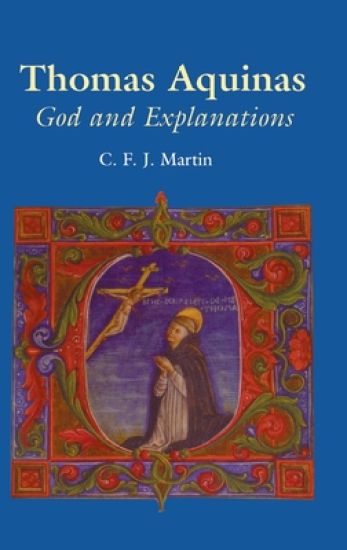
Takes the student step-by-step through the intellectual problems of Medieval thought, explaining the principal lines of argument from Augustine of Hippos to the sixteenth century.
This path-breaking approach to Thomas Aquinas interprets the Five Ways in the context of his theory of science. Aquinas is the leading medieval philosopher and his work is of continuing contemporary relevance. Addressing all the critical themes of authority and reason, Christopher Martin examines the role of science and definitions in medieval thought, and how to deal with the big question: is there a God? Rigorous and challenging, Martin's clear exposition compares and contrasts Aquinas' arguments with those of other philosophers, Anselm, Descartes and Kant.
What does it mean to say that a person has been educated? This question forms the basis of global education policy debates; from the way governments establish funding for national school systems, to the way children are treated in the classroom. Should there be a common ethical core to such polices? What kind of educational process should aboriginal groups in Labrador, Canada, have a moral right to, and should this process be different from what children in New York's boroughs have claim to? Should a school-based curriculum, such as the UK's National Curriculum, make well-being a central concern or are there other ethical dimensions to be addressed? Christopher Martin explores these questions and argues that the best way to consider them is to view education as a matter of public moral understanding. He brings together traditions of thought central to philosophy of education, such as R.S. Peters, and connects this tradition to the moral philosophy and critical theory of Jurgen Habermas, whose theory of Discourse Morality has previously been given little attention in education circles.
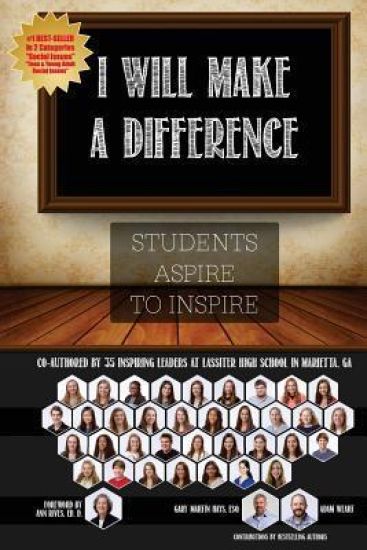
35 students have compiled their blueprints for how they plan to make a difference in this world.Their goals range from providing safe drinking water to under-developed countries to ending body image issues.They opine on how their lives may unfold based on the actions they take today and the direction they head tomorow.This book is a microcosm of what young adults in the United States are aspiring to be.Best-selling authors and co-founders of We Published That, L.L.C., Gary Martin Hays and Adam Weart, have worked diligently with these students to bring this book to life.All proceeds from the sale of this book will go towards the core mission of Keep Georgia Safe which is to provide safety education and crime prevention training in Georgia.