Dixie Square Mall opened in 1966...closed in 1979...and remains standing in 2008. The local shopping mall - not too far from home - a place to shop, eat, work, and socialize. For the people of Harvey, Illinois Dixie Square Mall was this and more. Since it's closing in 1979, Dixie Square has become something else: a crumbling eyesore and a haven for crime and gang activity. Christopher W. Luhar-Trice's photographs from The Dixie Square Project beautifully document this curious artifact of American consumerism. This full-color book includes historical information about Dixie Square, maps, and over 50 color photographs by the artist telling the visual story of America's most famous dead mall, best known for it's appearance in the 1980 film The Blues Brothers. For updates and more information please visit the companion website: www.dixiesquareproject.com
A captivating A–Z treasury about birds and birdingBirdpedia is an engaging illustrated compendium of bird facts and birding lore. Featuring nearly 200 entries—on topics ranging from plumage and migration to birds in art, literature, and folklore—this enticing collection is brimming with wisdom and wit about all things avian.Christopher Leahy sheds light on "hawk-watching," "twitching," and other rituals from the sometimes mystifying world of birding that entail a good deal more than their names imply. He explains what kind of bird's nests you can eat, why mocking birds mock, and many other curiosities that have induced otherwise sane people to peer into treetops using outrageously expensive optical equipment. Leahy shares illuminating insights about pioneering ornithologists such as John James Audubon and Florence Bailey, and describes unique bird behaviors such as anting, caching, duetting, and mobbing. He discusses avian fossils, the colloquial naming of birds, the science and history of ornithology, and more. The book's convenient size makes it the perfect traveling companion to take along on your own avian adventures.With charming illustrations by Abby McBride, Birdpedia is a marvelous mix of fact and fancy that is certain to delight seasoned birders and armchair naturalists alike.Features a cloth cover with an elaborate foil-stamped design
The Cadillac V-16 was conceived in secrecy in the middle of the Roaring Twenties, when incomes were rising, prosperity seemed endless and the car business was beginning to break from a traditional emphasis on function over form. But by the time the Cadillac V-16 reached showrooms in 1930, the nation was falling headlong into the Great Depression, and it soon became a rare relic of the boom before the crash. That is why in the mid-1960s, when Christopher Cummings was an adolescent car enthusiast, the oldest Cadillac V-16s were a dream just out of reach. This memoir tells the story of a boy who grew up loving cars, learned everything he could about them, and acquired quite a few impressive models for himself, while always looking forward to the day he would, by surprising circumstance, find the automobile of his dreams. Early chapters reveal the adventure Cummings underwent renovating his first car at age 13. Over the course of his teenage years he would work to acquire three classic Cadillacs: a 1941 Cadillac Series 7523 seven-passenger touring sedan, a 1941 Cadillac Series 61 coupe, and a 1931 Cadillac Series 355A Fleetwood Cabriolet. Later chapters recount the painstaking effort he put into renovating and maintaining those coveted vehicles. The story culminates with Cummings' unexpected acquisition of the car that earned the motto "Standard of the World," the 1930 V-16 Imperial Sedan limousine. In all, this memoir bears witness to an elegant sample of the best that the Classic era of automotive history had to offer.
For eleven years prior to World War II, Cadillac defied the norms of practicality and produced an extravagant supercar, a 16-cylinder luxury automobile that could be tailored to the customer's every want. Big, thirsty and lavish, it cemented Cadillac's place in the top tier of motoring magnificence. Each of the cars has its own colorful and fascinating story to tell. Driven by a life-long love of the V-16 and an interest in the history of his own car, the author has assembled more than 65 of these tales, gleaned from interviews, books, periodicals and documents, into a liberally illustrated book. Each story is shaped by the people a particular car touched, and the events they lived through together. All are an important part of our automotive and cultural history.
Approaches recent innovations in argumentation theory from a primarily rhetorical perspective.The revival of argumentation theory in the past few decades has focused on its logical and dialectical dimensions, with less attention paid to rhetorical features. This book explores and then redresses this imbalance. Tindale examines important logical and dialectical innovations in recent argumentation theory and shows that they depend implicitly upon rhetorical features of argument that have been suppressed in the account. This is illustrated using two extended case studies, one looking at Shell International's defense of its actions in Nigeria after the death of Ken Saro-Wiwa, and the other exploring the uses of character-based argument and testimony in a Holocaust-denial text and legal trial.In addition to the case studies, two chapters treat serious problems that plague current argumentation theory. The first concerns the nature of fallacy; the second concerns the ties between traditional argumentation and a model of rationality that has been seriously critiqued by feminist and postmodernist scholars. In both instances, the discussion indicates how a rhetorical approach to argumentation offers fresh insights and suggests responses to the questions raised.
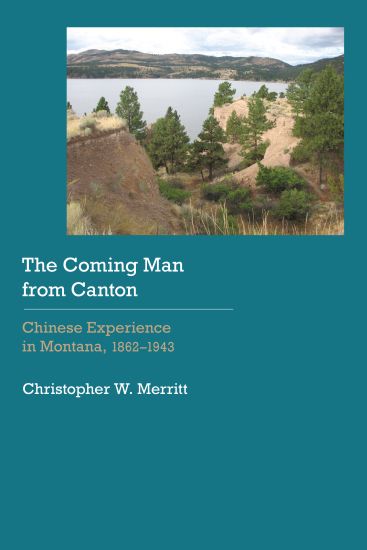
In The Coming Man from Canton Christopher W. Merritt mines the historical and archaeological record of the Chinese immigrant experience in Montana to explore new questions and perspectives. During the 1860s Chinese immigrants arrived by the thousands, moving into the Rocky Mountain West and tenaciously searching for prosperity in the face of resistance, restriction, racism, and armed hostility from virtually every ethnic group in American society. As second-class citizens, Chinese immigrants remained largely insular and formed their own internal governments as well as labor and trade networks, typically establishing communities apart from the main towns. Chinese miners, launderers, restaurant keepers, gardeners, railroad laborers, and other workers became a separate but integral part of the American experience in the Intermountain West. Although Chinese immigrants constituted more than 10 percent of the Montana Territory’s total population by 1870, the historical records provide a biased and narrow perspective, as they were generally written by European American community members. Merritt uses the statewide Montana context to show the diversity of Chinese settlements that has often been neglected by archival studies. His research highlights how the legacy of the Chinese in Montana is, or is not, reflected in modern Montana identity and how scholars, educators, professionals, and the public can alter the existing perception of this population as the “other” and perceive it instead an integral part of Montana’s past.
A comprehensive history of economic thought in the United States from 1790 to 1860 Due to the enormous influence of Adam Smith's The Wealth of Nations on Western liberal economics, a tradition closely linked to the United States, many scholars assume that early American economists were committed to Smith's ideas of free trade and small government. Debunking this belief, Christopher W. Calvo provides a comprehensive history of the nation's economic thought from 1790 to 1860, tracing the development of a uniquely American understanding of capitalism.The Emergence of Capitalism in Early America shows how American economists challenged, adjusted, and adopted the ideas of European thinkers such as Adam Smith, David Ricardo, and Thomas Malthus to suit their particular interests. Calvo not only explains the divisions between American free trade and the version put forward by Smith, but he also discusses the sharp differences between northern and southern liberal economists. Emergent capitalism fostered a dynamic discourse in early America, including a homegrown version of socialism burgeoning in antebellum industrial quarters, as well as a reactionary brand of conservative economic thought circulating on slave plantations across the Old South. This volume also traces the origins and rise of nineteenth-century protectionism, a system that Calvo views as the most authentic expression of American political economy. Finally, Calvo examines early Americans' awkward relationship with capitalism's most complex institution—finance.Grounded in the economic debates, Atlantic conversations, political milieu, and material realities of the antebellum era, this book demonstrates that American thinkers fused different economic models, assumptions, and interests into a unique hybrid-capitalist system that shaped the trajectory of the nation's economy.
Blood, Power, and Bedlam examines the etiology of violations of international criminal law in four post-colonial African states. With a particular focus on genocide and crimes against humanity, an integrated theory is produced and historical, political, economic, and structural aspects are explored. The book’s main intent is an analysis of the worst crimes humans commit and how, in the cases examined, they arise out of a post-colonial environment. Attention is given to existing or potential applications of international social control.
Blood, Power, and Bedlam examines the etiology of violations of international criminal law in four post-colonial African states. With a particular focus on genocide and crimes against humanity, an integrated theory is produced and historical, political, economic, and structural aspects are explored. The book’s main intent is an analysis of the worst crimes humans commit and how, in the cases examined, they arise out of a post-colonial environment. Attention is given to existing or potential applications of international social control.
At the time of his death in 1935, Harry S. Swarth, head of the Mammalogy and Ornithology Departments at the California Academy of Sciences in San Francisco, had been preparing a manuscript reflecting on twenty-five years of research in Alaska and British Columbia. The Distribution and Migrations of Birds in Adjacent Alaska and British Columbia summarized Swarth’s research, ideas, and conjectures on bird life in the region, including theories on when and how birds populated this vast territory after the retreat of glaciers near the end of the Pleistocene. Drawing on his field experiences and the forty scientific papers on the region he published from 1908 on, Swarth’s manuscript represented state-of-the-art science for the time. And it holds up; his work is still cited by ornithologists today. In 2019, Christopher Swarth, Harry’s grandson and a scientist in his own right, discovered the forgotten manuscript. This volume includes the original unpublished manuscript, accompanied by contextual essays from contemporary scientists, including Steven Heinl (Alaska Fish & Wildlife) and Philip Unitt (San Diego Natural History Museum). He has also included excerpts from Harry Swarth’s field notes to bring additional color and insight to the project. Appendices include expedition locations, a comprehensive list of Harry Swarth’s publications, and a glossary with historic and contemporary bird names.
Investigating the essential role that the postal system plays in American democracy and how the corporate sector has attempted to destroy it."With First Class: The U.S. Postal Service, Democracy, and the Corporate Threat, Christopher Shaw makes a brilliant case for polishing the USPS up and letting it shine in the 21st century."—John Nichols, national affairs correspondent for The Nation and author of Coronavirus Criminals and Pandemic Profiteers: Accountability for Those Who Caused the Crisis"First Class is essential reading for all postal workers and for our allies who seek to defend and strengthen our public Postal Service."—Mark Dimondstein, President, American Postal Workers Union, AFL-CIOThe fight over the future of the U.S. Postal Service is on. For years, corporate interests and political ideologues have pushed to remake the USPS, turning it from a public institution into a private business—and now, with mail-in voting playing a key role in local, state, and federal elections, the attacks have escalated. Leadership at the USPS has been handed over to special interests whose plan for the future includes higher postage costs, slower delivery times, and fewer post offices, policies that will inevitably weaken this invaluable public service and source of employment.Despite the general shift to digital communication, the vast majority of the American people—and small businesses—still rely heavily on the U.S. postal system, and many are rallying to defend it. First Class brings readers to the front lines of the struggle, explaining the various forces at work for and against a strong postal system, and presenting reasonable ideas for strengthening and expanding its capacity, services, and workforce. Emphasizing the essential role the USPS has played ever since Benjamin Franklin served as our first Postmaster General, author Christopher Shaw warns of the consequences for the country—and for our democracy—if we don’t win this fight.Praise for First Class:"Piece by piece, an essential national infrastructure is being dismantled without our consent. Shaw makes an eloquent case for why the post office is worth saving and why, for the sake of American democracy, it must be saved."—Steve Hutkins, founder/editor of Save the Post Office and Professor of English at New York University"The USPS is essential for a democratic American society; thank goodness we have this new book from Christopher W. Shaw explaining why."—Danny Caine, author of Save the USPS and owner of the Raven Book Store, Lawrence, KS"Shaw's excellent analysis of the Postal Service and its vital role in American Democracy couldn't be more timely. … First Class should serve as a clarion call for Americans to halt the dismantling and to, instead, preserve and enhance the institution that can bind the nation together."—Ruth Y. Goldway, Retired Chair and Commissioner, U.S. Postal Regulatory Commission, responsible for the Forever Stamps"In a time of community fracture and corporate predation, Shaw argues, a first-class post office of the future can bring communities together and offer exploitation-free banking and other services."—Robert Weissman, president of Public Citizen