
Kirjahaku
Etsi kirjoja tekijän nimen, kirjan nimen tai ISBN:n perusteella.
1000 tulosta hakusanalla Christopher W. Wilson

"Recreations of Christopher North, Vol. I" is a collection of essays by the Scottish author Christopher North, offering a rich tapestry of observations on leisure and hobbies in the 19th century. Known for his keen literary criticism and nature writing, North explores various aspects of recreational activities and personal reflections in this volume. His essays provide insightful commentary on Scottish landscapes, blending cultural observations with social commentary. North's Romantic style is evident in his vivid descriptions of nature and his engaging discussions on life's simpler pleasures. Through his reflections, North captures the essence of 19th-century life, highlighting the interplay between personal enjoyment and broader cultural themes. The volume stands as a testament to North's literary prowess and his ability to weave together observations on both the natural world and human experience, making it a compelling read for those interested in Scottish literature and historical perspectives on leisure.

"Recreations of Christopher North, Vol. II" by John Wilson continues the exploration of 19th-century leisure activities through a series of essays. This volume delves deeper into nature writing and literary reflections, capturing the essence of Scottish landscapes and the intricacies of personal insights. Wilson's Romantic style is evident as he intertwines cultural observations with social commentary, offering a nuanced perspective on recreational pursuits and their impact on daily life. The essays provide valuable literary criticism, reflecting on the social and historical contexts of the time. Wilson's evocative prose and thoughtful observations make this volume a significant contribution to Scottish literature, offering readers a glimpse into the leisurely and intellectual pursuits of the era. Through his engaging and reflective essays, Wilson enriches our understanding of both the natural world and the cultural dynamics of 19th-century Scotland, continuing to engage readers with his unique literary voice.

The Remarkable Adventures of Christopher Poe
Robert Carlton Brown; M. Wilson (ILT) Craig
Kessinger Pub
2007
pokkari
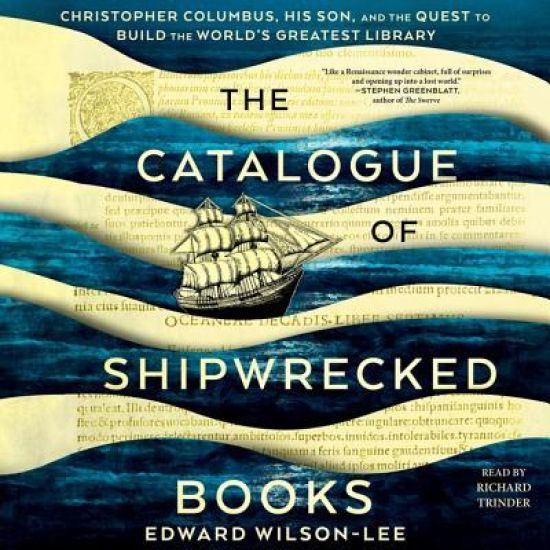
The Catalogue of Shipwrecked Books: Christopher Columbus, His Son, and the Quest to Build the World's Greatest Library
Edward Wilson-Lee
Simon Schuster Audio
2019
cd
In the tradition of Stephen Greenblatt's The Swerve and Dava Sobel's Galileo's Daughter, a vividly rendered account of the forgotten quest by Christopher Columbus's son to create the greatest library in the world--"a perfectly pitched poetic drama" (Financial Times) and an amazing tour through 16th century Europe.The Catalogue of Shipwrecked Books tells the story of the first and greatest visionary of the print age, a man who saw how the explosive expansion of knowledge and information generated by the advent of the printing press would entirely change the landscape of thought and society. He also happened to be Christopher Columbus's illegitimate son. At the peak of the Age of Exploration, while his father sailed across the ocean to explore the boundaries of the known world, Hernando Col n sought to surpass Columbus's achievements by building a library that would encompass the world and include "all books, in all languages and on all subjects." In service of this vision, he spent his life travelling--first to the New World with his father in 1502, surviving through shipwreck and a bloody mutiny off the coast of Jamaica, and later, throughout Europe, scouring the bookstores of the day at the epicenter of printing. The very model of a Renaissance man, Hernando restlessly and obsessively bought thousands and thousands of books, amassing a collection based on the modern conviction that a truly great library should include the kind of material dismissed as ephemeral trash: ballads, pornography, newsletters, popular images, romances, fables. Using an invented system of hieroglyphs, he meticulously catalogued every item in his library, devising the first ever search engine for his rich profusion of books and images and music. A major setback in 1522 gave way to the creation of Hernando's Catalogue of Shipwrecked Books and inspired further refinements to his library, including a design for the first modern bookshelves. In this illuminating and brilliantly researched biography, Edward Wilson-Lee tells an enthralling story of the life and times of the first genius of the print age, a tale with striking lessons for our own modern experiences of information revolution and globalization.
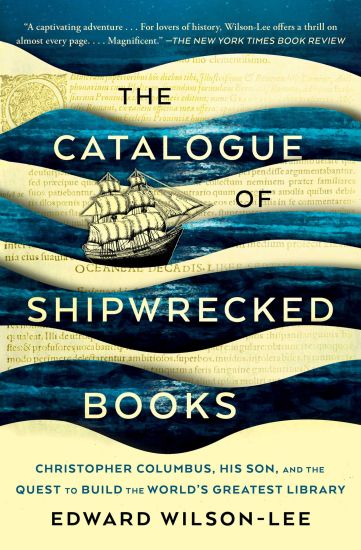
The Catalogue of Shipwrecked Books: Christopher Columbus, His Son, and the Quest to Build the World's Greatest Library
Edward Wilson-Lee
Scribner Book Company
2020
nidottu
This impeccably researched and "adventure-packed" (The Washington Post) account of the obsessive quest by Christopher Columbus's son to create the greatest library in the world is "the stuff of Hollywood blockbusters" (NPR) and offers a vivid picture of Europe on the verge of becoming modern. At the peak of the Age of Exploration, Hernando Col n sailed with his father Christopher Columbus on his final voyage to the New World, a journey that ended in disaster, bloody mutiny, and shipwreck. After Columbus's death in 1506, eighteen-year-old Hernando sought to continue--and surpass--his father's campaign to explore the boundaries of the known world by building a library that would collect everything ever printed: a vast holding organized by summaries and catalogues; really, the first ever database for the exploding diversity of written matter as the printing press proliferated across Europe. Hernando traveled extensively and obsessively amassed his collection based on the groundbreaking conviction that a library of universal knowledge should include "all books, in all languages and on all subjects," even material often dismissed: ballads, erotica, news pamphlets, almanacs, popular images, romances, fables. The loss of part of his collection to another maritime disaster in 1522, set off the final scramble to complete this sublime project, a race against time to realize a vision of near-impossible perfection. "Magnificent...a thrill on almost every page" (The New York Times Book Review), The Catalogue of Shipwrecked Books is a window into sixteenth-century Europe's information revolution, and a reflection of the passion and intrigues that lie beneath our own insatiable desires to bring order to the world today.
Jacob Rudolph, Christopher Stokes and Allied Families: 1201-1946
Frances Lee Wilson 1889- Rudolph
Hassell Street Press
2021
nidottu
This work has been selected by scholars as being culturally important and is part of the knowledge base of civilization as we know it.This work is in the public domain in the United States of America, and possibly other nations. Within the United States, you may freely copy and distribute this work, as no entity (individual or corporate) has a copyright on the body of the work.Scholars believe, and we concur, that this work is important enough to be preserved, reproduced, and made generally available to the public. To ensure a quality reading experience, this work has been proofread and republished using a format that seamlessly blends the original graphical elements with text in an easy-to-read typeface.We appreciate your support of the preservation process, and thank you for being an important part of keeping this knowledge alive and relevant.

Heartbreak, The Trials Of Literary Life: Or Recollections Of Christopher North (1859)
John Wilson
KESSINGER PUBLISHING, LLC
2008
nidottu
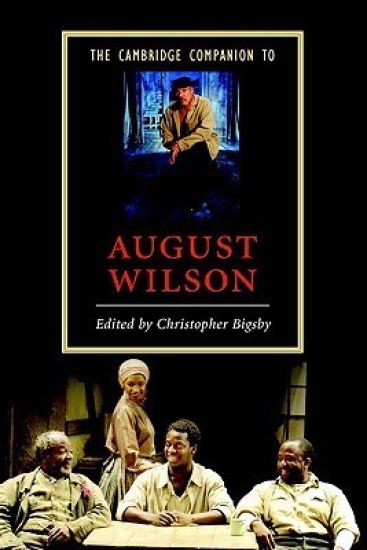
One of America's most powerful and original dramatists, August Wilson offered an alternative history of the twentieth century, as seen from the perspective of black Americans. He celebrated the lives of those seemingly pushed to the margins of national life, but who were simultaneously protagonists of their own drama and evidence of a vital and compelling community. Decade by decade, he told the story of a people with a distinctive history who forged their own future, aware of their roots in another time and place, but doing something more than just survive. Wilson deliberately addressed black America, but in doing so discovered an international audience. Alongside chapters addressing Wilson's life and career, and the wider context of his plays, this Companion dedicates individual chapters to each play in his ten-play cycle, which are ordered chronologically, demonstrating Wilson's notion of an unfolding history of the twentieth century.
One of America's most powerful and original dramatists, August Wilson offered an alternative history of the twentieth century, as seen from the perspective of black Americans. He celebrated the lives of those seemingly pushed to the margins of national life, but who were simultaneously protagonists of their own drama and evidence of a vital and compelling community. Decade by decade, he told the story of a people with a distinctive history who forged their own future, aware of their roots in another time and place, but doing something more than just survive. Wilson deliberately addressed black America, but in doing so discovered an international audience. Alongside chapters addressing Wilson's life and career, and the wider context of his plays, this Companion dedicates individual chapters to each play in his ten-play cycle, which are ordered chronologically, demonstrating Wilson's notion of an unfolding history of the twentieth century.
History of the Campaign of Mobile; Including the Co-Operative Operations of Gen. Wilson's Cavalry in Alabama ... with Maps and Illustrations.
Christopher Columbus Andrews; James Harrison Wilson
British Library, Historical Print Editions
2011
pokkari
Title: History of the Campaign of Mobile; including the co-operative operations of Gen. Wilson's Cavalry in Alabama ... With maps and illustrations.Publisher: British Library, Historical Print EditionsThe British Library is the national library of the United Kingdom. It is one of the world's largest research libraries holding over 150 million items in all known languages and formats: books, journals, newspapers, sound recordings, patents, maps, stamps, prints and much more. Its collections include around 14 million books, along with substantial additional collections of manuscripts and historical items dating back as far as 300 BC.The MILITARY HISTORY & WARFARE collection includes books from the British Library digitised by Microsoft. This series offers titles on warfare from ancient to modern times. It includes detailed accounts of campaigns, battles, weapons, as well as the soldiers and commanders who devised, initiated, and supported war efforts throughout history. Specific analyses discuss the impact of war on societies, cultures, economies, and changing international relationships. ++++The below data was compiled from various identification fields in the bibliographic record of this title. This data is provided as an additional tool in helping to insure edition identification: ++++ British Library Andrews, Christopher Columbus; Wilson, James Harrison; 1867. 276 p.; 8 . 9603.ee.12.
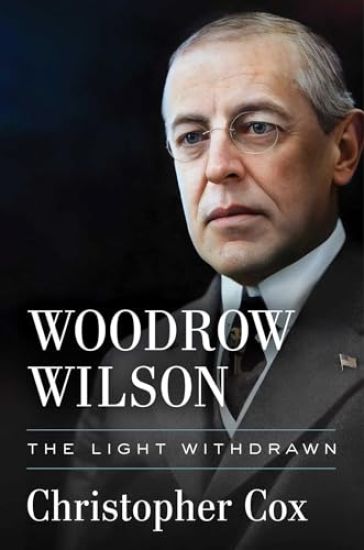
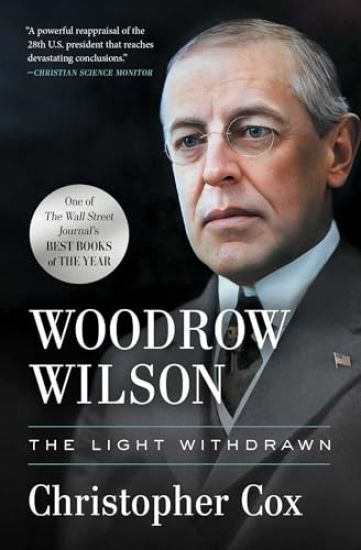
An “assiduously researched” (The Wall Street Journal), “powerful...dispassionate new biography” (The Christian Science Monitor) of Woodrow Wilson, focused on his role in the long national struggle for racial equality and women’s voting rights.More than a century after his death, Woodrow Wilson’s influence on American politics remains strong while his contradictions loom larger than ever. With panoramic sweep, Woodrow Wilson: The Light Withdrawn examines his life and times, focusing especially on the 28th president’s opposition to the movements for racial equality and women’s voting rights. The Wilson who emerges is a man superbly unsuited to the moment when, as he ascended to the presidency in 1912, the struggle for women’s voting rights in America reached the tipping point. The first southern Democrat to occupy the White House since the Civil War era brought with him to Washington like-minded men who quickly set to work segregating the federal government. Wilson’s own sympathy for Jim Crow and states’ rights animated his decades-long hostility to the Susan B. Anthony Amendment, which promised universal suffrage backed by federal enforcement. Women demonstrating for voting rights found themselves demonized in government propaganda, beaten and starved while illegally imprisoned, and even confined to the insane asylum. When, in the twilight of his second term, two-thirds of Congress stood on the threshold of passing the Anthony Amendment, Wilson abruptly switched his position. But in sympathy with like-minded southern Democrats, he endorsed a plan to rewrite the Anthony Amendment to protect Jim Crow restrictions on the voting rights of Black women. The heroes responsible for the eventual success of the unadulterated Anthony Amendment are brought to life by Christopher Cox, an author steeped in the ways of Washington and political power. This is a “Pulitzer Prize–worthy history” (The Washington Examiner) that puts you at the center of one of the greatest advances in the history of American democracy.
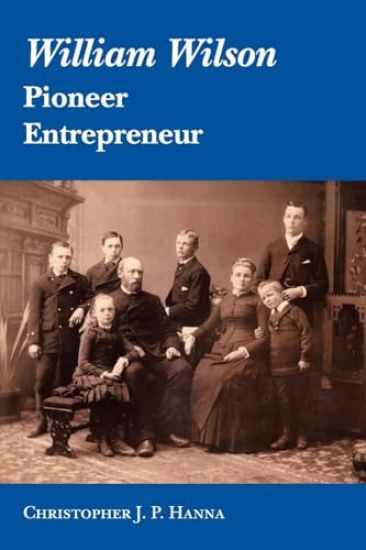

Whether they appear in mystery novels or headline news stories, on prime-time TV or the silver screen, few figures have maintained such an extraordinary hold on the American cultural imagination as modern police officers. Why are we so fascinated with the police and their power? What relation do these pervasive media representations bear to the actual history of modern policing? Christopher P. Wilson explores these questions by examining narratives of police power in crime news, popular fiction, and film, showing how they both reflect and influence the real strategies of law enforcement on the beat, in the squad room and in urban politics. He takes us from Theodore Roosevelt's year of reform with the 1890s NYPD to the rise of "community policing", from the classic "police procedural" film "The Naked City" to the best-selling novels of LAPD veteran Joseph Wambaugh. Wilson concludes by demonstrating the ways in which popular storytelling about police power has been intimately tied to the course of modern liberalism, and to the rising tide of neoconservatism today.
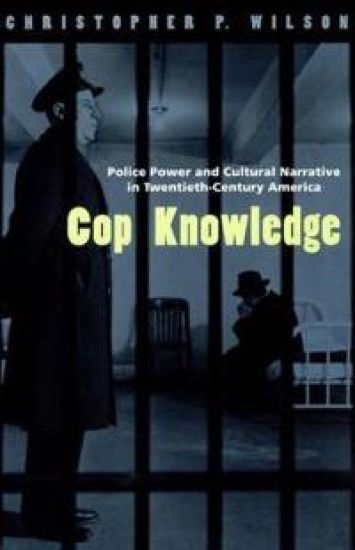
Whether they appear in mystery novels or headline news stories, on prime-time TV or the silver screen, few figures have maintained such an extraordinary hold on the American cultural imagination as modern police officers. Why are we so fascinated with the police and their power? What relation do these pervasive media representations bear to the actual history of modern policing? Christopher P. Wilson explores these questions by examining narratives of police power in crime news, popular fiction, and film, showing how they both reflect and influence the real strategies of law enforcement on the beat, in the squad room and in urban politics. He takes us from Theodore Roosevelt's year of reform with the 1890s NYPD to the rise of "community policing", from the classic "police procedural" film "The Naked City" to the best-selling novels of LAPD veteran Joseph Wambaugh. Wilson concludes by demonstrating the ways in which popular storytelling about police power has been intimately tied to the course of modern liberalism, and to the rising tide of neoconservatism today.
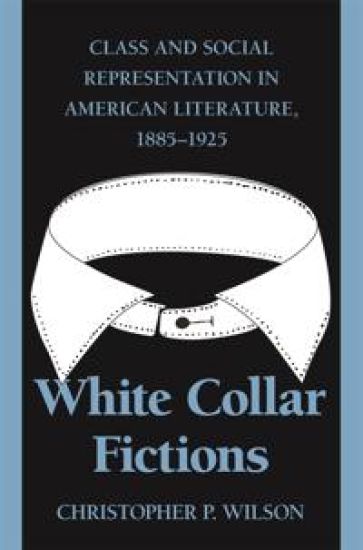
At the turn of the twentieth century, representations of “white collar” Americans—the “middle” social strata H. L. Mencken ridiculed as boobus Americanus—took on an ever-greater prominence within American literature and popular culture. Magazines like the Saturday Evening Post idolized businessmen and “average Americans,” while books like Winesburg, Ohio and Babbitt produced new portraits of “middle America.” In White Collar Fictions, Christopher P. Wilson explores how these white collar representations became part and parcel of a new social class coming to terms with its own power, authority, and contradictions. By investigating the material experience and social vocabularies within white collar life itself, Wilson uncovers the ways in which writers helped create a new cultural vocabulary—“Babbittry,” the “little people,” the “Average American”—that served to redefine power, authority, and commonality in American society. An innovative study that integrates literary analysis with social history, White Collar Fictions reexamines the life and work of Sherwood Anderson, Sinclair Lewis, and such nearly forgotten authors as O. Henry, Edna Ferber, Robert Grant, and Elmer Rice.
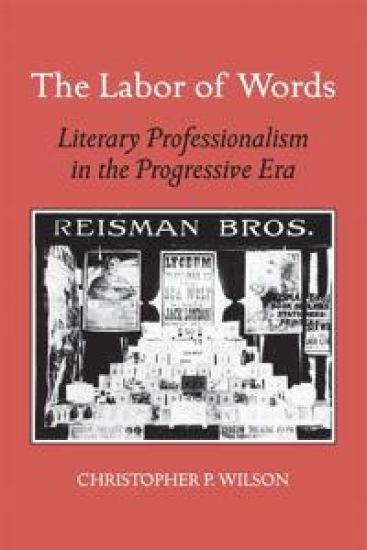
In the three decades after 1885, a virtual explosion in the nation’s print media—newspaper tabloids, inexpensive magazines, and best-selling books—vaulted the American writer to unprecedented heights of cultural and political influence. The Labor of Words traces the impact of this mass literary marketplace on Progressive era writers. Using the works and careers of Jack London, Upton Sinclair, David Graham Phillips, and Lincoln Steffens as case studies, Christopher P. Wilson measures the advantages and costs of the new professional literary role and captures the drama of this transformative epoch in American journalism and letters.
Musical references, allusions to music, and music stage directions abound in Shakespeare, ranging from simple trumpet flourishes to sophisticated, philosophical allegory. Music in Shakespeare: A Dictionary identifies all musical terms found in the Shakespeare canon. An A-Z of over 300 entries includes a definition of each musical term in its historical and theoretical context, and explores the extent of Shakespeare's use of musical imagery across the full range of his dramatic and poetic work. Music in Shakespeare also analyses the usage of musical instruments and sound effects on the Shakespearean stage, providing descriptions of the instruments employed in the Elizabethan and Jacobean theatres. This is a comprehensive reference guide for scholars and students with interests ranging from the thematic and allegorical relevance of music in Shakespeare's works to the history of performance. It is also aimed at the growing number of directors and actors concerned with recovering the staging conditions of the early modern theatre.