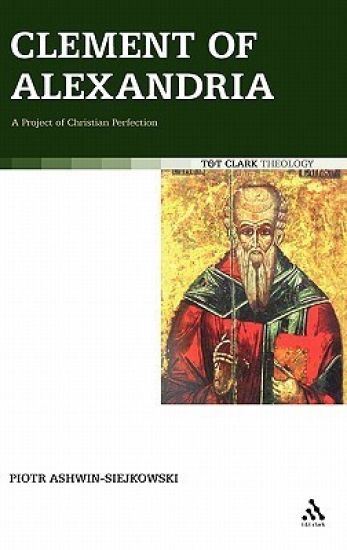
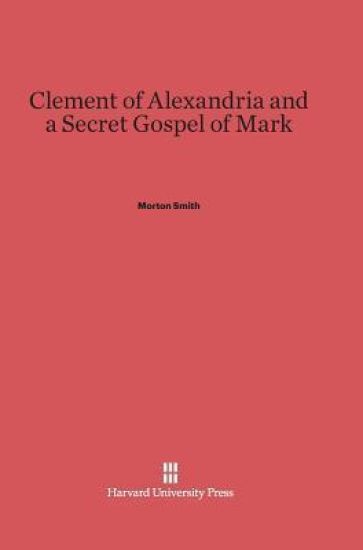
This book examines Clement's project which brings together ethical, intellectual and spiritual development of a Christian while highlighting the need of search for integrity in the life of faith and reason. Approaches to Clement have traditionally either assessed the philosophical context of his thought or studied the adaptation of Greek legacy into a new Christian context as underpinning Clement's work. In this new study Piotr Ashwin-Siejkowski challenges and develops these approaches providing new and refreshing insights into Clement's understanding of Christian perfection.
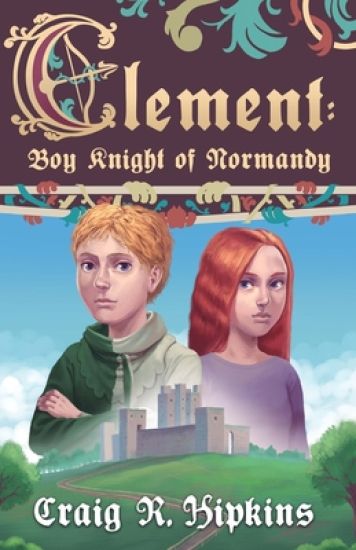
Clement is no ordinary thirteen year old boy. He lives in a castle in 12th century Normandy. After helping Adalbert on his quest to find a long lost treasure, Clement and his friend Dagena return for another adventure. This time, Clement must overcome the evil ambitions of his wicked uncle, Sven the Terrible Prepare yourself for some medieval action and excitement that you will not soon forget. This is the first book in a planned trilogy. Clement and Dagena first appeared in the novel Adalbert.
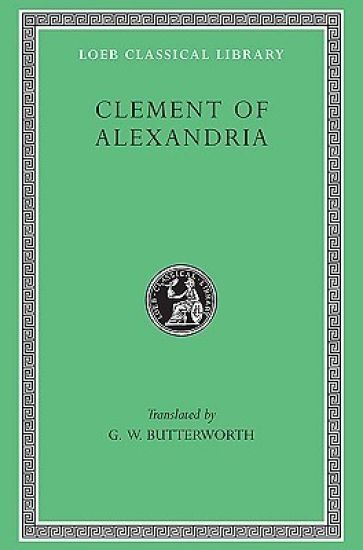
A scholarly evangelist.Clement of Alexandria, famous Father of the Church, is known chiefly from his own works. He was born, perhaps at Athens, about AD 150, son of non-Christian parents; he converted to Christianity probably in early manhood. He became a presbyter in the Church at Alexandria and there succeeded Pantaenus in the catechetical school; his students included Origen and Bishop Alexander. He may have left Alexandria in 202, was known at Antioch, was alive in 211, and was dead before 220. We have Clement’s Exhortation to the Greeks to give up gods for God and Christ; Tutor (3 books), wherein Clement instructs Christians on how to act in keeping with Christ’s teachings; Stromateis (Patchwork, 8 books), intending to stress the true nature of the Christian Gnostic; and Who Is the Man Who Is Saved? (an exposition of Mark 10:17–31). This volume contains the Exhortation to the Greeks, the treatise on the rich man, and an exhortation To the Newly Baptized. Clement was an eclectic philosopher of a neo-Platonic kind who later found a new philosophy in Christianity, and studied not only the Bible but the beliefs of Christian heretics.
The posthumous collection of writings by the seminal American art critic features his observations of Jackson Pollock, Hans Hofmann, Barnett Newman, Willem de Kooning, and others. (Fine Arts).
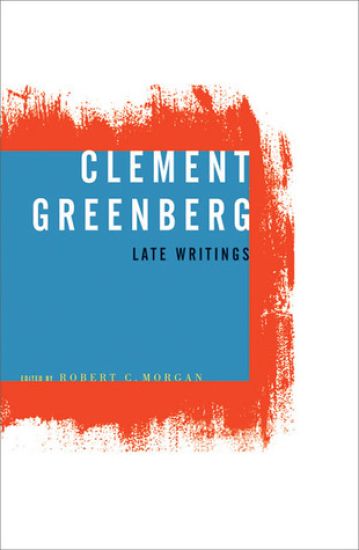
Clement Greenberg (1909-1994) was a colossus of twentieth-century American art, achieving a degree of authority almost unimaginable for a critic today. For more than thirty years he was both lionized as a proponent of formalism and criticized for his perceived dogmatism. In the postwar period Greenberg used his position of influence to advocate the importance of abstract expressionism and color-field painting and to establish the careers of such artists as Jackson Pollock, Hans Hofmann, Barnett Newman, and Willem de Kooning. With the coming of pop art, performance and conceptual art, and postmodernism, however, Greenberg found his position increasingly challenged. Edited with an introduction by critic Robert C. Morgan, Clement Greenberg, Late Writings is the first collection from the period 1970 to 1990, and the only comprehensive resource for Greenberg’s thought during the last third of his life. While earlier works have covered Greenberg’s early and middle career, this volume spans his mature period, during which he reevaluates and refines many of his earlier tenets in some of his most carefully crafted and engaging work. Exploring a surprising breadth of issues and mediums and demonstrating a depth of aesthetic and philosophical insights, in these relatively unknown works Greenberg incites a new direction for modernism beyond the twentieth century. This essential volume includes five interviews from the end of his life in which Greenberg revisits some of the concerns of his formative years, illuminating the progression of his thought. Late Writings is an integral resource as issues of quality and significance in the dynamic world of art continue to be redefined. Clement Greenberg was the most influential art critic of the postwar period. He was the author of numerous books, and his essays appeared in art magazines as well as such publications as Partisan Review, Commentary, and The Nation. Robert C. Morgan is the author of The End of the Art World and of a monograph on the optical painter Vasarely. In addition to his work as a critic, artist, art historian, and curator, he is visiting professor of art at Hunter College in New York City.
The only book-length biography of this controversial critic, now in paperback for the first time! Love him or hate him, admire him or revile him, there is no doubt that Clement Greenberg was the most influential critic of modern art in the second half of the twentieth century. His championing of abstract expressionist painters such as Jackson Pollock, Barnett Newman, and David Smith put the United States on the international art map. His support for color-field painters Morris Louis and Kenneth Noland dramatically accelerated their careers. The intellectual power of his polemical essays helped bring about the midcentury shift in which New York replaced Paris as the art capital of the Western world; his aggressive personality and fierce involvement in the New York art scene triggered a backlash so potent that one critic termed it a “patricide.”
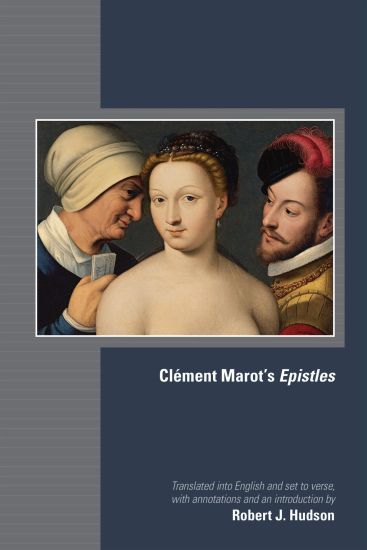
The first complete, versified English-language translation of the epistles of Renaissance poet Clément Marot. Clément Marot (1496–1544), a royal poet in Renaissance France who ushered in new verse forms and renewed existing ones, stands as one of the most important literary voices of the first half of the sixteenth century. Clément Marot’s Epistles represents a first attempt to offer a sustained English-language translation and critical edition of what is widely considered his most personal, historically relevant, and crowning verse form. Aiming for integrality and poetic precision, the volume translates and sets to verse all seventy-four of Marot’s epistles, employing the same meter and rhyme scheme used by the poet in the original compositions. Likewise focused on capturing Marot’s poetic voice, thus maintaining idiomatic and literary integrity, the resulting translation is an attempt to relate the playfulness and pathos of Marot’s verse, rendering it accessible to an anglophone public. Beyond the more traditional verse epistles included in the primary base text, Marot’s authorized complete works from 1538, the volume also offers translations of the introductory prose epistles penned by Marot for his Adolescence clémentine of 1532 and the 1538 edition (Lyon, Dolet), as well as the coq-à-l’âne and other versified satirical epistles, the “artificial epistle” retelling of a popular medieval romance, and more. A robust critical apparatus includes ample footnotes, an extensive introduction, illustrations, a bibliography, a chronological table, and a concordance with the principal modern French-language editions of Marot’s epistles. The book should appeal to English-speaking historians and literary scholars alike, as well as to poetry lovers, who will appreciate a new acquaintance with this distinctive voice from poetry’s past.
This work has been selected by scholars as being culturally important and is part of the knowledge base of civilization as we know it.This work is in the public domain in the United States of America, and possibly other nations. Within the United States, you may freely copy and distribute this work, as no entity (individual or corporate) has a copyright on the body of the work.Scholars believe, and we concur, that this work is important enough to be preserved, reproduced, and made generally available to the public. To ensure a quality reading experience, this work has been proofread and republished using a format that seamlessly blends the original graphical elements with text in an easy-to-read typeface.We appreciate your support of the preservation process, and thank you for being an important part of keeping this knowledge alive and relevant.
200 Page Lined Journal/NotebookClement is a proud Scottish Clan that shared a common heritage in Scotland and spread its family roots to the new world and beyond. This is a great way to show pride in your Celtic or Gaelic heritage featuring the tartan and the poach of this proud clan. It makes a perfect gift for any occasion.


![Clement Attlee. [A Pictorial Biography]](/covers/9781013455186.jpg)
![Clement Attlee. [A Pictorial Biography]](/covers/9781013725432.jpg)