

Kirjahaku
Etsi kirjoja tekijän nimen, kirjan nimen tai ISBN:n perusteella.
1000 tulosta hakusanalla Colin A. Carter

Seventh-century Gaelic law-tracts delineate professional poets (filid) who earned high social status through formal training. These poets cooperated with the Church to create an innovative bilingual intellectual culture in Old Gaelic and Latin. Bede described Anglo-Saxon students who availed themselves of free education in Ireland at this culturally dynamic time. Gaelic scholars called sapientes (“wise ones”) produced texts in Old Gaelic and Latin that demonstrate how Anglo-Saxon students were influenced by contact with Gaelic ecclesiastical and secular scholarship. Seventh-century Northumbria was ruled for over 50 years by Gaelic-speaking kings who could access Gaelic traditions. Gaelic literary traditions provide the closest analogues for Bede’s description of Cædmon’s production of Old English poetry. This ground-breaking study displays the transformations created by the growth of vernacular literatures and bilingual intellectual cultures. Gaelic missionaries and educational opportunities helped shape the Northumbrian “Golden Age”, its manuscripts, hagiography, and writings of Aldhelm and Bede.
The Gaelic Background of Old English Poetry before Bede
Colin A. Ireland
De Gruyter
2023
isokokoinen pokkari
Seventh-century Gaelic law-tracts delineate professional poets (filid) who earned high social status through formal training. These poets cooperated with the Church to create an innovative bilingual intellectual culture in Old Gaelic and Latin. Bede described Anglo-Saxon students who availed themselves of free education in Ireland at this culturally dynamic time. Gaelic scholars called sapientes (“wise ones”) produced texts in Old Gaelic and Latin that demonstrate how Anglo-Saxon students were influenced by contact with Gaelic ecclesiastical and secular scholarship. Seventh-century Northumbria was ruled for over 50 years by Gaelic-speaking kings who could access Gaelic traditions. Gaelic literary traditions provide the closest analogues for Bede’s description of Cædmon’s production of Old English poetry. This ground-breaking study displays the transformations created by the growth of vernacular literatures and bilingual intellectual cultures. Gaelic missionaries and educational opportunities helped shape the Northumbrian “Golden Age”, its manuscripts, hagiography, and writings of Aldhelm and Bede.


This textbook demystifies the complex Statistical calculations and difficulty in analyzing and interpreting assessment data by presenting simplified approaches for: - Understanding data types and using appropriate graphical and numerical forms to describe data. - Correctly reading and interpreting quantitative data and qualitative data presented in charts, tables, and graphs including pie charts, bar graphs, two-way tables, side-by-side bar graphs, segmented bar graphs, line graphs, histograms, dotplots, parallel boxplots, side-by-side stemplots, and scatter plots. - Correctly reading and interpreting quantitative data presented in numerical forms including mean, median, standard deviation, range, interquartile range, percentiles, quartiles, and standardized scores (z-scores). - Making data-driven decisions based on statistical calculations and interpretations. - Using the results of prudent data analysis to drive leadership and instruction. - Using the findings of extensive data analysis of assessment data to develop an innovative school improvement action plan.
2023-2024 Basic and Clinical Science Course™, Section 12
Colin A. McCannel
AMERICAN ACADEMY OF OPHTHALMOLOGY
2023
nidottu
Section 12 of the Academy's Basic and Clinical Science Course™ (BCSC®) is arranged into three parts.Part one begins with an overview of the retina and its relationship to the pigment epithelium, choroid and vitreous plus discusses the major retinal disorders and their appropriate diagnostic methods and treatment principles.Part two cover specific diseases and trauma to the posterior segment and provides appropriate diagnostic techniques, plus reviews vitreoretinal diseases and management and therapy of retinal diseases.Part three provides key knowledge about cryotherapy for posterior segment diseases and includes select therapeutic topics, plus laser therapy and vitreoretinal surgery. A chapter on gene therapy covers the common types of DNA therapy: gene augmentation, optogenetics, and genome editing.This section features 19 videos, including videos on posterior segment treatment approaches and common vitreoretinal procedures. More than 175 figures, illustrations and photos plus ten interactive animations, are included to aid your understanding.Upon completion of Section 12, readers should be able to:Select appropriate methods of examination and ancillary studies for the diagnosis of vitreoretinal disordersDescribe the principles of medical and surgical treatment of vitreoretinal disordersIncorporate data from major prospective clinical trials in the management of selected vitreoretinal disordersDescribe and explain the urgency, appropriateness and timing of vitreoretinal conditions and interventions.

The RAF and Commonwealth air crews were bound by regulations and discipline during WWII. Survival was by no means a certainty, with casualties becoming a part of everyday life. The evolution of non-established clubs was recognised and regarded as an important area within RAF history that boosted moral. The regulations flexed to allow membership pins and badges to be worn on RAF and Commonwealth flying uniforms. This book allows the reader to experience a number of individual stories and understand the relevance of being a: - 'Goldfish' (Lives saved by the use of personal life preservers and dinghies), 'Caterpillar' (Lives saved by parachutes) or: - 'Guinea Pig' (Lives saved by pioneering surgery conducted by Archibald McIndoe at the Queen Victoria Hospital Sussex) In many instances the accounts are recalled in great detail from the official records of medals and awards. True heroism and gallant deeds supported by original photographs create an easy to read book, revealing areas of interest not previously visited in this format.
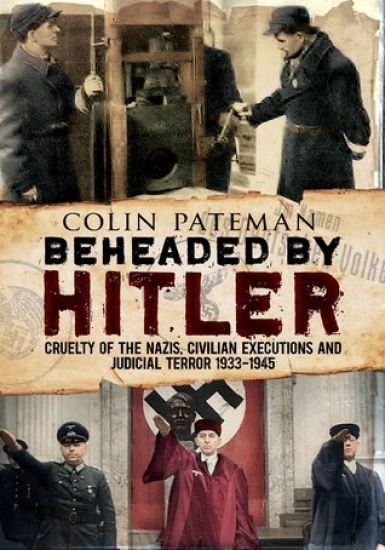
From 1933 during the Nazi era when Hitler refashioned the German judicial system in line with his oppressive regime, many crimes became capital offences which led to a drastic increase in the number of executions. In 1936, the Reich Minister of Justice, Franz Gurtner, acting upon Hitler's direction, ordered that the fallbeil, a variation on the guillotine, replace the hand axe as the official method for all civil executions throughout Germany. To meet this new demand for 'justice', many prisons were designated as execution sites and equipped with a 'Tegel Fallbeil', named after the inmates of the Tegal prison in Berlin who first built these atrocious contraptions. Beheaded by Hitler: Cruelty of the Nazis, Judicial Terror and Civilian Executions 1933-1945 provides the reader with a chilling insight into the judicial terror that took place and the harrowing stories of execution by fallbeil of civilians who were convicted of domestic resistance to the Nazi regime, treason and other offences after so called 'trials' by the Volksgerichtshof or People's Court.This exceptionally well researched book also explains the Nazi judicial system, the prisons selected for central execution sites and the Nazi officials and executioners that carried out Hitler's cleansing.

Reforestation and avoiding deforestation are methods of harnessing nature to tackle global warming - the greatest challenge facing humankind. In this book, Colin Hunt deals comprehensively with the present and future role of forests in climate change policy and practice. The author provides signposts for the way ahead in climate change policy and offers practical examples of forestry's role in climate change mitigation in both developed and tropical developing countries. Chapters on measuring carbon in plantations, their biodiversity benefits and potential for biofuel production complement the analysis. He also discusses the potential for forestry in climate change policy in the United States and other countries where policies to limit greenhouse gas emissions have been foreshadowed. The author employs scientific and socio-economic analysis and lays bare the complexity of forestry markets. A review of the workings of carbon markets, based both on the Kyoto Protocol and voluntary participation, provides a foundation from which to explore forestry's role. Emphasis is placed on acknowledging how forests' idiosyncrasies affect the design of markets for sequestered carbon. The realization of forestry's potential in developed countries depends on the depth of cuts in greenhouse gas emissions, together with in-country rules on forestry. An increase in funding for carbon retention in tropical forests is an immediate imperative, but complexities dictate that the sources of finance will likely be dedicated funds rather than carbon markets. This timely and comprehensive book will be of great value to any reader interested in climate change. Policy-makers within international agencies and governments, academics and students in the fields of geography, economics, science policy, forestry, development studies as well as carbon market participants and forest developers in the private sector will find it especially useful.

Early Railway Chemistry and its Legacy
Colin A Russell; John Hudson
Royal Society of Chemistry
2011
nidottu
One of the most important parts of British heavy industry today is our railway system. Its constant appearances in news bulletins, its enormous appeal to fans or "enthusiasts", its permanent role in the lives of most of us, and its economic significance today, all underline its importance. Railway historians and enthusiasts will be surprised to learn that chemists played an important part in the development of the railway industry in Britain. Chemists themselves are well aware of the many and wide-ranging applications of their discipline, but the fact that their predecessors were involved in the technological development of railways will come as a surprise to many. This book is the first detailed study of this important interaction and covers the crucial role that chemistry played in the development of the British railway industry from its beginnings in the early 19th century up to the grouping of the railways of 1923 into GWR, SR, LNER, and LMSR. The book describes the vital relationship between chemistry and the railway industry, all very recently discovered. It shows that the railway system would simply have not been possible without chemical inputs, chiefly but by no means entirely analytical. This discovery about a huge revenue-earning industry in Britain came from rare documents recently unearthed and other archival material and the book contains many rare illustrations and vast amounts of previously unpublished material. For the historian, it is a classic case of where history of science and history of technology converge. A great many engineers contributed to the enormous technological development which occurred in the railway industry between 1830 and 1923, but working alongside the engineers were the chemists, and in certain critical areas their contribution to this development was vital. It is a contribution which up until now has not been adequately recognised, and this book puts the record straight. The book has an unusually wide appeal, being of interest to practising chemists, those interested in the history of chemistry and its role in society, historians of science and technology, mechanical engineers, and not least railway enthusiasts and railway historians. The chemist will be justly proud of the extreme importance of the subject for industry and the railway enthusiast will gain a wholly new picture of the development of the industry in Britain.
From Political Economy to Anthropology
Colin A.M. Duncan; David W. Tandy
Black Rose Books
2024
nidottu
This collection which represents a move toward a better understanding of the ancient people's attempts at situating economic life within particular societies. Some of the topics covered include a social and economical analysis of ancient, pre-State Greece; of the classical Maya; the Maori women and slaves; of rural India; rural Kentucky; and of pre-industrial Japan.

The bible warns of the dangers of church leaders representing God, but lacking a biblical understanding of Godly leadership, which includes those operating in an official capacity, but having ulterior and sinister motives. This leaves those submitted under their influence vulnerable to situations that can have devastating effects on a person's faith, their relationship with God, and ultimately their relationship with the body of Christ. This book will help people to identify the warning signs, avoid the dangers and embark on a journey of restoration and healing on the other side of hurtful and sometimes sadly, deeply traumatic church experiences.

The bible warns of the dangers of church leaders representing God, but lacking a biblical understanding of Godly leadership, which includes those operating in an official capacity, but having ulterior and sinister motives. This leaves those submitted under their influence vulnerable to situations that can have devastating effects on a person's faith, their relationship with God, and ultimately their relationship with the body of Christ. This book will help people to identify the warning signs, avoid the dangers and embark on a journey of restoration and healing on the other side of hurtful and sometimes sadly, deeply traumatic church experiences.

Real Estate Investment
Colin A. Jones; Edward Trevillion
Springer International Publishing AG
2022
nidottu
This textbook, aimed at undergraduate and postgraduate real estate programmes, provides an overview of real estate investment and pricing in a global context with special attention to the diversification of asset types in three parts. Designed as a successor to Will Fraser’s successful student-led investment book, Principles of Property Investment and Pricing, it encompasses the microeconomics of real estate markets and context alongside pricing failures of real estate highlighted by the impact of the global financial crisis, especially with regard to irrationality and risk.Part 1 focuses on the microeconomics of the real estate sector, covering the complex nature of real estate and the consequences for economic analysis and the operation of the market, the underlying essential processes and principles of real estate investment decision making, including a pricing model, and the significance of real estate cycles and why they occur. Part 2 begins with the characteristics of realestate as an investment, differentiated between direct and indirect investment, and making comparisons with alternative stock market assets, then examines real estate investors and their objectives, including financial institutions, REITs and other indirect vehicles. Additionally, it sets out the frameworks within which real estate investment decisions are made in relation to other investments and focuses on decision-making processes and the practicalities of performance measurement. Emerging real estate debates are discussed in Part 3. These chapters are primarily forward-looking to the implications and challenges for real estate investment, including the consequences of recent aspects of regulation, changes to occupier demand, partly driven by technology but also sustainability pressures, the logic and difficulties of international investment, with a particular focus on emerging markets.

Søvnproblemer er uhyre udbredt, og søvnløshed er desuden årsag til mange plagsømme følgeproblemer, som træthed, depression, vægtsvingninger og stress. Der udskrives sovemedicin i enorme mængder, men medicin løser ofte ikke de dybereliggende forhold, der ligger til grund for de søvnproblemer, som forpester alt for mange menneskers liv. Ikke at kunne sove hører til de onder, folk oftest går til lægen med, men ikke desto mindre er sundhedsvæsenet endnu ikke nået særligt langt i retning af at kunne tilbyde en effektiv behandling.At overvinde søvnløshed gennemgår i letlæst form mere en 25 års forskning på området, og bogen udgør dermed en uundværlig selvhjælpsguide i behandlingen af søvnløshed baseret på teknikker fra kognitiv adfærdsterapi.
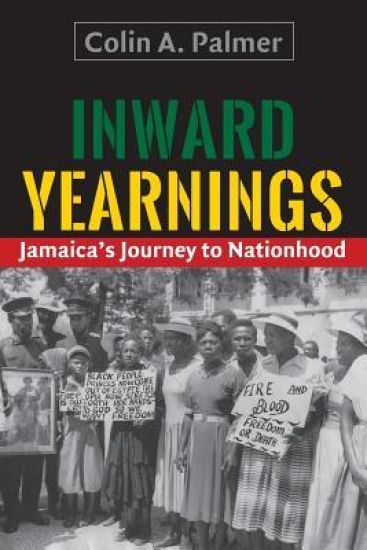
Inward Yearnings: Jamaica’s Journey to Nationhood is a pioneering case study of an Anglo-Caribbean island’s search for a racial selfhood, its nervous embrace of its African heritage and ultimately a nationalism that reflected those inner longings. These complex and interrelated processes manifested themselves with the founding of the Universal Negro Improvement Association by Marcus Garvey in 1914, the emergence of Rastafarianism and the Back to Africa Movement in the 1930s, the People’s National Party’s adoption of self-government as its goal in 1940, and the appearance of numerous black consciousness groups in the 1950s.The first half of the book excavates the roots of these inner struggles, and their expressions and roles in Jamaica’s society and culture. The second half examines Jamaica’s entry into the West Indies Federation in 1958 and its secession by means of a referendum in 1961. The Colonial Office had convinced the ten federating units that they were all too small to make their individual independence a viable option. The Jamaicans attempted to subsume their nationalism in formation into a larger West Indian nationalism but the process failed. A federal union had been constructed upon a watery foundation.Palmer’s book is a carefully researched history of the federation’s failure and of Jamaica’s decision to affirm its own political identity and selfhood. The book is based largely on manuscript sources located in the British National Archives at Kew Gardens, the Jamaica Archives in Spanish Town and the National Archives of the United States located in College Park. The Jamaican newspaper, the Daily Gleaner, also constituted an invaluable source.
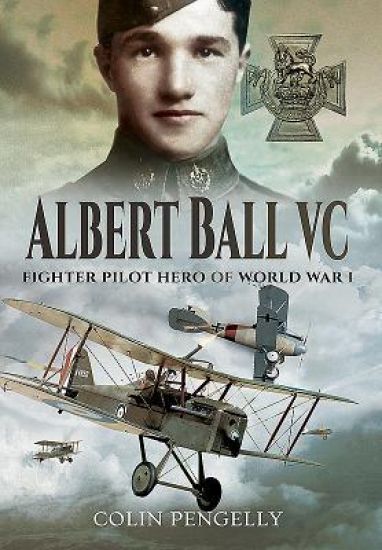
Albert Ball's individuality and his insistence on fighting alone set him apart from other fighter pilots during World War One. His invincible courage and utter determination made him a legend not only in Britain but also amongst his enemies, to whom the sight of his lone Nieuport Scout brought fear. In 1914 he enlisted in the British army with the 2/7th Battalion (Robin Hoods), of the Sherwood Foresters, Notts and Derby Regiment. By the October of 1914 he had reached the rank of Sergeant and then in the same month was made a Second-Lieutenant to his own battalion. In June 1915 he paid for private tuition and trained as a pilot at Hendon. In October 1915 he obtained Royal Aero Club Certificate and requested transfer to the Royal Flying Corps. The transfer granted, he further trained at Norwich and Upavon, being awarded the pilot's brevet on 22 January 1916. On 16 May 1916 - flying Bristol Scout 5512 - he opened his score, shooting down an Albatros C-type over Beaumont. On 29 May 1916 he shot down two LVG C-types, whilst flying his Nieuport 5173.Captain Albert Ball made his final flight on 7 May 1917 when he flew SE5 A4850 as part of an eleven-strong hunting patrol into action against Jagdstaffel 11, led by Lothar Von Richthofen. It was a very cloudy day. Albert was pursuing Lothar's Albatros Scout who crash-landed, wounded. Then Albert was seen by many observers to dive out of a cloud and crash. He died minutes later in the arms of a French girl, Madame Cecille Deloffre. He rose from obscurity to the top rank of contemporary fighter pilots in only 15 months. In that period he had been awarded the MC, DSO and two Bars and was credited with at least 44 victories. He was posthumously awarded the Victoria Cross.

Shorter Science and Civilisation in China: Volume 3
Ronan Colin A. Ronan
Cambridge University Press
1986
sidottu
This third volume of Colin Ronan's abridgement of Joseph Needham's monumental work is devoted to Chinese contributions to nautical science and technology