Endometriosis affects women in the reproductive years, is associated with pelvic pain and infertility, and - although not life threatening - can seriously impair health, with huge economic and social consequences. It is arguably the most frequent problem encountered in contemporary More...gynecology and is the subject of much ongoing research and innovation in management. This beautifully and comprehensively illustrated Atlas, now in its third edition, provides a useful educational tool for trainees and general obstetricians and gynecologists who may not be up-to-date with the most important recent research on the diagnosis and management of the condition; particularly expanded for this edition are the chapters on ultrasound imaging and the nutritional aspects of the subject.
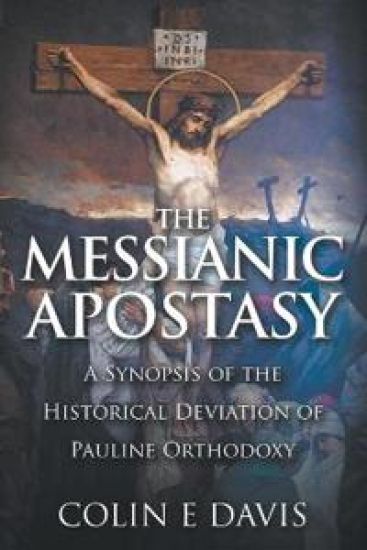
The Messianic Apostasy: A Synopsis of the Historical Deviation of Pauline Orthodoxy provides a reappraisal of early Pauline theology in the context of 1st-century Palestine and the Hellenistic world in which Paul lived.This scholarly text examines the heretical elements within St Paul's theology in the context of his contemporary Judaism and how the early Christian church of the first three centuries of the Common Era drew its influences from him.Theological scholar, Colin E Davis, investigates the philosophical and religious zeitgeist of the period and Paul's eventual development of the concept of "his Christ figure" along possible Nazarean lines.(About the Author)Colin E Davis has resided in Bracken Ridge, Brisbane, Australia, for almost sixty-five years. He holds degrees in theology and Roman studies, including a Bachelor of Arts with honours, a Master of Literary Studies in philosophy, theology, and Roman political theory, and a D. Lit. (Qual) in Stoic and Platonic philosophy as well as ancient religious studies. He wrote numerous study guides and educational courses in Roman history for the Queensland Department of Education and was an International Baccalaureate examiner in the field of history. The author has also had three novels published: Poseidon's Grotto, The Flux, and Logos. He is now retired and devotes himself to theological and historical research.
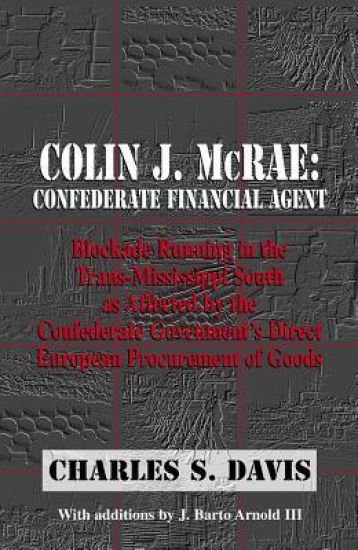
This biography of Confederate financial agent Colin McRae is now offered in an expanded 2008 edition which includes archival documents, correspondence and accounting records that illustrate how this man was instrumental in the financial management of the Southern States during the Civil War. Arnold (Texas A&M U.) has easily doubled Davis' original 1960 text, adding more insight into how McRae used blockade running along the Mississippi River to shore up financial strength in order to fight the war. Written for Civil War history buffs and students, this book contains plenty of photographs of the original documents and correspondence.
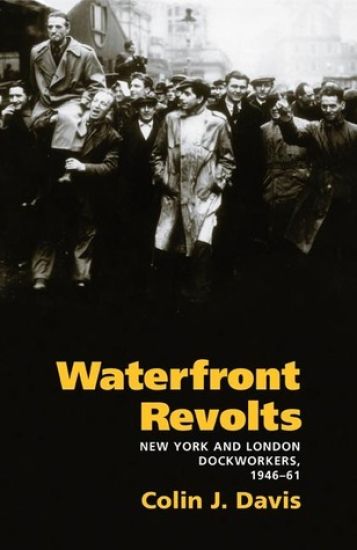
During the decade that followed World War II, American and British dockworkers undertook a series of militant revolts against their employers, their governments, and even their union leaderships. In this in-depth comparative study, Colin Davis explores the upheavals on both sides of the Atlantic. Davis examines the dynamics of work and work stoppage along the two pivotal waterfronts, showing how issues of race, organized crime, union affiliation, working conditions, and Cold War politics shaped waterfront uprisings and the state's response to them. He explores other key differences between American and British labor, such as the cultural forces that led to the emergence of rank-and-file dockworkers' movements, degree of governmental oversight, methods of obtaining work, and specifics of ethnic and racial identification. An eye-opening look at dockworker influence in postwar industry, Waterfront Revolts reveals how workers and trade unions directly influenced Cold War politics, the economy, and culture across national borders.
Undercliffe Cemetery in Bradford contains many grand 19th-century monuments: finely decorated obelisks, extravagent mausoleums and huge columns abound. This title tells the story of Undercliffe from the 1850s to date, from Victorian showpiece to dereliction in the 1980s and on to today's restoration efforts.
Deep-sea fishing has always been a hazardous occupation, with crews facing gale-force winds, huge waves and swells, and unrelenting rain and snow. For those New England and British fishermen whose voyages took them hundreds of miles from the coastline, life was punctuated by strenuous work, grave danger, and frequent fear. Unsurprisingly, every fishing port across the world has memorials to those lost at sea.During the 1960s and 1970s, these seafaring workers experienced new hardships. As modern fleets from many nations intensified their hunt for fish, they found themselves in increasing competition for disappearing prey. Colin J. Davis details the unfolding drama as New England and British fishermen and their wives, partners, and families reacted to this competition. Rather than acting as bystanders to these crises, the men and women chronicled in Contested and Dangerous Seas became fierce advocates for the health of the Atlantic Ocean fisheries and for their families' livelihoods.
Lynden Hoover is on the brink of a new beginning with a fast-growing tech company, but he first needs to confront the traumas of his past. At age eleven Lynden found a surrogate father in the form of a hobo riding a train, the Tramp, who abused and discarded Lynden. The memory of the Tramp has haunted Lynden's life, ruining his relationships. Now Lynden makes a snap decision, leaping into an open boxcar to find the Tramp and somehow punish him.There Lynden meets The Duke, a hobo who calls America’s landscape his home. He’s “Profesh” and clings to an honor code quickly fading into the past. The Duke has his own secrets, fleeing from the merciless Short Arm, a one-time friend who now wants The Duke dead. The Duke reluctantly agrees to teach Lynden how to be a Professional hobo, all while trying to stay ahead of the relentless Short Arm.As Lynden and The Duke travel the rails a unique friendship forms, more than just that of mentor and apprentice. A special bond is formed as secrets are exposed, sacrifices made, and trusts are betrayed. Three determined people hurtle toward a spellbinding climax where pasts and futures collide, and lives hang in the balance.
These essays explore problems with digital approaches to analog objects and offer digital methods to study networks of production, dissemination, and collection. Further, they reflect on the limitations of those methods and speak to a central truth of digital projects: unlike traditional scholarship, digital scholarship is often the result of collective networks of not only disciplinary scholars but also of library professionals and other technical and professional staff as well as students.
Shadow Tech is an alchemical exploration into the human shadow. Among several models discussed, destructive cultural drives are related to viruses and parasites in biology and information systems. Cyclical destructive behavior is attributed to the "victim-victor cycle". Culture and mind are shown to be organic operating systems which act as mediums for viral transmission of shadow energies. The authors share their own experiences and alchemical philosophy, as well as effective methods for balancing repressed destructive energies.What's next for those who have taken the "Red Pill"? The authors have found alchemical shadow work to be a powerful tool for balancing their internal states and the raising of their consciousness. The biggest battle for the minds of humanity is not waged "out there" - it's waged inside the psychic states of every human being.
In 1976, the US Supreme Court ruled in Gregg v. Georgia that the death penalty was constitutional if it complied with certain specific provisions designed to ensure that it was reserved for the 'worst of the worst.' The same court had rejected the death penalty just four years before in the Furman decision because it found that the penalty had been applied in a capricious and arbitrary manner. The 1976 decision ushered in the 'modern' period of the US death penalty, setting the country on a course to execute over 1,400 inmates in the ensuing years, with over 8,000 individuals currently sentenced to die. Now, forty years after the decision, the eminent political scientist Frank Baumgartner along with a team of younger scholars (Marty Davidson, Kaneesha Johnson, Arvind Krishnamurthy, and Colin Wilson) have collaborated to assess the empirical record and provide a definitive account of how the death penalty has been implemented. Each chapter addresses a precise empirical question and provides evidence, not opinion, about whether how the modern death penalty has functioned. They decided to write the book after Justice Breyer issued a dissent in a 2015 death penalty case in which he asked for a full briefing on the constitutionality of the death penalty. In particular, they assess the extent to which the modern death penalty has met the aspirations of Gregg or continues to suffer from the flaws that caused its rejection in Furman. To answer this question, they provide the most comprehensive statistical account yet of the workings of the capital punishment system. Authoritative and pithy, the book is intended for both students in a wide variety of fields, researchers studying the topic, and--not least--the Supreme Court itself.
In 1976, the US Supreme Court ruled in Gregg v. Georgia that the death penalty was constitutional if it complied with certain specific provisions designed to ensure that it was reserved for the 'worst of the worst.' The same court had rejected the death penalty just four years before in the Furman decision because it found that the penalty had been applied in a capricious and arbitrary manner. The 1976 decision ushered in the 'modern' period of the US death penalty, setting the country on a course to execute over 1,400 inmates in the ensuing years, with over 8,000 individuals currently sentenced to die. Now, forty years after the decision, the eminent political scientist Frank Baumgartner along with a team of younger scholars (Marty Davidson, Kaneesha Johnson, Arvind Krishnamurthy, and Colin Wilson) have collaborated to assess the empirical record and provide a definitive account of how the death penalty has been implemented. Each chapter addresses a precise empirical question and provides evidence, not opinion, about whether how the modern death penalty has functioned. They decided to write the book after Justice Breyer issued a dissent in a 2015 death penalty case in which he asked for a full briefing on the constitutionality of the death penalty. In particular, they assess the extent to which the modern death penalty has met the aspirations of Gregg or continues to suffer from the flaws that caused its rejection in Furman. To answer this question, they provide the most comprehensive statistical account yet of the workings of the capital punishment system. Authoritative and pithy, the book is intended for both students in a wide variety of fields, researchers studying the topic, and--not least--the Supreme Court itself.
Treating individuals with a substance misuse problem can be challenging, especially if clients present with multiple problems related to the main addiction. Clinicians can feel at a loss as to where to begin, or revert to an attempt to treat underlying problems - ignoring damaging aspects of the substance misuse itself. At times referral to specialists may seem the only responsible way forward. Written by a team of clinical academics in the field of addictions, Cognitive-Behavioural Therapy in the Treatment of Addictions is a ready reference for clinicians that offers a brief, evidence-based, collaborative approach that starts here and now. Client and therapist embark together on a journey to tackle the problem in a practical way. The book includes session tools, worksheets and daily thought records.
Ally Barrett; John Barton; Gregory Cameron; Andrew Davison; Alan Everett; Peter Graystone; Malcolm Guite; Colin Heber-Percy; Chine McDonald; Rachel Mann; Anna Matthews; Nadim Nassar; Emma Parker; David Runcorn; Jane Steen; Angela Tilby; Margaret Whipp; Lucy Winkett; Stephen Cottrell
Reflections for Daily Prayer continues to be one of the most popular and highly valued daily Bible reading companions. Continuing its tradition of excellence, regular favourites and new contributors offer insightful, informed and inspiring reflections on the scripture readings of the day, based on the Common Worship lectionary for Morning Prayer. Stephen Cottrell, the Archbishop of York, is the guest contributor for Holy Week. New voices this year include Gregory Cameron, the Bishop of St Asaph and author of the popular An Advent Book of Days and An Easter Book of Days; Chine MacDonald, author, broadcaster and Director of the religious think tank Theos; and Emma Parker, Deputy Warden of Cranmer Hall, Durham. For every day (excluding Sundays) of the 2023-24 church year, there are full references and a quotation from the day’s set of Scripture readings, concise and challenging commentary, and a collect. Also included is a simple order for Morning and Night Rrayer, and additional helps for nurturing a habit of regular daily prayer.
"All I really get to see is stuff on t.v. and not what the normal world looks like"--Collin Davis, ZEITmagazin Collin Davis has been behind bars for eighteen years; he has been sentenced to at least forty-five years' imprisonment. His brother's girlfriend, the photographer Chantal Seitz (b. Hardheim, 1993; lives and works in Berlin) asked him what he wanted to see of the world. It was the beginning of a pen friendship and a dialogue about seeing and reality inside and outside the prison. Stay Safe Out There is the result of an engrossing correspondence. The artist's book shows how Seitz and Davis use photography to think and communicate about the world on both sides of the prison's walls and how the corrections system determines who may see what and how it may be seen. Based on letters, emails, series of photographs--which Seitz captures as requested by Davis--as well as facsimiles of leaflets advertising convenience goods to inmates, Google Street View shots of the prison's walls, and portraits of Davis himself, the book interweaves the two protagonists' realities. A searching exchange of ideas on seeing and not seeing, on isolation and the capitalism of the prison industry, it frames a perspective that is both personal and collective on current debates over reforms to the criminal justice system designed to strengthen prisoners' rights.
This groundbreaking book includes Winning Insights from…JPMorgan * The Container Store * Fossil * KidKraft * National Motor Club * Sears * Southwest Airlines * The Hartford * UCLA Health Center * and more!There is no such thing as a one-size-fits-all strategy, especially in today’s highly complex and competitive world of business. But there is such a thing as a one-size-fits-all approach to business success . . . it's called the Artof Adherence.A good strategy gets you in the game, but adhering to your strategy gets you into the winner's circle. With today's microwave mentality, business leaders often abandonstrategies quickly because they don’t yield immediate results.Learn how world-class leaders and organizations master the Art of Adherence. Stick with It reveals a time-tested, real-world validated formula for winning:FOCUS X COMPETENCE X PASSION = ADHERENCEWhen you consistently sharpen Focus, build Competence, and ignite Passion, you plant the seeds of victory. Initially, you may not see tangible results, but rest assured growth is occurring under the surface. Asindividuals and teams stick with it, momentum builds, creating a self-reinforcing cycle of victory.The authors, including leadership guru Lee J. Colan, draw upon 25 years of corporate leadership, field research, executive consulting, and training with many ofthe world’s leading organizations. They combine real-world stories with cut-through-the-clutter tools so you can convert this rapid-read book into fast results.READ STICK WITH IT TODAY AND WIN TOMORROW!Praise for Stick With It:"We have successfully applied Colan's powerful tools for 12 years to drive our business growth and team engagement. Stick with It delivers a clear model and tools presented in Colan's practical and actionable style." -- Barry E. Davis, President and CEO, Crosstex Energy Services"The Adherence Equation (Focus x Competence x Passion) is a powerful formula for driving growth and winning in today's market. Stick with It balances research with real-world examples to deliver field-tested tools. You can read it on Friday and apply it on Monday." -- John Walker, COO, KidKraft"Stick with It simplifies the complex topic of business execution. We have applied these concepts to create winning business results and a winning culture." -- Paul Spiegelman, CEO, The Beryl Companies"This book is the secret sauce to being successful with ANY strategy. Stick with It is a practical guide for avoiding the very reason that most strategies fail—lack of adherence. The authors bring in real-world and understandable examples that will make you and your organization soar to new heights." -- David T. Feinberg, MD, MBA, President and CEO, UCLA Health System"The authors hit the bull's-eye! In our company, one of the single biggest challenges is finding leaders who will execute a plan. I strongly recommend Stick with It to any leader who wants to build a successful team." -- Jerry Crawford , President, Jani-King International, Inc.
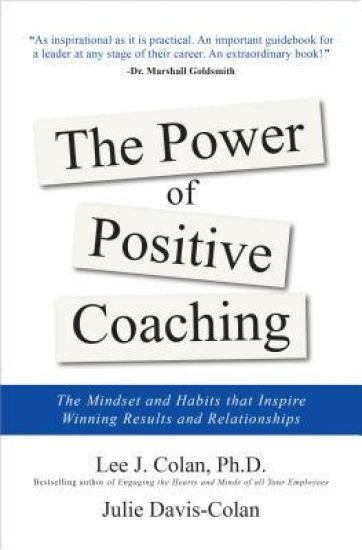
Positive Coaching Mindset x Positive Coaching Habits = Winning Results and Relationships Most coaching books focus on skills and scripts. But without the right mindset, those skills and scripts will not yield the response and results your want from your team. When you have a positive mindset, you are able to see more opportunities for growth and improvement. Coaching is not just about investing in others—it’s about investing in yourself. When you grow, you can better help others grow.The Power of Positive Coaching shows you how to elevate your coaching game and drive winning results and relationships. Acclaimed coaches Lee Colan, Ph.D. and Julie Davis-Colan reveal how to build a positive coaching mindset that you can use to apply the five positive coaching habitsWith this book as your guide, you’ll learn how to: • Develop a more positive mindset to leverage on the job and in your personal life• Build proven, positive coaching habits by using simple tools and techniques• Inspire better results and relationships on your team • Explain the circle of consequences to gain alignment• Ask purposeful questions to ignite engagement• Involve your team to reduce the eight areas of waste to enlist ownership• Measure performance with relevant scoreboards to enhance accountability• Appreciate the people behind your employees to deepen commitment.Apply The Power of Positive Coaching, and create a positive ripple effect throughout your team, your business, and your life.
This work has been selected by scholars as being culturally important and is part of the knowledge base of civilization as we know it.This work is in the public domain in the United States of America, and possibly other nations. Within the United States, you may freely copy and distribute this work, as no entity (individual or corporate) has a copyright on the body of the work.Scholars believe, and we concur, that this work is important enough to be preserved, reproduced, and made generally available to the public. To ensure a quality reading experience, this work has been proofread and republished using a format that seamlessly blends the original graphical elements with text in an easy-to-read typeface.We appreciate your support of the preservation process, and thank you for being an important part of keeping this knowledge alive and relevant.










![The Davis Rocky Mountain Coin Encyclopedia [Prices Paid For List]; 1935](/covers/9781014906038.jpg)