

Kirjahaku
Etsi kirjoja tekijän nimen, kirjan nimen tai ISBN:n perusteella.
1000 tulosta hakusanalla Colin F. Barnes
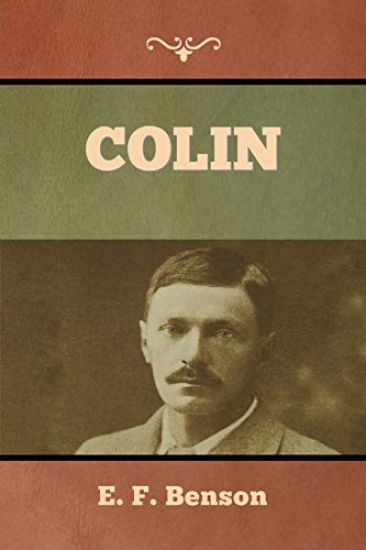
E.F. Benson, in full Edward Frederic Benson, (born July 24, 1867, Wellington College, Berkshire, Eng.-died Feb. 29, 1940, London), writer of fiction, reminiscences, and biographies, of which the best remembered are his arch, satirical novels and his urbane autobiographical studies of Edwardian and Georgian society. The son of E.W. Benson, an archbishop of Canterbury (1883-96), the young Benson was educated at Marlborough School and at King's College, Cambridge. After graduation he worked from 1892 to 1895 in Athens for the British School of Archaeology and later in Egypt for the Society for the Promotion of Hellenic Studies. In 1893 he published Dodo, a novel that attracted wide attention. It was followed by a number of other successful novels-such as Mrs. Ames (1912), Queen Lucia (1920), Miss Mapp (1922), and Lucia in London (1927)-and books on a wide range of subjects, totaling nearly 100. Among them were biographies of Queen Victoria, William Gladstone, and William II of Germany. In 1938 he was made an honorary fellow of Magdalene College, Cambridge. Benson's reminiscences include As We Were (1930), As We Are (1932), and Final Edition (1940). (britannica.com)

E.F. Benson, in full Edward Frederic Benson, (born July 24, 1867, Wellington College, Berkshire, Eng.-died Feb. 29, 1940, London), writer of fiction, reminiscences, and biographies, of which the best remembered are his arch, satirical novels and his urbane autobiographical studies of Edwardian and Georgian society. The son of E.W. Benson, an archbishop of Canterbury (1883-96), the young Benson was educated at Marlborough School and at King's College, Cambridge. After graduation he worked from 1892 to 1895 in Athens for the British School of Archaeology and later in Egypt for the Society for the Promotion of Hellenic Studies. In 1893 he published Dodo, a novel that attracted wide attention. It was followed by a number of other successful novels-such as Mrs. Ames (1912), Queen Lucia (1920), Miss Mapp (1922), and Lucia in London (1927)-and books on a wide range of subjects, totaling nearly 100. Among them were biographies of Queen Victoria, William Gladstone, and William II of Germany. In 1938 he was made an honorary fellow of Magdalene College, Cambridge. Benson's reminiscences include As We Were (1930), As We Are (1932), and Final Edition (1940). (britannica.com)


Reproduction of the original. The publishing house Megali specialises in reproducing historical works in large print to make reading easier for people with impaired vision.
Reproduction of the original. The publishing house Megali specialises in reproducing historical works in large print to make reading easier for people with impaired vision.


The book, "" Colin II; A Novel "", has been considered important throughout the human history, and so that this work is never forgotten we have made efforts in its preservation by republishing this book in a modern format for present and future generations. This whole book has been reformatted, retyped and designed. These books are not made of scanned copies and hence the text is clear and readable.

Experience the extraordinary last days and countdown to humanity's evolution beyond money. How one man's refusal to bow to the system becomes the catalyst for a global metamorphosis. F-Day is a high octane political thriller loaded with a powerful question - can we do better without money? Prepare to have your world view blurred as you sit in the passenger seat of what could some day become mankind's greatest single journey - away from oppressive control and into an enticing future of infinite possibilities. Soon to be made into a movie, F-Day is a David and Goliath tale of epic proportions that challenges some of our deepest preconceptions of the world today.An instant Amazon top 100 seller with straight five star reviews, here's what readers are saying: "A staggering look at what the future holds in store. SO exciting.""A superbly written story that draws you in and is impossible to put down.""Fast-paced and exciting ""Amazing simple ideas that could transform our reality ""What a page turner ""A winner ""You find yourself in a world you never want to leave...""Keeps you engaged and invested to the last page ""A roller coaster of a story that is perfect for anyone that cares about the future.""A source of so much inspiration and hope."☆☆☆☆☆ "Will keep you enthralled..""Brilliantly written, deep and rich.""A world one will instantly be yearning for...""Once you have read it you will also understand ""Enticing & Motivating..""When you close the book and sigh, If only..."If you are interested in an open access economy, gift economy, resource-based economy, zero marginal cost economy, some of the tenets of socialism, or the works of Charles Eisenstein, Jeremy Rifkin, Jacque Fresco, R. Buckminster Fuller, Peter Joseph, Michael Tellinger, then this book is a must read for you.


Originally published in 2004. Once the most popular Victorian artist, G. F. Watts was also a complex and elusive figure. Influenced by evolutionary theory, he reinterpreted the tradition of the classical body, while his philanthropic and educational interests informed projects for a more affective public art. This book is the first modern account of the full range of Watts's different artistic interests and practices. Offering fresh approaches to his historical, allegorical and mythological paintings, it also traces his increasingly radical approach to portraiture and sculpture and examines the institutional and biographical factors behind his immense public profile. Together the essays present a comprehensive analysis of Watts's work and his vital relationship to the intellectual, cultural and social forces of his time.

Originally published in 2004. Once the most popular Victorian artist, G. F. Watts was also a complex and elusive figure. Influenced by evolutionary theory, he reinterpreted the tradition of the classical body, while his philanthropic and educational interests informed projects for a more affective public art. This book is the first modern account of the full range of Watts's different artistic interests and practices. Offering fresh approaches to his historical, allegorical and mythological paintings, it also traces his increasingly radical approach to portraiture and sculpture and examines the institutional and biographical factors behind his immense public profile. Together the essays present a comprehensive analysis of Watts's work and his vital relationship to the intellectual, cultural and social forces of his time.


