Kirjojen hintavertailu. Mukana 11 627 363 kirjaa ja 12 kauppaa.

Kirjahaku

Etsi kirjoja tekijän nimen, kirjan nimen tai ISBN:n perusteella.

1000 tulosta hakusanalla Commander X; Timothy Green Beckley

Commander of the River

Commander of the River

Ubah Cristina Ali Farah

INDIANA UNIVERSITY PRESS
2023
sidottu
From an early age, Yabar listened to Aunt Rosa's story of the commander of the river. Somali legend tells of how two wise men were entrusted with creating a river, because their country had none and had no drinking water. But when crocodiles found their way into the water, the people elected a commander of the river to control the beasts and allow access to the water. To know Good, you must live with necessary Evil. After his father abandoned him, Yabar sets out on a journey to discover what became of him. Sent from his home in Rome to his aunt's house in London, Yabar will discover a terrible family secret, which he may want to forget. Commander of the River is a timeless and compelling coming-of-age story set in contemporary Italy. The second novel by acclaimed Somali Italian writer Ubah Cristina Ali Farah, it explores themes of racism, trauma, adolescent angst, and the rebellious torments of the young.
Commander of the River

Commander of the River

Ubah Cristina Ali Farah

INDIANA UNIVERSITY PRESS
2023
pokkari
From an early age, Yabar listened to Aunt Rosa's story of the commander of the river. Somali legend tells of how two wise men were entrusted with creating a river, because their country had none and had no drinking water. But when crocodiles found their way into the water, the people elected a commander of the river to control the beasts and allow access to the water. To know Good, you must live with necessary Evil. After his father abandoned him, Yabar sets out on a journey to discover what became of him. Sent from his home in Rome to his aunt's house in London, Yabar will discover a terrible family secret, which he may want to forget. Commander of the River is a timeless and compelling coming-of-age story set in contemporary Italy. The second novel by acclaimed Somali Italian writer Ubah Cristina Ali Farah, it explores themes of racism, trauma, adolescent angst, and the rebellious torments of the young.
Commander of the Armada

Commander of the Armada

Peter Pierson

Yale University Press
1989
sidottu
The seventh Duke of Medina Sidonia is best known as the man who led to defeat the Spanish Armada of 1588. This book by Peter Pierson is the first complete biography in any language of this important figure. Based on previously inaccessible documents from the Medina Sidonia archives, it offers fascinating material on sixteenth-century Spain and new and exciting details about the armada campaign.Pierson begins by describing the Duke’s youth and his close ties to the court of Philip II. He discusses the Duke’s lifelong involvement with the shipping that navigated the treasure route from Spain to the Indies, his significant role in Philip’s successful quest for the Portuguese Crown, and his appointment as Captain General of the Ocean-Sea. Spain’s war with England dominates the central chapters of the book. Pierson relates how Medina Sidonia embargoed ships and recruited men for the armada, the largest fleet yet concentrated in early modern Europe, and he analyzes Philip’s choice of the Duke to command the armada. Pierson provides a radical reinterpretation of the armada campaign, and with the aid of ten superb maps and diagrams he reconstructs the positions of the two navies, the number and names of ships, and their movements from the fleet’s departure for England to the surviving vessel’s arrival home. Pierson continues with Medina Sidonia’s life after the armada campaign and discusses his second appearance on the world stage, as the unsuccessful defender of Cádiz against a major Anglo-Dutch attack in 1596. “This superb book is both the definitive biography of an important man and an indispensable source on the Armada campaign.” –Geoffrey Parker, coauthor of The Spanish Armada
Commanders of the Army of the Potomac.

Commanders of the Army of the Potomac.

Warren W. Hassler

Praeger Publishers Inc
1980
sidottu
Between 1861 and 1865 seven men commanded the North's Army of the Potomac. All found themselves, one by one, pitted against a soldier of consummate ability, Robert E. Lee. How did they react to this supreme test? What were their patterns of conduct in battle and at the conference table? This book takes the measure of each soldier at the crucial moment of his life and the life of the nation.
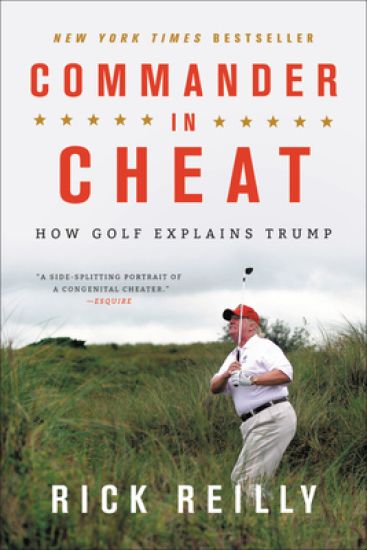
Commander in Cheat: How Golf Explains Trump

Commander in Cheat: How Golf Explains Trump

Rick Reilly

Grand Central Publishing
2020
nidottu
NEW YORK TIMES BESTSELLER "Reilly pokes more holes in Trump's claims than there are sand traps on all of his courses combined. It is by turns amusing and alarming."-- The New Yorker "Golf is the spine of this shocking, wildly humorous book, but humanity is its flesh and spirit." -- Chicago Sun-Times "Every one of Trump's most disgusting qualities surfaces in golf." -- The Ringer Donald Trump loves golf. He loves to play it, buy it, build it, and operate it. He owns 14 courses around the world and runs another five, all of which he insists are the best on the planet. He also claims he's a 3 handicap, almost never loses, and has won an astonishing 18 club championships. How much of all that is true? Almost none of it, acclaimed sportswriter Rick Reilly reveals in this unsparing look at Trump in the world of golf. Based on Reilly's own experiences with Trump as well as interviews with over 100 golf pros, amateurs, developers, and caddies, Commander in Cheat is a startling and at times hilarious indictment of Trump and his golf game. You'll learn how Trump cheats (sometimes with the help of his caddies and Secret Service agents), lies about his scores (the "Trump Bump"), tells whoppers about the rank of his courses and their worth (declaring that every one of them is worth $50 million), and tramples the etiquette of the game (driving on greens doesn't help). Trump doesn't brag so much, though, about the golf contractors he stiffs, the course neighbors he intimidates, or the way his golf decisions wind up infecting his political ones. For Trump, it's always about winning. To do it, he uses the tricks he picked up from the hustlers at the public course where he learned the game as a college kid, and then polished as one of the most bombastic businessmen of our time. As Reilly writes, "Golf is like bicycle shorts. It reveals a lot about a man." Commander in Cheat "paints a side-splitting portrait of a congenital cheater" (Esquire), revealing all kinds of unsightly truths Trump has been hiding.
Commander of Invisible Army of Allah

Commander of Invisible Army of Allah

Sheikh Yasin Muhammad Yaqeenullah

Lulu.com
2019
pokkari
Believing in Angels is the second pillar of Islam out of six pillars as perfect messengers of Allah Subhanahu Wataala. They only speak to chosen ones among pious believers for a very special purpose, but even if we get a chance to speak to them, we confuse them with Jinnat, simply because Jinnat are also unseen and often possess human beings and use their hearts and energy, others become part of their lives as useful family members, or gods for those who worship them. Meet the author sharing his experience of chatting live with a blessed angel from heaven on phone and messages are synchronized to his email account as a clear proof that he talked to Angels as a point of approach for dawah to call towards Islam and strengthen our faith in blessed Angels, they are closer to us in every blink of an eye but they are limited in communication with us because our hearts are naturally sealed and closed for communication with spiritual beings.
Commander in Chief: How Truman, Johnson, and Bush Turned a Presidential Power Into a Threat to America's Future
How Korea, Vietnam, and Iraq Made The Commander In Chief and Foretell the Future of America This is a story of ever-expanding presidential powers in an age of unwinnable wars. Harry Truman and Korea, Lyndon Johnson and Vietnam, George W. Bush and Iraq: three presidents, three ever broader interpretations of the commander in chief clause of the Constitution, three unwinnable wars, and three presidential secrets. Award-winning presidential biographer and military historian Geoffrey Perret places these men and events in the larger context of the post-World War II world to establish their collective legacy: a presidency so powerful it undermines the checks and balances built into the Constitution, thereby creating a permanent threat to the Constitution itself. In choosing to fight in Korea, Vietnam, and Iraq, Truman, Johnson, and Bush alike took counsel of their fears, ignored the advice of the professional military and major allies, and were influenced by facts kept from public view. Convinced that an ever-more powerful commander in chief was the key to victory, they misread the moment. Since World War II wars have become tests of stamina rather than strength, and more likely than not they sow the seeds of future wars. Yet recent American presidents have chosen to place their country in the forefront of fighting them. In the course of doing so, however, they gave away the secret of American power--for all its might, the United States can be defeated by chaos and anarchy.
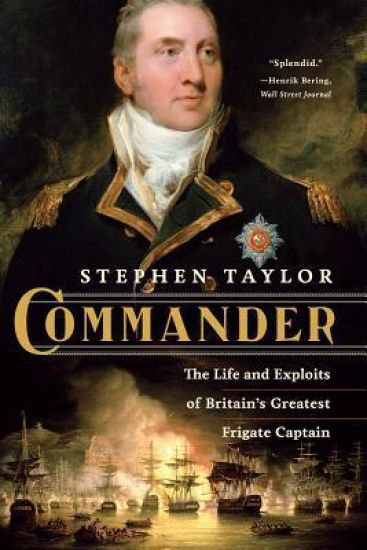
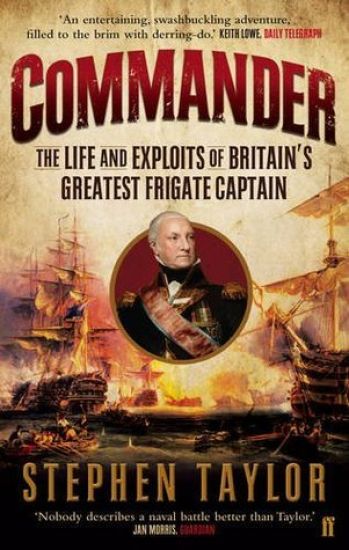
Commander

Commander

WW Norton Co
2013
pokkari
Edward Pellew, captain of the legendary Indefatigable, was quite simply the greatest British frigate captain in the age of sail. Left fatherless at age eight, with a penniless mother and five siblings, Pellew fought his way from the very bottom of the navy to fleet command. Victories and eye-catching feats won him a public following. Yet he had a gift for antagonizing his better-born peers, and he made powerful enemies. Redemption came with his last command, when he set off to do battle with the Barbary States and free thousands of European slaves. Opinion held this to be an impossible mission, and Pellew himself, leading from the front in the style of his contemporary Nelson, did not expect to survive. Pellew s humanity, fondness for subordinates, and blind love for his family, and the warmth and intimacy of his letters, make him a hugely engaging figure. Stephen Taylor gives him at last the biography he deserves."
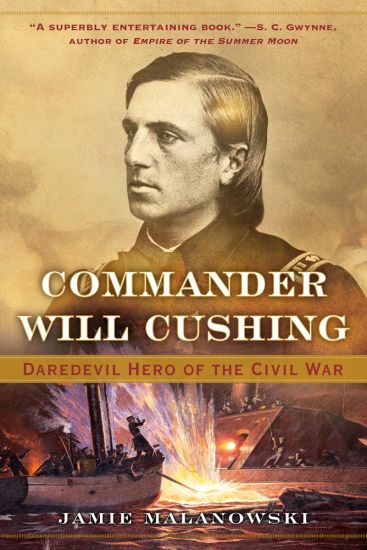
Commander Will Cushing: Daredevil Hero of the Civil War

Commander Will Cushing: Daredevil Hero of the Civil War

Jamie Malanowski

W. W. Norton Company
2015
nidottu
October 1864. The confederate ironclad CSS Albemarle had sunk two federal warships and damaged seven others, taking control of the Roanoke River and threatening the Union blockade. Twenty-one-year-old navy lieutenant William Barker Cushing hatched a daring plan: to attack the fearsome warship with a few dozen men in two small wooden boats. What followed, the close-range torpedoing of the Albemarle and Cushing's harrowing two-day escape downriver from vengeful Rebel posses, is one of the most dramatic individual exploits in American military history. Theodore Roosevelt said that Cushing "comes next to Farragut on the hero roll of American naval history," but most have never heard of him today. Tossed out of the Naval Academy for "buffoonery," Cushing proved himself a prodigy in behind-the-lines warfare. Given command of a small union ship, he performed daring, near-suicidal raids, "cutting out" confederate ships and thwarting blockade runners. With higher commands and larger ships, Cushing's exploits grow bolder, culminating in the sinking of the Albemarle.A thrilling narrative biography, steeped in the tactics, weaponry, and battle techniques of the Union Navy, Commander Will Cushing brings to life a compelling yet flawed figure. Along with his three brothers, including one who fell at Gettysburg, Cushing served with bravery and heroism. But he was irascible and complicated--a loveable rogue, prideful and impulsive, who nonetheless possessed a genius for combat.In telling Cushing's story, Malanowski paints a vivid, memorable portrait of the army officials, engineers, and politicians scrambling to win the war. But he also goes deeper into the psychology of the daredevil soldier--and what this heroic and tragic figure, who died before his time, can tell us about the ways we remember the glories of war.
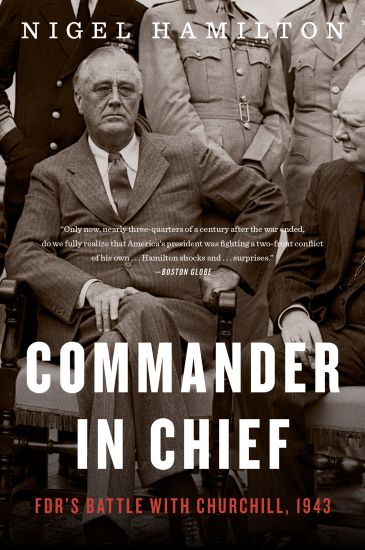
Commander in Chief: Fdr's Battle with Churchill, 1943
From Nigel Hamilton's acclaimed World War II saga, the astonishing story of FDR's yearlong, defining battle with Churchill in 1943, as the war raged in Africa and Italy.1943 was the year of Allied military counteroffensives, beating back the forces of the Axis powers in North Africa and the Pacific--the "Hinge of Fate," as Winston Churchill called it. In Commander in Chief, Nigel Hamilton reveals FDR's true role in this saga: overruling his own Joint Chiefs of Staff, ordering American airmen on an ambush of the Japanese navy's Admiral Yamamoto, facing down Churchill when he attempted to abandon Allied D-day strategy (twice). This FDR is profoundly different from the one Churchill later painted. President Roosevelt's patience was tested to the limit quelling the prime minister's "revolt," as Churchill pressured Congress and senior American leaders to focus Allied energy on disastrous fighting in Italy and the Aegean instead of landings in Normandy. Finally, in a dramatic showdown at Hyde Park, FDR had to stop Churchill from losing the war by making the ultimate threat, setting the Allies on their course to final victory. In Commander in Chief, Hamilton masterfully chronicles the clash of nations--and of two titanic personalities--at a crucial moment in modern history.
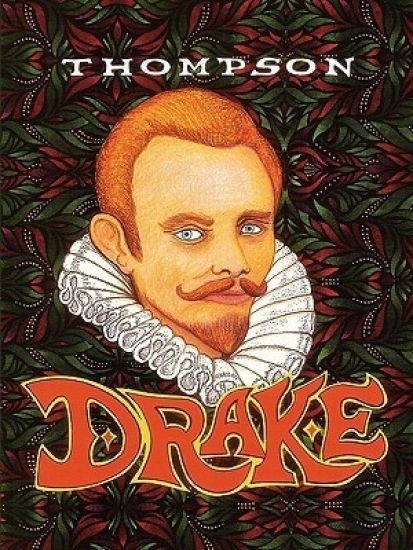
Commander Francis Drake & the West Coast Mysteries
Discovery of Drake's "lost" navigational chart finally reveals secrets behind his voyage to America's West Coast in 1579. The secret location of Drake's colony "New Albion" is finally identified. This was the "first" British colony in America; and it marks the beginning of the British Empire. At last, we know the reason for an ongoing feud between Queen Elizabeth and Sir Francis. He wanted desperately to rescue the shipmates that he left behind in New Albion. Drake used a shipboard clock to map the West Coast. This is the first map of America that was made using a chronometer: thus Drake's map is accurate to within 15-degrees of the true longitude. Drake was not "just a pirate" as most historians assume. He was a naturalist, ethnographer, and geographer. Drake's map and his new ship design opened the way for the Dutch East India Company.
Commander

Commander

Stephen Taylor

Faber Faber
2013
pokkari
Edward Pellew, captain of the legendary Indefatigable, was quite simply the greatest frigate captain in the age of sail. An incomparable seaman, ferociously combative yet chivalrous, a master of the quarterdeck and an athlete of the tops, he was as quick to welcome a gallant foe into his cabin as to dive to the rescue of a man overboard. He is the likely model for the heroic but all-too-human Jack Aubrey in Patrick O'Brian's novels.Pellew was orphaned at eight, but fought his way from the very bottom of the Navy to fleet command and a viscountcy. Victories and eye-catching feats won him a public following. Yet as an outsider with a gift for antagonizing his better-born peers, he made powerful enemies. Redemption came with his last command, when he set off to do battle with the Barbary States and free thousands of European slaves. Contemporary opinion held this to be an impossible mission, and Pellew himself, in leading from the front in the style of his direct contemporary Nelson, did not expect to survive.Pellew's humanity as much as his gallantry, fondness for subordinates and blind love for his family, and the warmth and intimacy of his letters, make him a hugely engaging and sympathetic figure. In Stephen Taylor's magnificent new life he at last has the biography he deserves.
Commanders

Commanders

Lennart Svensson

Manticore Press
2018
pokkari
Commanders is a collection of biographies about American generals. It takes a look at American history from the Civil War to the Gulf War by telling the stories of the generals commanding the wars - from Lee to Schwarzkopf.Written as popular history, each general is individually described. Author Lennart Svensson does everything from telling anecdotes, reflecting on culture, war and history, to musing over operational details, meticulously narrating each general's story. Commanders provides "good stories, well told" in the genre of the historical essay. At the end of the book there is also a chapter examining topics such as the mirroring of American wars in literature and film.As Svensson says in the introduction: "these are war stories, told by the fireside with a glass of whisky in the hand."The study includes the following generals: Robert E. Lee George G. Meade U. S. Grant Thomas "Stonewall" Jackson George B. McClellan George A. Custer John J. Pershing George C. Marshall Douglas MacArthur George S. Patton Dwight D. Eisenhower Omar N. Bradley Claire Lee Chennault James H. Doolittle Leslie R. Groves Charles E. Yeager Schwarzkopf
Commander of All Lincoln’s Armies

Commander of All Lincoln’s Armies

John F. Marszalek

The Belknap Press
2004
sidottu
In the summer of 1862, President Lincoln called General Henry W. Halleck to Washington, D.C., to take command of all Union armies in the death struggle against the Confederacy. For the next two turbulent years, Halleck was Lincoln's chief war advisor, the man the President deferred to in all military matters. Yet, despite the fact that he was commanding general far longer than his successor, Ulysses S. Grant, he is remembered only as a failed man, ignored by posterity. In the first comprehensive biography of Halleck, the prize-winning historian John F. Marszalek recreates the life of a man of enormous achievement who bungled his most important mission. When Lincoln summoned him to the nation's capital, Halleck boasted outstanding qualifications as a military theorist, a legal scholar, a brave soldier, and a California entrepreneur. Yet in the thick of battle, he couldn't make essential decisions. Unable to produce victory for the Union forces, he saw his power become subsumed by Grant's emergent leadership, a loss that paved the way for Halleck's path to obscurity. Harnessing previously unused research, as well as the insights of modern medicine and psychology, Marszalek unearths the seeds of Halleck's fatal wartime indecisiveness in personality traits and health problems. In this brilliant dissection of a rich and disappointed life, we gain new understanding of how the key decisions of the Civil War were taken, as well as insight into the making of effective military leadership.