Kirjojen hintavertailu. Mukana 11 244 527 kirjaa ja 12 kauppaa.

Kirjahaku

Etsi kirjoja tekijän nimen, kirjan nimen tai ISBN:n perusteella.

1000 tulosta hakusanalla Conrad Mbewe

Conrad and Nature
Conrad and Nature is the first collection of critical essays examining nature and the environment in Joseph Conrad’s writings. Together, these essays by established and emerging scholars reveal both the crucial importance of nature in Conrad’s work, and the vital, ongoing relevance of Conrad’s treatment of the environment in our era of globalization and climate change. No richer subject matter for an environmentally-engaged criticism can be found than the Conradian contexts and themes under investigation in this volume: island cultures, colonial occupations, storms at sea, mining and extraction, inconstant weather, ecological collapse, and human communities competing for resources. The 17 essays collected here —13 new essays, and 4 excerpts from classic works of Conradian scholarship -- consolidate some of the most important voices and perspectives on Conrad’s relation to the natural world, and open new avenues for Conradian and environmental scholarship in the 21st century.
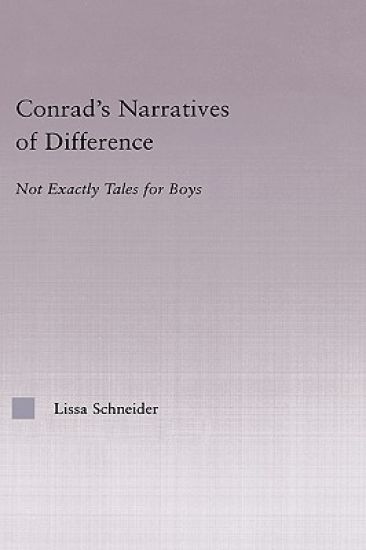
Conrad's Narratives of Difference

Conrad's Narratives of Difference

Lissa Schneider

Routledge
2014
nidottu
In Joseph Conrad’s tales, representations of women and of "feminine" generic forms like the romance are often present in fugitive ways. Conrad’s use of allegorical feminine imagery, fleet or deferred introductions of female characters, and hybrid generic structures that combine features of "masculine" tales of adventure and intrigue and "feminine" dramas of love or domesticity are among the subjects of this literary study. Many of Conrad’s critics have argued that Conrad’s fictions are aesthetically flawed by the inclusion of women and love plots; thus Thomas Moser has questioned why Conrad did not "cut them out altogether." Yet a thematics of gender suffuses Conrad’s narrative strategies. Even in tales that contain no significant female characters or obvious love plots, Conrad introduces elusive feminine presences, in relationships between men, as well as in men’s relationships to their ship, the sea, a shore breeze, or even in the gendered embrace of death. This book investigates an identifiably feminine "point of view" which is present in fugitive ways throughout Conrad’s canon. Conrad’s narrative strategies are articulated through a language of sexual difference that provides the vocabulary and grammar for tales examining European class, racial, and gender paradigms to provide acute and, at times, equivocal investigations of femininity and difference.
Conrad's Narratives of Difference

Conrad's Narratives of Difference

Lissa Schneider

Routledge
2003
sidottu
In Joseph Conrad’s tales, representations of women and of "feminine" generic forms like the romance are often present in fugitive ways. Conrad’s use of allegorical feminine imagery, fleet or deferred introductions of female characters, and hybrid generic structures that combine features of "masculine" tales of adventure and intrigue and "feminine" dramas of love or domesticity are among the subjects of this literary study. Many of Conrad’s critics have argued that Conrad’s fictions are aesthetically flawed by the inclusion of women and love plots; thus Thomas Moser has questioned why Conrad did not "cut them out altogether." Yet a thematics of gender suffuses Conrad’s narrative strategies. Even in tales that contain no significant female characters or obvious love plots, Conrad introduces elusive feminine presences, in relationships between men, as well as in men’s relationships to their ship, the sea, a shore breeze, or even in the gendered embrace of death. This book investigates an identifiably feminine "point of view" which is present in fugitive ways throughout Conrad’s canon. Conrad’s narrative strategies are articulated through a language of sexual difference that provides the vocabulary and grammar for tales examining European class, racial, and gender paradigms to provide acute and, at times, equivocal investigations of femininity and difference.
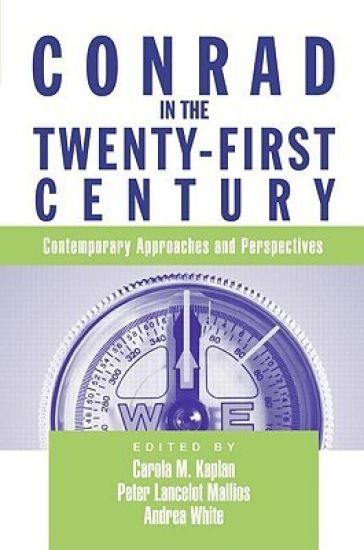
Conrad in the Twenty-First Century
Best known as the author of Heart of Darkness , Joseph Conrad (1857-1924) is one of the most widely taught writers in the English language. Conrad's work has taken on a new importance in the dawning of the 21st century: in the wake of September 11 many cultural commentators returned to his novel The Secret Agent to discuss the roots of terrorism, and the overarching theme of colonialism in much of his work has positioned his writing as central to not only literature scholars, but also to postcolonial and cultural studies scholars and, more recently, to scholars interested in globalization. Reading Conrad Now is a collection of original essays by leading Conrad scholars that rereads Conrad in light of his representations of post-colonialism, of empire, imperialism, and of modernism and modernity-questions that are once again relevant today. The collection is framed by an introduction by J. Hillis Miller-one of the most important literary critics today-and a concluding extensive interview with Edward Said (one of his final interviews before his death on September 25, 2003)- the most prominent postcolonial critic-addressing his lifelong fascination with Conrad. Reading Conrad Now will be essential reading for anyone seeking a contemporary introduction to this great writer, and will be of great interest to scholars working with Conrad in a variety of fields including literary studies, cultural studies, ethnic and area studies, and postcolonial studies.
Conrad in the Twenty-First Century
Best known as the author of Heart of Darkness , Joseph Conrad (1857-1924) is one of the most widely taught writers in the English language. Conrad's work has taken on a new importance in the dawning of the 21st century: in the wake of September 11 many cultural commentators returned to his novel The Secret Agent to discuss the roots of terrorism, and the overarching theme of colonialism in much of his work has positioned his writing as central to not only literature scholars, but also to postcolonial and cultural studies scholars and, more recently, to scholars interested in globalization. Reading Conrad Now is a collection of original essays by leading Conrad scholars that rereads Conrad in light of his representations of post-colonialism, of empire, imperialism, and of modernism and modernity-questions that are once again relevant today. The collection is framed by an introduction by J. Hillis Miller-one of the most important literary critics today-and a concluding extensive interview with Edward Said (one of his final interviews before his death on September 25, 2003)- the most prominent postcolonial critic-addressing his lifelong fascination with Conrad. Reading Conrad Now will be essential reading for anyone seeking a contemporary introduction to this great writer, and will be of great interest to scholars working with Conrad in a variety of fields including literary studies, cultural studies, ethnic and area studies, and postcolonial studies.
Conrad's Short Fiction

Conrad's Short Fiction

Lawrence Graver

University of California Press
2021
pokkari
In recent years, critics and readers alike have increasingly recognized the unique brilliance of Joseph Conrad's short fiction, elevating it to the pinnacle of his artistic achievements. Marvin Mudrick, in his provocative analysis, even argues that Conrad’s finest works are his novellas, suggesting that their compact scope perfectly channels his intense moral and psychological explorations. While Mudrick's view might challenge the centrality of Conrad’s renowned novels like Lord Jim or Nostromo, it highlights the enduring power of works such as Typhoon, The Shadow-Line, and Heart of Darkness, which encapsulate Conrad’s themes with unparalleled clarity and force. This book delves into Conrad's mastery of short fiction, examining his evolution as a writer and the creative tensions he navigated. Conrad’s “long-short” stories, as he termed them, straddle the line between compact storytelling and the expansive narrative techniques of the novel. With works often ranging around 30,000 to 40,000 words—his ideal length for achieving narrative depth and realism—Conrad forged a form that resonated deeply with his artistic sensibilities, even if it challenged market conventions. By exploring the thematic and structural intricacies of his short fiction, this study reveals how Conrad’s tales reflect his quest for a balance between innovation, moral complexity, and reader engagement. This title is part of UC Press's Voices Revived program, which commemorates University of California Press’s mission to seek out and cultivate the brightest minds and give them voice, reach, and impact. Drawing on a backlist dating to 1893, Voices Revived makes high-quality, peer-reviewed scholarship accessible once again using print-on-demand technology. This title was originally published in 1969.
Conrad's Short Fiction

Conrad's Short Fiction

Lawrence Graver

University of California Press
2021
sidottu
In recent years, critics and readers alike have increasingly recognized the unique brilliance of Joseph Conrad's short fiction, elevating it to the pinnacle of his artistic achievements. Marvin Mudrick, in his provocative analysis, even argues that Conrad’s finest works are his novellas, suggesting that their compact scope perfectly channels his intense moral and psychological explorations. While Mudrick's view might challenge the centrality of Conrad’s renowned novels like Lord Jim or Nostromo, it highlights the enduring power of works such as Typhoon, The Shadow-Line, and Heart of Darkness, which encapsulate Conrad’s themes with unparalleled clarity and force. This book delves into Conrad's mastery of short fiction, examining his evolution as a writer and the creative tensions he navigated. Conrad’s “long-short” stories, as he termed them, straddle the line between compact storytelling and the expansive narrative techniques of the novel. With works often ranging around 30,000 to 40,000 words—his ideal length for achieving narrative depth and realism—Conrad forged a form that resonated deeply with his artistic sensibilities, even if it challenged market conventions. By exploring the thematic and structural intricacies of his short fiction, this study reveals how Conrad’s tales reflect his quest for a balance between innovation, moral complexity, and reader engagement. This title is part of UC Press's Voices Revived program, which commemorates University of California Press’s mission to seek out and cultivate the brightest minds and give them voice, reach, and impact. Drawing on a backlist dating to 1893, Voices Revived makes high-quality, peer-reviewed scholarship accessible once again using print-on-demand technology. This title was originally published in 1969.
Conrad in Perspective

Conrad in Perspective

Zdzislaw Najder

Cambridge University Press
2005
pokkari
Zdzislaw Najder, one of the world's leading authorities on Joseph Conrad and author of the major biography Joseph Conrad: A Chronicle (1983), is widely acclaimed for his particular insights into Conrad's Polish background. The fruits of thirty years of Conrad study appear in this landmark volume of his essays, which explore a wide range of topics: Conrad's national and cultural heritage; his fictions, from the unfinished 'Sisters' and Lord Jim to The Secret Agent; his attitude towards Russia in general and Dostoevsky in particular; his concepts of man and society; and the role of the idea of honour in his work. In a series of more general essays Najder goes on to place Conrad's work within a broad European philosophical, political and literary context. Conrad in Perspective offers new insights into the life and work of one of the twentieth century's greatest novelists by one of his most perceptive critics.
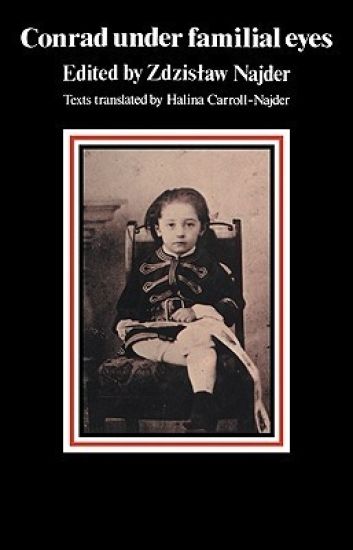
Conrad under Familial Eyes

Conrad under Familial Eyes

Cambridge University Press
2006
pokkari
This volume brings together a wide range of letters and documents which collectively shed a great deal of light on Joseph Conrad's cultural roots, a subject of growing interest in recent years. The texts have been edited by Professor Zdzislaw Najder, one of the most eminent of Conrad scholars, and translated by Halina Carroll-Najder. Very few of the texts collected here have been made available in English before; many have never appeared in the original Polish. The texts are grouped according to the events and subjects referred to. A significant collection of letters by Conrad's parents is particularly revealing. His mother, Ewa, emerges as a deeply patriotic and religious woman who was intensely loyal to her husband. His father, Apollo, was a complex man; proud, self-centered, even opinionated, he was a poet and writer of satirical comedies as well as being an outspoken democrat and fierce patriot. A different influence on the young Conrad was exerted by his uncle - guardian, Tadeusz Bobrowski, a levelheaded rationalist and enlightened liberal; numerous fragments of his memoirs are included in the book. His book will be an essential tool of reference for all serious students of Conrad.
Conrad on Film

Conrad on Film

Cambridge University Press
2006
pokkari
This book offers the first comprehensive, international survey of more than eighty films and videos based on the life and work of Joseph Conrad. Essays by leading film and literary scholars examine the films, both in the context of film history and technology, and in terms of the theoretical and practical problems facing directors - including Alfred Hitchcock, Orson Welles, Francis Ford Coppola and Andrzej Wajda - who have attempted to put Conrad on film. Conrad was the first major English author to adapt his work for the screen, and the story of his unpublished 'film-play' is told in an important chapter. The challenges of finding visual analogues for Conrad's narrative irony and filmic equivalents for his narrators are also examined. The volume is well illustrated and includes a detailed filmography and film bibliography, making it a landmark study of Conrad films and film adaptations in general.
Conrad and Impressionism

Conrad and Impressionism

John G. Peters

Cambridge University Press
2007
pokkari
In this 2001 book, John Peters investigates the impact of Impressionism on Conrad and links this to his literary techniques as well as his philosophical and political views. Impressionism, Peters argues, enabled Conrad to encompass both surface and depth not only in visually perceived phenomena but also in his narratives and objects of consciousness, be they physical objects, human subjects, events or ideas. Though traditionally thought of as a sceptical writer, Peters claims that through Impressionism Conrad developed a coherent and mostly traditional view of ethical and political principles, a claim he supports through reference to a broad range of Conrad's texts. Conrad and Impressionism investigates the sources and implications of Conrad's impressionism in order to argue for a consistent link between his literary technique, philosophical presuppositions and socio-political views. The same core ideas concerning the nature of human experience run throughout his works.
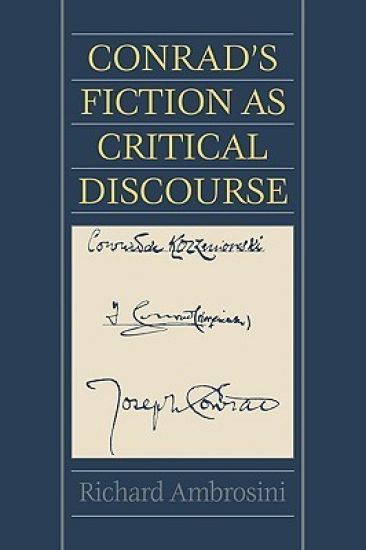
Conrad's Fiction as Critical Discourse

Conrad's Fiction as Critical Discourse

Richard Ambrosini

Cambridge University Press
2008
pokkari
Joseph Conrad's comments about his works have commonly been dismissed as theoretically unsophisticated, while the critical notions of James, Woolf and Joyce have come to shape our understanding of the modern novel. Richard Ambrosini's study of Conrad's Fiction as Critical Discourse makes an original claim for the importance of his theoretical ideas as they are formed, tested, and eventually redefined in Heart of Darkness and Lord Jim. Setting the narrator's discourse in these tales in the context of the dynamic interplay of Conrad's fictional with his non-fictional writings, and of the transformations in his narrative forms, Ambrosini defines Conrad's view of fiction and the artistic ideal underlying his commitment as a writer in a new and challenging way. Conrad's innovatory techniques as a novelist are shown in the continuity of his theoretical enterprise, from the early search for an artistic prose and a personal novel form, to the later dislocations of perspective achieved by manipulation of conventions drawn from popular fiction. This reassessment of Conrad's critical thought offers a new perspective on the transition from the Victorian novel to contemporary fiction.
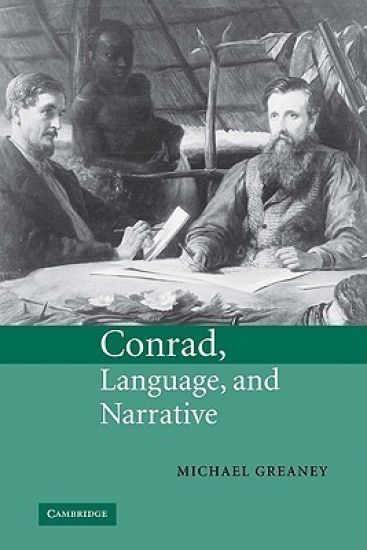
Conrad, Language, and Narrative

Conrad, Language, and Narrative

Michael Greaney

Cambridge University Press
2009
pokkari
In this re-evaluation of the writings of Joseph Conrad, Michael Greaney places language and narrative at the heart of his literary achievement. A trilingual Polish expatriate, Conrad brought a formidable linguistic self-consciousness to the English novel; tensions between speech and writing are the defining obsessions of his career. He sought very early on to develop a 'writing of the voice' based on oral or communal modes of storytelling. Greaney argues that the 'yarns' of his nautical raconteur Marlow are the most challenging expression of this voice-centred aesthetic. But Conrad's suspicion that words are fundamentally untrustworthy is present in everything he wrote. The political novels of his middle period represent a breakthrough from traditional storytelling into the writerly aesthetic of high modernism. Greaney offers an examination of a wide range of Conrad's work which combines recent critical approaches to language in post-structuralism with an impressive command of linguistic theory.
Conrad under Familial Eyes

Conrad under Familial Eyes

Cambridge University Press
1984
sidottu
This volume brings together a wide range of letters and documents which collectively shed a great deal of light on Joseph Conrad's cultural roots. A significant collection of letters by Conrad's parents is particularly revealing, and emphasizes the different influences on the young boy.
Conrad's Eastern World

Conrad's Eastern World

Norman Sherry

Cambridge University Press
1977
pokkari
A book for those interested in Conrad's life and work and/or literary detection convincingly performed. Professor Sherry establishes how well Conrad knew the East and how the original material he garnered there was supplemented from other sources; he also shows what Conrad made of his experiences, thus revealing clearly what the artist's own contribution was.
Conrad's Western World

Conrad's Western World

Norman Sherry

Cambridge University Press
1980
pokkari
Conrad's Western World traces the sources of Heart of Darkness, Nostromo, The Secret Agent and some of the short stories related to these novels. As in his highly acclaimed Conrad's Eastern World, Professor Sherry provides an interesting blend of biographical reconstruction and investigation into the originals of the main incidents and characters - Kurtz, Nostromo, Verloc and many of the minor figures as well. It has been possible to show in the study of Conrad's source material a movement away from analyses of personal experience or the narrated experiences of others to a manipulation of material entirely outside the bounds of his own experience. This change reveals also a movement in interest from personal and private dilemmas to wider and more public concerns, and shows Conrad developing a progressive sense of the frightening underside of human society. Finally, Professor Sherry considers the play of Conrad's mind over his source material and traces the development of individual works from the given sources to the completed fiction. This reconstruction of Conrad's original materials and the tracing of their development into literary works of great distinction gives us a unique insight into Conrad's preoccupations and art.
Conrad: Nostromo

Conrad: Nostromo

Watt Ian

Cambridge University Press
1988
pokkari
Conrad's great novel is a rich study not only of a typical South American country, but of the politics of any underdeveloped country, and for this reason it is permanently topical. Ian Watt addresses Conrad's concerns when writing the work, and provides an accessible introduction, taking account of background, history and politics, and reception and influence.
Conrad's Fiction as Critical Discourse

Conrad's Fiction as Critical Discourse

Richard Ambrosini

Cambridge University Press
1991
sidottu
Joseph Conrad’s comments about his works have until now been dismissed as theoretically unsophisticated, while the critical notions of James, Woolf and Joyce have come to shape our understanding of the modern novel. Richard Ambrosini’s study of Conrad’s Fiction as Critical Discourse makes and original claim for the importance of his theoretical ideas as they are formed, tested, and eventually redefined in ‘Heart of Darkness’ and Lord Jim. Setting the narrator’s discourse in these tales in the context of the dynamic interplay of Conrad’s fictional with his non-fictional writings, and of the transformations in his narrative forms, Ambrosini defines Conrad’s view of fiction and the artistic ideal underlying his commitment as a writer in a new and challenging way. Conrad’s innovatory techniques as a novelist are shown in the continuity of his theoretical enterprise, from the early search for an artistic prose and a personal novel form, to the later dislocations of perspective achieved by manipulation of conventions drawn from popular fiction. This reassessment of Conrad’s critical thought offers a new perspective on the transition from the Victorian novel to contemporary fiction.