Constructing Quantum Mechanics is the first of two volumes on the genesis of quantum mechanics. This volume traces the early contributions by Planck, Einstein, and Bohr, all showing the need for drastic changes to the physics of their day. It examines the efforts by Sommerfeld and others to develop a new theory, now known as the old quantum theory. After some striking successes, this theory ran into serious difficulties and ended up serving as the scaffold on which the arch of modern quantum mechanics was built. This volume breaks new ground, both in its treatment of the work of Sommerfeld and his associates, and by offering new perspectives on classic papers by Planck, Einstein, Bohr, and others. Paying close attention to both primary and secondary sources, Constructing Quantum Mechanics provides an in-depth analysis of the heroic struggle to come to terms with the wealth of mostly spectroscopic data that eventually gave us modern quantum mechanics.
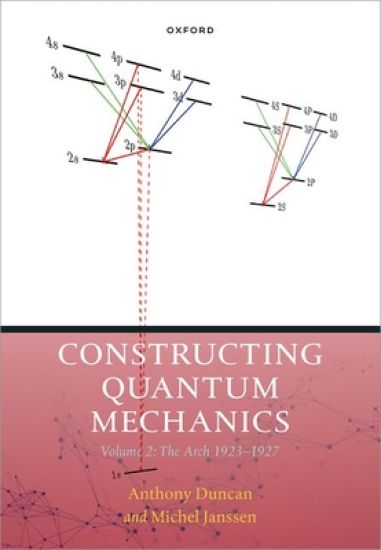
This is the second of two volumes on the genesis of quantum mechanics in the first quarter of the 20th century. It covers the period 1923-1927. After covering some of the difficulties the old quantum theory had run into by the early 1920s as well as the discovery of the exclusion principle and electron spin, it traces the emergence of two forms of the new quantum mechanics, matrix mechanics and wave mechanics, in the years 1923-27. It then shows how the new theory took care of some of the failures of the old theory and put its successes on a more solid basis. Finally, it shows how in 1927 the two forms of the new theory were unified, first through statistical transformation theory, then through the Hilbert space formalism. This volume provides a detailed analysis of the classic papers by Heisenberg, Born, Jordan, Dirac, De Broglie, Einstein, Schrödinger, von Neumann and other authors. Drawing on the correspondence of these and other physicists, their later reminiscences and the extensive secondary literature on the “quantum revolution”, this volume places these papers in the context of the discussions out of which modern quantum mechanics emerged. It argues that the genesis of modern quantum mechanics can be seen as the construction of an arch on a scaffold provided by the old quantum theory, discarded once the arch could support itself.
This two-volume book is on the genesis of quantum mechanics. The first volume covers the key developments in the period 1900-1923, which provided the scaffold on which the arch of modern quantum mechanics was built. This volume traces the early contributions by Planck, Einstein, and Bohr to the theories of black-body radiation, specific heats, and spectroscopy, all showing the need for drastic changes to the physics of their day. It examines the efforts by Sommerfeld and others to provide a new theory, now known as the old quantum theory. After some striking initial successes (explaining the fine structure of hydrogen, X-ray spectra, and the Stark effect), the old quantum theory ran into serious difficulties (failing to provide consistent models for helium and the Zeeman effect) and eventually gave way to matrix and wave mechanics. The second volume provides detailed analysis of the classic papers by Heisenberg, Born, Jordan, Dirac, De Broglie, Einstein, Schrödinger, von Neumann and other authors. Drawing on the correspondence of these and other physicists, their later reminiscences and the extensive secondary literature on the "quantum revolution," this volume places these papers in the context of the discussions out of which modern quantum mechanics emerged. It argues that the genesis of modern quantum mechanics can be seen as the construction of an arch on a scaffold provided by the old quantum theory, discarded once the arch could support itself.
Across the social sciences, scholars are increasingly showing how people 'work' to construct organizational life, including the rules and routines that shape and enable organizational activity, the identities of people who occupy organizations, and the societal norms and assumptions that provide the context for organizational action. The idea of work emphasizes the ways in which people and groups engage in purposeful, reflexive efforts rooted in an awareness of organizational life as constructed in human interaction and changeable through human effort. Studies of these efforts have identified new forms of work including emotion work, identity work, boundary work, strategy work, institutional work, and a host of others. Missing in these conversations, however, is a recognition that these forms of work are all part of a broader phenomenon driven by historical shifts that began with modernity and dramatically accelerated through the twentieth century. This book introduces the social-symbolic work perspective, which addresses this broader phenomenon. The social-symbolic work perspective integrates diverse streams of research to examine how people purposefully and reflexively work to construct organizational life, including the identities, technologies, boundaries, and strategies that constitute their organizations. In this book, the authors define social-symbolic work and introduce three forms - self work, organization work, and institutional work. Social-symbolic work highlights people's efforts to construct the social world, and focuses attention on the motivations, practices, resources, and effects of those efforts. This book explores eight distinct streams of social-symbolic work research, drawing on a broad range of examples from the worlds of business, politics, sports, social movements, and many others. It provides researchers, students, and practitioners with an integrative theoretical framework useful in understanding social-symbolic work, a survey of the main forms of social-symbolic work, a rich set of theoretical opportunities to inspire new studies, and practical methodological guidance for empirical research on social-symbolic work.
Constructing the Medieval Maritime State: Identity, Violence, and Connection in the Mediterranean explores how the small medieval kingdom of Denia in Spain became a powerful maritime state after the collapse of the Umayyad Caliphate. Its rulers built authority, not only through war and seafaring raids but also by connecting Denia to wider Mediterranean trade, diplomacy, and culture. The rise and evolution of the taifa of Denia is a powerful case study for understanding the construction of medieval maritime states in the Mediterranean. Travis Bruce situates Denia within the collapse of the Umayyad Caliphate and explores how its rulers forged legitimacy through identity formation, maritime violence, and regional connectivity. Denia's identity was negotiated through rulership, unfreedom, and cultural hybridity, and violence ^—^particularly predatory warfare and maritime jihad ^—^ functioned as both statecraft and economic extraction. At the same time, Denia's entanglement in commercial, diplomatic, and intellectual networks positioned it as a key node linking the Islamic Mediterranean and the Latin West. The state's trajectory cannot be reduced to narratives of decline or simple religious conflict but instead reveals a process of negotiation shaped by mobility, interdependence, and the fluid boundaries between public and private power. This narrative reframes Mediterranean history beyond Eurocentric paradigms and underscores the significance of Islamic maritime states within the wider medieval world.
An analysis of the policies and institutions used by the EU to create a single market. Drawing upon literature from several disciplines, this book develops an account of the regulatory strategies and institutional arrangements adopted, providing an evaluation of the process involved.
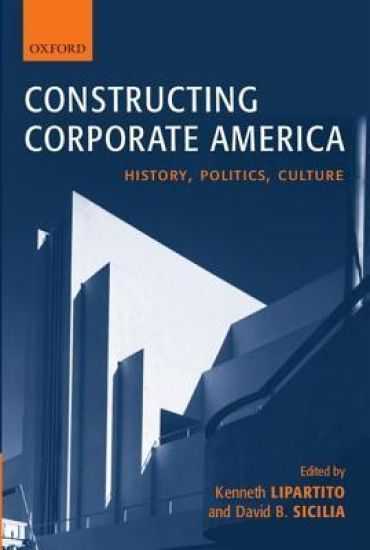
Why and how has the business corporation come to exert such a powerful influence on American society? The essays here take up this question, offering a fresh perspective on the ways in which the business corporation has assumed an enduring place in the modern capitalist economy and how it has affected American society, culture and politics. The authors challenge standard assumptions about the business corporation's emergence and performance in the United States since the 1800s. Reviewing in depth the different theoretical and historiographical traditions that have treated the corporation, the volume seeks a new departure that can more fully explain this crucial institution of capitalism. Rejecting assertions that the corporation is dead, the essays show that in fact it has survived and even thrived down to the present in part because of the ways in which it has related to its social, political and cultural environment. In doing so, the book breaks with older explanations ground in technology and economics, and treats the corporation as a fully social institution.
Why and how has the business corporation come to exert such a powerful influence on American society? The essays here take up this question, offering a fresh perspective on the ways in which the business corporation has assumed an enduring place in the modern capitalist economy, and how it has affected American society, culture and politics over the past two centuries. The authors challenge standard assumptions about the business corporation's emergence and performance in the United States over the past two centuries. Reviewing in depth the different theoretical and historiographical traditions that have treated the corporation, the volume seeks a new departure that can more fully explain this crucial institution of capitalism. Rejecting assertions that the corporation is dead, the essays show that in fact it has survived and even thrived down to the present in part because of the ways in which it has related to its social, political and cultural environmental. In doing so, the book breaks with older explanations ground in technology and economics, and treats the corporation for the first time as a fully social institution. Drawing on a variety of social theories and approaches, the essays help to point the way toward future studies of this powerful and enduring institution, offering a new periodization and a new set of question for scholars to explore. The range of essays engages the legal and political position of the corporation, the ways in which the corporation has been shaped by and shaped American culture, the controversies over corporate regulation and corporate power, and the efforts of minority and disadvantaged groups to gain access to the resources and opportunities that corporations control.
This volume aims to provoke reflection on the English conception and treatment of prisoners' rights, through juxtaposition with the conception of prisoners' rights in Germany. First, the German and English understandings of prisoners' legal status are examined; secondly these understandings are placed against the background of broader social, political, and legal factors; and thirdly, the methodological problems of comparative law are addressed. English and German approaches to prisoners' rights present illuminating contrasts. In England, despite significant judicial activity in the development of a jurisprudence of prisoners' rights, protection of prisoners' rights remains partial and equivocal. Many aspects of prison life are left within the realm of executive discretion. This equivocal commitment to rights in England is juxtaposed with Germany's highly articulated rights culture and its ambitious system of prisoners' rights protection under the Prison Act 1976. The German Prison Act sets out foundational principles of prison administration, affords prisoners positive rights, defines the limitations of prisoners' constitutional rights, and provides prisoners with recourse to a Prison Court. Moreover, these rights and principles have been developed and refined in a substantial body of prison law jurisprudence over the last thirty years.
Despite plentiful discussion at various times, the personal victim has traditionally been afforded almost no formal role in the criminal justice process. Victims' rights have always met with stout opposition from both judges and the Lord Chancellor, who have guarded defendants' rights; the maintenance of professionally-controlled and emotionally unencumbered trials; and the doctrine that crime is at heart an offence against society, State, or Sovereign. Constructing Victims' Rights provides a detailed account of how this opposition was overcome, and of the progressive redefinition of victims of crime, culminating in 2003 in proposals for awarding near-rights to victims of crime. Based upon extensive observation, primary papers, and interviews, Paul Rock examines changes in the forms of criminal justice policy-making within the New Labour Government, observing how they shaped political representations and activities centred on victims of crime. He reveals how the issues of new managerialism, restorative justice, human rights, race and racism (after the death of Stephen Lawrence), and the treatment of rape victims after the trial of Ralston Edwards came to form a critical mass that required ordering and reconstruction. Constructing Victims' Rights unpicks and explains the resultant battery of proposals and the deft policy manoeuvre contained in the Domestic Violence, Crime, and Victims Bill of 2003. This, the solution to a seemingly intractable problem, was a work of finesse, proposing on the one hand, the imposition of statutory duties on criminal justice agencies and the granting of access to an Ombudsman, and on the other, a National Victims' Advisory Panel that would afford victims a symbolic voice, and a symbolic champion: a Commissioner for Victims and Witnesses.
Natasha O'Hear considers seven different visualisations of all or part of the Book of Revelation across a range of different media, from illuminated manuscripts, to tapestries, to altarpieces to paintings woodcut prints. Artists featured include the Van Eycks, Memling, Botticelli, Dürer and Cranach the Elder. This study is a contribution to the history of interpretation of the Book of Revelation in the Late Medieval and Early Modern period in the form of seven visual case studies ranging from 1250-1522. It is also is an attempt to understand the different ways in which images exhibit hermeneutical strategies akin to what is found in textual exegesis, but with the peculiar properties of synchronicity of both subject-matter and effect that distinguish them from reading a text. The book explores the multi-faceted scope of visual exegesis as a way of exploring the content and the character of a biblical text such as The Book of Revelation, as well as the complementary relationship between textual and visual exegesis.
Constructing a Policy-Making State? sets out to examine the processes by which Europeanization takes place. Europeanization is defined as the process by which the key decisions about public policies are gradually transferred to the European level (or for new policy areas, emerge at the European level). This is in contrast to definitions of Europeanization which focus on the adaption of member states to European public policies. Thus, the main focus is whether a European Union 'policy-making state' is being created via changes in the distribution of power between member states and the European level institutions over time. In addition to several overview chapters (such as on agenda setting in the EU), there are twelve sectoral studies which analyse the differing trajectories and outcomes of the Europeanization process and the extent to which the European Union can make 'authoritative allocations'. The case studies have been selected in order to illustrate the degree of cross-sectoral variation in the process of Europeanization, from sectors which have yet to see very much Europeanization, such as health, to sectors such as competition policy which are almost fully Europeanized. The book is consciously multi-theoretic in its approach, drawing on a range of theories and concepts, from theories of European integration, to theories of public policy processes.
David Chalmers develops a picture of reality on which all truths can be derived from a limited class of basic truths. The picture is inspired by Rudolf Carnap's construction of the world in Der Logische Aufbau Der Welt. Carnap's Aufbau is often seen as a noble failure, but Chalmers argues that a version of the project can succeed. With the right basic elements and the right derivation relation, we can indeed construct the world. The focal point of Chalmers' project is scrutability: the thesis that ideal reasoning from a limited class of basic truths yields all truths about the world. Chalmers first argues for the scrutability thesis and then considers how small the base can be. The result is a framework in "metaphysical epistemology": epistemology in service of a global picture of the world. The scrutability framework has ramifications throughout philosophy. Using it, Chalmers defends a broadly Fregean approach to meaning, argues for an internalist approach to the contents of thought, and rebuts W.V. Quine's arguments against the analytic and the a priori. He also uses scrutability to analyze the unity of science, to defend a sort of conceptual metaphysics, and to mount a structuralist response to skepticism. Based on Chalmers's 2010 John Locke lectures, Constructing the World opens up debate on central philosophical issues concerning knowledge, language, mind, and reality.
David J. Chalmers constructs a highly ambitious and original picture of the world, from a few basic elements. He develops and extends Rudolf Carnap's attempt to do the same in Der Logische Aufbau Der Welt (1928). Carnap gave a blueprint for describing the entire world using a limited vocabulary, so that all truths about the world could be derived from that description--but his Aufbau is often seen as a noble failure. In Constructing the World, Chalmers argues that something like the Aufbau project can succeed. With the right vocabulary and the right derivation relation, we can indeed construct the world. The focal point of Chalmers's project is scrutability: roughly, the thesis that ideal reasoning from a limited class of basic truths yields all truths about the world. Chalmers first argues for the scrutability thesis and then considers how small the base can be. All this can be seen as a project in metaphysical epistemology: epistemology in service of a global picture of the world and of our conception thereof. The scrutability framework has ramifications throughout philosophy. Using it, Chalmers defends a broadly Fregean approach to meaning, argues for an internalist approach to the contents of thought, and rebuts W. V. Quine's arguments against the analytic and the a priori. He also uses scrutability to analyze the unity of science, to defend a conceptual approach to metaphysics, and to mount a structuralist response to skepticism. Based on Chalmers's 2010 John Locke lectures, Constructing the World opens up debate on central areas of philosophy including philosophy of language, consciousness, knowledge, and reality. This major work by a leading philosopher will appeal to philosophers in all areas.
Constructing Identity in and around Organizations is the second volume in Perspectives on Process Organization Studies, a series which explores an emerging approach to the study of organizations that focuses on (understanding) activities, interactions, and change as essential properties of organizations rather than structures and state - an approach which prioritizes activity over product, change over persistence, novelty over continuity, and expression over determination. The constructing of identities - those processes through which actors in and around organizations claim, accept, negotiate, affirm, stabilize, maintain, reproduce, challenge, disrupt, destabilize, repair or otherwise relate to their sense of selves and others - has become a critically important topic in the study of organizations. This volume attempts to amplify - and possibly refract - contemporary debates amongst identity scholars that question established notions of identity as "essence", "entity," or "thing". It calls for alternative approaches to understanding identity and its significance in contexts in and around organizations by conceptualizing it as "process" - that is, being continually under construction. Based in diverse theoretical and philosophical traditions and contexts, contributions by leading scholars to this volume offer new perspectives on how individual and organizational identities evolve and come to be constructed through ongoing activities and interactions.
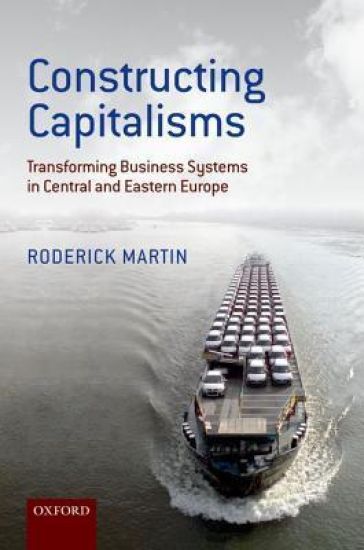
The balance of economic power in Europe is shifting eastwards. Poland, the Czech Republic, Hungary, and Romania have all seen increases in their contributions to international trade and in the rate of GDP growth, whilst other countries have seen declines, and firms in these Central and Eastern European economies are becoming increasingly influential participants in international production systems, centred largely on Germany. This book presents an up-to-date, theoretically informed analysis of how these four countries have developed distinctive business systems since the political revolutions that transformed this region in 1989, combining the structures of liberal market capitalism established in the 1990s with practices established earlier. Influenced by the socialist inheritance of communism and increasingly diverse sources of capital, different forms of capitalism developed, less responsive to shareholder interests, and more responsive to managerial and national strategic interests This book concentrates on changing patterns of ownership and control, means of capital accumulation, the relations among multinationals, regional enterprises, and governments, and the role of the state. Whilst recognizing the role of multinationals in generating export-led growth, the book emphasizes the central role of government at national and international level. The forms of capitalism under construction differ from expectations common in the 1990s, combining elements from both US/UK and continental European models of capitalism.
Constructing Identity in and around Organizations is the second volume in Perspectives on Process Organization Studies, a series which explores an emerging approach to the study of organizations that focuses on (understanding) activities, interactions, and change as essential properties of organizations rather than structures and state - an approach which prioritizes activity over product, change over persistence, novelty over continuity, and expression over determination. The constructing of identities - those processes through which actors in and around organizations claim, accept, negotiate, affirm, stabilize, maintain, reproduce, challenge, disrupt, destabilize, repair or otherwise relate to their sense of selves and others - has become a critically important topic in the study of organizations. This volume attempts to amplify - and possibly refract - contemporary debates amongst identity scholars that question established notions of identity as "essence", "entity," or "thing". It calls for alternative approaches to understanding identity and its significance in contexts in and around organizations by conceptualizing it as "process" - that is, being continually under construction. Based in diverse theoretical and philosophical traditions and contexts, contributions by leading scholars to this volume offer new perspectives on how individual and organizational identities evolve and come to be constructed through ongoing activities and interactions.
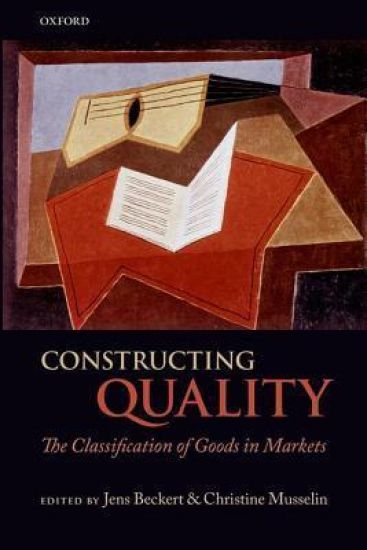
How can we engage in a market relationship when the quality of the goods we want to acquire is unknown, invisible, or uncertain? For market exchange to be possible, purchasers and suppliers of goods must be able to assess the quality of a product in relation to other products. Only by recognizing qualities and perceiving quality differences can purchasers make non-random choices, and price differences between goods be justified. "Quality" is not a natural given, but the outcome of a social process in which products become seen as possessing certain traits, and occupying a specific position in relation to other products in the product space. While we normally take the quality of goods for granted, quality at a closer look is the outcome of a highly complex process of construction involving producers, consumers, and market intermediaries engaged in judgment, evaluation, categorization, and measurement. The authors in this volume investigate the processes through which the quality of goods is established. They also investigate how product qualities are contested and how they change over time. The empirical cases discussed cover a broad range of markets in which quality is especially difficult to assess. The cases include: halal food, funeral markets, wine, labor, school choice, financial products, antiques, and counterfeit goods. The book contributes to the sociology of markets. At the same time it connects to the larger issue of the constitution of social order through cognitive processes of classification.
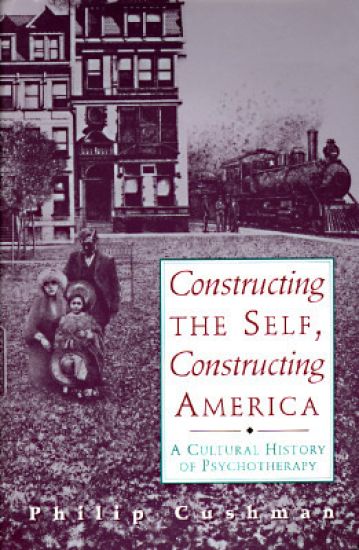
In this ground-breaking cultural history of psychotherapy, historian and psychologist Philip Cushman shows how the development of modern psychotherapy is inextricably intertwined with that of the United States and how it has changed the way Americans view events and themselves. By tracing our various definitions of the self throughout history, Cushman reveals that psychotherapy is very much a product of a particular time and place,and that it has been fundamentally complicit in creating many of the ills it seeks to assuage.
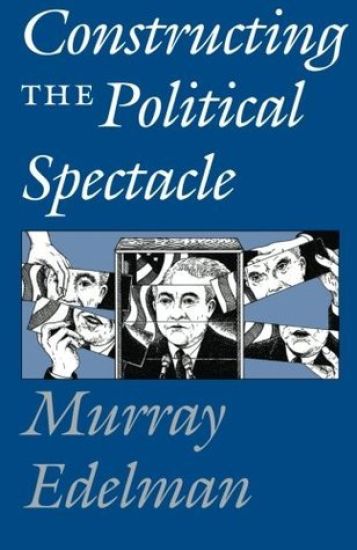
Thanks to the ready availability of political news today, informed citizens can protect and promote their own interests and the public interest more effectively. Or can they? Murray Edelman argues against this conventional interpretation of politics, one that takes for granted that we live in a world of facts and that people react rationally to the facts they know. In doing so, he explores in detail the ways in which the conspicuous aspects of the political scene are interpretations that systematically buttress established inequalities and interpretations already dominant political ideologies.