
Kirjahaku
Etsi kirjoja tekijän nimen, kirjan nimen tai ISBN:n perusteella.
1000 tulosta hakusanalla Cotton Noe

Cotton had a remarkable talent of playing baseball. He grew up with odds against him. Yet was a winner, displaying excellent characteristics and always including family. No matter what accomplishment we want to achieve, we must set our priorities correctly as Cotton.

Running from a life of poverty, 16 year old Cotton Ramsey escapes the Savannah River bottomland to New York. Twenty years later, she has changed her name and runs a large pharmaceutical company, which belonged to the family of her late husband. When Beau Simpson, her first love, arrives to deliver the news of her daddy
Cotton
Intellect Books
2016
nidottu
This book brings together contributors from a wide range of disciplines to explore the importance of cotton as a major resource for US fashion businesses. It is rooted in a lengthy investigative research project that deployed undergraduate and graduate students and faculty researchers to US fashion businesses that rely on cotton to make their garments – with the goal of better understanding how such a key resource is sourced, priced, transported, manipulated and, ultimately, sold on to the consumer as a stylish garment. The contributors focus in particular on the role of brands in the marketing of cotton goods, and the way that brand marketing creates distinctions, valuable in the marketplace, between various versions of what are at base similar items of clothing, like t-shirts and underclothes. The book also explores the importance of the 'Made in the USA' campaign, with its appeal to consumers concerned about local manufacturing employment, reduced resource use and social responsibility.
This book explores the fascinating history and present-day practices associated with cotton. This is a story of commercial and cultural enterprise, of the ties and tensions between East and West, of technological and industrial revolution, social modernization, colonialism and slavery. Cotton's history mirrors profound global transformations. And cotton remains one of the most significant mass commodities today.Cotton's track record on labor conditions in factories and plantations has tarnished its history and reputation, even as cotton clothes became the hallmark of modern industrialized society. Cotton expressed popular fashions and popular politics in dynamic ways. Yet cottons also take other cultural forms and are part of vibrant craft traditions in many parts of the world. This book explores the history, impact and ongoing life of this hugely influential textile.
Cotton
Springer-Verlag Berlin and Heidelberg GmbH Co. K
2010
sidottu
The food, feed, ?ber, and fuel needs of the changing world pose the challenge of doubling or tripling of world food, feed, and ?ber production by the year 2050 to meet the needs of a 11 billion global population. In addition, the dramatic changes in food prices in the recent years further warrant that production and productivity need to be enhanced to ensure adequate supplies. Biotechnology can make a signi?cant contribution to this effort as demonstrated by cotton and other crops; the new advances in biotechnology have made it possible to develop plants that contain genes that were not possible to be developed by sexual means. Cotton has been a leader in the use of biotechnology. With the introduction of Bt cotton, followed by stacked cotton products (insect and herbicide tolerance) and extensive use of molecular breeding tools, cotton cultivation has been much improved. The contributions in this book illustrate the scienti?c advances that are going on in cotton and the impact they continue to deliver for all cotton growers. Twelve percent of the global cotton area is now under biotech products at 15. 5 million ha. The primary bene?ts from using genetically engineered cotton include reduced insecticide use, lower production costs, improved yields, lower farming risks, and increased opportunities to grow cotton in areas of severe pest infestation.
Cotton
Springer-Verlag Berlin and Heidelberg GmbH Co. K
2012
nidottu
The food, feed, ?ber, and fuel needs of the changing world pose the challenge of doubling or tripling of world food, feed, and ?ber production by the year 2050 to meet the needs of a 11 billion global population. In addition, the dramatic changes in food prices in the recent years further warrant that production and productivity need to be enhanced to ensure adequate supplies. Biotechnology can make a signi?cant contribution to this effort as demonstrated by cotton and other crops; the new advances in biotechnology have made it possible to develop plants that contain genes that were not possible to be developed by sexual means. Cotton has been a leader in the use of biotechnology. With the introduction of Bt cotton, followed by stacked cotton products (insect and herbicide tolerance) and extensive use of molecular breeding tools, cotton cultivation has been much improved. The contributions in this book illustrate the scienti?c advances that are going on in cotton and the impact they continue to deliver for all cotton growers. Twelve percent of the global cotton area is now under biotech products at 15. 5 million ha. The primary bene?ts from using genetically engineered cotton include reduced insecticide use, lower production costs, improved yields, lower farming risks, and increased opportunities to grow cotton in areas of severe pest infestation.
Cotton
Springer-Verlag Berlin and Heidelberg GmbH Co. K
2012
nidottu
Cotton is a multipurpose crop and produces lint, the most important source of fiber used in the textile industry, oil, seed meal, and hulls.Twenty-three chapters on various aspects of in vitro manipulation and other biotechnological approaches to the improvement of cotton are arranged in six sections. Special emphasis is placed on interspecific hybridization, somaclonal variation, transgenic cotton resistant to insects and herbicides, and re-engineering of fiber. This book is of special interest to advanced students, teachers, and research workers in the field of cotton breeding, genetics, tissue culture, molecular biology, and plant biotechnology in general.
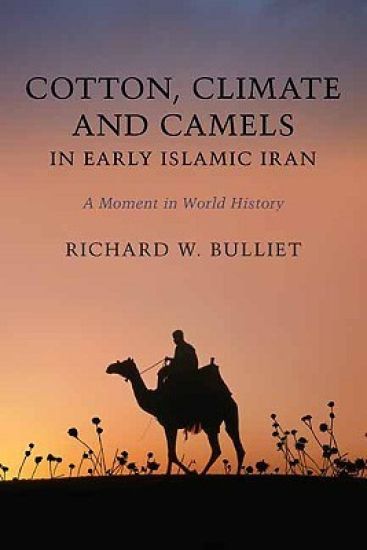
Cotton, Climate, and Camels in Early Islamic Iran
Richard Bulliet
Columbia University Press
2009
sidottu
A boom in the production and export of cotton made Iran the richest region of the Islamic caliphate in the ninth and tenth centuries. Yet in the eleventh century, Iran's impressive agricultural economy entered a steep decline, bringing the country's primacy to an end. Richard W. Bulliet advances several provocative theses to explain these hitherto unrecognized historical events. According to Bulliet, the boom in cotton production directly paralleled the spread of Islam, and Iran's agricultural decline stemmed from a significant cooling of the climate that lasted for over a century. The latter phenomenon also prompted Turkish nomadic tribes to enter Iran for the first time, establishing a political dominance that would last for centuries. Substantiating his argument with innovative quantitative research and recent scientific discoveries, Bulliet first establishes the relationship between Iran's cotton industry and Islam and then outlines the evidence for what he terms the "Big Chill." Turning to the story of the Turks, he focuses on the lucrative but temperature-sensitive industry of cross-breeding one-humped and two-humped camels. He concludes that this unusual concatenation of events had a profound and long-lasting impact not just on the history of Iran but on the development of world affairs in general.

Cotton, Climate, and Camels in Early Islamic Iran
Richard Bulliet
Columbia University Press
2011
pokkari
A boom in the production and export of cotton made Iran the richest region of the Islamic caliphate in the ninth and tenth centuries. Yet in the eleventh century, Iran's impressive agricultural economy entered a steep decline, bringing the country's primacy to an end. Richard W. Bulliet advances several provocative theses to explain these hitherto unrecognized historical events. According to Bulliet, the boom in cotton production directly paralleled the spread of Islam, and Iran's agricultural decline stemmed from a significant cooling of the climate that lasted for over a century. The latter phenomenon also prompted Turkish nomadic tribes to enter Iran for the first time, establishing a political dominance that would last for centuries. Substantiating his argument with innovative quantitative research and recent scientific discoveries, Bulliet first establishes the relationship between Iran's cotton industry and Islam and then outlines the evidence for what he terms the "Big Chill." Turning to the story of the Turks, he focuses on the lucrative but temperature-sensitive industry of cross-breeding one-humped and two-humped camels. He concludes that this unusual concatenation of events had a profound and long-lasting impact not just on the history of Iran but on the development of world affairs in general.


Cotton Textile Wages in the United States and Great Britain
Roland Gibson
Columbia University Press
2022
sidottu
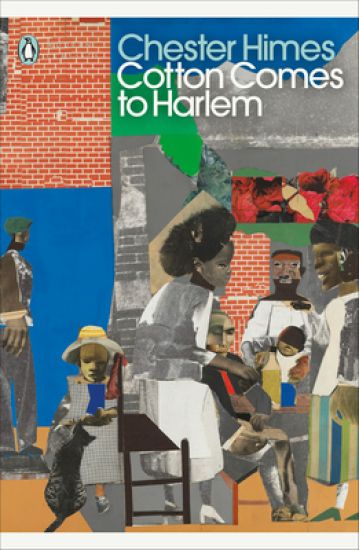
'A bawdy, brazen rollercoaster of a novel . . . the wildest' The New York TimesA preacher called Deke O'Malley's been selling false hope: the promise of a glorious new life in Africa for just $1,000 a family. But when thieves with machine guns steal the proceeds - and send one man's brain matter flying - the con is up. Now Grave Digger Jones and Coffin Ed mean to bring the good people of Harlem back their $87,000, however many corpses they have to climb over to get it.Cotton Comes to Harlem is a non-stop ride, with violence, sex, double-crosses, and the two baddest detectives ever to wear a badge in Harlem.With an Introduction by Will Self

'The new crime and espionage series from Penguin Classics makes for a mouth-watering prospect' Daily TelegraphA con-man is swindling the poor folk of Harlem out of their life savings - and now all hell's broken loose.The 'Reverend' Deke O'Malley has just made $87,000 by duping his followers, only for white gunmen to hijack the rally and escape with the cash hidden inside a bale of cotton. Now ace detectives Grave Digger Jones and Coffin Ed Johnson must get the good people of Harlem their money back by any means necessary, in a raucous, breakneck adventure involving double-crosses, exotic dancers, a racist colonel and a whole pile of bodies...
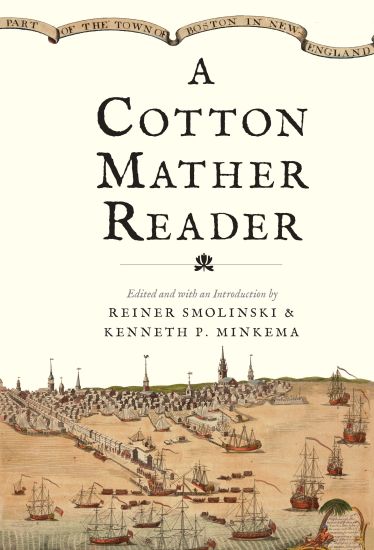
An authoritative selection of the writings of one of the most important early American writers “A brilliant collection that reveals the extraordinary range of Cotton Mather’s interests and contributions—by far the best introduction to the mind of the Puritan divine.”—Francis J. Bremer, author of Lay Empowerment and the Development of Puritanism Cotton Mather (1663–1728) has a wide presence in American culture, and longtime scholarly interest in him is increasing as more of his previously unpublished writings are made available. This reader serves as an introduction to the man and to his huge body of published and unpublished works.
An authoritative selection of the writings of one of the most important early American writers “A brilliant collection that reveals the extraordinary range of Cotton Mather’s interests and contributions—by far the best introduction to the mind of the Puritan divine.”—Francis J. Bremer, author of Lay Empowerment and the Development of Puritanism Cotton Mather (1663–1728) has a wide presence in American culture, and longtime scholarly interest in him is increasing as more of his previously unpublished writings are made available. This reader serves as an introduction to the man and to his huge body of published and unpublished works.
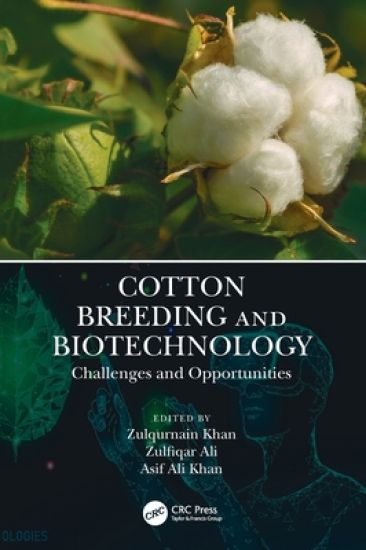
Cotton Breeding and Biotechnology
TAYLOR FRANCIS LTD
2022
sidottu
Cotton Breeding and Biotechnology presents information on one of the most economically important crops of the world, cotton. This book contains chapters on the history of cotton; breeding approaches; technologies for increasing germination, crop growth and yield; and fiber quality issues. It emphasizes sustainable development in the cotton industry analysing the progress of breeding technologies under environmental adversity. The book explores the national and global status of cotton crop, including cotton production, possible impacts of climate change, and the vulnerability of cotton to pest infestations and disease attacks.FeaturesFocuses on cotton breeding and biotechnologyProposes ideas, data, and strategies to mount breeding programs for enhancing cotton productionDetails strategies for cotton quality improvement against abiotic and biotic stressesEmphasizes the revival of cotton in Pakistan and South Asian regionThis book is useful to researchers, cotton breeders and growers, farmers, and the agriculture industry.
Cotton Breeding and Biotechnology
TAYLOR FRANCIS LTD
2022
nidottu
Cotton Breeding and Biotechnology presents information on one of the most economically important crops of the world, cotton. This book contains chapters on the history of cotton; breeding approaches; technologies for increasing germination, crop growth and yield; and fiber quality issues. It emphasizes sustainable development in the cotton industry analysing the progress of breeding technologies under environmental adversity. The book explores the national and global status of cotton crop, including cotton production, possible impacts of climate change, and the vulnerability of cotton to pest infestations and disease attacks.FeaturesFocuses on cotton breeding and biotechnologyProposes ideas, data, and strategies to mount breeding programs for enhancing cotton productionDetails strategies for cotton quality improvement against abiotic and biotic stressesEmphasizes the revival of cotton in Pakistan and South Asian regionThis book is useful to researchers, cotton breeders and growers, farmers, and the agriculture industry.