Kirjojen hintavertailu. Mukana 11 627 463 kirjaa ja 12 kauppaa.

Kirjahaku

Etsi kirjoja tekijän nimen, kirjan nimen tai ISBN:n perusteella.

1000 tulosta hakusanalla Craig Robert Vander Maas

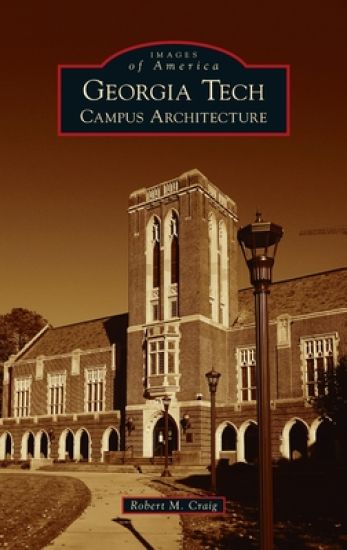
Georgia Tech: Campus Architecture

Georgia Tech: Campus Architecture

Robert Craig

Arcadia Publishing (SC)
2021
nidottu
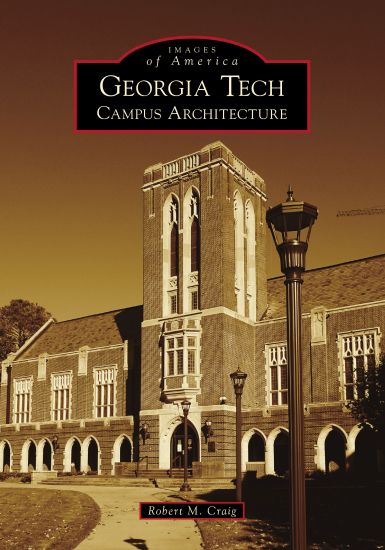
The architectural development of Georgia Tech began as a core of Victorian-era buildings sited around a campus green and Tech Tower. During the subsequent Beaux-Arts era, designers (who were also members of the architecture faculty) added traditionally styled buildings, with many of them in a pseudo-Jacobean collegiate redbrick style. Early Modernist Paul Heffernan led an architectural revolution in his academic village of functionalist buildings on campus--an aesthetic that inspired additional International Style campus buildings. Formalist, Brutalist, and Post-Modern architecture followed, and when Georgia Tech was selected as the Olympic Village for the 1996 Summer Olympics, new residence halls were added to the campus. Between 1994 and 2008, Georgia Tech president G. Wayne Clough stewarded over $1 billion in capital improvements at the school, notably engaging midtown Atlanta with the development of Technology Square. The landscape design by recent campus planners is especially noteworthy, featuring a purposeful designation of open spaces, accommodations for pedestrian perambulations, and public art. What might have developed into a prosaic assemblage of academic and research buildings has instead evolved into a remarkably competent assemblage of aesthetically pleasing architecture.

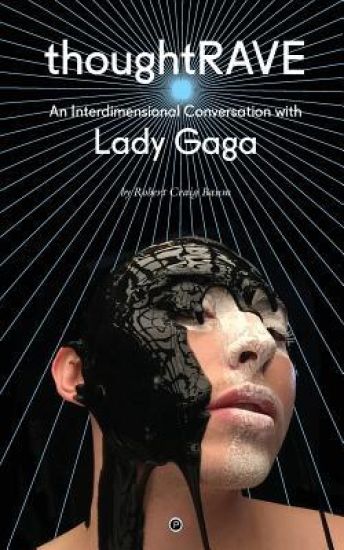
Thoughtrave: An Interdimensional Conversation with Lady Gaga

Thoughtrave: An Interdimensional Conversation with Lady Gaga

Lady Gaga; Robert Craig Baum

Punctum Books
2016
nidottu
Thoughtrave is the immediate and most detailed archive of Lady Gaga's emotional, intellectual, philosophical, and spiritual evolution, a reclaiming of her art (and humanity) from within the center of her celebrity during one of the most difficult transitions of her career: Summer 2013-Fall 2014.Lady Gaga: I don't like being used to make money. I feel sad when I am overworked and that I just become a money making machine and that my passion and my creativity take a backseat. That makes me unhappy. So, what did I do? I started to say no. Not doing that. I don't want to do that. I'm not taking that picture. Not going to that event. Not standing by that because that's not what I stand for.Thoughtrave marks perhaps the most important (and unconditional, unpublished, unencumbered) insights into the music industry, the personal battles that accompanied her transition from Stefani to Gaga. "It's one of those rare moments in life when you ask a question of someone you've admired for many years and receive the most honest of answers leading both people into a relationship that was and remains one of the most important of my life," says Baum, a professor, producer, composer, writer, editor, and activist for adjunct professors. As Baum explains to Stefani in one of the many interviews published here for the first time, Robert Craig Baum: It's uncanny for me to look back at 2008-2011 - when I was intensely meditating on the problem "Why is there any being at all?" - to find evidence of your intervention here with me...to find you, back then...before I knew you. It was almost as if I was playing the Bruce Willis character in Twelve Monkeys, overshooting my mark in time/space, aiming for this particular conversation but speaking through Ereignis (life gives) to a moment I (and many others) call "headphones on."As George Elerick writes in his Introduction to the book, "In Hand-to-Hand Battle for the Users," "The book you hold in your hands easily falls into the category of a transgression. It's as though we are breaking into somewhere we are not meant to be (like a rave) and are invited into the mind of one of today's musical geniuses. Maybe we can even equivocate the experience to that of being a member of the paparazzi. Their whole mode of employment is based on breaking social codes and entering into the lives of everyday-people-turned-rock-stars. That's what this book is, a disruptive invitation to break into the life and mind of Lady Gaga, the person, not just the persona."
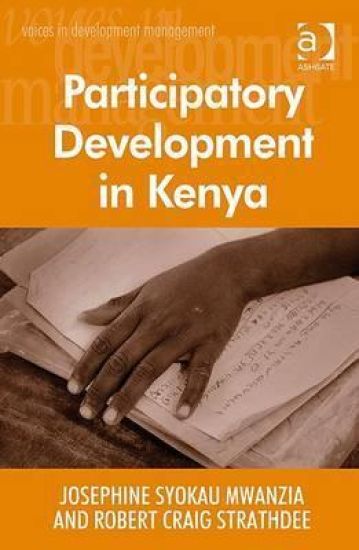
Participatory Development in Kenya

Participatory Development in Kenya

Josephine Syokau Mwanzia; Robert Craig Strathdee

Ashgate Publishing Limited
2010
sidottu
Participatory Development (PDev) has been embraced by Third World governments and international organizations such as the World Bank as a means to reduce poverty and empower disadvantaged communities. The emphasis on creating partnerships and using participatory and people-centred approaches has obvious political appeal, yet there is evidence that in practice interventions designed to increase PDev and reduce poverty have yet to have the desired empowerment, transformation and sustainability effect. Using an in-depth study of the Basic Education Improvement Project (BEIP) implemented by the Government of Kenya, the authors of this book critically assess the fit between policy, practice and theory of PDev to shed light on theoretical debates that are on-going in development.
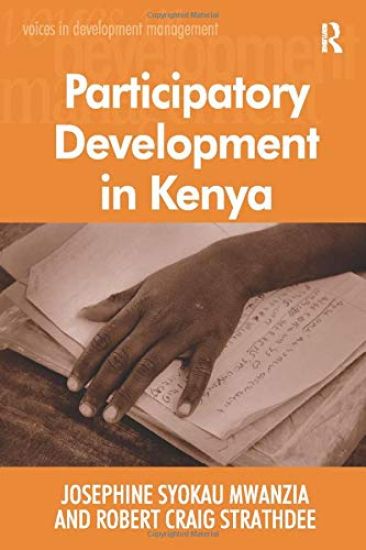
Participatory Development in Kenya

Participatory Development in Kenya

Josephine Syokau Mwanzia; Robert Craig Strathdee

Routledge
2016
nidottu
Participatory Development (PDev) has been embraced by Third World governments and international organizations such as the World Bank as a means to reduce poverty and empower disadvantaged communities. The emphasis on creating partnerships and using participatory and people-centred approaches has obvious political appeal, yet there is evidence that in practice interventions designed to increase PDev and reduce poverty have yet to have the desired empowerment, transformation and sustainability effect. Using an in-depth study of the Basic Education Improvement Project (BEIP) implemented by the Government of Kenya, the authors of this book critically assess the fit between policy, practice and theory of PDev to shed light on theoretical debates that are on-going in development.
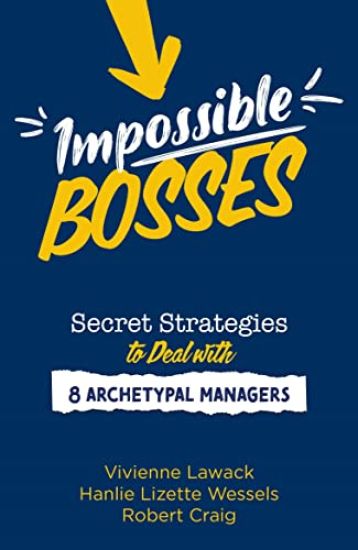
Impossible Bosses

Impossible Bosses

Vivienne Lawack; Hanlie Wessels; Robert Craig

JONATHAN BALL PUBLISHERS SA
2022
pokkari
Ever had a sleepless night or wanted to quit your job because of an impossible boss?Difficult managers can obstruct your professional growth by hiding corporate ladders and trapping you in an invisible cage.Using different psychological profiling systems, the authors, all experts in business leadership, identify eight archetypal characters who create uniquely challenging situations at work, including Ms Say-Me (the competitive control freak), Mr Tumbleweed (the indecisive worrier), Ms Crosswire (the disorganised people schmoozer), Mr Make-Up (the seemingly nice manipulator) and their four demanding friends.You'll learn about their key character traits and why they act the way they do. Best of all, you'll learn secret strategies for mitigating the impact of an impossible boss on your work experience and how to communicate your ideas to them. This book offers practical tips for how to rapidly take back control of your career and navigate tricky situations. A coach in your pocket, Impossible Bosses shows you how to manage your manager.
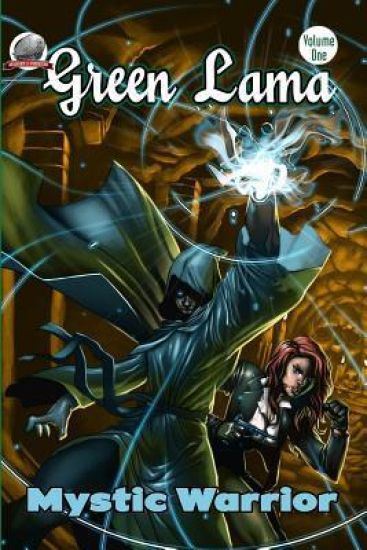
Green Lama-Mystic Warrior

Green Lama-Mystic Warrior

Nick Ahlhelm; W. Peter Miller; Robert Craig

Airship 27
2014
nidottu
The Mystic Warrior Jethro Dumont was a jaded, rich American who hungered to find purpose in this world. His search for self-knowledge and fulfillment led him to a secluded Buddhist monastery high in the Tibetan Himalayas. There Dumont studied the mysteries of the orient at the same time learning to accept the non-violent tenets of this ancient and venerated philosophy. By the time he returned to America, he was a changed man; one possessed with mental clarity and unique, mystic abilities beyond the understanding of normal men. Now, with the aid of his Buddhist companion, Tsarong, he assumes the identity of a new, eerie crime-fighter, The Green Lama For years the exploits of Green Lama have thrilled pulp fans both in his own magazine, in comics and on radio. Now he returns to pulp action in this collection featuring two previous issued classics by Peter Miller and Kevin Noel Olson and two brand new, never before printed adventures by Nick Ahlhelm and Robert Craig. From confronting Nazis in his beloved Tibet to investigating bizarre murders in a Hollywood movie studio, Jethro Dumont's new career is one filled with plenty of action and adventure as the Mystic Warrior strikes again
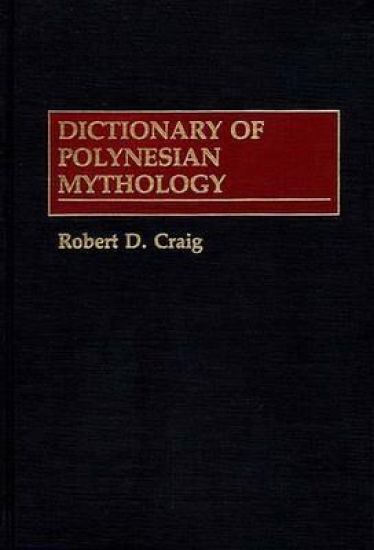
Dictionary of Polynesian Mythology

Dictionary of Polynesian Mythology

Robert Dean Craig

Greenwood Press
1989
sidottu
Prior to 1500 A.D. the Polynesians were the most widely spread people on earth, having settled an area of the Pacific, the Polynesian Triangle, twice the size of the United States. In this first reference guide to the mythology of these Vikings of the Pacific, Craig reviews Polynesian legends, stories, gods, goddesses, and heroes in hundreds of alphabetical entries that succinctly describe both characters and events. His wide-ranging and thorough introduction sets the subject in its geographic, historical, anthropological, and linguistic contexts, offering an illuminating overview of the origin of the Polynesians as a distinct people and tracing their voyages and settlements from Indonesia to Malaysia, Tonga, Samoa, the Marquesas, the various islands of eastern Polynesia, including Hawaii, Easter Island, and New Zealand. The introduction presents fascinating information on Polynesian navigational skills and the voyages themselves, as well as a chart that details the evolution of the thirty Polynesian languages and compares cognates from several of these languages. A simplified pronunciation guide and a selected list of Polynesian dictionaries and/or grammars are provided for those interested in pursuing the richness of the Polynesian languages. This introductory survey gives readers the necessary background to understand the origin, development, and dispersion of the myths throughout the Pacific basin. The Dictionary of Polynesian Mythology is the result of many years of research. The individual entries were gleaned from nearly 300 sources in English, German, French, and Polynesian languages with the majority extracted from a number of primary sources that date generally in the nineteenth and early twentieth centuries. The printed source materials for this volume are fully described and listed by geographical group, including Maori, Cook Islands, Tahitian, Marquesan, Hawaiian, Samoan, and Tongan. General collections that retell the Polynesian stories are also surveyed. The entries are alphabetically arranged by major mythological figure; lesser characters can be located in the index. Short bibliographical citations--author, date, and page number--are included at the end of each main entry to direct readers to fuller information contained in the printed sources. An appendix provides valuable supplemental information on Polynesian gods and goddesses. This dictionary is sure to become a basic reference tool for libraries, students, and scholars of Pacific history and culture, as well as for courses in mythology, religion, and philosophy.
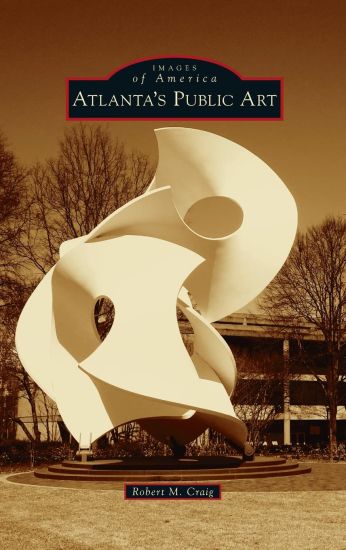
Atlanta's Public Art

Atlanta's Public Art

Robert M Craig

ARCADIA PUB (SC)
2021
sidottu
The public art in Atlanta includes a broad range of media, subjects, styles, and artistic merit. Statuary and figurative sculpture, often in bronze, memorialize historic individuals, while contemporary sculpture includes large-scale abstract works in stone, stainless or weathering steel, and other materials. Street artists and muralists have created more than 1,000 urban murals throughout the city, including large and colorful abstract canvases, with thematic subjects referencing sports, nature, social issues, the city's African American and Hispanic communities, and Atlanta's leadership in the civil rights movement. Some guerrilla artists began as traffickers of graffiti who tagged buildings, railroad boxcars, and underpasses, creating iconic compilations such as the Krog Street Tunnel. Street art styles embrace photo-realism, abstract expressionism, or folk, op, or pop art, with the latter inspired by fantasy, comic-strip graphics, or Goth. Native Atlantan Alex Brewer (also known as HENSE) has executed commissions from Peru to Australia, while artists from Barcelona, Rome, and Zimbabwe have contributed to Atlanta's status as an international city.
Handbook of Polynesian Mythology

Handbook of Polynesian Mythology

Robert Dean Craig

ABC-CLIO
2004
sidottu
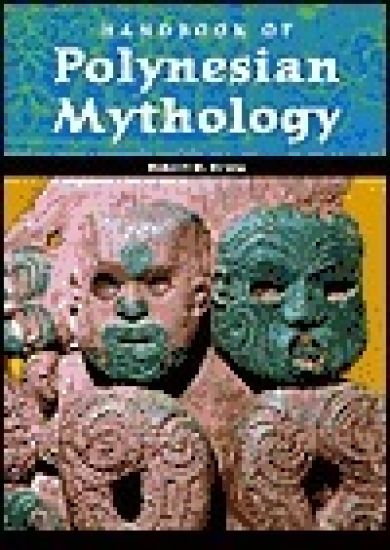
An accessible, concise reference source on Polynesia's complex mythology, product of a culture little known outside its home. Encounters with the West introduced Polynesian mythology to the world—and sealed its fate as a casualty of colonialism. But for centuries before the Europeans came, that mythology was as vast as the triangle of ocean in which it flourished, as diverse as the people it served, and as complex as the mythologies of Greece and Rome. Students, researchers, and enthusiasts can follow vivid retellings of stories of creation, death, and great voyages, tracking variations from island to island. They can use the book's reference section for information on major deities, heroes, elves, fairies, and recurring themes, as well as the mythic implications of everything from dogs and volcanoes to the hula, Easter Island, and tattooing (invented in the South Pacific and popularized by returning sailors).
Augustine's Confessions

Augustine's Confessions

Robert Hunter Craig; Nicholas Wolterstorff

Rowman Littlefield
2020
sidottu
Augustine's Confessions: Conversion and Consciousness argues two original positions concerning the structure and meaning of the Confessions by Augustine. The structure is found to be a tool used by Augustine in his earlier pre-Confessions writings in which he uses the Allegory of the Cave in book VII of the Republic by Plato to both describe human consciousness and as a structural framework for his own life story. As with Plato's allegory, Augustine then uses Books X-XIII to do, what the author calls, "Scriptural Philosophical" analysis of the allegorical prayer previously given. The author shows that the Confessions is really an allegorical quasi-prayer that shows Augustine's state of mind or disposition through space/time - and at the same time uses different personas, schools of thought and metaphysical constructs to show the inadequacy of Plato's consciousness model of the cave to truly describe human ratiocination within consciousness in its totality - Synchronic-Synthetic-Triplex (SST) or body, mind, God-Will substance. Instead, Augustine demonstrates the superiority of the Christian conversion to that of the Platonic as described both by Platonic books and the books of the Platonists. The Christian conversion is based on the incarnate Wisdom of Christ Jesus within the Cave/World.