

Kirjahaku
Etsi kirjoja tekijän nimen, kirjan nimen tai ISBN:n perusteella.
130 tulosta hakusanalla Crotus Rubeanus

The death of a loved one is a tragedy everybody experiences at least once in their lifetime. Grief is a heavy burden to carry alone. But what if we're not alone? What if it just so happens the right words fall into our ears at the right time solidifying our experiences and connecting those of us who grieve outside of time and distance? What if we come to realize through a few lines of poetry just how natural and acceptable it is to rage like a firestorm, scream like a banshee and melt into a puddle of sadness? Within the paper folds of Natasha Nelson's Corpse Beneath the Crocus, we experience the vibrant journey of grief as a poetic expression of transformation. The bitter agony of heartache and the exultation of growth gleaned from it are splattered on the pages in a winding roadmap of acceptance.
When Hallah's first sky-missile blasted a crater near the Fairdilly Fair, the fairgoers quickly resumed their revels, only briefly inconvenienced. The single exception: an orange-haired Queen of Niceness whose perfect young life was ruined forever ... she just didn't know it yet. So begins the saga of plucky-but-naive Glix Larue as she discovers the truth about herself, her living planet and the hidden hazards of dreams. Then she'll just need to survive the wrath of Lady Crocus, the mad goddess of the sky ... The Deadly Crocus is Book One in the Falling Sky series, part of award-winning author E.T. Ellison's ten volume Nevergate Cycle.
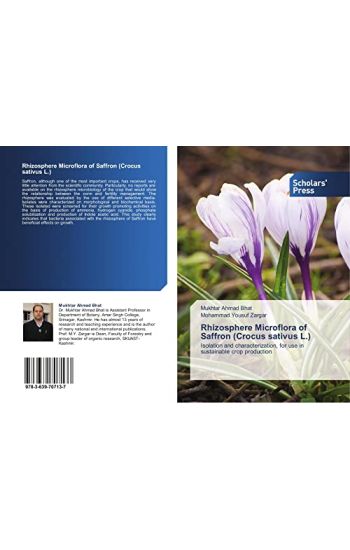
Rhizosphere Microflora of Saffron (Crocus sativus L.)
Mukhtar Ahmad Bhat; Mohammad Yousuf Zargar
SCHOLARS' PRESS
2014
nidottu
The Medicinal Wonder of Crocus sativus L.
Amina Belguendouz
Lap Lambert Academic Publishing
2024
pokkari
Crocus sativus L., commonly known as saffron, is a highly valued medicinal plant recognized for its extensive phytochemical richness and diverse biological potentials. This review elucidates the key bioactive compounds, including crocin, picrocrocin, and safranal, which contribute to its therapeutic properties. Saffron exhibits significant antioxidant, anti-inflammatory, and anticancer activities, making it a promising candidate for various health applications. Its historical use in traditional medicine, combined with modern scientific validation, underscores saffron's role as a multifaceted agent in promoting health and combating diseases. Further research is essential to fully harness its medicinal benefits.
Fungal Endophytes of Crocus sativus and their applications
Zahoor Ahmed Wani
Lap Lambert Academic Publishing
2020
nidottu

Ethnomedicinal Role of Crocus Sativus in Cadmium Instigated Toxicity
Lap Lambert Academic Publishing
2023
nidottu
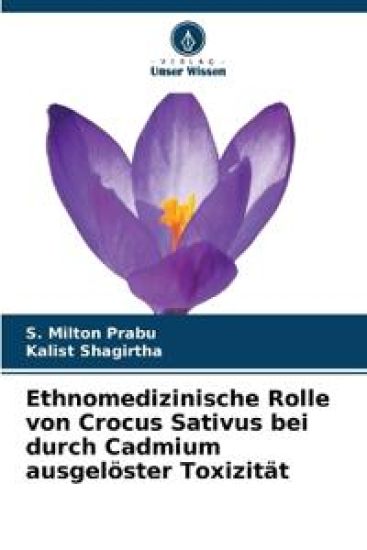
Ethnomedizinische Rolle von Crocus Sativus bei durch Cadmium ausgelöster Toxizität
S Milton Prabu; Kalist Shagirtha
Verlag Unser Wissen
2023
pokkari
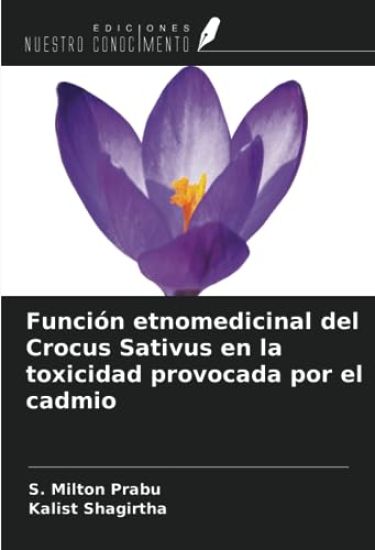
Función etnomedicinal del Crocus Sativus en la toxicidad provocada por el cadmio
S. Milton Prabu; Kalist Shagirtha
Ediciones Nuestro Conocimiento
2023
nidottu
Rôle ethnomédical de Crocus Sativus dans la toxicité induite par le cadmium
Editions Notre Savoir
2023
nidottu
Ruolo etnomedico del Crocus Sativus nella tossicità provocata dal cadmio
S Milton Prabu; Kalist Shagirtha
Edizioni Sapienza
2023
pokkari
Papel etnomedicinal do Crocus Sativus na toxicidade provocada pelo cádmio
S Milton Prabu; Kalist Shagirtha
Edicoes Nosso Conhecimento
2023
pokkari
Jetnomedicinskaq rol' Crocus Sativus pri toxichnosti, wyzwannoj kadmiem
Sciencia Scripts
2023
nidottu
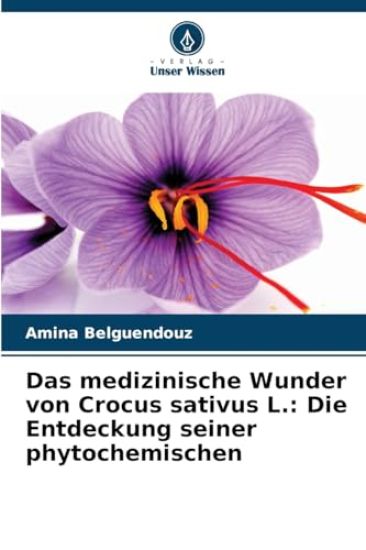
Crocus sativus L., gemeinhin als Safran bekannt, ist eine hoch gesch tzte Heilpflanze, die f r ihren gro en phytochemischen Reichtum und ihr vielf ltiges biologisches Potenzial bekannt ist. In dieser bersicht werden die wichtigsten bioaktiven Verbindungen, darunter Crocin, Picrocrocin und Safranal, die zu seinen therapeutischen Eigenschaften beitragen, n her erl utert. Safran weist bedeutende antioxidative, entz ndungshemmende und krebsbek mpfende Eigenschaften auf, was ihn zu einem vielversprechenden Kandidaten f r verschiedene Gesundheitsanwendungen macht. Seine historische Verwendung in der traditionellen Medizin in Verbindung mit modernen wissenschaftlichen Erkenntnissen unterstreicht die Rolle von Safran als vielseitiges Mittel zur F rderung der Gesundheit und zur Bek mpfung von Krankheiten. Weitere Forschung ist unerl sslich, um seine medizinischen Vorteile voll auszusch pfen.
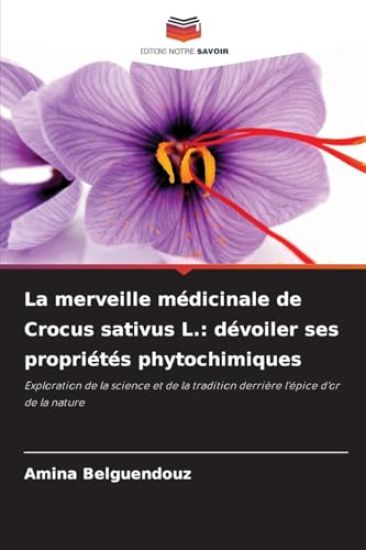
Crocus sativus L., commun ment appel safran, est une plante m dicinale tr s appr ci e, reconnue pour sa grande richesse phytochimique et ses divers potentiels biologiques. Cette tude lucide les principaux compos s bioactifs, notamment la crocine, la picrocrocine et le safranal, qui contribuent ses propri t s th rapeutiques. Le safran pr sente des activit s antioxydantes, anti-inflammatoires et anticanc reuses significatives, ce qui en fait un candidat prometteur pour diverses applications dans le domaine de la sant . Son utilisation historique dans la m decine traditionnelle, combin e une validation scientifique moderne, souligne le r le du safran en tant qu'agent multiples facettes dans la promotion de la sant et la lutte contre les maladies. Il est essentiel de poursuivre les recherches afin d'exploiter pleinement ses bienfaits m dicinaux.
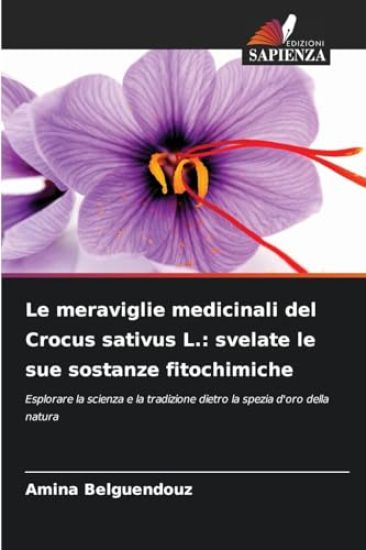
Il Crocus sativus L., comunemente noto come zafferano, una pianta medicinale molto apprezzata e riconosciuta per la sua ampia ricchezza fitochimica e le sue diverse potenzialit biologiche. Questa rassegna illustra i principali composti bioattivi, tra cui crocina, picrocrocina e safranale, che contribuiscono alle sue propriet terapeutiche. Lo zafferano presenta significative attivit antiossidanti, antinfiammatorie e antitumorali, che lo rendono un candidato promettente per diverse applicazioni sanitarie. Il suo uso storico nella medicina tradizionale, combinato con la moderna convalida scientifica, sottolinea il ruolo dello zafferano come agente poliedrico nella promozione della salute e nella lotta alle malattie. Ulteriori ricerche sono essenziali per sfruttare appieno i suoi benefici medicinali.
A maravilha medicinal de Crocus sativus L.
Amina Belguendouz
Edicoes Nosso Conhecimento
2024
pokkari
O Crocus sativus L., vulgarmente conhecido como a afr o, uma planta medicinal muito apreciada, reconhecida pela sua extensa riqueza fitoqu mica e pelos seus diversos potenciais biol gicos. Esta revis o elucida os principais compostos bioactivos, incluindo a crocina, a picrocrocina e o safranal, que contribuem para as suas propriedades terap uticas. O a afr o apresenta actividades antioxidantes, anti-inflamat rias e anticancer genas significativas, o que o torna um candidato promissor para v rias aplica es na rea da sa de. A sua utiliza o hist rica na medicina tradicional, combinada com a valida o cient fica moderna, sublinha o papel do a afr o como agente multifacetado na promo o da sa de e no combate s doen as. essencial prosseguir a investiga o para tirar pleno partido dos seus benef cios medicinais.

Apocarotenoids of Crocus sativus L: From biosynthesis to pharmacology
Shoib Ahmad Baba; Nasheeman Ashraf
Springer Verlag, Singapore
2016
nidottu
This book is a product of years of research on saffron biology. It intends to give a broad but concise overview of the various aspects of apocarotenoid biosynthesis in Crocus sativus, its regulation and pharmacology .Crocus sativus L. of family Iridaceae is an important medicinal plant. The dried stigma of C. sativus flower is considered as the world's costliest spice. Saffron is the sources of unique carotenoid derived molecules called apocarotenoids which include crocin, crocetin, picrocrocin and safranal. These molecules are synthesized in the tissue and developmental stage specific manner. Besides providing colour, aroma and flavour to the spice, these molecules have tremendous medicinal importance. The book uncovers major concepts of apocarotenoids biosynthesis and provides deeper and more complete understanding about their biotechnological and pharmacological applications.The book is divided into three sections –The first section provides a general introduction of C. sativus, its apocarotenoids, their biosynthesis, regulation and transport. Second section provides information about the carotenoid cleavage dioxygenases (CCDs) which are the key players in apocarotenoid biosynthesis. The classification of plant CCDs, their structure, reaction mechanism, biotechnological application are thoroughly discussed. The final section deals with the major pharmacological properties of C. sativus apocarotenoids, ranging from their role as anticancer to their utility as neuroprotective molecules.This is a one of its kind book on Crocus sativus. It will be useful for the researchers working on Crocus sativus, students and also practitioners involved in extraction and bio-synthesis of the useful medical components.