Kirjojen hintavertailu. Mukana 11 244 527 kirjaa ja 12 kauppaa.

Kirjahaku

Etsi kirjoja tekijän nimen, kirjan nimen tai ISBN:n perusteella.

1000 tulosta hakusanalla Dagmar Herzog

AQA German A Level and AS Grammar & Translation Workbook
Written especially for students transitioning from GCSE to AS and those working towards the AQA A Level exam, the AQA AS and A Level German Grammar & Translation Workbook can be used for homework, revision and independent study. It includes thorough revision of key grammar points and embedded translation practice, giving students confidence in language manipulation skills when meeting the rigorous demands of the 2016 specification. Please note: If you're taking the Edexcel, WJEC or Eduqas exam, please search for AS and A Level French Grammar and Translation Workbook edition of this workbook.
Well-Mannered Medicine

Well-Mannered Medicine

Dagmar Wujastyk

Oxford University Press Inc
2012
sidottu
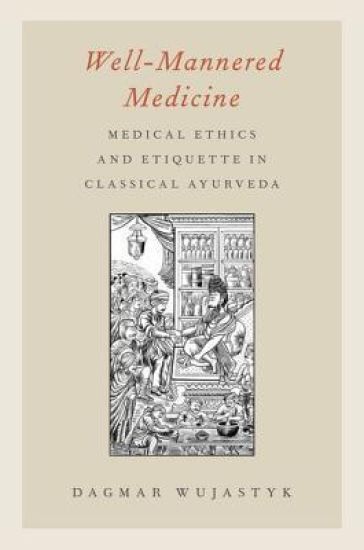
Dagmar Wujastyk explores the moral discourses on the practice of medicine in the foundational texts of Ayurveda. The classical ayurvedic treatises were composed in Sanskrit between the first and the fifth centuries CE, and the later works, dating into the sixteenth century CE, were still considered strongly authoritative. As Wujastyk shows, these works testify to an elaborate system of medical ethics and etiquette. Physicians looked to the ayurvedic treatises for a guide to professional conduct. Ayurvedic discourses on good medical practice depict the physician as highly-educated, skilled, moral, and well-mannered. The rules of conduct positioned physicians within mainstream society's and characterized medical practice as a trustworthy and socially acceptable profession. At the same time, professional success was largely based on a particular physician's ability to cure his patients. This resulted in tension, as some treatments and medications were considered socially or religiously unacceptable. Doctors needed to treat their patients successfully while ostensibly following the rules of acceptable behavior. Wujastyk offers insight into the many unorthodox methods of avoiding conflict while ensuring patient compliance shown in the ayurvedic treatises, giving a disarmingly candid perspective on the realities of medical practice and its crucial role in a profoundly well-mannered society.
Well-Mannered Medicine

Well-Mannered Medicine

Dagmar Wujastyk

Oxford University Press Inc
2012
nidottu
Dagmar Wujastyk explores the moral discourses on the practice of medicine in the foundational texts of Ayurveda. The classical ayurvedic treatises were composed in Sanskrit between the first and the fifth centuries CE, and the later works, dating into the sixteenth century CE, were still considered strongly authoritative. As Wujastyk shows, these works testify to an elaborate system of medical ethics and etiquette. Physicians looked to the ayurvedic treatises for a guide to professional conduct. Ayurvedic discourses on good medical practice depict the physician as highly-educated, skilled, moral, and well-mannered. The rules of conduct positioned physicians within mainstream society's and characterized medical practice as a trustworthy and socially acceptable profession. At the same time, professional success was largely based on a particular physician's ability to cure his patients. This resulted in tension, as some treatments and medications were considered socially or religiously unacceptable. Doctors needed to treat their patients successfully while ostensibly following the rules of acceptable behavior. Wujastyk offers insight into the many unorthodox methods of avoiding conflict while ensuring patient compliance shown in the ayurvedic treatises, giving a disarmingly candid perspective on the realities of medical practice and its crucial role in a profoundly well-mannered society.
The Crafting of the 10,000 Things – Knowledge and Technology in Seventeenth–Century China
The last decades of the Ming dynasty, though plagued by chaos and destruction, saw a significant increase in publications that examined advances in knowledge and technology. Among the numerous guides and reference books that appeared during this period was a series of texts by Song Yingxing (1587-1666?), a minor local official living in southern China. His Tiangong kaiwu, the longest and most prominent of these works, documents the extraction and processing of raw materials and the manufacture of goods essential to everyday life, from yeast and wine to paper and ink to boats, carts, and firearms. In The Crafting of the 10,000 Things, Dagmar Schafer probes this fascinating text and the legacy of its author to shed new light on the development of scientific thinking in China, the purpose of technical writing, and its role in and effects on Chinese history.
The Crafting of the 10,000 Things

The Crafting of the 10,000 Things

Dagmar Schäfer

University of Chicago Press
2011
sidottu
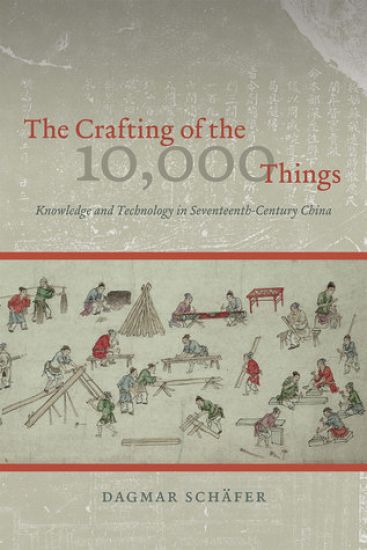
The last decades of the Ming dynasty, though plagued by chaos and destruction, saw major advances in knowledge and technology. Among the numerous guides and reference books that appeared during this period was a series of texts by Song Yingxing (1587-1666?), a minor local official living in southern China. His "Tiangong kaiwu", the longest and most prominent of these works, documents the extraction and processing of raw materials, and the manufacture of goods essential to everyday life, from pearls and wine to boats, carts, and firearms. In "The Crafting of the 10,000 Things Dagmar Schafer" probes this fascinating text and the legacy of its author to shed new light on the development of scientific thinking in China, the purpose of technical writing, and its role in and effects on Chinese history. Meticulously unfolding the layers of Song's personal and cultural life, Schafer places the Tiangong kaiwu squarely in its original milieu - both practically and theoretically - and thus develops a new understanding of scientific and technological thinking. Even as she vividly sets the Chinese scene, Schafer offers incisive comparisons between seventeenth-century China and Europe. Sinologists and historians of science alike will be engrossed by this book, the first to place Song's writing in a broader context.
Germany 1945

Germany 1945

Dagmar Barnouw

Indiana University Press
2008
pokkari
Photographers from the U.S. Army's Signal Corps were with the troops that drove back Hitler's troops and occupied Germany at the end of WWII. Soon photos of death camps and starving POWs shocked the home front, providing ample evidence of Nazi brutality. Yet did the faces of the defeated Germans show remorse? The victors saw only arrogance, servility, and the resentment of a population thoroughly brainwashed by the Nazis. In fact, argues Dagmar Barnouw, the photographs from this period tell a more complex story and hold many clues for a better understanding of the recent German past.
Weimar Intellectuals and the Threat of Modernity

Weimar Intellectuals and the Threat of Modernity

Dagmar Barnouw

Indiana University Press
1988
sidottu
" . . . the range, power, and archival resourcefulness of Barnouw's book will make it impossible for anyone working in the field to ignore this powerful and disturbing historical meditation on the societal function and responsibility of the intellecutual." —The German Quarterly " . . . a work of real value for patient readers." —American Journal of Sociology " . . . a forceful and compelling thesis that challenges our understanding of several seminal figures writing during the first half of the century." —Monatshefte In this challenging study of a complex period, Barnouw investigates the works of seven representative figures of the Weimar republic: Walter Rahtenau, Robert Musil, Thomas Mann, Walter Benjamin, Ernst Jünger, Hermann Broch, and Alfred Döblin.
Biophysical Chemistry

Biophysical Chemistry

Dagmar Klostermeier; Markus G. Rudolph

CRC Press
2020
nidottu
Biophysical Chemistry explores the concepts of physical chemistry and molecular structure that underlie biochemical processes. Ideally suited for undergradate students and scientists with backgrounds in physics, chemistry or biology, it is also equally accessible to students and scientists in related fields as the book concisely describes the fundamental aspects of biophysical chemistry, and puts them into a biochemical context.The book is organized in four parts, covering thermodynamics, kinetics, molecular structure and stability, and biophysical methods. Cross-references within and between these parts emphasize common themes and highlight recurrent principles. End of chapter problems illustrate the main points explored and their relevance for biochemistry, enabling students to apply their knowledge and to transfer it to laboratory projects. Features:Connects principles of physical chemistry to biochemistryEmphasizes the role of organic reactions as tools for modification and manipulation of biomoleculesIncludes a comprehensive section on the theory of modern biophysical methods and their applications
Growing Up Female in Nazi Germany

Growing Up Female in Nazi Germany

Dagmar Reese

The University of Michigan Press
2006
nidottu
Growing Up Female in Nazi Germany explores the world of the Bund Deutscher Mädel (BDM), the female section within the Hitler Youth that included almost all German girls aged 10 to 14. The BDM is often enveloped in myths; German girls were brought up to be the compliant handmaidens of National Socialism, their mental horizon restricted to the "three Ks" of Kinder, Küche, Kirche (children, kitchen, and church). Dagmar Reese, however, depicts another picture of life in the BDM. She explores how and in what way the National Socialists were successful in linking up with the interests of contemporary girls and young women and providing them a social life of their own. The girls in the BDM found latitude for their own development while taking on responsibilities that integrated them within the folds of the National Socialist state."At last available in English, this pioneering study provides fresh insights into the ways in which the Nazi regime changed young 'Aryan' women's lives through appeals to female self-esteem that were not obviously defined by Nazi ideology, but drove a wedge between parents and children. Thoughtful analysis of detailed interviews reveals the day-to-day functioning of the Third Reich in different social milieus and its impact on women's lives beyond 1945. A must-read for anyone interested in the gendered dynamics of Nazi modernity and the lack of sustained opposition to National Socialism."--Uta Poiger, University of Washington"In this highly readable translation, Reese provocatively identifies Nazi girls league members' surprisingly positive memories and reveals significant implications for the functioning of Nazi society. Reaching across disciplines, this work is for experts and for the classroom alike."--Belinda Davis, Rutgers UniversityDagmar Reese is The Moses Mendelssohn Zentrum Potsdam researcher on the DFG-project "Georg Simmels Geschlechtertheorien im ‚fin de siecle' Berlin", 2004William Templer is a widely published translator from German and Hebrew and is on the staff of Rajamangala University of Technology Srivijaya.
Growing Up Female in Nazi Germany

Growing Up Female in Nazi Germany

Dagmar Reese

The University of Michigan Press
2006
sidottu
The Bund Deutscher Madel was the female section of Hitler Youth. ""Growing Up Female in Nazi Germany"" examines the way this Nazi organization linked up with the interests of contemporary German girls and young women. Recruiting its members systematically since the end of the 1930s, the BDM encompassed practically all German girls aged ten to fourteen by allowing them latitude for their own development while assigning them responsibilities that gradually integrated them into the National Socialist State. Historian Dagmar Reese illuminates the different experiences of these young women through two case studies: one of the BDM's work in the petty-bourgeois milieu of a Protestant garrison town, and the other immersed in the working-class milieu of Berlin's ""red"" Wedding neighborhood. ""Growing Up Female in Nazi Germany"" is the English translation of a major work of German history, one in a list of such works published in Michigan's field-defining series, ""Social History, Popular Culture, and Politics in Germany"". It will be of interest to students and scholars in the fields of German, cultural and gender history, as well as political theory.
The Victorian Music Hall

The Victorian Music Hall

Dagmar Kift

Cambridge University Press
1996
sidottu
With the exception of the occasional local case study, music-hall history has until now been presented as the history of the London halls. This book attempts to redress the balance by setting music-hall history within a national perspective. Kift argues that before the 1890s the halls catered to a predominantly working-class and lower middle-class audience of both sexes and all ages and that they were instrumental in giving these classes a strong and self-confident identity. The halls' ability to sustain a distinct class-awareness was one of their greatest strengths - but this factor was also at the root of many of the controversies which surrounded them. These controversies are at the centre of the book and Kift treats them as test cases for vertical and horizontal social relations which provide fresh insights into nineteenth-century British society and politics.
Poincaré Duality Algebras, Macaulay's Dual Systems, and Steenrod Operations

Poincaré Duality Algebras, Macaulay's Dual Systems, and Steenrod Operations

Dagmar M. Meyer; Larry Smith

Cambridge University Press
2005
sidottu
Poincaré duality algebras originated in the work of topologists on the cohomology of closed manifolds, and Macaulay's dual systems in the study of irreducible ideals in polynomial algebras. These two ideas are tied together using basic commutative algebra involving Gorenstein algebras. Steenrod operations also originated in algebraic topology, but may best be viewed as a means of encoding the information often hidden behind the Frobenius map in characteristic p0. They provide a noncommutative tool to study commutative algebras over a Galois field. In this Tract the authors skilfully bring together these ideas and apply them to problems in invariant theory. A number of remarkable and unexpected interdisciplinary connections are revealed that will interest researchers in the areas of commutative algebra, invariant theory or algebraic topology.
Tournament

Tournament

Dagmar Jacisinova; Jennifer Goebel

Menotomy Press
2013
nidottu
"The debut YA novel from author duo Goebel and Jacisinova finds a group of teenagers fighting to prevent the next nuclear catastrophe... There is plenty of excitement here... Young readers are sure to relate to these characters." - Kirkus Indie ReviewsIn 2014, a worldwide nuclear war demolishes a wide swath of the planet. Alaska, the only part left of the United States, joins with the other surviving countries to set up a Global Government. Its primary responsibility is to prevent another devastating war. Leadership changes every two years, based on the outcome of the only competitive outlet the survivors can agree on: a worldwide soccer tournament. In 2044, 17-year-old twin soccer stars Jason and Nate are ready to play the game of their lives. But they soon discover that Alaska's new president has some very special plans and winning the Tournament is the least of their worries.For Grades 6 - 10.For more details visit www.Tournament2044.com
Living with Religious Diversity in Early-Modern Europe

Living with Religious Diversity in Early-Modern Europe

Dagmar Freist

Ashgate Publishing Limited
2009
sidottu
Current scholarship continues to emphasise both the importance and the sheer diversity of religious beliefs within early modern societies. Furthermore, it continues to show that, despite the wishes of secular and religious leaders, confessional uniformity was in many cases impossible to enforce. As the essays in this collection make clear, many people in Reformation Europe were forced to confront the reality of divided religious loyalties, and this raised issues such as the means of accommodating religious minorities who refused to conform and the methods of living in communion with those of different faiths. Drawing together a number of case studies from diverse parts of Europe, Living with Religious Diversity in Early Modern Europe explores the processes involved when groups of differing confessions had to live in close proximity - sometimes grudgingly, but often with a benign pragmatism that stood in opposition to the will of their rulers. By focussing on these themes, the volume bridges the gap between our understanding of the confessional developments as they were conceived as normative visions and religious culture at the level of implementation. The contributions thus measure the religious policies articulated by secular and ecclesiastical elites against the 'lived experience' of people going about their daily business. In doing this, the collection shows how people perceived and experienced the religious upheavals of the confessional age and how they were able to assimilate these changes within the framework of their lives.
Going Native or Going Naive?

Going Native or Going Naive?

Dagmar Wernitznig

University Press of America
2003
nidottu
Going Native or Going Naïve? is a critical analysis of an esoteric-Indian movement, called white shamanism. This movement, originating from the 1980's New Age boom, redefines the phenomenon of playing Indian. For white shamans and their followers, Indianness turns into a signifier for cultural cloning. By generating a neo-primitivistic bias, white shamanism utilizes esoteric reconceptualizations of ethnicity and identity. In Going Native or Going Naïve?, a retrospective view on psychohistorical and sociopolitical implications of Indianness and (ig)noble savage metaphors should clarify the prefix neo within postmodern adaptations of primitivism. The appropriation of an Indian simulacrum by white shamans as well as white shamanic disciplines connotes a subtle, yet hazardous form of ethnocentrism. Transcending mere market trends and profit margins, white shamanism epitomizes synthetic/cybernetic acculturations. Through investigating the white shamanic matrix, Going Native or Going Naïve? is intended to make these synthesizing processes more transparent.