Kirjojen hintavertailu. Mukana 11 699 587 kirjaa ja 12 kauppaa.

Kirjahaku

Etsi kirjoja tekijän nimen, kirjan nimen tai ISBN:n perusteella.

1000 tulosta hakusanalla Dagmar Wirch

The Victorian Music Hall

The Victorian Music Hall

Dagmar Kift

Cambridge University Press
1996
sidottu
With the exception of the occasional local case study, music-hall history has until now been presented as the history of the London halls. This book attempts to redress the balance by setting music-hall history within a national perspective. Kift argues that before the 1890s the halls catered to a predominantly working-class and lower middle-class audience of both sexes and all ages and that they were instrumental in giving these classes a strong and self-confident identity. The halls' ability to sustain a distinct class-awareness was one of their greatest strengths - but this factor was also at the root of many of the controversies which surrounded them. These controversies are at the centre of the book and Kift treats them as test cases for vertical and horizontal social relations which provide fresh insights into nineteenth-century British society and politics.
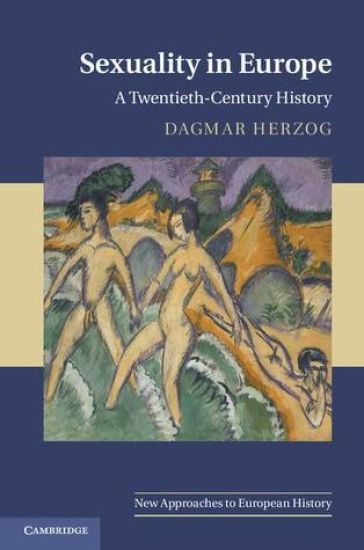
Sexuality in Europe

Sexuality in Europe

Dagmar Herzog

Cambridge University Press
2011
pokkari
This original book brings a fascinating and accessible account of the tumultuous history of sexuality in Europe from the waning of Victorianism to the collapse of Communism and the rise of European Islam. Although the twentieth century is often called 'the century of sex' and seen as an era of increasing liberalization, Dagmar Herzog instead emphasizes the complexities and contradictions in sexual desires and behaviours, the ambivalences surrounding sexual freedom, and the difficulties encountered in securing sexual rights. Incorporating the most recent scholarship on a broad range of conceptual problems and national contexts, the book investigates the shifting fortunes of marriage and prostitution, contraception and abortion, queer and straight existence. It analyzes sexual violence in war and peace, the promotion of sexual satisfaction in fascist and democratic societies, the role of eugenics and disability, the politicization and commercialization of sex, and processes of secularization and religious renewal.
Poincaré Duality Algebras, Macaulay's Dual Systems, and Steenrod Operations

Poincaré Duality Algebras, Macaulay's Dual Systems, and Steenrod Operations

Dagmar M. Meyer; Larry Smith

Cambridge University Press
2005
sidottu
Poincaré duality algebras originated in the work of topologists on the cohomology of closed manifolds, and Macaulay's dual systems in the study of irreducible ideals in polynomial algebras. These two ideas are tied together using basic commutative algebra involving Gorenstein algebras. Steenrod operations also originated in algebraic topology, but may best be viewed as a means of encoding the information often hidden behind the Frobenius map in characteristic p0. They provide a noncommutative tool to study commutative algebras over a Galois field. In this Tract the authors skilfully bring together these ideas and apply them to problems in invariant theory. A number of remarkable and unexpected interdisciplinary connections are revealed that will interest researchers in the areas of commutative algebra, invariant theory or algebraic topology.
Sexuality in Europe

Sexuality in Europe

Dagmar Herzog

Cambridge University Press
2011
sidottu
This original book brings a fascinating and accessible account of the tumultuous history of sexuality in Europe from the waning of Victorianism to the collapse of Communism and the rise of European Islam. Although the twentieth century is often called 'the century of sex' and seen as an era of increasing liberalization, Dagmar Herzog instead emphasizes the complexities and contradictions in sexual desires and behaviours, the ambivalences surrounding sexual freedom, and the difficulties encountered in securing sexual rights. Incorporating the most recent scholarship on a broad range of conceptual problems and national contexts, the book investigates the shifting fortunes of marriage and prostitution, contraception and abortion, queer and straight existence. It analyzes sexual violence in war and peace, the promotion of sexual satisfaction in fascist and democratic societies, the role of eugenics and disability, the politicization and commercialization of sex, and processes of secularization and religious renewal.
Tournament

Tournament

Dagmar Jacisinova; Jennifer Goebel

Menotomy Press
2013
nidottu
"The debut YA novel from author duo Goebel and Jacisinova finds a group of teenagers fighting to prevent the next nuclear catastrophe... There is plenty of excitement here... Young readers are sure to relate to these characters." - Kirkus Indie ReviewsIn 2014, a worldwide nuclear war demolishes a wide swath of the planet. Alaska, the only part left of the United States, joins with the other surviving countries to set up a Global Government. Its primary responsibility is to prevent another devastating war. Leadership changes every two years, based on the outcome of the only competitive outlet the survivors can agree on: a worldwide soccer tournament. In 2044, 17-year-old twin soccer stars Jason and Nate are ready to play the game of their lives. But they soon discover that Alaska's new president has some very special plans and winning the Tournament is the least of their worries.For Grades 6 - 10.For more details visit www.Tournament2044.com
Sex after Fascism

Sex after Fascism

Dagmar Herzog

Princeton University Press
2007
pokkari
What is the relationship between sexual and other kinds of politics? Few societies have posed this puzzle as urgently, or as disturbingly, as Nazi Germany. What exactly were Nazism's sexual politics? Were they repressive for everyone, or were some individuals and groups given sexual license while others were persecuted, tormented, and killed? How do we make sense of the evolution of postwar interpretations of Nazism's sexual politics? What do we make of the fact that scholars from the 1960s to the present have routinely asserted that the Third Reich was "sex-hostile"? In response to these and other questions, Sex after Fascism fundamentally reconceives central topics in twentieth-century German history. Among other things, it changes the way we understand the immense popular appeal of the Nazi regime and the nature of antisemitism, the role of Christianity in the consolidation of postfascist conservatism in the West, the countercultural rebellions of the 1960s-1970s, as well as the negotiations between government and citizenry under East German communism. Beginning with a new interpretation of the Third Reich's sexual politics and ending with the revisions of Germany's past facilitated by communism's collapse, Sex after Fascism examines the intimately intertwined histories of capitalism and communism, pleasure and state policies, religious renewal and secularizing trends. A history of sexual attitudes and practices in twentieth-century Germany, investigating such issues as contraception, pornography, and theories of sexual orientation, Sex after Fascism also demonstrates how Germans made sexuality a key site for managing the memory and legacies of Nazism and the Holocaust.
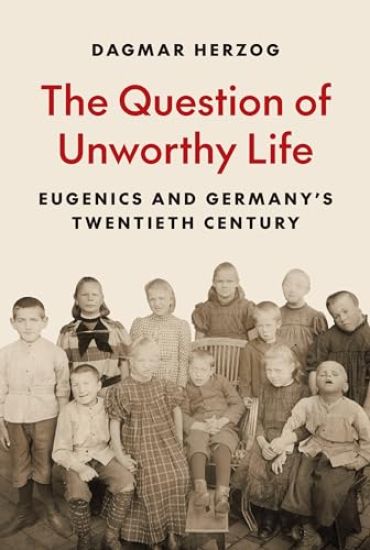
The Question of Unworthy Life

The Question of Unworthy Life

Dagmar Herzog

PRINCETON UNIVERSITY PRESS
2024
sidottu
The dark history of eugenic thought in Germany from the nineteenth century to today—and the courageous countervoicesBetween 1939 and 1945, Nazi genocide claimed the lives of nearly three hundred thousand people diagnosed with psychiatric illness or cognitive deficiencies. Not until the 1980s would these murders, as well as the coercive sterilizations of some four hundred thousand others classified as “feeble-minded,” be officially acknowledged as crimes at all. The Question of Unworthy Life charts this history from its origins in prewar debates about the value of disabled lives to our continuing efforts to unlearn eugenic thinking today.Drawing on a wealth of rare archival evidence, Dagmar Herzog sheds light on how Germany became the only modern state to implement a plan to eradicate cognitive impairment from the entire body politic. She traces how eugenics emerged from the flawed premise that intellectual deficiency was biologically hereditary, and how this crude explanatory framework diverted attention from the actual economic and clinical causes of disability. Herzog describes how the vilification of the disabled was dressed up as the latest science and reveals how Christian leaders and prominent educators were complicit in amplifying and legitimizing Nazi policies.Exposing the driving forces behind the Third Reich’s first genocide and its persistent legacy today, The Question of Unworthy Life recovers the stories of the unsung advocates for disability rights who challenged the aggressive victimization of the disabled and developed alternative approaches to cognitive impairment based on ideals of equality, mutuality, and human possibility.
Intimacy and Exclusion

Intimacy and Exclusion

Dagmar Herzog

Princeton University Press
2014
pokkari
During the years leading up to the revolutions of 1848, liberal and conservative Germans engaged in a contest over the terms of the Enlightenment legacy and the meaning of Christianity--a contest that grew most intense in the Grand Duchy of Baden, where liberalism first became an influential political movement. Bringing insights drawn from Jewish and women's studies into German history, Dagmar Herzog demonstrates how centrally Christianity's problematic relationships to Judaism and to sexuality shaped liberal, conservative, and radical thought in the pre-revolutionary years. In particular, she reveals how often conflicts over the "politics of the personal," especially over sex and marriage, determined "larger" political matters, among them the relationship between church and state and the terms on which Jews were granted civic rights. Herzog documents the rise of a politically sophisticated conservative Catholicism, and explores liberals' ensuing eagerness to advance a humanist version of Christianity. Yet she also examines the limitations at the heart of the liberal project, especially liberals' unwillingness to grant equality to those deemed "different" from the Christian male norm. Finally, the author analyzes the difficulties encountered by philosemitic and feminist radicals in reconceptualizing both classical liberalism and Christianity in order to make room for the claims of Jews and women. Originally published in 1996. The Princeton Legacy Library uses the latest print-on-demand technology to again make available previously out-of-print books from the distinguished backlist of Princeton University Press. These editions preserve the original texts of these important books while presenting them in durable paperback and hardcover editions. The goal of the Princeton Legacy Library is to vastly increase access to the rich scholarly heritage found in the thousands of books published by Princeton University Press since its founding in 1905.
Intimacy and Exclusion

Intimacy and Exclusion

Dagmar Herzog

Princeton University Press
2016
sidottu
During the years leading up to the revolutions of 1848, liberal and conservative Germans engaged in a contest over the terms of the Enlightenment legacy and the meaning of Christianity--a contest that grew most intense in the Grand Duchy of Baden, where liberalism first became an influential political movement. Bringing insights drawn from Jewish and women's studies into German history, Dagmar Herzog demonstrates how centrally Christianity's problematic relationships to Judaism and to sexuality shaped liberal, conservative, and radical thought in the pre-revolutionary years. In particular, she reveals how often conflicts over the "politics of the personal," especially over sex and marriage, determined "larger" political matters, among them the relationship between church and state and the terms on which Jews were granted civic rights. Herzog documents the rise of a politically sophisticated conservative Catholicism, and explores liberals' ensuing eagerness to advance a humanist version of Christianity. Yet she also examines the limitations at the heart of the liberal project, especially liberals' unwillingness to grant equality to those deemed "different" from the Christian male norm. Finally, the author analyzes the difficulties encountered by philosemitic and feminist radicals in reconceptualizing both classical liberalism and Christianity in order to make room for the claims of Jews and women. Originally published in 1996. The Princeton Legacy Library uses the latest print-on-demand technology to again make available previously out-of-print books from the distinguished backlist of Princeton University Press. These editions preserve the original texts of these important books while presenting them in durable paperback and hardcover editions. The goal of the Princeton Legacy Library is to vastly increase access to the rich scholarly heritage found in the thousands of books published by Princeton University Press since its founding in 1905.
Living with Religious Diversity in Early-Modern Europe

Living with Religious Diversity in Early-Modern Europe

Dagmar Freist

Ashgate Publishing Limited
2009
sidottu
Current scholarship continues to emphasise both the importance and the sheer diversity of religious beliefs within early modern societies. Furthermore, it continues to show that, despite the wishes of secular and religious leaders, confessional uniformity was in many cases impossible to enforce. As the essays in this collection make clear, many people in Reformation Europe were forced to confront the reality of divided religious loyalties, and this raised issues such as the means of accommodating religious minorities who refused to conform and the methods of living in communion with those of different faiths. Drawing together a number of case studies from diverse parts of Europe, Living with Religious Diversity in Early Modern Europe explores the processes involved when groups of differing confessions had to live in close proximity - sometimes grudgingly, but often with a benign pragmatism that stood in opposition to the will of their rulers. By focussing on these themes, the volume bridges the gap between our understanding of the confessional developments as they were conceived as normative visions and religious culture at the level of implementation. The contributions thus measure the religious policies articulated by secular and ecclesiastical elites against the 'lived experience' of people going about their daily business. In doing this, the collection shows how people perceived and experienced the religious upheavals of the confessional age and how they were able to assimilate these changes within the framework of their lives.
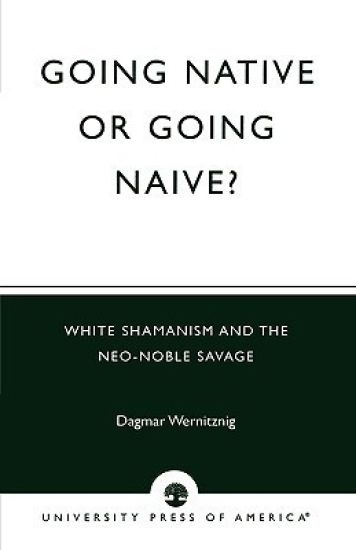
Going Native or Going Naive?

Going Native or Going Naive?

Dagmar Wernitznig

University Press of America
2003
nidottu
Going Native or Going Naïve? is a critical analysis of an esoteric-Indian movement, called white shamanism. This movement, originating from the 1980's New Age boom, redefines the phenomenon of playing Indian. For white shamans and their followers, Indianness turns into a signifier for cultural cloning. By generating a neo-primitivistic bias, white shamanism utilizes esoteric reconceptualizations of ethnicity and identity. In Going Native or Going Naïve?, a retrospective view on psychohistorical and sociopolitical implications of Indianness and (ig)noble savage metaphors should clarify the prefix neo within postmodern adaptations of primitivism. The appropriation of an Indian simulacrum by white shamans as well as white shamanic disciplines connotes a subtle, yet hazardous form of ethnocentrism. Transcending mere market trends and profit margins, white shamanism epitomizes synthetic/cybernetic acculturations. Through investigating the white shamanic matrix, Going Native or Going Naïve? is intended to make these synthesizing processes more transparent.
Europe's Indians, Indians in Europe

Europe's Indians, Indians in Europe

Dagmar Wernitznig

University Press of America
2007
sidottu
Europe's Indians, Indians in Europe is an accessible and multidisciplinary synopsis of European iconographies and cultural narratives related to Native Americans. In this pioneering work, European fascination with and phantasmagorias of 'Indianness' are comprehensively discussed, involving perspectives of history, literature, and cultural criticism. Topics range from so-called Pocahontas, paraded as an exotic souvenir princess in front of seventeenth-century Londoners, to Native Americans touring Europe as show token Indians with Buffalo Bill's Wild West show in the late nineteenth-century. European strategies of playing Indian include German dime novel artisan Karl May (1842–1912) and his literary fabrications of the 'vanishing race,' which were utilized by National Socialist propaganda, as well as the Englishman Archibald Stansfeld Belaney (1888-1938) reinventing himself as Grey Owl, or contemporary Europeans, 'cloning' surrogate Indian identities and 'patenting' synthetic tribes. Covering a vast transatlantic spectrum of aspects and anecdotes, Europe's Indians, Indians in Europe is a seminal study for anyone interested in learning more about European motives, mythopoetics, and microcosms of 'dressing in feathers.'
Europe's Indians, Indians in Europe

Europe's Indians, Indians in Europe

Dagmar Wernitznig

University Press of America
2007
nidottu
Europe's Indians, Indians in Europe is an accessible and multidisciplinary synopsis of European iconographies and cultural narratives related to Native Americans. In this pioneering work, European fascination with and phantasmagorias of 'Indianness' are comprehensively discussed, involving perspectives of history, literature, and cultural criticism. Topics range from so-called Pocahontas, paraded as an exotic souvenir princess in front of seventeenth-century Londoners, to Native Americans touring Europe as show token Indians with Buffalo Bill's Wild West show in the late nineteenth-century. European strategies of playing Indian include German dime novel artisan Karl May (1842D1912) and his literary fabrications of the 'vanishing race,' which were utilized by National Socialist propaganda, as well as the Englishman Archibald Stansfeld Belaney (1888-1938) reinventing himself as Grey Owl, or contemporary Europeans, 'cloning' surrogate Indian identities and 'patenting' synthetic tribes. Covering a vast transatlantic spectrum of aspects and anecdotes, Europe's Indians, Indians in Europe is a seminal study for anyone interested in learning more about European motives, mythopoetics, and microcosms of 'dressing in feathers.'
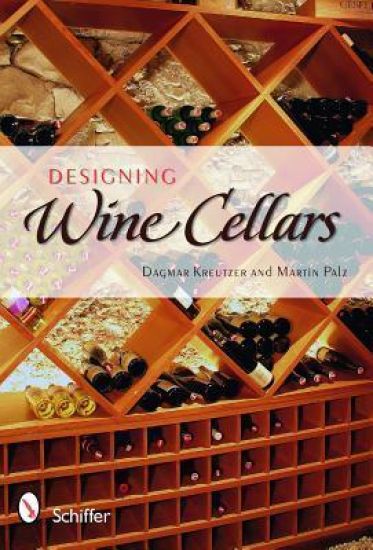
Designing Wine Cellars

Designing Wine Cellars

Dagmar Kreutzer

Schiffer Publishing Ltd
2010
sidottu
There is really only one good reason to store wine, it will taste its very best if you do! This helpful guide with detailed text and 342 color illustrations will guide readers where and how to store wine. Collecting strategies, the proper aging of wine, and safe load capacity for your racks are featured. Proper storage temperature, lighting, humidity, vibration, tilt, and the use of cork and other bottle closures are discussed. Readers will find everything to create a functional wine cellar that will reward their efforts for years to come. Explore basement construction and renovation techniques, earth cellars, and the adaptation of an existing home basement for increased storage capacity and maintenance of proper environment to provide terrific wine every year.
Visible Spaces

Visible Spaces

Dagmar Barnouw

Johns Hopkins University Press
2000
pokkari
Hannah Arendt still makes people angry. Her writings on the modern German-Jewish experience are deliberately challenging -- and sometimes shocking -- to an audience used to thinking of the Jewish people as the victims of history. Visible Spaces is the most ambitious attempt to date to explore the origins and implications of Arendt's political thought. Dagmar Barnouw, an admiring yet critical reader, draws extensively on unpublished archival materials relating to the Jewish experience in modern Germany and its influence on Arendt's political philosophy. Arendt's work is discussed chronologically, from Origins of Totalitarianism to The Human Condition and the unfinished Life of the Mind. Barnouw also offers a challenging reassessment of Arendt's well-known report on the Eichmann trial. The result is an insightful study of Arendt's thought in its complex historical context.