Kirjojen hintavertailu. Mukana 11 244 527 kirjaa ja 12 kauppaa.

Kirjahaku

Etsi kirjoja tekijän nimen, kirjan nimen tai ISBN:n perusteella.

1000 tulosta hakusanalla Daniel C. Dennett

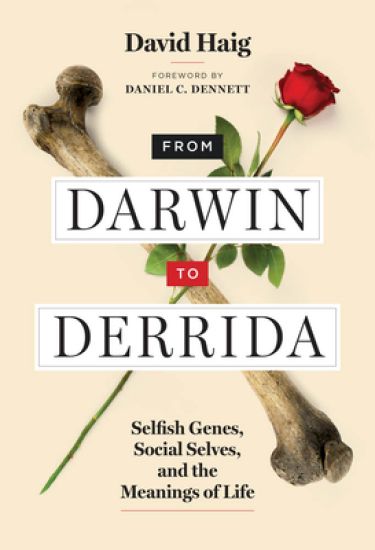
From Darwin to Derrida

From Darwin to Derrida

David Haig; Daniel C. Dennett

MIT Press
2020
sidottu
How the meaningless process of natural selection produces purposeful beings who find meaning in the world.In From Darwin to Derrida, evolutionary biologist David Haig explains how a physical world of matter in motion gave rise to a living world of purpose and meaning. Natural selection, a process without purpose, gives rise to purposeful beings who find meaning in the world. The key to this, Haig proposes, is the origin of mutable "texts"-genes-that preserve a record of what has worked in the world. These texts become the specifications for the intricate mechanisms of living beings.Haig draws on a wide range of sources-from Laurence Sterne's Tristram Shandy to Immanuel Kant's Critique of the Power of Judgment to the work of Jacques Derrida to the latest findings on gene transmission, duplication, and expression-to make his argument. Genes and their effects, he explains, are like eggs and chickens. Eggs exist for the sake of becoming chickens and chickens for the sake of laying eggs. A gene's effects have a causal role in determining which genes are copied. A gene (considered as a lineage of material copies) persists if its lineage has been consistently associated with survival and reproduction. Organisms can be understood as interpreters that link information from the environment to meaningful action in the environment. Meaning, Haig argues, is the output of a process of interpretation; there is a continuum from the very simplest forms of interpretation, instantiated in single RNA molecules near the origins of life, to the most sophisticated. Life is interpretation-the use of information in choice.
Feeling Pain and Being in Pain

Feeling Pain and Being in Pain

Nikola Grahek; Daniel C. Dennett

Bradford Books
2011
pokkari
An examination of the two most radical dissociation syndromes of the human pain experience-pain without painfulness and painfulness without pain-and what they reveal about the complex nature of pain and its sensory, cognitive, and behavioral components.In Feeling Pain and Being in Pain, Nikola Grahek examines two of the most radical dissociation syndromes to be found in human pain experience: pain without painfulness and painfulness without pain. Grahek shows that these two syndromes-the complete dissociation of the sensory dimension of pain from its affective, cognitive, and behavioral components, and its opposite, the dissociation of pain's affective components from its sensory-discriminative components (inconceivable to most of us but documented by ample clinical evidence)-have much to teach us about the true nature and structure of human pain experience.Grahek explains the crucial distinction betweenfeeling pain and being in pain, defending it on both conceptual and empirical grounds. He argues that the two dissociative syndromes reveal the complexity of the human pain experience: its major components, the role they play in overall pain experience, the way they work together, and the basic neural structures and mechanisms that subserve them.Feeling Pain and Being in Pain does not offer another philosophical theory of pain that conclusively supports or definitively refutes either subjectivist or objectivist assumptions in the philosophy of mind. Instead, Grahek calls for a less doctrinaire and more balanced approach to the study of mind-brain phenomena.
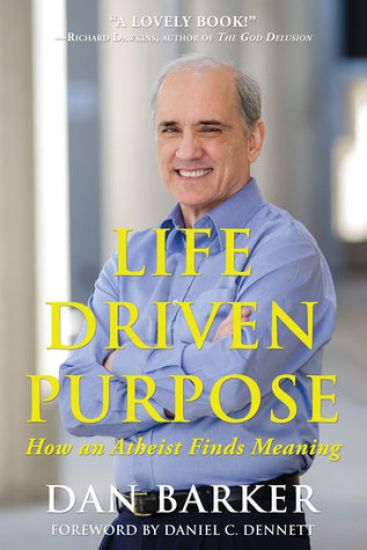
Life Driven Purpose

Life Driven Purpose

Dan Barker; Daniel C. Dennett

Pitchstone Publishing
2015
nidottu
Every thinking person wants to lead a life of meaning and purpose. For thousands of years, holy books have told us that such a life is available only through obedience and submission to some higher power. Today, the faithful keep popular devotionals and tracts within easy reach on bedside tables and mobile devices, all communicating this common message: “Life is meaningless without God.” In this volume, former pastor Dan Barker eloquently, powerfully, and rationally upends this long-held belief. Offering words of enrichment, emancipation, and inspiration, he reminds us how millions of atheists lead happy, loving, moral, and purpose-filled lives. Practicing what he preaches, he also demonstrates through his own personal journey that life is valuable for its own sake—that meaning and purpose come not from above, but from within.
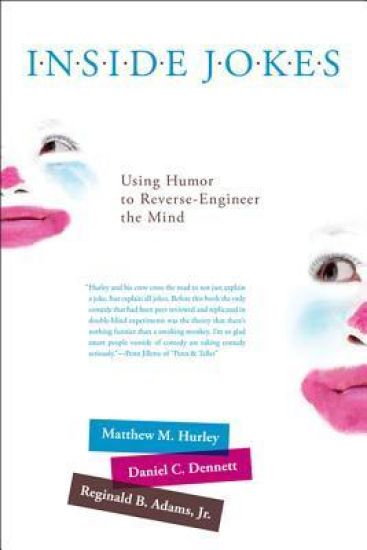
Inside Jokes

Inside Jokes

Matthew M. Hurley; Daniel C. Dennett; Reginald B. Adams Jr.

MIT Press
2013
pokkari
An evolutionary and cognitive account of the addictive mind candy that is humor.Some things are funny-jokes, puns, sitcoms, Charlie Chaplin, The Far Side, Malvolio with his yellow garters crossed-but why? Why does humor exist in the first place? Why do we spend so much of our time passing on amusing anecdotes, making wisecracks, watching The Simpsons? In Inside Jokes, Matthew Hurley, Daniel Dennett, and Reginald Adams offer an evolutionary and cognitive perspective. Humor, they propose, evolved out of a computational problem that arose when our long-ago ancestors were furnished with open-ended thinking. Mother Nature-aka natural selection-cannot just order the brain to find and fix all our time-pressured misleaps and near-misses. She has to bribe the brain with pleasure. So we find them funny. This wired-in source of pleasure has been tickled relentlessly by humorists over the centuries, and we have become addicted to the endogenous mind candy that is humor.
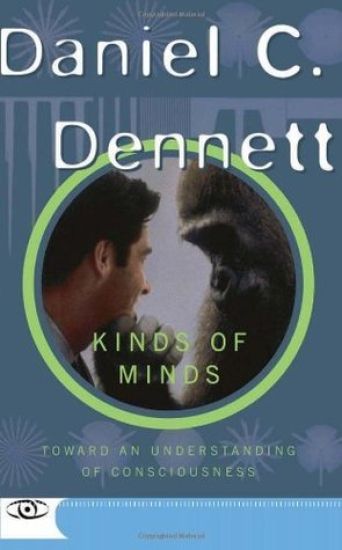
Kinds Of Minds

Kinds Of Minds

Dennett Danile C.

Basic Books
1997
pokkari
Combining ideas from philosophy, artificial intelligence, and neurobiology, Daniel Dennett leads the reader on a fascinating journey of inquiry, exploring such intriguing possibilities as: Can any of us really know what is going on in someone else's mind? What distinguishes the human mind from the minds of animals, especially those capable of complex behaviour? If such animals, for instance, were magically given the power of language, would their communities evolve an intelligence as subtly discriminating as ours? Will robots, once they have been endowed with sensory systems like those that provide us with experience, ever exhibit the particular traits long thought to distinguish the human mind, including the ability to think about thinking? Dennett addresses these questions from an evolutionary perspective. Beginning with the macromolecules of DNA and RNA, the author shows how, step-by-step, animal life moved from the simple ability to respond to frequently recurring environmental conditions to much more powerful ways of beating the odds, ways of using patterns of past experience to predict the future in never-before-encountered situations. Whether talking about robots whose video-camera "eyes" give us the powerful illusion that "there is somebody in there" or asking us to consider whether spiders are just tiny robots mindlessly spinning their webs of elegant design, Dennett is a master at finding and posing questions sure to stimulate and even disturb.
The Essential Kabbalah

The Essential Kabbalah

Daniel C Matt

HarperCollins (USA)
2009
nidottu
A translation of the Kabbalah for the layperson includes a compact presentation of each primary text and features a practical analysis and vital historical information that offer insight into the various aspects of Jewish mysticism.
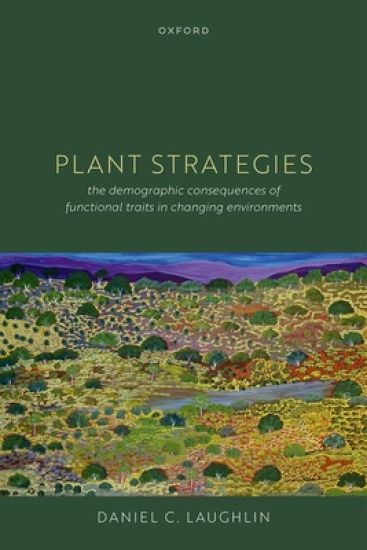
Plant Strategies

Plant Strategies

Daniel C. Laughlin

Oxford University Press
2023
sidottu
How do plants make a living? Some plants are gamblers, others are swindlers. Some plants are habitual spenders while others are strugglers and miserly savers. Plants have evolved a spectacular array of solutions to the existential problems of survival and reproduction in a world where resources are scarce, disturbances can be deadly, and competition is cut-throat. Few topics have both captured the imagination and furrowed the brows of plant ecologists, yet no topic is more important for understanding the assembly of plant communities, predicting plant responses to global change, and enhancing the restoration of our rapidly degrading biosphere. The vast array of plant strategy models that characterize the discipline now require synthesis. These models tend to emphasize either life history strategies based on demography, or functional strategies based on ecophysiology. Indeed, this disciplinary divide between demography and physiology runs deep and continues to this today. The goal of this accessible book is to articulate a coherent framework that unifies life history theory with comparative functional ecology to advance prediction in plant ecology. Armed with a deeper understanding of the dimensionality of life history and functional traits, we are now equipped to quantitively link phenotypes to population growth rates across gradients of resource availability and disturbance regimes. Predicting how species respond to global change is perhaps the most important challenge of our time. A robust framework for plant strategy theory will advance this research agenda by testing the generality of traits for predicting population dynamics.
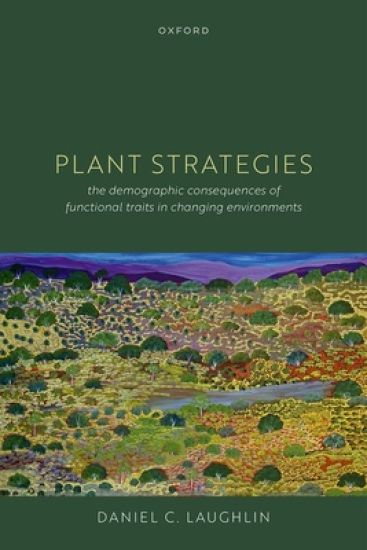
Plant Strategies

Plant Strategies

Daniel C. Laughlin

Oxford University Press
2023
nidottu
How do plants make a living? Some plants are gamblers, others are swindlers. Some plants are habitual spenders while others are strugglers and miserly savers. Plants have evolved a spectacular array of solutions to the existential problems of survival and reproduction in a world where resources are scarce, disturbances can be deadly, and competition is cut-throat. Few topics have both captured the imagination and furrowed the brows of plant ecologists, yet no topic is more important for understanding the assembly of plant communities, predicting plant responses to global change, and enhancing the restoration of our rapidly degrading biosphere. The vast array of plant strategy models that characterize the discipline now require synthesis. These models tend to emphasize either life history strategies based on demography, or functional strategies based on ecophysiology. Indeed, this disciplinary divide between demography and physiology runs deep and continues to this today. The goal of this accessible book is to articulate a coherent framework that unifies life history theory with comparative functional ecology to advance prediction in plant ecology. Armed with a deeper understanding of the dimensionality of life history and functional traits, we are now equipped to quantitively link phenotypes to population growth rates across gradients of resource availability and disturbance regimes. Predicting how species respond to global change is perhaps the most important challenge of our time. A robust framework for plant strategy theory will advance this research agenda by testing the generality of traits for predicting population dynamics.
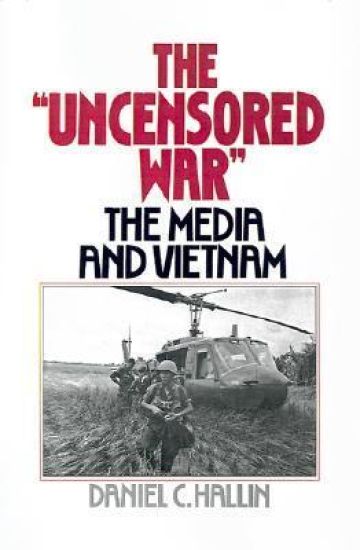
The 'Uncensored War'

The 'Uncensored War'

Daniel C. Hallin

Oxford University Press Inc
1986
sidottu
Vietnam was America's most divisive and unsuccessful foreign war. It was also the first to be televised and the first of the modern era fought without military censorship. From the earliest days of the Kennedy-Johnson escalation right up to the American withdrawal, and even today, the media's role in Vietnam has continued to be intensely controversial. The "Uncensored War" gives a richly detailed account of what Americans read and watched about Vietnam. Hallin draws on the complete body of the New York Times coverage from 1961 to 1965, a sample of hundreds of television reports from 1965-73, including television coverage filmed by the Defense Department in the early years of the war, and interviews with many of the journalists who reported it, to give a powerful critique of the conventional wisdom, both conservative and liberal, about the media and Vietnam. Far from being a consistent adversary of government policy in Vietnam, Hallin shows, the media were closely tied to official perspectives throughout the war, though divisions in the government itself and contradictions in its public relations policies caused every administration, at certain times, to lose its ability to "manage" the news effectively. As for television, it neither showed the "literal horror of war," nor did it play a leading role in the collapse of support: it presented a highly idealized picture of the war in the early years, and shifted toward a more critical view only after public unhappiness and elite divisions over the war were well advanced. The "Uncensored War" is essential reading for anyone interested in the history of the Vietnam war or the role of the media in contemporary American politics. A groundbreaking study of the media's influence on the Vietnam War BLOverturns the conventional notions about the media's role in the war BLDraws directly on a huge body of newspaper and TV coverage
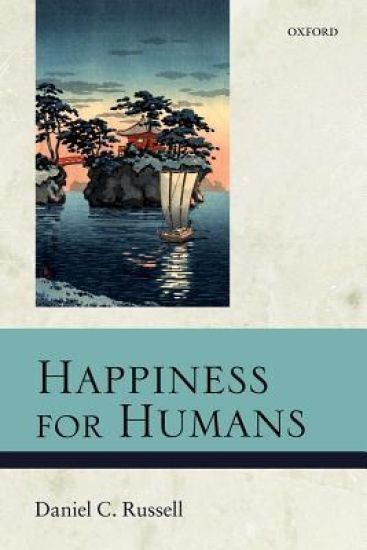
Happiness for Humans

Happiness for Humans

Daniel C. Russell

Oxford University Press
2015
nidottu
In Happiness for Humans, Daniel C. Russell takes a fresh look at happiness from a practical perspective: the perspective of someone trying to solve the wonderful problem of how to give himself a good life. From this perspective, 'happiness' is the name of a solution to that problem for practical deliberation. Russell's approach to happiness falls within a tradition that reaches back to ancient Greek and Roman philosophers--a tradition now called 'eudaimonism.' Beginning with Aristotle's seminal discussion of the role of happiness in practical reasoning, Russell asks what sort of good happiness would have to be in order to play the role in our practical economies that it actually does play. Looking at happiness from this perspective, Russell argues that happiness is a life of activity, with three main features: it is acting for the sake of ends we can live for, and living for them wisely; it is fulfilling for us, both as humans and as unique individuals; and it is inextricable from our connections with the particular persons, pursuits, and places that make us who we are. By returning to this ancient perspective on happiness, Russell finds new directions for contemporary thought about the good lives we want for ourselves.
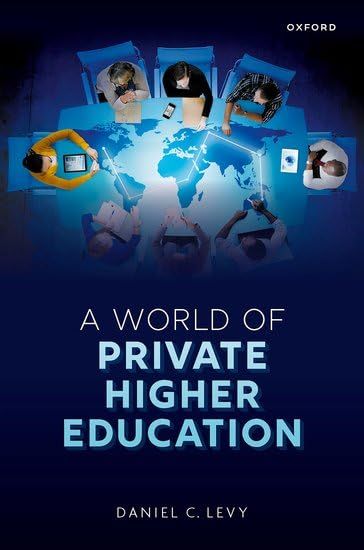
A World of Private Higher Education

A World of Private Higher Education

Daniel C. Levy

Oxford University Press
2024
sidottu
A World of Private Higher Education is the definitive treatment of a sector accounting for a third of the world's 200 million higher education enrolment--yet remaining largely unknown even to scholars of higher education and widely mis-characterized when it is considered by stakeholders or the general public. Beyond the eye-popping numbers, several inter-related thematic findings regarding the Private and the Public underscore the subject matter's importance. First, private-public differences are significant-it matters that so many students are in a sector that not long ago was only marginal in much of the world. Second, private higher education (PHE) itself is increasingly diverse, with significant and private-private differences. Third, the overlaying of the first two realities yields increasing diversity in private-public higher education distinctions. Especially for its pioneering mapping of PHE globally, regionally, and nationally, the book draws on the pioneering dataset of the pioneering scholarly program for research on PHE (Program for Research on Private Higher Education). Unprecedented in geographical scope, the dataset is unprecedented in longitudinal coverage too, dating back to 2000. Empirical methods allow for extensive analysis, and theoretical analysis draws on key private-public concepts embedded in literatures on privatization, nonprofit studies, and policy models. For the major challenge of penetrating inside the increasingly diverse private sector of higher education, Levy revises his heralded and widely employed PHE typology.