Kirjojen hintavertailu. Mukana 11 244 527 kirjaa ja 12 kauppaa.

Kirjahaku

Etsi kirjoja tekijän nimen, kirjan nimen tai ISBN:n perusteella.

1000 tulosta hakusanalla Daniel C. Morrison

Practical Intelligence and the Virtues

Practical Intelligence and the Virtues

Daniel C. Russell

Oxford University Press
2011
nidottu
One of the most important developments in modern moral philosophy is the resurgence of interest in the virtues. In this new book, Daniel Russell explores two important hopes for such an approach to moral thought: that starting from the virtues should cast light on what makes an action right, and that notions like character, virtue, and vice should yield a plausible picture of human psychology. Russell argues that the key to each of these hopes is an understanding of the cognitive and deliberative skills involved in the virtues. If right action is defined in terms of acting generously or kindly, then these virtues must involve skills for determining what the kind or generous thing to do would be on a given occasion. Likewise, Russell argues that understanding virtuous action as the intelligent pursuit of virtuous goals yields a promising picture of the psychology of virtue. This book develops an Aristotelian account of the virtue of practical intelligence or 'phronesis'--an excellence of deliberating and making choices--which Russell argues is a necessary part of every virtue. This emphasis on the roots of the virtues in the practical intellect contrasts with ambivalence about the practical intellect in much recent work on the virtues--a trend Russell argues is ultimately perilous for virtue theory. This book also takes a penetrating look at issues like the unity of the virtues, responsibility for character, and that elusive figure, 'the virtuous person'. Written in a clear and careful manner, Practical Intelligence and the Virtues will appeal to philosophers and students alike in moral philosophy and moral psychology.
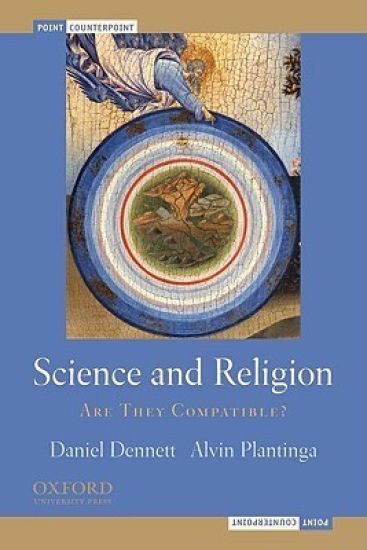
Science and Religion

Science and Religion

Daniel C. Dennett; Alvin Plantinga

Oxford University Press Inc
2011
nidottu
One of today's most controversial and heated issues is whether or not the conflict between science and religion can be reconciled. In Science and Religion: Are They Compatible?, renowned philosophers Daniel C. Dennett and Alvin Plantinga expand upon the arguments that they presented in an exciting live debate held at the 2009 American Philosophical Association Central Division conference. An enlightening discussion that will motivate students to think critically, Science and Religion: Are They Compatible? opens with Plantinga's assertion that Christianity is compatible with evolutionary theory because Christians believe that God created the living world, and it is entirely possible that God did so by using a process of evolution. Dennett vigorously rejects this argument, provoking a reply from Plantinga, another response from Dennett, and final statements from both sides. As philosophers, the authors possess expert skills in critical analysis; their arguments provide a model of dialogue between those who strongly disagree. Ideal for courses in philosophy of religion, science and religion, and philosophy of science, Science and Religion is also captivating reading for general readers.
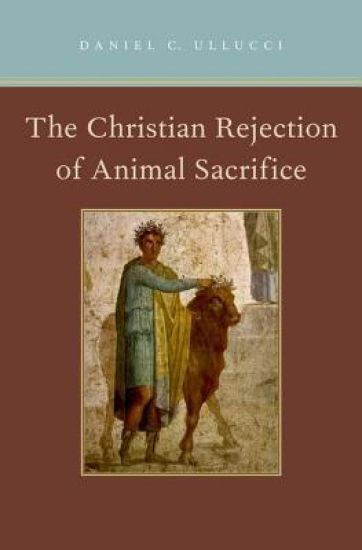
The Christian Rejection of Animal Sacrifice

The Christian Rejection of Animal Sacrifice

Daniel C. Ullucci

Oxford University Press Inc
2012
sidottu
Sacrifice dominated the religious landscape of the ancient Mediterranean world for millennia, but its role and meaning changed dramatically in the fourth and fifth centuries with the rise of Christianity. Daniel Ullucci offers a new explanation of this remarkable transformation, in the process demonstrating the complexity of the concept of sacrifice in Roman, Greek, and Jewish religion. The Christian Rejection of Animal Sacrifice challenges the predominant scholarly model, which posits a connection between so-called critiques of sacrifice in non-Christian Greek, Latin, and Hebrew texts and the Christian rejection of animal sacrifice. According to this model, pre-Christian authors attacked the propriety of animal sacrifice as a religious practice, and Christians responded by replacing animal sacrifice with a pure, ''spiritual'' 'worship. This historical construction influences prevailing views of animal sacrifice even today, casting it as barbaric, backward, and primitive despite the fact that it is still practiced in such contemporary religions as Islam and Santeria. Rather than interpret the entire history of animal sacrifice through the lens of the Christian master narrative, Ullucci shows that the ancient texts must be seen not simply as critiques but as part of an ongoing competition between elite cultural producers to define the meaning and purpose of sacrifice. He reveals that Christian authors were not merely purveyors of pure spiritual religion, but a cultural elite vying for legitimacy and influence in societies that long predated them. The Christian Rejection of Animal Sacrifice is a crucial reinterpretation of the history of one of humanity's oldest and most fascinating rituals.
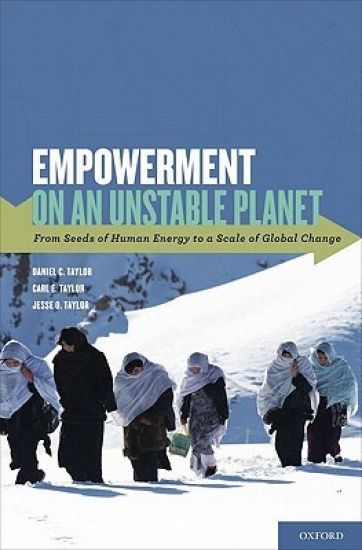
Empowerment on an Unstable Planet

Empowerment on an Unstable Planet

Daniel C. Taylor; Carl E. Taylor; Jesse O. Taylor

Oxford University Press Inc
2011
sidottu
Since World War II, development projects have invested more than two trillion dollars towards health services, poverty alleviation, education, food security, and environmental initiatives around the world. Despite these efforts, 20% of the world still lives on less than $1.50 a day and the environment within which all live declines dramatically. There are clear limits to what further investments at this rate can achieve. This book advances the thesis that a more effective and universal foundation for social change and environmental restoration is not money, but human energy. Using this approach Tibet recovered from being nearly deforested to having over 40% of its land area protected under conservation management. Using principles outlined in this book mothers in northeast India implemented a package of life-changing actions that halved child mortality. They parallel the way New York City has created a citywide conservation program over three-and-a-half centuries. Each of these examples is particular to its time and place, yet a shared set of principles is at work in all of them. Improving the quality of life for a community starts by strengthening successes already operating. It involves local knowledge and a relatively simple set of principles, tasks, and criteria designed to empower communities. This highly readable account demonstrates how a comprehensive process for social change harnesses the energy of a community and scales it up with a rising number of participants becoming invested in increasingly high-quality work. Richly illustrated with photographs and stories of innovative people and programs in communities ranging from Nepal to Afghanistan to the South Bronx, it provides practical, proven guidelines for creating profound and sustained social change that begins in individual communities and grows to scale.
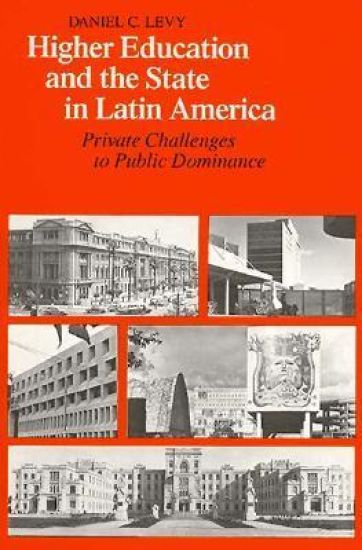
Higher Education and the State in Latin America

Higher Education and the State in Latin America

Daniel C. Levy

University of Chicago Press
1986
sidottu
Latin America higher education has undergone an astonishing transformation in recent years, highlighted by the private sector's growth from 3 to 34 percent of the region's total enrollment. In this provocative work Daniel Levy examines the sources, characteristics, and consequences of the development and considers the privatization of higher education within the broader context of state-society relationships. Levy shows how specific national circumstances cause variations and identifies three basic private-public patterns: one in which the private and public sectors are relatively similar and those in which one sector or the other is dominant. These patterns are analyzed in depth in case studies of Chile, Mexico, and Brazil. For each sector, Levy investigates origins and growth, and then who pays, who rules, and whose interests are served. In addition to providing a wealth of information, Levy offers incisive analyses of the nature of public and private institutions. Finally, he explores the implications of his findings for concepts such as autonomy, corporatism, and privatization. His multifaceted study is a major contribution to the literature on Latin American studies, comparative politics, and higher education.
Making EU Foreign Policy

Making EU Foreign Policy

Daniel C. Thomas

Palgrave Macmillan
2011
sidottu
A novel explanation of how EU member states overcome their divergent preferences to reach agreement on common foreign policies, with fourteen in-depth case studies covering diplomatic and security issues, enlargement, trade, development and environmental protection.
I've Been Thinking

I've Been Thinking

Daniel C. Dennett

PENGUIN BOOKS LTD
2023
sidottu
'A generous book written by a figure who has made a significant impact on philosophy ... Anyone interested in philosophy should read it' Nigel Warburton, Times Literary Supplement'One of today's most readable, intellectually nimble and scientifically literate philosophers' Nature'Who would have guessed that a philosopher's life could be so full of adventures?'Daniel C. Dennett, philosopher and cognitive scientist, has spent his career considering consciousness. I've Been Thinking traces the development of Dennett's own intellect and instructs us how we too can become good thinkers.Dennett's restless curiosity leads him from his childhood in Beirut to Harvard, and from Parisian jazz clubs to 'tillosophy' on his tractor in Maine. Along the way, he encounters and debates with a host of legendary thinkers, and reveals the breakthroughs and misjudgments that shaped his paradigm-shifting philosophies. Thinking, Dennett argues, is hard, and risky. In fact, all good philosophical thinking is inevitably accompanied by bafflement, frustration and self-doubt. It is only in getting it wrong that we, very occasionally, find a way to get it right.This memoir by one of the greatest philosophers of our time will speak to anyone who seeks a life of the mind with adventure and creativity.
Intuition Pumps and Other Tools for Thinking

Intuition Pumps and Other Tools for Thinking

Daniel C. Dennett

Penguin Books Ltd
2014
pokkari
In Intuition Pumps, Daniel Dennett, one of the world's leading philosophers, and author of Consciousness Explained and Freedom Evolves, offers aspiring thinkers his personal trove of mind-stretching thought experimentsThinking is hard. A few of us may be natural geniuses; others are blessed with reserves of willpower. Then there's the rest of us: not prodigies and short on time, but still aspiring to understand the world. What can we do? Daniel Dennett, one of the world's most original thinkers, reveals a collection of his favourite thinking tools, or 'intuition pumps'. From Occam's Razor to the benefit of mistakes, the 90% rule to avoiding 'deepitites', this entertaining guide will enable you to tackle life's most fundamental questions - evolution, meaning, consciousness and free will - and teach you to think truly independently and creatively.Daniel Dennett is one of the most original and provocative thinkers in the world. A brilliant polemicist and philosopher, he is famous for challenging unexamined orthodoxies. His books include Brainstorms, Brainchildren, Elbow Room, Consciousness Explained, Darwin's Dangerous Idea and Freedom Evolves. He lives in North Andover, Massachusetts.'One of the world's most original and provocative thinkers' Daily Telegraph'A master class' Guardian 'Intelligence, insight and flair ... They don't come much bigger than Daniel Dennett' Julian Baggini, Guardian'A philosopher's box of tools for the musing mind' Melvin Konner, Nature'You'll enjoy and be challenged by it'Steven Rose, Guardian'A lively primer on the radical answers Mr. Dennett has elaborated to the big questions in his nearly five decades in philosophy' Jennifer Schuessler, The New York Times'America's most important and entertaining philosopher' Observer
UN MUNDO PERVERSO

UN MUNDO PERVERSO

Daniel C. Narváez

Lulu.com
2020
sidottu
Un mundo perverso es una historia de estilo moderno y muy visual, cercano al estilo Nordic Noir. Se desarrolla a lo largo de la Costa Blanca en localidades como Playa de San Juan, Calpe, Benissa, Campello. Cuenta ademas con escenarios puntuales ubicados en Afganistan, Colombia, Lituania y Bielorrusia.Los personajes, todos ellos de origenes diversos como diversa es la identidad de Europa, estan enlazados por hechos que han ocurrido en el pasado y que les obliga a tomar decisiones valientes y superar sus miedos. Mientras lo hacen, descubren episodios de su pasado y nuevas limites a sus relaciones personales.Todos ellos iran encontrandose en una lucha por acabar con la realidad del mundo perverso en el que habitan.
Rice and Slaves

Rice and Slaves

Daniel C. Littlefield

University of Illinois Press
1991
nidottu
Daniel Littlefield's investigation of colonial South Carolinianss preference for some African ethnic groups over others as slaves reveals how the Africans' diversity and capabilities inhibited the development of racial stereotypes and influenced their masters' perceptions of slaves. It also highlights how South Carolina, perhaps more than anywhere else in North America, exemplifies the common effort of Africans and Europeans in molding American civilization.
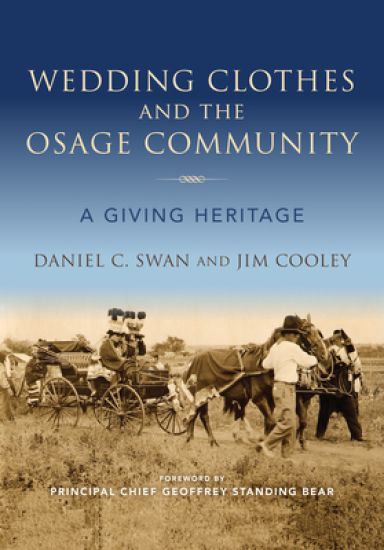
Wedding Clothes and the Osage Community

Wedding Clothes and the Osage Community

Daniel C. Swan; Jim Cooley

Indiana University Press
2019
sidottu
Wedding Clothes and the Osage Community: A Giving Heritage explores how gift exchange, motivated by the values of generosity and hospitality, serves as a critical component in the preservation and perpetuation of Osage society. Authors, Daniel C. Swan and Jim Cooley collaborate with members of the Osage Nation to discuss this foundational cultural practice over two centuries and in multiple social contexts. The book begins with an in-depth examination of the Mízhin form of marriage, which bound two extended Osage families together for economic, biologic, and social reasons intended to produce value and community cohesion for the larger society. Swan and Cooley then follow the movement of Osage bridal regalia from the Mízhin from of marriage into the "Paying for the Drum" ceremony of the Osage Ilonshka—a variant of the Plains Grass Dance, which is a nativistic movement that spread throughout the Plains and Prairie regions of the United States in the 1890s. The Ilonshka dance and its associated organization provide a spiritual charter for the survival of the ancient Osage physical divisions, or "districts" as they are called today. Swan and Cooley demonstrate how the process of re-chartering elements of material culture and their associated meanings from one ceremony to another serves as an example of the ways in which the Osage people have adapted their cultural values to changing economic and political conditions. At the core of this historical trajectory is a broad system of Osage social relations predicated on status, reciprocity, and cooperation. Through Osage weddings and the Ilonshka dance the Osage people reinforce and strengthen the social relations that provide a foundation for their respective communities.
Wedding Clothes and the Osage Community

Wedding Clothes and the Osage Community

Daniel C. Swan; Jim Cooley

Indiana University Press
2019
pokkari
Wedding Clothes and the Osage Community: A Giving Heritage explores how gift exchange, motivated by the values of generosity and hospitality, serves as a critical component in the preservation and perpetuation of Osage society. Authors, Daniel C. Swan and Jim Cooley collaborate with members of the Osage Nation to discuss this foundational cultural practice over two centuries and in multiple social contexts. The book begins with an in-depth examination of the Mízhin form of marriage, which bound two extended Osage families together for economic, biologic, and social reasons intended to produce value and community cohesion for the larger society. Swan and Cooley then follow the movement of Osage bridal regalia from the Mízhin from of marriage into the "Paying for the Drum" ceremony of the Osage Ilonshka—a variant of the Plains Grass Dance, which is a nativistic movement that spread throughout the Plains and Prairie regions of the United States in the 1890s. The Ilonshka dance and its associated organization provide a spiritual charter for the survival of the ancient Osage physical divisions, or "districts" as they are called today. Swan and Cooley demonstrate how the process of re-chartering elements of material culture and their associated meanings from one ceremony to another serves as an example of the ways in which the Osage people have adapted their cultural values to changing economic and political conditions. At the core of this historical trajectory is a broad system of Osage social relations predicated on status, reciprocity, and cooperation. Through Osage weddings and the Ilonshka dance the Osage people reinforce and strengthen the social relations that provide a foundation for their respective communities.
Brainstorms

Brainstorms

Daniel C. Dennett

MIT Press
2017
pokkari
An anniversary edition of a classic in cognitive science, with a new introduction by the author.When Brainstorms was published in 1978, the interdisciplinary field of cognitive science was just emerging. Daniel Dennett was a young scholar who wanted to get philosophers out of their armchairs-and into conversations with psychologists, linguists, computer scientists. This collection of seventeen essays by Dennett offers a comprehensive theory of mind, encompassing traditional issues of consciousness and free will. Using careful arguments and ingenious thought experiments, the author exposes familiar preconceptions and hobbling intuitions. The essays are grouped into four sections: "Intentional Explanation and Attributions of Mentality"; "The Nature of Theory in Psychology"; "Objects of Consciousness and the Nature of Experience"; and "Free Will and Personhood."This anniversary edition includes a new introduction by Dennett, "Reflections on Brainstorms after Forty Years," in which he recalls the book's original publication by Harry and Betty Stanton of Bradford Books and considers the influence and afterlife of some of the essays. For example, "Mechanism and Responsibility" was Dennett's first articulation of his concept of the intentional stance; "Are Dreams Experiences?" anticipates the major ideas in his 1991 book Consciousness Explained; and "Where Am I?" has been variously represented in a BBC documentary, a student's Javanese shadow puppet play, and a feature-length film made in the Netherlands, Victim of the Brain.
The Intentional Stance

The Intentional Stance

Daniel C. Dennett

Bradford Books
1989
pokkari
How are we able to understand and anticipate each other in everyday life, in our daily interactions? Through the use of such "folk" concepts as belief, desire, intention, and expectation, asserts Daniel Dennett in this first full-scale presentation of a theory of intentionality that he has been developing for almost twenty years. We adopt a stance, he argues, a predictive strategy of interpretation that presupposes the rationality of the people-or other entities-we are hoping to understand and predict.These principles of radical interpretation have far-reaching implications for the metaphysical and scientific status of the processes referred to by the everday terms of folk psychology and their corresponding terms in cognitive science.While Dennett's philosophical stance has been steadfast over the years, his views have undergone successive enrichments, refinements, and extensions. The Intentional Stance brings together both previously published and original material: four of the book's ten chapters-its first and the final three-appear here for the first time and push the theory into surprising new territory. The remaining six were published earlier in the 1980s but were not easily accessible; each is followed by a reflection-an essay reconsidering and extending the claims of the earlier work. These reflections and the new chapters represent the vanguard of Dennett's thought. They reveal fresh lines of inquiry into fundamental issues in psychology, artificial intelligence, and evolutionary theory as well as traditional issues in the philosophy of mind. A Bradford Book.
Sweet Dreams

Sweet Dreams

Daniel C. Dennett

MIT Press
2006
pokkari
In the years since Daniel Dennett's influential Consciousness Explained was published in 1991, scientific research on consciousness has been a hotly contested battleground of rival theories-"so rambunctious," Dennett observes, "that several people are writing books just about the tumult." With Sweet Dreams, Dennett returns to the subject for "revision and renewal" of his theory of consciousness, taking into account major empirical advances in the field since 1991 as well as recent theoretical challenges.In Consciousness Explained, Dennett proposed to replace the ubiquitous but bankrupt Cartesian Theater model (which posits a privileged place in the brain where "it all comes together" for the magic show of consciousness) with the Multiple Drafts Model. Drawing on psychology, cognitive neuroscience, and artificial intelligence, he asserted that human consciousness is essentially the mental software that reorganizes the functional architecture of the brain. In Sweet Dreams, he recasts the Multiple Drafts Model as the "fame in the brain" model, as a background against which to examine the philosophical issues that "continue to bedevil the field."With his usual clarity and brio, Dennett enlivens his arguments with a variety of vivid examples. He isolates the "Zombic Hunch" that distorts much of the theorizing of both philosophers and scientists, and defends heterophenomenology, his "third-person" approach to the science of consciousness, against persistent misinterpretations and objections. The old challenge of Frank Jackson's thought experiment about Mary the color scientist is given a new rebuttal in the form of "RoboMary," while his discussion of a famous card trick, "The Tuned Deck," is designed to show that David Chalmers's Hard Problem is probably just a figment of theorists' misexploited imagination. In the final essay, the "intrinsic" nature of "qualia" is compared with the naively imagined "intrinsic value" of a dollar in "Consciousness-How Much is That in Real Money?"
Ledgers and Prices

Ledgers and Prices

Daniel C. Snell

Yale University Press
1982
sidottu
Trade and economic life of the Ur III period (2112-2004 B.C.E.) is here revealed through a study of documents in cuneiform, the remains of a complex Mesopotamian bureaucracy that meticulously recorded many of its activities.
Becoming Elijah

Becoming Elijah

Daniel C. Matt

YALE UNIVERSITY PRESS
2022
sidottu
The story of the prophet Elijah’s transformation from fierce zealot to compassionate hero and cherished figure in Jewish tradition “In a series on Jewish Lives, this volume is about the Jewish life—the one that goes on forever. Becoming Elijah blends meticulous scholarship with bold literary and poetic imagination. Don’t miss it!”—Arthur Green, author of Judaism for the World “The author’s erudite prose and masterful command of history and faith traditions bring his subject to vibrant life. This is an edifying and accessible chronicle of a towering religious figure.”—Publishers Weekly (starred review) In the Bible Elijah is a zealous prophet, attacking idolatry and injustice, championing God. He performs miracles, restoring life and calling down fire. When his earthly life ends, he vanishes in a whirlwind, carried off to heaven in a fiery chariot. Was this a spectacular death, or did Elijah escape death entirely? The latter view prevailed. Though residing in heaven, Elijah revisits earth—to help, rescue, enlighten, and eventually herald the Messiah. Because of his messianic role, Jews open the door for Elijah during each seder—the meal commemorating liberation from slavery and anticipating final redemption. How did this zealot turn into a compassionate hero—apparently the most popular figure in Jewish tradition? Becoming Elijah explores this question, tracing how Elijah develops from the Bible to Rabbinic Judaism, Kabbalah, and Jewish ritual (as well as Christianity and Islam). His transformation is pertinent and inspirational for our polarized, fanatical world.
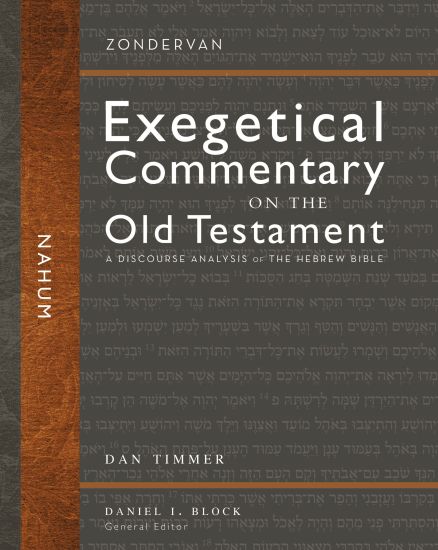
Nahum

Nahum

Daniel C. Timmer

Zondervan
2020
sidottu
How a biblical author says something is just as important as what they say.Designed for the pastor and Bible teacher, this series carefully analyzes the discourse of each Old Testament book and shows how the main thrust of each passage contributes to the development of the whole composition in the original Hebrew.For each passage, the ZECOT provides:The main idea of the passage.Its literary context.The author's original translation.Exegetical outline with Hebrew layout.Its structure and literary form.An explanation of the text.Its canonical and practical significance. While primarily designed for those with a basic knowledge of biblical Hebrew, Hebrew words are always explained so that anyone who desires to understand the Old Testament and communicate its message will benefit from the depth and accessibility these volumes offer.
State Capital and Private Enterprise

State Capital and Private Enterprise

Daniel C. Kramer

Routledge
2019
sidottu
To what extent can governments supplement private venture capitalists and stimulate the economy by providing money to new entrepreneurs as well as existing enterprises? The UK’s National Enterprise Board (NEB) attempted to do just this, and whilst it gained most publicity through its efforts to bail out ailing giants such as British Leyland and Rolls Royce Aerospace, much of its attention was actually directed to smaller ventures. Originally published in 1988 Professor Kramer reports that the NEB’s record of success was surprisingly good, and that many flourishing undertakings would not be in business today had it not been for the NEB’s efforts. The author goes further, and after discussing the political and economic issues involved in according public aid to private enterprises on a case by case basis, he argues that not only should the UK revive its NEB, but that other countries, notably the United States, could benefit by establishing their own versions of it. Indeed, throughout, the author’s perspective as an outsider makes him peculiarly alive to the relevance of the UK example to a whole range of international cases.As the first scholarly, full-length study of the NEB, this book will be of value to those interested in the relationships between venture capitalists generally and the enterprises in which they take equity. It will also interest those studying the relationship between holding companies and their subsidiaries.