Kirjojen hintavertailu. Mukana 11 699 587 kirjaa ja 12 kauppaa.

Kirjahaku

Etsi kirjoja tekijän nimen, kirjan nimen tai ISBN:n perusteella.

1000 tulosta hakusanalla Daniel J. Crooks

Music Discovery

Music Discovery

Daniel J. Healy; Kimberly Lansinger Ankney

Oxford University Press Inc
2020
nidottu
Improvisation is a boundless and exciting way to experience music, especially for students. Teachers increasingly agree that improvisation is an essential skill for students to learn - however, many are unsure how to productively incorporate it in the classroom. Furthermore, most improvisational practices are centered around jazz, with very little to help even classical and vocal ensembles let alone the general music classroom. Now, in this new book, Daniel Healy and Kimberly Lansinger Ankney offer a practical volume aimed at busy music teachers. Recognizing educators' desire to balance the standard curriculum with improvisational activities, the authors provide 36 activities to incorporate into their everyday music classes and ensemble practices. All activities are flexibly designed in styles ranging from modern classical to pop. Teachers can spend anywhere from 5 minutes to an entire term on a single activity, in a variety of environments and ensembles - concert bands, orchestras, choirs, jazz ensembles, and music technology classes alike can benefit from the practices of improvisation. Aligning improvisation practices with the constraints of the classroom, the lessons focus on key music learning principles (melody, harmony, rhythm, texture/timbre, articulation, and dynamics), allowing students' basic performance skills to develop in conjunction with their improvisational ones. The book also comes with a companion website which provides helpful resources for teachers, including recordings of actual K-12 ensembles performing the improvisation activities. Designed for a wide range of ages and experience levels, Music Discovery: Improvisation for the Large Ensemble and Music Classroom is the first practical guide of its kind, and gives teachers a long-awaited jumping-off point to introduce this playful, thrilling, and vital musical practice to their students.

A Good Life on a Finite Earth

A Good Life on a Finite Earth

Daniel J. Fiorino

Oxford University Press Inc
2018
sidottu
The potential conflict among economic and ecological goals has formed the central fault line of environmental politics in the United States and most other countries since the 1970s. The accepted view is that efforts to protect the environment will detract from economic growth, jobs, and global competitiveness. Conversely, much advocacy on behalf of the environment focuses on the need to control growth and avoid its more damaging effects. This offers a stark choice between prosperity and growth, on the one hand, and ecological degradation on the other. Stopping or reversing growth in most countries is unrealistic, economically risky, politically difficult, and is likely to harm the very groups that should be protected. At the same time, a strategy of unguided "growth above all" would cause ecological catastrophe. Over the last decade, the concept of green growth -- the idea that the right mix of policies, investments, and technologies will lead to beneficial growth within ecological limits -- has become central to global and national debates and policy due to the financial crisis and climate change. As Daniel J. Fiorino argues, in order for green growth to occur, ecological goals must be incorporated into the structure of the economic and political systems. In this book, he looks at green growth, a vast topic that has heretofore not been systematically covered in the literature on environmental policy and politics. Fiorino looks at its role in global, national, and local policy making; its relationship to sustainable development; controversies surrounding it (both from the left and right); its potential role in ameliorating inequality; and the policy strategies that are linked with it. The book also examines the political feasibility of green growth as a policy framework. While he focuses on the United States, Fiorino will draw comparisons to green growth policy in other countries, including Germany, China, and Brazil.
A Good Life on a Finite Earth

A Good Life on a Finite Earth

Daniel J. Fiorino

Oxford University Press Inc
2018
nidottu
The potential conflict among economic and ecological goals has formed the central fault line of environmental politics in the United States and most other countries since the 1970s. The accepted view is that efforts to protect the environment will detract from economic growth, jobs, and global competitiveness. Conversely, much advocacy on behalf of the environment focuses on the need to control growth and avoid its more damaging effects. This offers a stark choice between prosperity and growth, on the one hand, and ecological degradation on the other. Stopping or reversing growth in most countries is unrealistic, economically risky, politically difficult, and is likely to harm the very groups that should be protected. At the same time, a strategy of unguided "growth above all" would cause ecological catastrophe. Over the last decade, the concept of green growth -- the idea that the right mix of policies, investments, and technologies will lead to beneficial growth within ecological limits -- has become central to global and national debates and policy due to the financial crisis and climate change. As Daniel J. Fiorino argues, in order for green growth to occur, ecological goals must be incorporated into the structure of the economic and political systems. In this book, he looks at green growth, a vast topic that has heretofore not been systematically covered in the literature on environmental policy and politics. Fiorino looks at its role in global, national, and local policy making; its relationship to sustainable development; controversies surrounding it (both from the left and right); its potential role in ameliorating inequality; and the policy strategies that are linked with it. The book also examines the political feasibility of green growth as a policy framework. While he focuses on the United States, Fiorino will draw comparisons to green growth policy in other countries, including Germany, China, and Brazil.
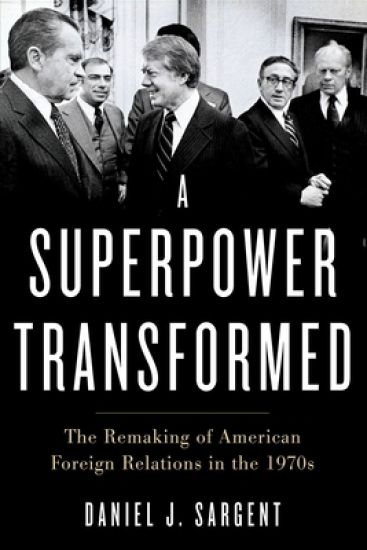
A Superpower Transformed

A Superpower Transformed

Daniel J. Sargent

Oxford University Press Inc
2017
nidottu
During the 1970s, American foreign policy faced a predicament of clashing imperatives-US decision makers, already struggling to maintain stability and devise strategic frameworks to guide the exercise of American power during the Cold War, found themselves hampered by the emergence of dilemmas that would come to a head in the post-Cold War era. Their choices proved to be of enormous consequence for the development of American foreign policy in the final decades of the twentieth century and beyond. In A Superpower Transformed, Daniel J. Sargent chronicles how policymakers across three administrations worked to manage complex international changes in a tumultuous era. Drawing on many newly-released archival documents and interviews with key figures, including President Jimmy Carter and Dr. Zbigniew Brzezinski, Sargent explores the collision of geopolitics and globalization that defined the decade. From the Nixon administration's efforts to stabilize a faltering Pax Americana; to Henry Kissinger's attempts to devise new strategies to manage or mitigate the consequences of economic globalization after the oil crisis of 1973-74; to the Carter administration's embrace of human rights promotion as a central task for foreign policy, Sargent explores the challenges that afflicted US policymakers in the 1970s, offering new insights into the complexities that emerged as the new forces of globalization and human rights transformed the United States as a superpower. A sweeping reinterpretation of a pivotal era, A Superpower Transformed is a must-read for anyone interested in U.S. foreign relations, American politics, globalization, economic policy, human rights, and contemporary American history.
The Lupus Book

The Lupus Book

Daniel J. Wallace

Oxford University Press Inc
2019
sidottu
Lupus, a disease of the immune system, can be quite deadly, claiming the lives of thousands of patients yearly. Dr. Daniel J. Wallace is one of the world's leading authorities on this disorder, an eminent clinician who has treated over 3,000 lupus patients, the largest such practice in America. His The Lupus Book, originally published in 1995, immediately established itself as the most readable and helpful book on the disease. Now Dr. Wallace has once again completely revised The Lupus Book, incorporating a wealth of new information. This Sixth Edition discusses new drug information and newly discovered information about the pathology of the diseaseall laid out in user-friendly language that any patient could understand. In particular, Wallace discusses the first drug for lupus to be approved by the FDAbelimumab (Benlysta)as well as other drugs in clinical trials. Readers will also discover fully updated sections on the science of lupus and breakthroughs in research including: genetics, microbiome, and clinical trial methodology. And as in past editions, the book provides absolutely lucid answers to such questions as: What causes lupus? How and where is the body affected? Can a woman with lupus have a baby? And how can one manage this disease? Indeed, Dr. Wallace has distilled his extensive experience, providing the most up-to-date information on causes, prevention, cure, exercise, diet, and many other important topics. There is also a glossary of terms and an appendix of lupus resource materials compiled by Dr. Wallace. Over 1.5 million Americans have lupus. The new Sixth Edition offers these patients and their families an abundance of reliable, information that will help them manage the disease and live a happier life.
Breached!: Why Data Security Law Fails and How to Improve It

Breached!: Why Data Security Law Fails and How to Improve It

Daniel J. Solove; Woodrow Hartzog

Oxford University Press
2022
sidottu
A novel account of how the law contributes to the insecurity of our data and a bold way to rethink it. Digital connections permeate our lives-and so do data breaches. Given that we must be online for basic communication, finance, healthcare, and more, it is alarming how difficult it is to create rules for securing our personal information. Despite the passage of many data security laws, data breaches are increasing at a record pace. In Breached , Daniel Solove and Woodrow Hartzog, two of the world's leading experts on privacy and data security, argue that the law fails because, ironically, it focuses too much on the breach itself. Drawing insights from many fascinating stories about data breaches, Solove and Hartzog show how major breaches could have been prevented or mitigated through a different approach to data security rules. Current law is counterproductive. It pummels organizations that have suffered a breach but doesn't address the many other actors that contribute to the problem: software companies that create vulnerable software, device companies that make insecure devices, government policymakers who write regulations that increase security risks, organizations that train people to engage in risky behaviors, and more. Although humans are the weakest link for data security, policies and technologies are often designed with a poor understanding of human behavior. Breached corrects this course by focusing on the human side of security. Drawing from public health theory and a nuanced understanding of risk, Solove and Hartzog set out a holistic vision for data security law-one that holds all actors accountable, understands security broadly and in relationship to privacy, looks to prevention and mitigation rather than reaction, and works by accepting human limitations rather than being in denial of them. The book closes with a roadmap for how we can reboot law and policy surrounding data security.
All About Fibromyalgia

All About Fibromyalgia

Daniel J. Wallace; Janice Brock Wallace

Oxford University Press Inc
2002
sidottu
In All About Fibromyalgia, the authors provide a thoroughly revised and updated version of the highly successful Making Sense of Fibromyalgia, which was endorsed by the Arthritis Foundation, Southern California Chapter. This new volume continues to provide a comprehensive guide - for both patients and professionals - to this little known and poorly understood syndrome. It has now also been completely updated with the current understanding of the disease, and includes information on the latest drug treatments.
Fibromyalgia

Fibromyalgia

Daniel J. Wallace; J. B. Wallace

Oxford University Press Inc
2003
nidottu
This is an inviting and succinct guide to fibromyalgia, a syndrome that affects 6 million Americans annually. Fibromyalgia is a form of chronic neuromuscular pain, a pain-amplification syndrome brought on by abnormal interactions between hormones, the immune system, neurotransmitters, and the autonomic nervous system. Often misdiagnosed, and widely misunderstood, the majority of patients are turned away from doctors or treated for depression. In their earlier books Making Sense of Fibromyalgia and All About Fibromyalgia, noted medical writer Janice Wallace and Dr Daniel Wallace, a leading expert on this disorder, provided comprehensive guides - for both patients and professionals - to this little known and poorly understood syndrome. Now, in Fibromyalgia, the Wallaces provide an inviting and succinct version of the syndrome laid out in clear and accessible language. The authors provide a clear, concise explanation of the syndrome and its symptoms, and outline latest treatments. Fibromyalgia addresses a desperate need for concise, accessible information on this syndrome and offers reassurance to patients and their families.
A Superpower Transformed

A Superpower Transformed

Daniel J. Sargent

Oxford University Press Inc
2015
sidottu
A Superpower Transformed explores the predicament of American foreign policy in the 1970s. This was a phase when the dilemmas of an emerging post-Cold War era buffeted the United States even as the makers of American foreign policy struggled for stability in an enduring Cold War. Clashing imperatives made the 1970s a difficult phase. Amidst conflicting pressures, leaders struggled to devise strategic frameworks to guide the exercise of American power in the world. 1970s-era choices nonetheless proved consequential. The Nixon administration's efforts to stabilize a faltering Pax Americana faltered, but Nixon's choices ultimately helped the champions of human rights to wrest control of American foreign policy away from the practitioners of amoral realpolitik. So too did Nixon's efforts to reverse the decline of American economic power help to open the doors to financial globalization, which accelerated quickly in the years following the 1971-73 collapse of the Bretton Woods international monetary system. Choices proved consequential, but American decision makers remained the captives of unmasterable circumstances, as the oil crisis of 1973-74 made clear. Coinciding with Watergate, the oil crisis plunged the world economy into disarray. It also pushed American decision makers to begin to devise new strategies to manage-or mitigate-the consequences of economic globalization. Henry Kissinger, who led this effort, was less successful in his attempts to terms with a human rights movement that flourished in the mid-1970s. Not until the inauguration of the Carter administration would American decision makers embrace human rights promotion as a central task for foreign policy. Carter's efforts to devise a post-Cold War foreign policy nonetheless faltered, confounded in the last years of 1970s by the resurgence of Soviet-American hostilities. While the Cold War resurged, the new forces of globalization and human rights that mobilized in the 1970s left the United States a superpower transformed.
Right Belief and True Belief

Right Belief and True Belief

Daniel J. Singer

OXFORD UNIVERSITY PRESS INC
2023
sidottu
The most important questions in life are questions about what we should do and what we should believe. The first kind of question has received considerable attention by normative ethicists, who search for a complete systematic account of right action. This book is about the second kind of question. Right Belief and True Belief starts by defining a new field of inquiry named 'normative epistemology' that mirrors normative ethics in searching for a systematic account of right belief. The book then lays out and defends a deeply truth-centric account of right belief called `truth-loving epistemic consequentialism.' Truth-loving epistemic consequentialists say that what we should believe (and what credences we should have) can be understood in terms of what conduces to us having the most accurate beliefs (credences). The view straight-forwardly vindicates the popular intuition that epistemic norms are about getting true beliefs and avoiding false beliefs, and it coheres well with how scientists, engineers, and statisticians think about what we should believe. Many epistemologists have rejected similar views in response to several persuasive objections, most famously including trade-off and counting-blades-of-grass objections. Right Belief and True Belief shows how a simple truth-based consequentialist account of epistemic norms can avoid these objections and argues that truth-loving epistemic consequentialism can undergird a general truth-centric approach to many questions in epistemology.
The Lupus Book

The Lupus Book

Daniel J. Wallace

OXFORD UNIVERSITY PRESS INC
2025
sidottu
Lupus, a disease of the immune system, can be quite deadly, claiming the lives of thousands of patients yearly. Dr. Daniel J. Wallace is one of the world's leading authorities on this disorder, an eminent clinician who has treated over 3,000 lupus patients, the largest such practice in America. His The Lupus Book, originally published in 1995, immediately established itself as the most readable and helpful book on the disease. Now Dr. Wallace has once again completely revised The Lupus Book, incorporating a wealth of new information. This book discusses new drug information and newly discovered information about the pathology of the disease all laid out in user-friendly language that any patient could understand. In particular, Wallace discusses the first drug for lupus to be approved by the FDA--belimumab (Benlysta)--as well as other drugs in clinical trials. Readers will also discover sections on the science of lupus and breakthroughs in research including: genetics, microbiome, and clinical trial methodology. And as in past editions, the book provides absolutely lucid answers to such questions as: What causes lupus? How and where is the body affected? Can a woman with lupus have a baby? And how can one manage this disease? Indeed, Dr. Wallace has distilled his extensive experience, providing the most up-to-date information on causes, prevention, cure, exercise, diet, and many other important topics. There is also a glossary of terms and an appendix of lupus resource materials compiled by Dr. Wallace. This new seventh edition discusses new treatments, review of pathogenesis, new laboratory tests
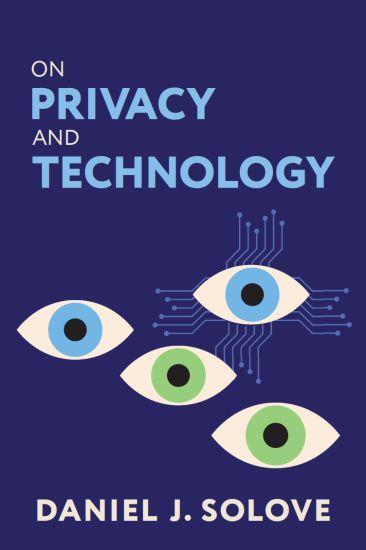
On Privacy and Technology

On Privacy and Technology

Daniel J. Solove

OXFORD UNIVERSITY PRESS INC
2025
sidottu
Succinct and eloquent, On Privacy and Technology is an essential primer on how to face the threats to privacy in today's age of digital technologies and AI. With the rapid rise of new digital technologies and artificial intelligence, is privacy dead? Can anything be done to save us from a dystopian world without privacy? In this short and accessible book, internationally renowned privacy expert Daniel J. Solove draws from a range of fields, from law to philosophy to the humanities, to illustrate the profound changes technology is wreaking upon our privacy, why they matter, and what can be done about them. Solove provides incisive examinations of key concepts in the digital sphere, including control, manipulation, harm, automation, reputation, consent, prediction, inference, and many others. Compelling and passionate, On Privacy and Technology teems with powerful insights that will transform the way you think about privacy and technology.
Dull Disasters?

Dull Disasters?

Daniel J. Clarke; Stefan Dercon

Oxford University Press
2016
sidottu
This is an open access title available under the terms of a CC BY 3.0 IGO licence. It is free to read at Oxford Scholarship Online and offered as a free PDF download from OUP and selected open access locations. In recent years, typhoons have struck the Philippines and Vanuatu; earthquakes have rocked Haiti, Pakistan, and Nepal; floods have swept through Pakistan and Mozambique; droughts have hit Ethiopia, Kenya, and Somalia; and more. All led to loss of life and loss of livelihoods, and recovery will take years. One of the likely effects of climate change is to increase the likelihood of the type of extreme weather events that seems to cause these disasters. But do extreme events have to turn into disasters with huge loss of life and suffering? Dull Disasters? harnesses lessons from finance, political science, economics, psychology, and the natural sciences to show how countries and their partners can be far better prepared to deal with disasters. The insights can lead to practical ways in which governments, civil society, private firms, and international organizations can work together to reduce the risks to people and economies when a disaster looms. Responses to disasters then become less emotional, less political, less headline-grabbing, and more business as usual and effective. The book takes the reader through a range of solutions that have been implemented around the world to respond to disasters. It gives an overview of the evidence on what works and what doesn't and it examines the crucial issue of disaster risk financing. Building on the latest evidence, it presents a set of lessons and principles to guide future thinking, research, and practice in this area.
Making Sense of Fibromyalgia

Making Sense of Fibromyalgia

Daniel J. Wallace; Janice Brock Wallace

Oxford University Press Inc
2014
nidottu
Six million people in the United States meet the criteria for fibromyalgia. On average, they see about four doctors before they were correctly diagnosed, and many were convinced they had a life-threatening illness such as a body-wide cancer. Fibromyalgia is a combination of pain, fatigue, and systemic symptoms. Ten million patient visits to doctors every year in the United States are for pain; $600 billion is spent annually to diagnose or manage chronic pain, including litigation fees. One group has estimated that patients with fibromyalgia run up $20 billion in medical expenses annually. 10% of US adults have moderate pain and 1% have severe pain. 12% have functional disability due to chronic pain. Additionally, at any visit, 15 percent of all patients tell their doctor they are tired. There is a paucity of reliable, detailed information about the fibromyalgia syndrome that patients can use to help themselves or others. This updated edition of Making Sense of Fibromyalgia is written by well known, widely published experts in the field. It distills complex concepts of amplified pain into a easily readable and understandable narrative. This monograph is aimed at college educated laypersons, allied health professionals, patients and treating physicians. Since it was first published in 1999, Making Sense of Fibromyalgia has sold over 100,000 copies. Now updated and improved, this effort should increase one's knowledge of a very complex subject.
Lupus

Lupus

Daniel J. Wallace

Oxford University Press Inc
2014
nidottu
One million people in the United States suffer from systemic lupus erythematosus (SLE or lupus), a chronic autoimmune disease that is potentially debilitating and sometimes fatal as the immune system attacks the body's cells and tissue, resulting in inflammation and tissue damage. SLE can affect any part of the body, but most often damages the heart, joints, skin, lungs, blood vessels, liver, kidneys and nervous system. The course of the disease is unpredictable, with periods of illness alternating with remission. It can be treated symptomatically, mainly with corticosteroids and immunosuppressants, though there is currently no cure. The symptoms of lupus vary widely, come and go unpredictably, and often mimic or are mistaken for other illnesses. As a result, patients present with varied symptoms to different practitioners and diagnosis can be elusive, with patients sometimes suffering unexplained symptoms and untreated lupus for years. Hence, a practical guide to the diagnosis and treatment of lupus is a valuable resource to an array of clinicians and may help expedite earlier diagnosis and better patient care. Part of the Oxford American Rheumatology Library, this concise, authoritative pocketbook describes the pathophysiology of lupus, diagnostic strategies and tools, and current and emerging therapeutic options, focusing on direct clinical applications for busy healthcare professionals. With 20 new tables and the most up-to-date information on the diagnosis, treatment and management of the condition, this second edition fulfills a need for a concise, practical guide to Lupus for clinicians that distills the principal features of this complicated, often misunderstood disorder.
The Genius of American Politics

The Genius of American Politics

Daniel J. Boorstin

University of Chicago Press
1958
nidottu
How much of our political tradition can be absorbed and used by other peoples? Daniel Boorstin's answer to this question has been chosen by the Carnegie Corporation of New York for representation in American Panorama as one of the 350 books, old and new, most descriptive of life in the United States. He describes the uniqueness of American thought and explains, after a close look at the American past, why we have not produced and are not likely to produce grand political theories or successful propaganda. He also suggests what our attitudes must be toward ourselves and other countries if we are to preserve our institutions and help others to improve theirs. ". . . a fresh and, on the whole, valid interpretation of American political life."—Reinhold Niebuhr, New Leader
The Lost World of Thomas Jefferson

The Lost World of Thomas Jefferson

Daniel J. Boorstin

University of Chicago Press
1993
nidottu
In this classic work by one of America's most distinguished historians, Daniel Boorstin enters into Thomas Jefferson's world of ideas. By analysing writings of 'the Jeffersonian Circle,' Boorstin explores concepts of God, nature, equality, toleration, education and government in order to illuminate their underlying world view. The Lost World of Thomas Jefferson demonstrates why on the 250th anniversary of his birth, this American leader's message has remained relevant to our national crises and grand concerns. "The volume is too subtle, too rich in ideas for anyone to do justice to it in brief summary, too heavily documented and too carefully wrought for anyone to dismiss its thesis...It is a major contribution not only to Jefferson studies but to American intellectual history...All who work in the history of ideas will find themselves in Mr. Boorstin's debt."--Richard Hofstadter, South Atlantic Monthly
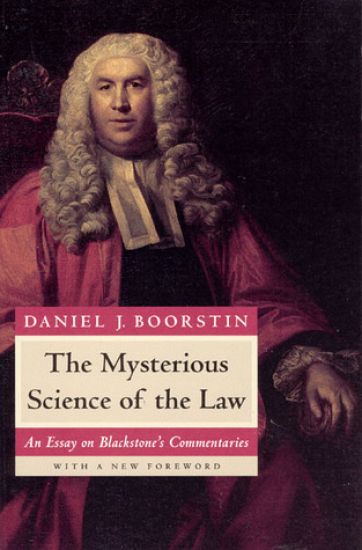
The Mysterious Science of the Law

The Mysterious Science of the Law

Daniel J. Boorstin

University of Chicago Press
1996
nidottu
Referred to as the "bible of American lawyers," Blackstone's "Commentaries" on the Laws of England shaped the principles of law in both England and America when its first volume appeared in 1765. For the next century that law remained what Blackstone made of it. Daniel J. Boorstin examines why "Commentaries" became the knowledge that any lawyer needed to acquire. Set against the intellectual values of the 18th century and the notions of reason, nature, and the sublime, "Commentaries" is fitted into its social setting. Boorstin has provided an intellectual history of the time, illustrating the elegance, social values and internal contradictions of the Age of Reason.
The Atlantic Divide in Antitrust

The Atlantic Divide in Antitrust

Daniel J. Gifford; Robert T. Kudrle

University of Chicago Press
2015
sidottu
How is it that two broadly similar systems of competition law have reached different results across a number of significant antitrust issues? While the United States and the European Union share a commitment to maintaining competition in the marketplace and employ similar concepts and legal language in making antitrust decisions, differences in social values, political institutions, and legal precedent have inhibited close convergence. With The Atlantic Divide in Antitrust, Daniel J. Gifford and Robert T. Kudrle explore many of the main contested areas of contemporary antitrust, including mergers, price discrimination, predatory pricing, and intellectual property. After identifying how prevailing analyses differ across these areas, they then examine the policy ramifications. Several themes run throughout the book, including differences in the amount of discretion firms have in dealing with purchasers, the weight given to the welfare of various market participants, and whether competition tends to be viewed as an efficiency-generating process or as rivalry. The authors conclude with forecasts and suggestions for how greater compatibility might ultimately be attained.
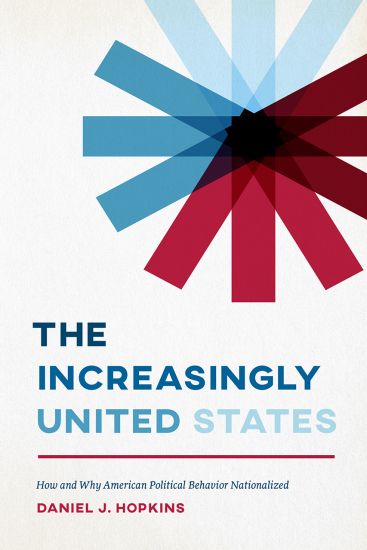
The Increasingly United States

The Increasingly United States

Daniel J. Hopkins

University of Chicago Press
2018
pokkari
In a campaign for state or local office these days, you're as likely today to hear accusations that an opponent advanced Obamacare or supported Donald Trump as you are to hear about issues affecting the state or local community. This is because American political behavior has become substantially more nationalized. American voters are far more engaged with and knowledgeable about what's happening in Washington, DC, than in similar messages whether they are in the South, the Northeast, or the Midwest. Gone are the days when all politics was local. With The Increasingly United States, Daniel J. Hopkins explores this trend and its implications for the American political system. The change is significant in part because it works against a key rationale of America's federalist system, which was built on the assumption that citizens would be more strongly attached to their states and localities. It also has profound implications for how voters are represented. If voters are well informed about state politics, for example, the governor has an incentive to deliver what voters--or at least a pivotal segment of them--want. But if voters are likely to back the same party in gubernatorial as in presidential elections irrespective of the governor's actions in office, governors may instead come to see their ambitions as tethered more closely to their status in the national party.