

Kirjahaku
Etsi kirjoja tekijän nimen, kirjan nimen tai ISBN:n perusteella.
1000 tulosta hakusanalla Daniel J. Flore

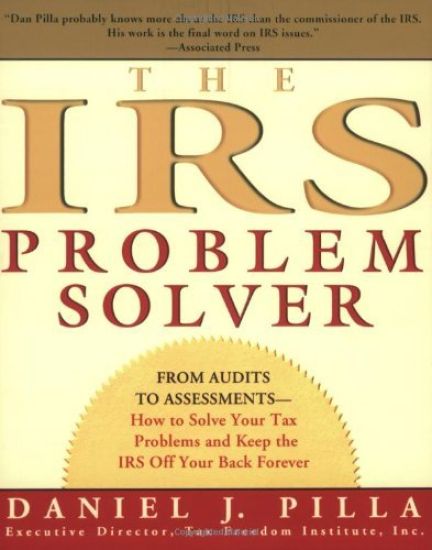
The IRS Problem Solver: From Audits to Assessments--How to Solve Your Tax Problems and Keep the IRS Off Your Back Forever
Daniel J. Pilla
HARPER BUSINESS
2003
nidottu
Are you burdened with the tax debt of a current or former spouse? Have you just received an IRS computerized or "correction" notice? Are you in danger of having your property seized? Has your tax return been selected for an audit?Is the IRS knocking on your door? If you've answered "yes" to any of these questions, you're not alone: more than twenty-five million taxpayers are faced with the terrifying prospect of dealing with audits, assessments, or other IRS problems every year. But with all the books devoted to how to prepare your taxes, there's never been one that explains how to get yourself out of trouble easily, legally, and inexpensively -- until now. With The IRS Problem Solver, veteran tax expert Dan Pilla offers the first comprehensive guide to dealing with the most common IRS problems taxpayers confront, from face-to-face audits to fraud penalties. Pilla's book is an indispensable preventive tool for all who file their own taxes--and a necessity for anyone who's just received a notice that the wolf is at the door.

This book provides a unified treatment of the characteristics of telescopes of all types, both those whose performance is set by geometrical aberrations and the effect of the atmosphere, and those diffraction-limited telescopes designed for observations from above the atmosphere. The emphasis throughout is on basic principles, such as Fermat's principle, and their application to optical systems specifically designed to image distant celestial sources. The book also contains thorough discussions of the principles underlying all spectroscopic instrumentation, with special emphasis on grating instruments used with telescopes. An introduction to adaptive optics provides the needed background for further inquiry into this rapidly developing area.

Highway Engineering
Daniel J. Findley; Bastian Schroeder; Christopher M. Cunningham; Thomas H. Brown Jr
Butterworth-Heinemann Inc
2015
nidottu
This book helps readers maximize effectiveness in all facets of highway engineering including planning, design, operations, safety, and geotechnical engineering. Highway Engineering: Planning, Design, and Operations features a seven part treatment, beginning with a clear and rigorous exposition of highway engineering concepts. These include project development, and the relationship between planning, operations, safety, and highway types (functional classification). Planning concepts and a four-step process overview are covered, along with trip generation, equations versus rates, trip distribution, and shortest path models equations versus rates. This is followed by parts concerning applications for horizontal and vertical alignment, highway geometric design, traffic operations, traffic safety, and civil engineering topics.

The Fossil Fuel Revolution
Daniel J. Soeder; Scyller J. Borglum
Elsevier Science Publishing Co Inc
2019
nidottu
The Fossil Fuel Revolution: Shale Gas and Tight Oil describes the remarkable new energy resources being obtained from shale gas and tight oil through a combination of directional drilling and staged hydraulic fracturing, opening up substantial new energy reserves for the 21st Century. The book includes the history of shale gas development, the technology used to economically recover hydrocarbons, and descriptions of the ten primary shale gas resources of the United States. International shale resources, environmental concerns, and policy issues are also addressed. This book is intended as a reference on shale gas and tight oil for industry members, undergraduate and graduate students, engineers and geoscientists.

Highway Engineering
Daniel J. Findley; Christopher M. Cunningham; Thomas H. Brown Jr; Lorraine M. Cahill; Guangchuan Yang; Leta F. Huntsinger
Butterworth-Heinemann Inc
2021
nidottu
Highway Engineering: Planning, Design, and Operations, Second Edition, presents a clear and rigorous exposition of highway engineering concepts, including project development and the relationship between planning, operations, safety and highway types. The book includes important topics such as corridor selection and traverses, horizontal and vertical alignment, design controls, basic roadway design, cross section elements, intersection and interchange design, and the integration of new vehicle technologies and trends. It also presents end of chapter exercises to further aid understanding and learning. This edition has been fully updated with the current design policies and reference manuals essential for highway, transportation, and civil engineers who are required to work to these standards.

Resource Central -- Instant Access -- for Emergency Care
Daniel J. Limmer; Michael F. O'Keefe; Edward T. Dickinson
Prentice Hall
2011
muu
This is a student supplement associated with: Emergency Care, 12/e Daniel J. Limmer EMT-P, Southern Maine Technical CollegeISBN: 013254380X
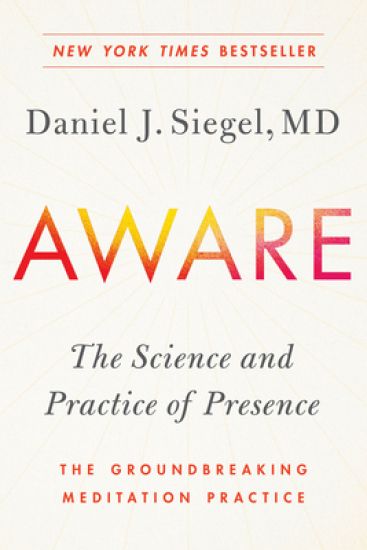
Aware: The Science and Practice of Presence--The Groundbreaking Meditation Practice
Daniel J. Siegel
Tarcher
2020
nidottu
New York Times bestseller - This groundbreaking book from New York Times bestselling author Daniel J. Siegel, M.D., introduces readers to his pioneering, science-based meditation practice. Aware provides practical instruction for mastering the Wheel of Awareness, a life-changing tool for cultivating more focus, presence, and peace in one's day-to-day life. An in-depth look at the science that underlies meditation's effectiveness, this book teaches readers how to harness the power of the principle "Where attention goes, neural firing flows, and neural connection grows." Siegel reveals how developing a Wheel of Awareness practice to focus attention, open awareness, and cultivate kind intention can literally help you grow a healthier brain and reduce fear, anxiety, and stress in your life. Whether you have no experience with a reflective practice or are an experienced practitioner, Aware is a hands-on guide that will enable you to become more focused and present, as well as more energized and emotionally resilient in the face of stress and the everyday challenges life throws your way.

Becoming Aware: A 21-Day Mindfulness Program for Reducing Anxiety and Cultivating Calm
Daniel J. Siegel
Tarcher
2021
nidottu
This hands-on user's guide to the groundbreaking Wheel of Awareness meditation practice featured in the New York Times bestseller Aware takes readers step-by-step through a twenty-one-day journey to discover what it means to be truly present and aware in our daily lives. In today's increasingly fast-paced world it can be difficult to find moments to catch your breath, regain inner balance, and just . . . be. This simple yet profound guide shows readers how to strengthen their minds by learning to focus attention, open awareness, and develop a positive state of mind--the three pillars of mindfulness practice that research shows lead to greater physical and mental well-being. Psychiatrist and cofounder of the Mindsight Institute, Daniel J. Siegel, M.D., created the science-grounded meditation practice called the Wheel of Awareness to unlock the power of the brain to integrate its many functions and develop internal resources that lead to an enduring sense of calm and quiet. Packed with guided meditation instructions, practical exercises, and everyday tools and techniques, Becoming Aware meets readers where they are and offers a simple program to enhance our inner sense of clarity and even our interpersonal well-being.
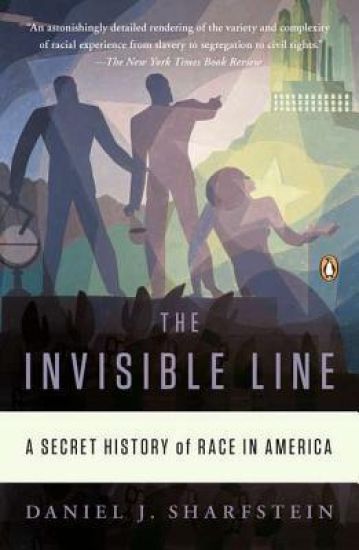
"An astonishingly detailed rendering of the variety and complexity of racial experience in an evolving national culture." -The New York Times Book ReviewIn the Obama era, as Americans confront the enduring significance of race and heritage, this multigenerational account of family secrets promises to spark debate across the country. Daniel J. Sharfstein's sweeping history moves from eighteenth-century South Carolina to twentieth-century Washington, D.C., unraveling the stories of three families who represent the complexity of race in America. Identifying first as people of color and later as whites, the families provide a lens through which to examine how people thought about and experienced race and how, for them and America, the very meanings of black and white changed. The Invisible Line cuts through centuries of myth to transform the way we see ourselves.
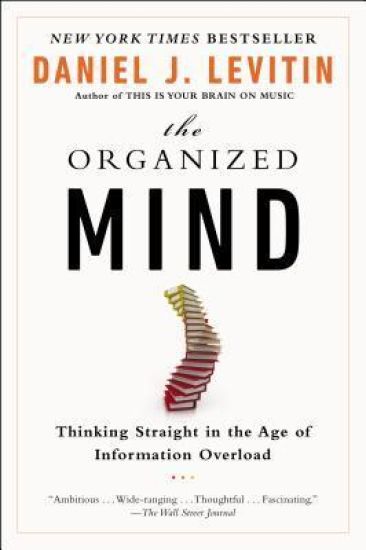
The Organized Mind: Thinking Straight in the Age of Information Overload
Daniel J. Levitin
DUTTON
2015
nidottu
New York Times bestselling author and neuroscientist Daniel J. Levitin shifts his keen insights from your brain on music to your brain in a sea of details. The information age is drowning us with an unprecedented deluge of data. At the same time, we're expected to make more--and faster--decisions about our lives than ever before. No wonder, then, that the average American reports frequently losing car keys or reading glasses, missing appointments, and feeling worn out by the effort required just to keep up. But somehow some people become quite accomplished at managing information flow. In The Organized Mind, Daniel J. Levitin, PhD, uses the latest brain science to demonstrate how those people excel--and how readers can use their methods to regain a sense of mastery over the way they organize their homes, workplaces, and time. With lively, entertaining chapters on everything from the kitchen junk drawer to health care to executive office workflow, Levitin reveals how new research into the cognitive neuroscience of attention and memory can be applied to the challenges of our daily lives. This Is Your Brain on Music showed how to better play and appreciate music through an understanding of how the brain works. The Organized Mind shows how to navigate the churning flood of information in the twenty-first century with the same neuroscientific perspective.

The Least of These My Brethren: A Doctor's Story of Hope and Miracles in an Inner-City AIDS Ward
Daniel J. Baxter M. D.; Baxter
Mariner Books
1998
nidottu
A doctor who worked with AIDS patients for more than three years in New York's Hell's Kitchen provides an unprecedented profile of AIDS and the compassion, inspiration, and grace found among his patients--society's castaways. Reprint. 15,000 first printing. PW.

Improvisation is a boundless and exciting way to experience music, especially for students. Teachers increasingly agree that improvisation is an essential skill for students to learn - however, many are unsure how to productively incorporate it in the classroom. Furthermore, most improvisational practices are centered around jazz, with very little to help even classical and vocal ensembles let alone the general music classroom. Now, in this new book, Daniel Healy and Kimberly Lansinger Ankney offer a practical volume aimed at busy music teachers. Recognizing educators' desire to balance the standard curriculum with improvisational activities, the authors provide 36 activities to incorporate into their everyday music classes and ensemble practices. All activities are flexibly designed in styles ranging from modern classical to pop. Teachers can spend anywhere from 5 minutes to an entire term on a single activity, in a variety of environments and ensembles - concert bands, orchestras, choirs, jazz ensembles, and music technology classes alike can benefit from the practices of improvisation. Aligning improvisation practices with the constraints of the classroom, the lessons focus on key music learning principles (melody, harmony, rhythm, texture/timbre, articulation, and dynamics), allowing students' basic performance skills to develop in conjunction with their improvisational ones. The book also comes with a companion website which provides helpful resources for teachers, including recordings of actual K-12 ensembles performing the improvisation activities. Designed for a wide range of ages and experience levels, Music Discovery: Improvisation for the Large Ensemble and Music Classroom is the first practical guide of its kind, and gives teachers a long-awaited jumping-off point to introduce this playful, thrilling, and vital musical practice to their students.

Improvisation is a boundless and exciting way to experience music, especially for students. Teachers increasingly agree that improvisation is an essential skill for students to learn - however, many are unsure how to productively incorporate it in the classroom. Furthermore, most improvisational practices are centered around jazz, with very little to help even classical and vocal ensembles let alone the general music classroom. Now, in this new book, Daniel Healy and Kimberly Lansinger Ankney offer a practical volume aimed at busy music teachers. Recognizing educators' desire to balance the standard curriculum with improvisational activities, the authors provide 36 activities to incorporate into their everyday music classes and ensemble practices. All activities are flexibly designed in styles ranging from modern classical to pop. Teachers can spend anywhere from 5 minutes to an entire term on a single activity, in a variety of environments and ensembles - concert bands, orchestras, choirs, jazz ensembles, and music technology classes alike can benefit from the practices of improvisation. Aligning improvisation practices with the constraints of the classroom, the lessons focus on key music learning principles (melody, harmony, rhythm, texture/timbre, articulation, and dynamics), allowing students' basic performance skills to develop in conjunction with their improvisational ones. The book also comes with a companion website which provides helpful resources for teachers, including recordings of actual K-12 ensembles performing the improvisation activities. Designed for a wide range of ages and experience levels, Music Discovery: Improvisation for the Large Ensemble and Music Classroom is the first practical guide of its kind, and gives teachers a long-awaited jumping-off point to introduce this playful, thrilling, and vital musical practice to their students.

The potential conflict among economic and ecological goals has formed the central fault line of environmental politics in the United States and most other countries since the 1970s. The accepted view is that efforts to protect the environment will detract from economic growth, jobs, and global competitiveness. Conversely, much advocacy on behalf of the environment focuses on the need to control growth and avoid its more damaging effects. This offers a stark choice between prosperity and growth, on the one hand, and ecological degradation on the other. Stopping or reversing growth in most countries is unrealistic, economically risky, politically difficult, and is likely to harm the very groups that should be protected. At the same time, a strategy of unguided "growth above all" would cause ecological catastrophe. Over the last decade, the concept of green growth -- the idea that the right mix of policies, investments, and technologies will lead to beneficial growth within ecological limits -- has become central to global and national debates and policy due to the financial crisis and climate change. As Daniel J. Fiorino argues, in order for green growth to occur, ecological goals must be incorporated into the structure of the economic and political systems. In this book, he looks at green growth, a vast topic that has heretofore not been systematically covered in the literature on environmental policy and politics. Fiorino looks at its role in global, national, and local policy making; its relationship to sustainable development; controversies surrounding it (both from the left and right); its potential role in ameliorating inequality; and the policy strategies that are linked with it. The book also examines the political feasibility of green growth as a policy framework. While he focuses on the United States, Fiorino will draw comparisons to green growth policy in other countries, including Germany, China, and Brazil.

The potential conflict among economic and ecological goals has formed the central fault line of environmental politics in the United States and most other countries since the 1970s. The accepted view is that efforts to protect the environment will detract from economic growth, jobs, and global competitiveness. Conversely, much advocacy on behalf of the environment focuses on the need to control growth and avoid its more damaging effects. This offers a stark choice between prosperity and growth, on the one hand, and ecological degradation on the other. Stopping or reversing growth in most countries is unrealistic, economically risky, politically difficult, and is likely to harm the very groups that should be protected. At the same time, a strategy of unguided "growth above all" would cause ecological catastrophe. Over the last decade, the concept of green growth -- the idea that the right mix of policies, investments, and technologies will lead to beneficial growth within ecological limits -- has become central to global and national debates and policy due to the financial crisis and climate change. As Daniel J. Fiorino argues, in order for green growth to occur, ecological goals must be incorporated into the structure of the economic and political systems. In this book, he looks at green growth, a vast topic that has heretofore not been systematically covered in the literature on environmental policy and politics. Fiorino looks at its role in global, national, and local policy making; its relationship to sustainable development; controversies surrounding it (both from the left and right); its potential role in ameliorating inequality; and the policy strategies that are linked with it. The book also examines the political feasibility of green growth as a policy framework. While he focuses on the United States, Fiorino will draw comparisons to green growth policy in other countries, including Germany, China, and Brazil.
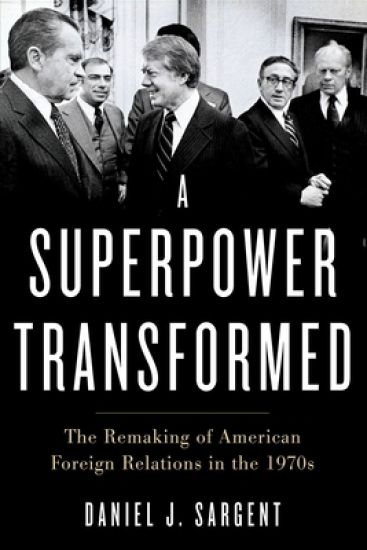
During the 1970s, American foreign policy faced a predicament of clashing imperatives-US decision makers, already struggling to maintain stability and devise strategic frameworks to guide the exercise of American power during the Cold War, found themselves hampered by the emergence of dilemmas that would come to a head in the post-Cold War era. Their choices proved to be of enormous consequence for the development of American foreign policy in the final decades of the twentieth century and beyond. In A Superpower Transformed, Daniel J. Sargent chronicles how policymakers across three administrations worked to manage complex international changes in a tumultuous era. Drawing on many newly-released archival documents and interviews with key figures, including President Jimmy Carter and Dr. Zbigniew Brzezinski, Sargent explores the collision of geopolitics and globalization that defined the decade. From the Nixon administration's efforts to stabilize a faltering Pax Americana; to Henry Kissinger's attempts to devise new strategies to manage or mitigate the consequences of economic globalization after the oil crisis of 1973-74; to the Carter administration's embrace of human rights promotion as a central task for foreign policy, Sargent explores the challenges that afflicted US policymakers in the 1970s, offering new insights into the complexities that emerged as the new forces of globalization and human rights transformed the United States as a superpower. A sweeping reinterpretation of a pivotal era, A Superpower Transformed is a must-read for anyone interested in U.S. foreign relations, American politics, globalization, economic policy, human rights, and contemporary American history.

Lupus, a disease of the immune system, can be quite deadly, claiming the lives of thousands of patients yearly. Dr. Daniel J. Wallace is one of the world's leading authorities on this disorder, an eminent clinician who has treated over 3,000 lupus patients, the largest such practice in America. His The Lupus Book, originally published in 1995, immediately established itself as the most readable and helpful book on the disease. Now Dr. Wallace has once again completely revised The Lupus Book, incorporating a wealth of new information. This Sixth Edition discusses new drug information and newly discovered information about the pathology of the diseaseall laid out in user-friendly language that any patient could understand. In particular, Wallace discusses the first drug for lupus to be approved by the FDAbelimumab (Benlysta)as well as other drugs in clinical trials. Readers will also discover fully updated sections on the science of lupus and breakthroughs in research including: genetics, microbiome, and clinical trial methodology. And as in past editions, the book provides absolutely lucid answers to such questions as: What causes lupus? How and where is the body affected? Can a woman with lupus have a baby? And how can one manage this disease? Indeed, Dr. Wallace has distilled his extensive experience, providing the most up-to-date information on causes, prevention, cure, exercise, diet, and many other important topics. There is also a glossary of terms and an appendix of lupus resource materials compiled by Dr. Wallace. Over 1.5 million Americans have lupus. The new Sixth Edition offers these patients and their families an abundance of reliable, information that will help them manage the disease and live a happier life.

Breached!: Why Data Security Law Fails and How to Improve It
Daniel J. Solove; Woodrow Hartzog
Oxford University Press
2022
sidottu
A novel account of how the law contributes to the insecurity of our data and a bold way to rethink it. Digital connections permeate our lives-and so do data breaches. Given that we must be online for basic communication, finance, healthcare, and more, it is alarming how difficult it is to create rules for securing our personal information. Despite the passage of many data security laws, data breaches are increasing at a record pace. In Breached , Daniel Solove and Woodrow Hartzog, two of the world's leading experts on privacy and data security, argue that the law fails because, ironically, it focuses too much on the breach itself. Drawing insights from many fascinating stories about data breaches, Solove and Hartzog show how major breaches could have been prevented or mitigated through a different approach to data security rules. Current law is counterproductive. It pummels organizations that have suffered a breach but doesn't address the many other actors that contribute to the problem: software companies that create vulnerable software, device companies that make insecure devices, government policymakers who write regulations that increase security risks, organizations that train people to engage in risky behaviors, and more. Although humans are the weakest link for data security, policies and technologies are often designed with a poor understanding of human behavior. Breached corrects this course by focusing on the human side of security. Drawing from public health theory and a nuanced understanding of risk, Solove and Hartzog set out a holistic vision for data security law-one that holds all actors accountable, understands security broadly and in relationship to privacy, looks to prevention and mitigation rather than reaction, and works by accepting human limitations rather than being in denial of them. The book closes with a roadmap for how we can reboot law and policy surrounding data security.