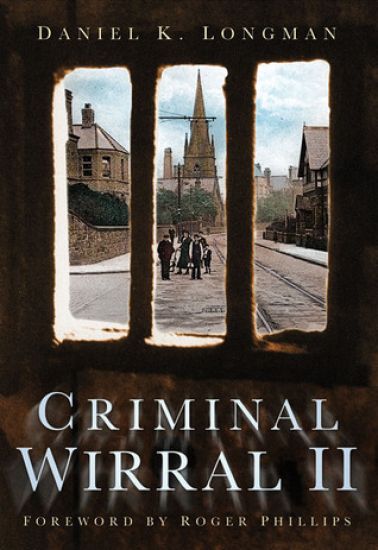
This fascinating new volume is a follow-up to Daniel K. Longman's first book Criminal Wirral; an intriguing and entertaining collection of some of the strangest, most despicable and comical crimes that took place on the Wirral peninsula throughout the Victorian era and the early twentieth century. The tales featured here uncover many fascinating cases that have been long forgotten, and are supported by illustrations which help to bring these events and the people featured in them to life. Read on and uncover the grisly facts of what once lay floating in Birkenhead Park pond, a gruesome suicide on board a Woodside-bound locomotive and the farcical actions of a drunken butler one night at the stately Thurstaston Hall Criminal Wirral II will appeal to anyone who has an interest in the darker side of Wirral's history.
With its strategic shipping ports and factories, the towns and cities dotted along the River Mersey soon became some of Hitler’s most heavily targeted sites during the Second World War. In August 1940 the German Luftwaffe attacked Birkenhead in what was to be the first of over 300 such bombing raids Merseyside sustained that year. Almost 4,000 people perished and many more were seriously injured as the streets and buildings of Liverpool and Wirral were destroyed and their residents left in turmoil. Featuring 45 vistas of bomb-damaged suburbia and city centre carnage alongside 45 photographs of the area as it is today, Merseyside War Years: Then & Now sensitively documents the changes and developments that have taken place in Merseyside since those dark days of war, demonstrating both architectural progress and Britain’s resilience and in the face of adversity.
From the momentous to the outlandish, this little book brings together past and present to offer a taste of Liverpool. Learn about the movers and shakers who shaped this fantastic city. The great and the good; the bad and the ugly. Small wonders, tall stories, triumph and tragedy. Best places – worst places. Origins, evolution, future. Written by a local who knows what makes Liverpool tick.
This is NOT a guide book. This little book brings together past and present to offer a taste of Wirral. Learn more about the movers and shakers who shaped this fantastic place. The GREAT and the good; the bad and the ugly. Small wonders, tall stories, TRIUMPH and tragedy. BEST places - Worst Places. Local lingo, architecture, green spaces, events, traditions, fact, fiction. Origins, evolution, FUTURE. Written by a local who knows what makes Wirral tick.
Thoroughly revised and updated, the sixth edition of this classic handbook provides comprehensive, concise, evidence-based information on diagnosis and treatment across the spectrum of illness and injury in the primary care setting. This book features a simple, accessible template for each subject, and quick and easy references to the relevant literature. The Little Black Book of Primary Care, Sixth Edition is a convenient resource offering instant access to vital information. Makes a great reference for solving pressing problems on the ward or in the clinic.
This work focuses on the all black 92nd Infantry Division in the Italian Campaign in World War II and the poor combat performance of the division in Italy. An introduction provides an overall view of the Italian Campaign and the role of the 92nd Infantry Division. The author then examines the reasons for the division's troubles on and off the battlefield, such as the low morale among the soldiers because of racial segregation, the limited facilities provided for them, and their lack of trust in their leadership. All of these issues are explored at length. Information on the early life and military training and experience of General Ned Almond is provided, along with the stories of Vernon Baker and John Fox, who emerged as leaders but endured a long struggle for recognition. The author concludes this work on a personal note by telling of his involvement as principal investigator of Acting Secretary of the Army John Shannon's study of why no African American received the Medal of Honor in World War II (a situation that was rectified in the late 1990s: See Elliott V. Converse, Daniel K. Gibran et al., The Exclusion of Black Soldiers from the Medal of Honor in World War II, McFarland 1997, $29.95).
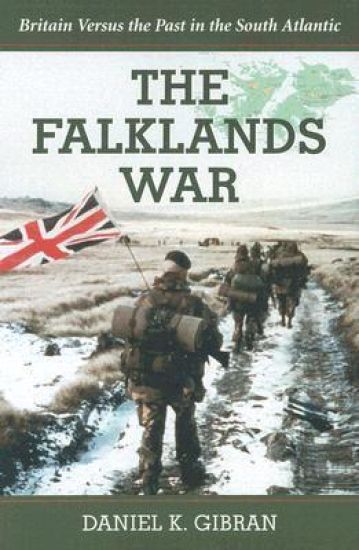
The Falklands War is an ideal showcase for how British policy evolved in the 1970s and 1980s. The background of the dispute over the island group in the remote South Atlantic (called Las Malvinas by the Argentines) is given first, then the events that precipitated the 1982 conflict and extensive examination of the military aspects of the war are provided. An overview follows of the many hypotheses offered for the British motivation to recapture the Falklands, showing that only those theories pertaining to the British perception of their national honor and the defense of democratic principles are significant. The Falklands War did not result in a dramatic shift in British defense policy, but did show the importance of external developments and political realism in policy formation, and these considerations are fully detailed here.
What does the history of Christian views of economic life mean for economic life in the twenty-first century? Here Daniel Finn reviews the insights provided by a large number of texts, from the Bible and the early church, to the Middle Ages and the Protestant Reformation, to treatments of the subject in the last century. Relying on both social science and theology, Finn then turns to the implications of this history for economic life today. Throughout, the book invites the reader to engage the sources and to develop an answer to the volume's basic question.
Where do Christians fit in a two-party political system? The partisan divide that is rending the nation is now tearing apart American churches. On one side are Christian Right activists and other conservatives who believe that a vote for a Democratic presidential candidate is a vote for abortion, sexual immorality, gender confusion, and the loss of religious liberty for Christians. On the other side are politically progressive Christians who are considering leaving the institutional church because of white evangelicalism's alliance with a Republican Party that they believe is racist, hateful toward immigrants, scornful of the poor, and directly opposed to the principles that Jesus taught. Even while sharing the same pew, these two sides often see the views of the other as hopelessly wrongheaded--even evil. Is there a way to transcend this deep-seated division? The Politics of the Cross draws on history, policy analysis, and biblically grounded theology to show how Christians can protect the unborn, advocate for traditional marriage, promote racial justice, care for the poor, and, above all, honor the gospel by adopting a cross-centered ethic instead of the idolatrous politics of power, fear, or partisanship. As Daniel K. Williams illustrates, both the Republican and Democratic parties are rooted in Christian principles, but both have distorted those principles and mixed them with assumptions that are antithetical to biblical truth. Williams explains how Christians can renounce partisanship and pursue policies that show love for our neighbors to achieve a biblical vision of justice. Nuanced, detailed, and even-handed, The Politics of the Cross tackles the thorny issues that divide Christians politically and offers a path forward with innovative, biblically minded political approaches that might surprise Christians on both the left and the right.
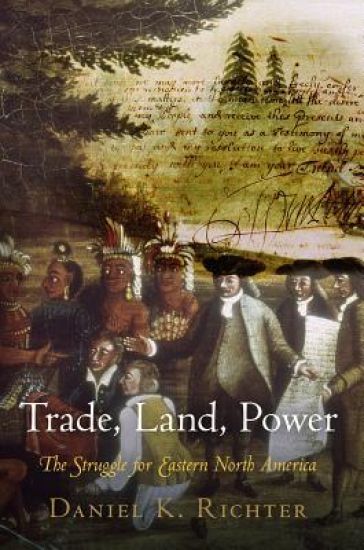
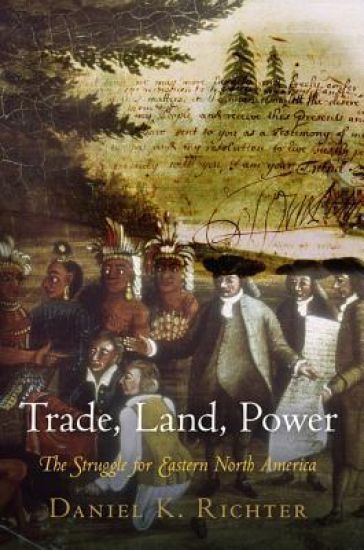
In this sweeping collection of essays, one of America's leading colonial historians reinterprets the struggle between Native peoples and Europeans in terms of how each understood the material basis of power. Throughout the seventeenth and eighteenth centuries in eastern North America, Natives and newcomers alike understood the close relationship between political power and control of trade and land, but they did so in very different ways. For Native Americans, trade was a collective act. The alliances that made a people powerful became visible through material exchanges that forged connections among kin groups, villages, and the spirit world. The land itself was often conceived as a participant in these transactions through the blessings it bestowed on those who gave in return. For colonizers, by contrast, power tended to grow from the individual accumulation of goods and landed property more than from collective exchange-from domination more than from alliance. For many decades, an uneasy balance between the two systems of power prevailed. Tracing the messy process by which global empires and their colonial populations could finally abandon compromise and impose their definitions on the continent, Daniel K. Richter casts penetrating light on the nature of European colonization, the character of Native resistance, and the formative roles that each played in the origins of the United States.
In this sweeping collection of essays, one of America's leading colonial historians reinterprets the struggle between Native peoples and Europeans in terms of how each understood the material basis of power. Throughout the seventeenth and eighteenth centuries in eastern North America, Natives and newcomers alike understood the close relationship between political power and control of trade and land, but they did so in very different ways. For Native Americans, trade was a collective act. The alliances that made a people powerful became visible through material exchanges that forged connections among kin groups, villages, and the spirit world. The land itself was often conceived as a participant in these transactions through the blessings it bestowed on those who gave in return. For colonizers, by contrast, power tended to grow from the individual accumulation of goods and landed property more than from collective exchange-from domination more than from alliance. For many decades, an uneasy balance between the two systems of power prevailed. Tracing the messy process by which global empires and their colonial populations could finally abandon compromise and impose their definitions on the continent, Daniel K. Richter casts penetrating light on the nature of European colonization, the character of Native resistance, and the formative roles that each played in the origins of the United States.
This book, a review of the psychological literatures with allied traditions in ethics, emphasizes parenting and educational strategies for influencing moral behavior, reasoning, and character development and charts a line of research for the "post-Kohlbergian era" in moral psychology.
Shows how the Four Books - "The Greater Learning", "The Analects", "The Mencius", and "The Doctrine of the Mean" - have been read and understood by the Chinese since the twelfth century. This book provides an introduction to the later imperial Confucian tradition; and introduces the reader to Zhu Xi's commentarial understanding of the Four Books.