Kirjojen hintavertailu. Mukana 11 627 067 kirjaa ja 12 kauppaa.

Kirjahaku

Etsi kirjoja tekijän nimen, kirjan nimen tai ISBN:n perusteella.

1000 tulosta hakusanalla Daniel Levin Becker

Healing the Reason-Emotion Split

Healing the Reason-Emotion Split

Daniel S. Levine

Routledge
2020
nidottu
Healing the Reason-Emotion Split draws on research from experimental psychology and neuroscience to dispel the myth that reason should be heralded above emotion.Arguing that reason and emotion mutually benefit our decision-making abilities, the book explores the idea that understanding this relationship could have long-term advantages for our management of society’s biggest problems. Levine reviews how reason and emotion operated in historical movements such as the Enlightenment, Romanticism and 1960s' counterculture, to conclude that a successful society would restore human connection and foster compassion in economics and politics by equally utilizing reason and emotion.Integrating discussion on classic and contemporary neurological studies and using allegory, the book lays out the potential for societal change through compassion, and would be of interest to psychologists concerned with social implications of their fields, philosophy students, social activists, and religious leaders.The Open Access version of this book, available at http://www.taylorfrancis.com, has been made available under a Creative Commons Attribution-Non Commercial (CC-BY-NC) 4.0 license.
Healing the Reason-Emotion Split

Healing the Reason-Emotion Split

Daniel S. Levine

Routledge
2020
sidottu
Healing the Reason-Emotion Split draws on research from experimental psychology and neuroscience to dispel the myth that reason should be heralded above emotion.Arguing that reason and emotion mutually benefit our decision-making abilities, the book explores the idea that understanding this relationship could have long-term advantages for our management of society’s biggest problems. Levine reviews how reason and emotion operated in historical movements such as the Enlightenment, Romanticism and 1960s' counterculture, to conclude that a successful society would restore human connection and foster compassion in economics and politics by equally utilizing reason and emotion.Integrating discussion on classic and contemporary neurological studies and using allegory, the book lays out the potential for societal change through compassion, and would be of interest to psychologists concerned with social implications of their fields, philosophy students, social activists, and religious leaders.The Open Access version of this book, available at http://www.taylorfrancis.com, has been made available under a Creative Commons Attribution-Non Commercial (CC-BY-NC) 4.0 license.
Popular Voices in Latin American Catholicism

Popular Voices in Latin American Catholicism

Daniel H. Levine

Princeton University Press
2014
pokkari
Throughout Latin America, observers and activists have found in religion a promise of deep and long-lasting democratization. But for religion to change culture and politics, religion itself must change. Such change is not only a matter of doctrine, ritual, or institutional arrangements but also arises out of the needs, values, and ideas of average believers. Combining rich interviews and community studies in Venezuela and Colombia with analysis of broad ideological and institutional transformations, Daniel Levine examines how religious and cultural change begins and what gives it substance and lasting impact. The author focuses on the creation of self-confident popular groups among hitherto isolated and dispirited individuals. Once silent voices come to light as peasants and urban barrio dwellers reflect on their upbringing and community, on poverty and opportunity, on faith, prayer, and the Bible, and on institutions like state, school, and church. Levine also interviews priests, sisters, and pastoral agents and explains how their efforts shape the links between popular groups and the larger society. The result is a clear understanding of how relations among social and cultural levels are maintained and transformed, how programs are implemented, why they succeed or fail, and how change appears both to elites and to ordinary people. Originally published in 1992. The Princeton Legacy Library uses the latest print-on-demand technology to again make available previously out-of-print books from the distinguished backlist of Princeton University Press. These editions preserve the original texts of these important books while presenting them in durable paperback and hardcover editions. The goal of the Princeton Legacy Library is to vastly increase access to the rich scholarly heritage found in the thousands of books published by Princeton University Press since its founding in 1905.
Religion and Politics in Latin America

Religion and Politics in Latin America

Daniel H. Levine

Princeton University Press
2014
pokkari
This book explores the transformations in religion in conjunction with political change. Professor Levine suggests, highlights the dynamic and dialectical interaction between religion and politics in general, and addresses the more universal problem of relating thought to action Originally published in 1981. The Princeton Legacy Library uses the latest print-on-demand technology to again make available previously out-of-print books from the distinguished backlist of Princeton University Press. These editions preserve the original texts of these important books while presenting them in durable paperback and hardcover editions. The goal of the Princeton Legacy Library is to vastly increase access to the rich scholarly heritage found in the thousands of books published by Princeton University Press since its founding in 1905.

Conflict and Political Change in Venezuela

Conflict and Political Change in Venezuela

Daniel H. Levine

Princeton University Press
2015
pokkari
Venezuela has had a long and bloody history of military dictatorships. Yet, since 1958, it has developed one of the few effective, competitive democracies in Latin America. To explain this transformation Daniel H. Levine analyzes the development of modern mass-based political parties with pervasive organizations and commanding strong loyalties; the changing structure and content of social and political conflict; and the gradual emergence of common norms governing political behavior. This book does not pretend to be a general survey of Venezuelan politics. Rather, it is an attempt to understand, for both theoretical and practical purposes, the development of shared "rules of the game" for political action in a heterogeneous society. Once these norms are accepted by key elites, and then imposed on recalcitrant oppositions, they provide a means of controlling and managing political conflict without eliminating it. Mr. Levine's conclusions are based primarily on case studies of specific political conflicts. His study of conflicts over educational reform uncovers the conditions in which a traditional sector of society--Catholic groups and institutions--moved from violent, total opposition to the political system to a position of accommodation. In the second case study he examines the role of students in politics, with special reference to the integration of students in national patterns of conflict and opposition. Originally published in 1973. The Princeton Legacy Library uses the latest print-on-demand technology to again make available previously out-of-print books from the distinguished backlist of Princeton University Press. These editions preserve the original texts of these important books while presenting them in durable paperback and hardcover editions. The goal of the Princeton Legacy Library is to vastly increase access to the rich scholarly heritage found in the thousands of books published by Princeton University Press since its founding in 1905.

Popular Voices in Latin American Catholicism

Popular Voices in Latin American Catholicism

Daniel H. Levine

Princeton University Press
2016
sidottu
Throughout Latin America, observers and activists have found in religion a promise of deep and long-lasting democratization. But for religion to change culture and politics, religion itself must change. Such change is not only a matter of doctrine, ritual, or institutional arrangements but also arises out of the needs, values, and ideas of average believers. Combining rich interviews and community studies in Venezuela and Colombia with analysis of broad ideological and institutional transformations, Daniel Levine examines how religious and cultural change begins and what gives it substance and lasting impact. The author focuses on the creation of self-confident popular groups among hitherto isolated and dispirited individuals. Once silent voices come to light as peasants and urban barrio dwellers reflect on their upbringing and community, on poverty and opportunity, on faith, prayer, and the Bible, and on institutions like state, school, and church. Levine also interviews priests, sisters, and pastoral agents and explains how their efforts shape the links between popular groups and the larger society. The result is a clear understanding of how relations among social and cultural levels are maintained and transformed, how programs are implemented, why they succeed or fail, and how change appears both to elites and to ordinary people. Originally published in 1992. The Princeton Legacy Library uses the latest print-on-demand technology to again make available previously out-of-print books from the distinguished backlist of Princeton University Press. These editions preserve the original texts of these important books while presenting them in durable paperback and hardcover editions. The goal of the Princeton Legacy Library is to vastly increase access to the rich scholarly heritage found in the thousands of books published by Princeton University Press since its founding in 1905.

Religion and Politics in Latin America

Religion and Politics in Latin America

Daniel H. Levine

Princeton University Press
2016
sidottu
This book explores the transformations in religion in conjunction with political change. Professor Levine suggests, highlights the dynamic and dialectical interaction between religion and politics in general, and addresses the more universal problem of relating thought to action Originally published in 1981. The Princeton Legacy Library uses the latest print-on-demand technology to again make available previously out-of-print books from the distinguished backlist of Princeton University Press. These editions preserve the original texts of these important books while presenting them in durable paperback and hardcover editions. The goal of the Princeton Legacy Library is to vastly increase access to the rich scholarly heritage found in the thousands of books published by Princeton University Press since its founding in 1905.

Conflict and Political Change in Venezuela

Conflict and Political Change in Venezuela

Daniel H. Levine

Princeton University Press
2016
sidottu
Venezuela has had a long and bloody history of military dictatorships. Yet, since 1958, it has developed one of the few effective, competitive democracies in Latin America. To explain this transformation Daniel H. Levine analyzes the development of modern mass-based political parties with pervasive organizations and commanding strong loyalties; the changing structure and content of social and political conflict; and the gradual emergence of common norms governing political behavior. This book does not pretend to be a general survey of Venezuelan politics. Rather, it is an attempt to understand, for both theoretical and practical purposes, the development of shared "rules of the game" for political action in a heterogeneous society. Once these norms are accepted by key elites, and then imposed on recalcitrant oppositions, they provide a means of controlling and managing political conflict without eliminating it. Mr. Levine's conclusions are based primarily on case studies of specific political conflicts. His study of conflicts over educational reform uncovers the conditions in which a traditional sector of society--Catholic groups and institutions--moved from violent, total opposition to the political system to a position of accommodation. In the second case study he examines the role of students in politics, with special reference to the integration of students in national patterns of conflict and opposition. Originally published in 1973. The Princeton Legacy Library uses the latest print-on-demand technology to again make available previously out-of-print books from the distinguished backlist of Princeton University Press. These editions preserve the original texts of these important books while presenting them in durable paperback and hardcover editions. The goal of the Princeton Legacy Library is to vastly increase access to the rich scholarly heritage found in the thousands of books published by Princeton University Press since its founding in 1905.
The Morality of Peacekeeping

The Morality of Peacekeeping

Daniel H. Levine

Edinburgh University Press
2013
sidottu
What is the peacekeeper's role in the 21st century? Peacekeeping, peace enforcement and 'stability operations' ask soldiers to use violence to create peace, defeat armed threats while having no enemies and uphold human rights without taking sides. The justice of 'humanitarian intervention' and 'the responsibility to protect' fascinates analysts and practitioners alike when the world is watching crises unfold and wondering whether to step in. But once the cavalry has been sent in - often founded by wealthy nations, but with individuals from the developing world on the ground - less attention is paid to the moral challenges peacekeepers face. The traditional categories of just war theory provide insufficient guidance in this complicated moral landscape. Built on careful moral reflection and scores of interviews with peacekeepers, trainers and planners in the field, this book sheds light on the challenges of peacekeeping - challenges likely to be characteristic of an increasing number of military engagements. The book is also about how peacekeepers can meet those moral challenges through building genuine partnerships with people in conflict. It includes material based on over 50 interviews with soldiers, police, trainers and planners from Africa, Europe and the United States. It addresses difficult questions about practical implementation and provides guidance to peacekeepers on the ground.
Group Dynamics for Teams - International Student Edition

Group Dynamics for Teams - International Student Edition

Daniel J. Levi; David A. Askay

SAGE Publications Inc
2020
nidottu
Grounded in psychology research but with a practical focus on organizational behavior issues, Group Dynamics for Teams helps readers understand and participate in teams more effectively in day-to-day work. Best-selling author Daniel Levi and new co-author David A. Askay thoroughly examine basic group dynamics concepts, such as goals, norms, cooperation, and communication, as well as review the main challenges that teams face, such as conflict, decision making, problem solving, creativity, and valuing diversity. Throughout the book are discussions of the organizational context of teams, including the impacts of organizational culture, virtual teamwork, rewarding teams, and team building.
Group Dynamics for Teams

Group Dynamics for Teams

Daniel J. Levi; David A. Askay

Sage Publications, Inc
2025
nidottu
Grounded in psychology research but with a practical focus on organizational behavior issues, Group Dynamics for Teams, Seventh Edition helps readers understand and participate in teams more effectively in day-to-day work. Best-selling authors Daniel Levi and David A. Askay thoroughly examine basic group dynamics concepts, such as goals, norms, cooperation, and communication, as well as review the main challenges that teams face, such as conflict, decision making, problem solving, creativity, and valuing diversity.
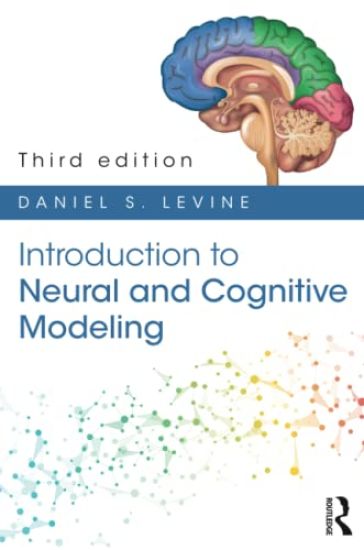
Introduction to Neural and Cognitive Modeling
This textbook provides a general introduction to the field of neural networks. Thoroughly revised and updated from the previous editions of 1991 and 2000, the current edition concentrates on networks for modeling brain processes involved in cognitive and behavioral functions. Part one explores the philosophy of modeling and the field’s history starting from the mid-1940s, and then discusses past models of associative learning and of short-term memory that provide building blocks for more complex recent models. Part two of the book reviews recent experimental findings in cognitive neuroscience and discusses models of conditioning, categorization, category learning, vision, visual attention, sequence learning, behavioral control, decision making, reasoning, and creativity. The book presents these models both as abstract ideas and through examples and concrete data for specific brain regions. The book includes two appendices to help ground the reader: one reviewing the mathematics used in network modeling, and a second reviewing basic neuroscience at both the neuron and brain region level. The book also includes equations, practice exercises, and thought experiments.
Introduction to Neural and Cognitive Modeling
This textbook provides a general introduction to the field of neural networks. Thoroughly revised and updated from the previous editions of 1991 and 2000, the current edition concentrates on networks for modeling brain processes involved in cognitive and behavioral functions. Part one explores the philosophy of modeling and the field’s history starting from the mid-1940s, and then discusses past models of associative learning and of short-term memory that provide building blocks for more complex recent models. Part two of the book reviews recent experimental findings in cognitive neuroscience and discusses models of conditioning, categorization, category learning, vision, visual attention, sequence learning, behavioral control, decision making, reasoning, and creativity. The book presents these models both as abstract ideas and through examples and concrete data for specific brain regions. The book includes two appendices to help ground the reader: one reviewing the mathematics used in network modeling, and a second reviewing basic neuroscience at both the neuron and brain region level. The book also includes equations, practice exercises, and thought experiments.