Kirjojen hintavertailu. Mukana 11 342 296 kirjaa ja 12 kauppaa.

Kirjahaku

Etsi kirjoja tekijän nimen, kirjan nimen tai ISBN:n perusteella.

1000 tulosta hakusanalla Daniel R. Faust

The Invisible Weapon

The Invisible Weapon

Daniel R. Headrick

Oxford University Press Inc
2012
nidottu
A vital instrument of power, telecommunications is and has always been a political technology. In this book, Headrick examines the political history of telecommunications from the mid-nineteenth century to the end of World War II. He argues that this technology gave society new options. In times of peace, the telegraph and radio were, as many predicted, instruments of peace; in times of tension, they became instruments of politics, tools for rival interests, and weapons of war. Writing in a lively, accessible style, Headrick illuminates the political aspects of information technology, showing how in both World Wars, the use of radio led to a shadowy war of disinformation, cryptography, and communications intelligence, with decisive consequences.
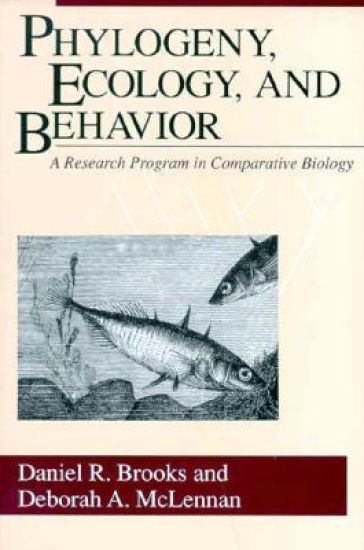
Phylogeny, Ecology, and Behavior

Phylogeny, Ecology, and Behavior

Daniel R. Brooks; Deborah A. McLennan

University of Chicago Press
1991
sidottu
"The merits of this work are many. A rigorous integration of phylogenetic hypotheses into studies of adaptation, adaptive radiation, and coevolution is absolutely necessary and can change dramatically our collective 'gestalt' about much in evolutionary biology. The authors advance and illustrate this thesis beautifully. The writing is often lucid, the examples are plentiful and diverse, and the juxtaposition of examples from different biological systems argues forcefully for the validity of the thesis. Many new insights are offered here, and the work is usually accessible to both the practiced phylogeneticist and the naive ecologist."—Joseph Travis, Florida State University "[Phylogeny, Ecology, and Behavior] presents its arguments forcefully and cogently, with ample . . .support. Brooks and McLennan conclude as they began, with the comment that evolution is a result, not a process, and that it is the result of an interaction of a variety of processes, environmental and historical. Evolutionary explanations must consider all these components, else they are incomplete. As Darwin's explanations of descent with modification integrated genealogical and ecological information, so must workers now incorporate historical and nonhistorical, and biological and nonbiological, processes in their evolutionary perspective."—Marvalee H. Wake, Bioscience"This book is well-written and thought-provoking, and should be read by those of us who do not routinely turn to phylogenetic analysis when investigating adaptation, evolutionary ecology and co-evolution."—Mark R. MacNair, Journal of Natural History
Evolution As Entropy

Evolution As Entropy

Daniel R. Brooks; E. O. Wiley

University of Chicago Press
1988
nidottu
"By combining recent advances in the physical sciences with some of the novel ideas, techniques, and data of modern biology, this book attempts to achieve a new and different kind of evolutionary synthesis. I found it to be challenging, fascinating, infuriating, and provocative, but certainly not dull."—James H, Brown, University of New Mexico"This book is unquestionably mandatory reading not only for every living biologist but for generations of biologists to come."—Jack P. Hailman, Animal Behaviour, review of the first edition"An important contribution to modern evolutionary thinking. It fortifies the place of Evolutionary Theory among the other well-established natural laws."—R.Gessink,TAXON
The Nature of Diversity

The Nature of Diversity

Daniel R. Brooks; Deborah A. McLennan

University of Chicago Press
2002
sidottu
All living things on earth - from individual species to entire ecosystems - have evolved through time, and evolution is the acknowledged framework of modern biology. Yet many areas of biology have moved from a focus on evolution to much narrower perspectives. Daniel R. Brooks and Deborah A. McLennan argue that it is impossible to comprehend the nature of life on earth unless evolution - the history of organisms - is restored to a central position in research. They demonstrate how the phylogenetic approach can be integrated with ecological and behavioral studies to produce a richer and more complete picture of evolution. Clearly setting out the conceptual, methodological, and empirical foundations of their research program, Brooks and McLennan show how scientists can use it to unravel the evolutionary history of virtually any characteristic of any living thing, from behaviors to ecosystems. They illustrate and test their approach with examples drawn from a wide variety of species and habitats. The Nature of Diversity provides a powerful new tool for understanding, documenting, and preserving the world's biodiversity. It is an essential book for biologists working in evolution, ecology, behavior, conservation, and systematics.
The Nature of Diversity

The Nature of Diversity

Daniel R. Brooks; Deborah A. McLennan

University of Chicago Press
2002
nidottu
All living things on earth - from individual species to entire ecosystems - have evolved through time, and evolution is the acknowledged framework of modern biology. Yet many areas of biology have moved from a focus on evolution to much narrower perspectives. Daniel R. Brooks and Deborah A. McLennan argue that it is impossible to comprehend the nature of life on earth unless evolution - the history of organisms - is restored to a central position in research. They demonstrate how the phylogenetic approach can be integrated with ecological and behavioral studies to produce a richer and more complete picture of evolution. Clearly setting out the conceptual, methodological, and empirical foundations of their research program, Brooks and McLennan show how scientists can use it to unravel the evolutionary history of virtually any characteristic of any living thing, from behaviors to ecosystems. They illustrate and test their approach with examples drawn from a wide variety of species and habitats. The Nature of Diversity provides a powerful new tool for understanding, documenting, and preserving the world's biodiversity. It is an essential book for biologists working in evolution, ecology, behavior, conservation, and systematics.
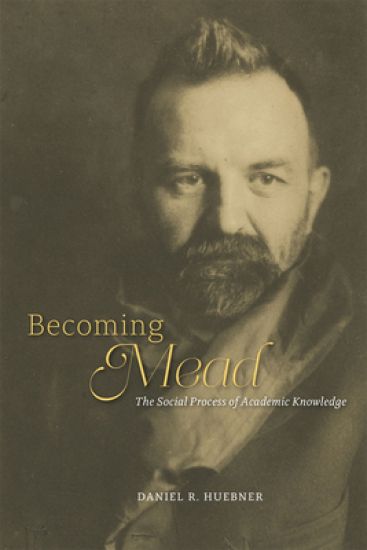
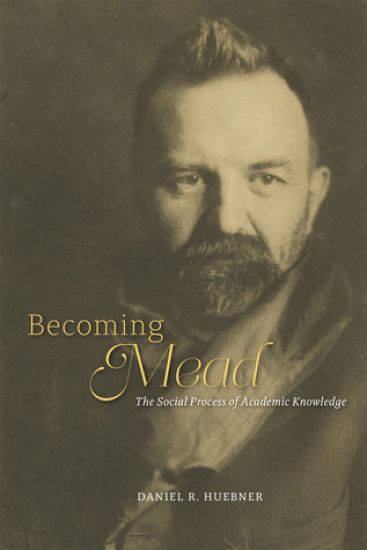
Becoming Mead

Becoming Mead

Daniel R. Huebner

University of Chicago Press
2014
sidottu
George Herbert Mead is a foundational figure in sociology, best known for his book Mind, Self, and Society, which was put together after his death from course notes taken by stenographers and students and from unpublished manuscripts. Mead, however, never taught a course primarily housed in a sociology department, and he wrote about a wide variety of topics far outside of the concerns for which he is predominantly remembered-including experimental and comparative psychology, the history of science, and relativity theory. In short, he is known in a discipline in which he did not teach for a book he did not write. In Becoming Mead, Daniel R. Huebner traces the ways in which knowledge has been produced by and about the famed American philosopher. Instead of treating Mead's problematic reputation as a separate topic of study from his intellectual biography, Huebner considers both biography and reputation as social processes of knowledge production. He uses Mead as a case study and provides fresh new answers to critical questions in the social sciences, such as how authors come to be considered canonical in particular disciplines, how academics understand and use others' works in their research, and how claims to authority and knowledge are made in scholarship. Becoming Mead provides a novel take on the history of sociology, placing it in critical dialogue with cultural sociology and the sociology of knowledge and intellectuals.
Becoming Mead

Becoming Mead

Daniel R. Huebner

University of Chicago Press
2014
nidottu
George Herbert Mead is a foundational figure in sociology, best known for his book Mind, Self, and Society, which was put together after his death from course notes taken by stenographers and students and from unpublished manuscripts. Mead, however, never taught a course primarily housed in a sociology department, and he wrote about a wide variety of topics far outside of the concerns for which he is predominantly remembered-including experimental and comparative psychology, the history of science, and relativity theory. In short, he is known in a discipline in which he did not teach for a book he did not write. In Becoming Mead, Daniel R. Huebner traces the ways in which knowledge has been produced by and about the famed American philosopher. Instead of treating Mead's problematic reputation as a separate topic of study from his intellectual biography, Huebner considers both biography and reputation as social processes of knowledge production. He uses Mead as a case study and provides fresh new answers to critical questions in the social sciences, such as how authors come to be considered canonical in particular disciplines, how academics understand and use others' works in their research, and how claims to authority and knowledge are made in scholarship. Becoming Mead provides a novel take on the history of sociology, placing it in critical dialogue with cultural sociology and the sociology of knowledge and intellectuals.
The Stockholm Paradigm

The Stockholm Paradigm

Daniel R. Brooks; Eric P. Hoberg; Walter A. Boeger

University of Chicago Press
2019
pokkari
The contemporary crisis of emerging disease has been a century and a half in the making. Human, veterinary, and crop health practitioners convinced themselves that disease could be controlled by medicating the sick, vaccinating those at risk, and eradicating the parts of the biosphere responsible for disease transmission. Evolutionary biologists assured themselves that coevolution between pathogens and hosts provided a firewall against disease emergence in new hosts. Most climate scientists made no connection between climate changes and disease. None of these traditional perspectives anticipated the onslaught of emerging infectious diseases confronting humanity today. As this book reveals, a new understanding of the evolution of pathogen-host systems, called the Stockholm Paradigm, explains what is happening. The planet is a minefield of pathogens with preexisting capacities to infect susceptible but unexposed hosts, needing only the opportunity for contact. Climate change has always been the major catalyst for such new opportunities, because it disrupts local ecosystem structure and allows pathogens and hosts to move. Once pathogens expand to new hosts, novel variants may emerge, each with new infection capacities. Mathematical models and real-world examples uniformly support these ideas. Emerging disease is thus one of the greatest climate change-related threats confronting humanity. While time is short, the danger is great, and we are largely unprepared, The Stockholm Paradigm offers hope for managing the crisis. By using the DAMA (document, assess, monitor, act) protocol, we can "anticipate to mitigate" emerging disease, buying time and saving money while we search for more effective ways to cope with this challenge.
The Racial Mosaic

The Racial Mosaic

Daniel R. Meister

McGill-Queen's University Press
2021
sidottu
Canada is often considered a multicultural mosaic, welcoming to immigrants and encouraging of cultural diversity. Yet this reputation masks a more complex history. In this groundbreaking study of the pre-history of Canadian multiculturalism, Daniel Meister shows how the philosophy of cultural pluralism normalized racism and the entrenchment of whiteness.The Racial Mosaic demonstrates how early ideas about cultural diversity in Canada were founded upon, and coexisted with, settler colonialism and racism, despite the apparent tolerance of a variety of immigrant peoples and their cultures. To trace the development of these ideas, Meister takes a biographical approach, examining the lives and work of three influential public intellectuals whose thoughts on cultural pluralism circulated widely beginning in the 1920s: Watson Kirkconnell, a university professor and translator; Robert England, an immigration expert with Canadian National Railways; and John Murray Gibbon, a publicist for the Canadian Pacific Railway. While they all proposed variants of the idea that immigrants to Canada should be allowed to retain certain aspects of their cultures, their tolerance had very real limits. In their personal, corporate, and government-sponsored works, only the cultures of "white" European immigrants were considered worthy of inclusion.On the fiftieth anniversary of Canada's official policy of multiculturalism, The Racial Mosaic represents the first serious and sustained attempt to detail the policy's historical antecedents, compelling readers to consider how racism has structured Canada's settler-colonial society.
The Racial Mosaic

The Racial Mosaic

Daniel R. Meister

McGill-Queen's University Press
2021
nidottu
Canada is often considered a multicultural mosaic, welcoming to immigrants and encouraging of cultural diversity. Yet this reputation masks a more complex history. In this groundbreaking study of the pre-history of Canadian multiculturalism, Daniel Meister shows how the philosophy of cultural pluralism normalized racism and the entrenchment of whiteness.The Racial Mosaic demonstrates how early ideas about cultural diversity in Canada were founded upon, and coexisted with, settler colonialism and racism, despite the apparent tolerance of a variety of immigrant peoples and their cultures. To trace the development of these ideas, Meister takes a biographical approach, examining the lives and work of three influential public intellectuals whose thoughts on cultural pluralism circulated widely beginning in the 1920s: Watson Kirkconnell, a university professor and translator; Robert England, an immigration expert with Canadian National Railways; and John Murray Gibbon, a publicist for the Canadian Pacific Railway. While they all proposed variants of the idea that immigrants to Canada should be allowed to retain certain aspects of their cultures, their tolerance had very real limits. In their personal, corporate, and government-sponsored works, only the cultures of "white" European immigrants were considered worthy of inclusion.On the fiftieth anniversary of Canada's official policy of multiculturalism, The Racial Mosaic represents the first serious and sustained attempt to detail the policy's historical antecedents, compelling readers to consider how racism has structured Canada's settler-colonial society.
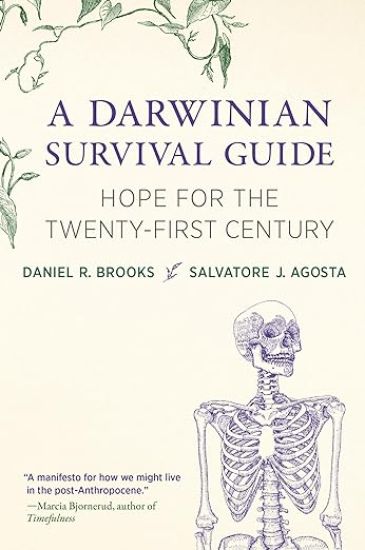
A Darwinian Survival Guide

A Darwinian Survival Guide

Daniel R. Brooks; Salvatore J. Agosta

MIT PRESS LTD
2024
sidottu
How humanity brought about the climate crisis by departing from its evolutionary trajectory 15,000 years ago—and how we can use evolutionary principles to save ourselves from the worst outcomes.Despite efforts to sustain civilization, humanity faces existential threats from overpopulation, globalized trade and travel, urbanization, and global climate change. In A Darwinian Survival Guide, Daniel Brooks and Salvatore Agosta offer a novel—and hopeful—perspective on how to meet these tremendous challenges by changing the discourse from sustainability to survival. Darwinian evolution, the world’s only theory of survival, is the means by which the biosphere has persisted and renewed itself following past environmental perturbations, and it has never failed, they explain. Even in the aftermath of mass extinctions, enough survivors remain with the potential to produce a new diversified biosphere.Drawing on their expertise as field biologists, Brooks and Agosta trace the evolutionary path from the early days of humans through the Late Pleistocene and the beginning of the Anthropocene all the way to the Great Acceleration of technological humanity around 1950, demonstrating how our creative capacities have allowed humanity to survive. However, constant conflict without resolution has made the Anthropocene not only unsustainable, but unsurvivable. Guided by the four laws of biotics, the authors explain how humanity should interact with the rest of the biosphere and with each other in accordance with Darwinian principles. They reveal a middle ground between apocalypse and utopia, with two options: alter our behavior now at great expense and extend civilization or fail to act and rebuild in accordance with those same principles. If we take the latter, then our immediate goal ought to focus on preserving as many of humanity’s positive achievements—from high technology to high art—as possible to shorten the time needed to rebuild.
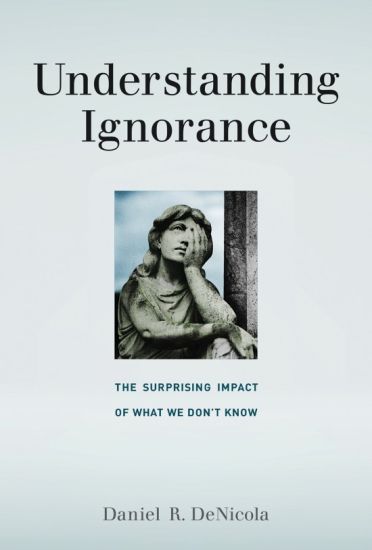
Understanding Ignorance

Understanding Ignorance

Daniel R. DeNicola

MIT Press
2018
pokkari
An exploration of what we can know about what we don't know: why ignorance is more than simply a lack of knowledge.Ignorance is trending. Politicians boast, "I'm not a scientist." Angry citizens object to a proposed state motto because it is in Latin, and "This is America, not Mexico or Latin America." Lack of experience, not expertise, becomes a credential. Fake news and repeated falsehoods are accepted and shape firm belief. Ignorance about American government and history is so alarming that the ideal of an informed citizenry now seems quaint. Conspiracy theories and false knowledge thrive. This may be the Information Age, but we do not seem to be well informed. In this book, philosopher Daniel DeNicola explores ignorance-its abundance, its endurance, and its consequences.DeNicola aims to understand ignorance, which seems at first paradoxical. How can the unknown become known-and still be unknown? But he argues that ignorance is more than a lack or a void, and that it has dynamic and complex interactions with knowledge. Taking a broadly philosophical approach, DeNicola examines many forms of ignorance, using the metaphors of ignorance as place, boundary, limit, and horizon. He treats willful ignorance and describes the culture in which ignorance becomes an ideological stance. He discusses the ethics of ignorance, including the right not to know, considers the supposed virtues of ignorance, and concludes that there are situations in which ignorance is morally good.Ignorance is neither pure nor simple. It is both an accusation and a defense ("You are ignorant!" "Yes, but I didn't know!"). Its practical effects range from the inconsequential to the momentous. It is a scourge, but, DeNicola argues daringly, it may also be a refuge, a value, even an accompaniment to virtue.
A Darwinian Survival Guide

A Darwinian Survival Guide

Daniel R. Brooks; Salvatore J. Agosta

MIT PRESS LTD
2026
nidottu
How humanity brought about the climate crisis by departing from its evolutionary trajectory 15,000 years ago and how we can use evolutionary principles to save ourselves from the worst outcomes. Despite efforts to sustain civilization, humanity faces existential threats from overpopulation, globalized trade and travel, urbanization, and global climate change. In A Darwinian Survival Guide, Daniel Brooks and Salvatore Agosta offer a novel and hopeful perspective on how to meet these tremendous challenges by changing the discourse from sustainability to survival. Darwinian evolution, the world s only theory of survival, is the means by which the biosphere has persisted and renewed itself following past environmental perturbations, and it has never failed, they explain. Even in the aftermath of mass extinctions, enough survivors remain with the potential to produce a new diversified biosphere. Drawing on their expertise as field biologists, Brooks and Agosta trace the evolutionary path from the early days of humans through the Late Pleistocene and the beginning of the Anthropocene all the way to the Great Acceleration of technological humanity around 1950, demonstrating how our creative capacities have allowed humanity to survive. However, constant conflict without resolution has made the Anthropocene not only unsustainable, but unsurvivable. Guided by the four laws of biotics, the authors explain how humanity should interact with the rest of the biosphere and with each other in accordance with Darwinian principles. They reveal a middle ground between apocalypse and utopia, with two options: alter our behavior now at great expense and extend civilization or fail to act and rebuild in accordance with those same principles. If we take the latter, then our immediate goal ought to focus on preserving as many of humanity s positive achievements from high technology to high art as possible to shorten the time needed to rebuild.
Conflicts of Devotion

Conflicts of Devotion

Daniel R. Gibbons

University of Notre Dame Press
2017
sidottu
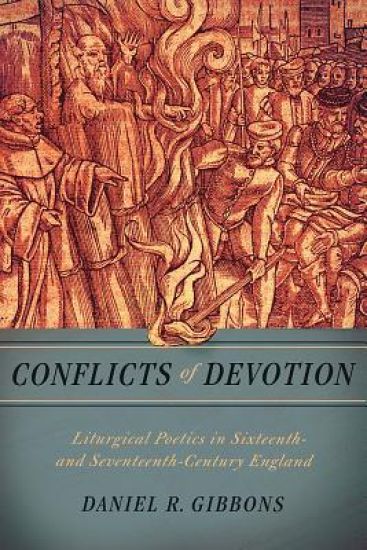
Who will mourn with me? Who will break bread with me? Who is my neighbor? In the wake of the religious reformations of the sixteenth century, such questions called for a new approach to the communal religious rituals and verses that shaped and commemorated many of the brightest and darkest moments of English life. In England, new forms of religious writing emerged out of a deeply fractured spiritual community. Conflicts of Devotion reshapes our understanding of the role that poetry played in the re-formation of English community, and shows us that understanding both the poetics of liturgy and the liturgical character of poetry is essential to comprehending the deep shifts in English spiritual attitudes and practices that occurred during the sixteenth and seventeenth centuries. The liturgical, communitarian perspective of Conflicts of Devotion sheds new light on neglected texts and deepens our understanding of how major writers such as Edmund Spenser, Robert Southwell, and John Donne struggled to write their way out of the spiritual and social crises of the age of the Reformation. It also sheds new light on the roles that poetry may play in negotiating—and even overcoming—religious conflict. Attention to liturgical poetics allows us to see the broad spectrum of ways in which English poets forged new forms of spiritual community out of the very language of theological division. This book will be of great interest to teachers and students of early modern poetry and of the various fields related to Reformation studies: history, politics, and theology.
Nietzsche as Cultural Physician

Nietzsche as Cultural Physician

Daniel R. Ahern

Pennsylvania State University Press
1995
pokkari
In this new interpretation of Nietzsche's thought, Daniel Ahern examines Nietzsche's understanding of physiology and argues that Nietzsche saw himself in the role of a ''physician'' of culture. Through what he calls Nietzsche's ''clinical standpoint,'' Ahern describes Nietzsche's views on the history of Western culture in terms of the ''physiological dynamics'' of exhaustion, decadence, sickness, and health. This physiology is a simultaneous interpretation of the will to power and constitutes both Nietzsche's ''diagnoses'' of the ''spiritual'' sickness of modern nihilism and its possible cure. To describe how ''spirit'' can be both a force of degeneration and vitality, Ahern studies Nietzsche's perception of the history and culture of both the ancient Greeks and Jews. In doing so, he provides a sound textual basis for confronting the potentially inflammatory aspects of Nietzsche's little discussed cultural criticism.This book marks the first serious exploration of Nietzsche's diagnosis and prognosis for modernity and of the centrality to Nietzsche's thought of his conception of himself as a physician of culture.
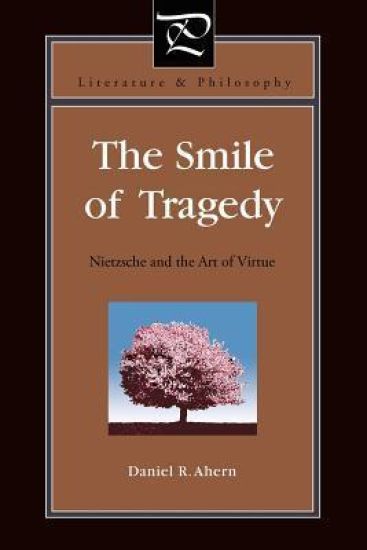
The Smile of Tragedy

The Smile of Tragedy

Daniel R. Ahern

Pennsylvania State University Press
2012
sidottu
In The Smile of Tragedy, Daniel Ahern examines Nietzsche’s attitude toward what he called “the tragic age of the Greeks,” showing it to be the foundation not only for his attack upon the birth of philosophy during the Socratic era but also for his overall critique of Western culture. Through an interpretation of “Dionysian pessimism,” Ahern clarifies the ways in which Nietzsche sees ethics and aesthetics as inseparable and how their theoretical separation is at the root of Western nihilism. Ahern explains why Nietzsche, in creating this precursor to a new aesthetics, rejects Aristotle’s medicinal interpretation of tragic art and concentrates on Apollinian cruelty as a form of intoxication without which there can be no art. Ahern shows that Nietzsche saw the human body as the vessel through which virtue and art are possible, as the path to an interpretation of “selflessness,” as the means to determining an order of rank among human beings, and as the site where ethics and aesthetics coincide.
The Smile of Tragedy

The Smile of Tragedy

Daniel R. Ahern

Pennsylvania State University Press
2012
pokkari
In The Smile of Tragedy, Daniel Ahern examines Nietzsche’s attitude toward what he called “the tragic age of the Greeks,” showing it to be the foundation not only for his attack upon the birth of philosophy during the Socratic era but also for his overall critique of Western culture. Through an interpretation of “Dionysian pessimism,” Ahern clarifies the ways in which Nietzsche sees ethics and aesthetics as inseparable and how their theoretical separation is at the root of Western nihilism. Ahern explains why Nietzsche, in creating this precursor to a new aesthetics, rejects Aristotle’s medicinal interpretation of tragic art and concentrates on Apollinian cruelty as a form of intoxication without which there can be no art. Ahern shows that Nietzsche saw the human body as the vessel through which virtue and art are possible, as the path to an interpretation of “selflessness,” as the means to determining an order of rank among human beings, and as the site where ethics and aesthetics coincide.