Kirjojen hintavertailu. Mukana 11 627 369 kirjaa ja 12 kauppaa.

Kirjahaku

Etsi kirjoja tekijän nimen, kirjan nimen tai ISBN:n perusteella.

1000 tulosta hakusanalla Daniel R. Headrick

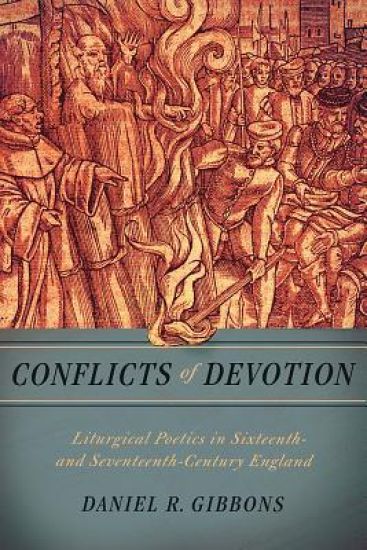
Conflicts of Devotion

Conflicts of Devotion

Daniel R. Gibbons

University of Notre Dame Press
2017
sidottu
Who will mourn with me? Who will break bread with me? Who is my neighbor? In the wake of the religious reformations of the sixteenth century, such questions called for a new approach to the communal religious rituals and verses that shaped and commemorated many of the brightest and darkest moments of English life. In England, new forms of religious writing emerged out of a deeply fractured spiritual community. Conflicts of Devotion reshapes our understanding of the role that poetry played in the re-formation of English community, and shows us that understanding both the poetics of liturgy and the liturgical character of poetry is essential to comprehending the deep shifts in English spiritual attitudes and practices that occurred during the sixteenth and seventeenth centuries. The liturgical, communitarian perspective of Conflicts of Devotion sheds new light on neglected texts and deepens our understanding of how major writers such as Edmund Spenser, Robert Southwell, and John Donne struggled to write their way out of the spiritual and social crises of the age of the Reformation. It also sheds new light on the roles that poetry may play in negotiating—and even overcoming—religious conflict. Attention to liturgical poetics allows us to see the broad spectrum of ways in which English poets forged new forms of spiritual community out of the very language of theological division. This book will be of great interest to teachers and students of early modern poetry and of the various fields related to Reformation studies: history, politics, and theology.
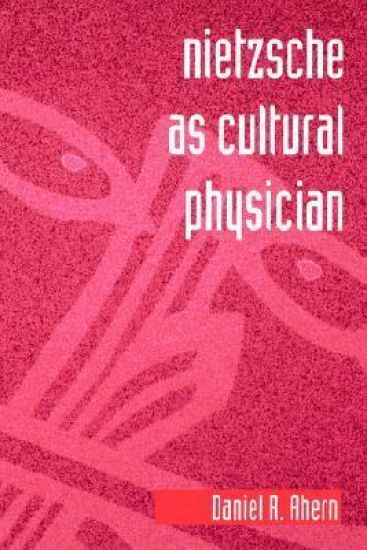
Nietzsche as Cultural Physician

Nietzsche as Cultural Physician

Daniel R. Ahern

Pennsylvania State University Press
1995
pokkari
In this new interpretation of Nietzsche's thought, Daniel Ahern examines Nietzsche's understanding of physiology and argues that Nietzsche saw himself in the role of a ''physician'' of culture. Through what he calls Nietzsche's ''clinical standpoint,'' Ahern describes Nietzsche's views on the history of Western culture in terms of the ''physiological dynamics'' of exhaustion, decadence, sickness, and health. This physiology is a simultaneous interpretation of the will to power and constitutes both Nietzsche's ''diagnoses'' of the ''spiritual'' sickness of modern nihilism and its possible cure. To describe how ''spirit'' can be both a force of degeneration and vitality, Ahern studies Nietzsche's perception of the history and culture of both the ancient Greeks and Jews. In doing so, he provides a sound textual basis for confronting the potentially inflammatory aspects of Nietzsche's little discussed cultural criticism.This book marks the first serious exploration of Nietzsche's diagnosis and prognosis for modernity and of the centrality to Nietzsche's thought of his conception of himself as a physician of culture.
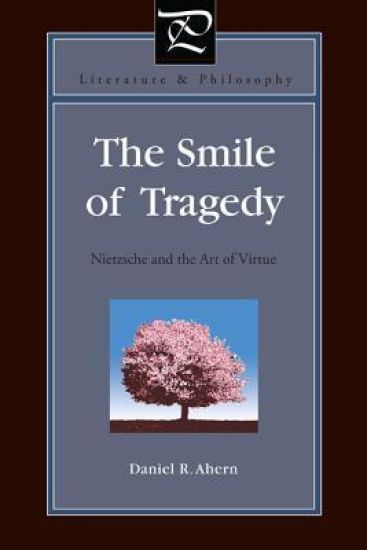
The Smile of Tragedy

The Smile of Tragedy

Daniel R. Ahern

Pennsylvania State University Press
2012
sidottu
In The Smile of Tragedy, Daniel Ahern examines Nietzsche’s attitude toward what he called “the tragic age of the Greeks,” showing it to be the foundation not only for his attack upon the birth of philosophy during the Socratic era but also for his overall critique of Western culture. Through an interpretation of “Dionysian pessimism,” Ahern clarifies the ways in which Nietzsche sees ethics and aesthetics as inseparable and how their theoretical separation is at the root of Western nihilism. Ahern explains why Nietzsche, in creating this precursor to a new aesthetics, rejects Aristotle’s medicinal interpretation of tragic art and concentrates on Apollinian cruelty as a form of intoxication without which there can be no art. Ahern shows that Nietzsche saw the human body as the vessel through which virtue and art are possible, as the path to an interpretation of “selflessness,” as the means to determining an order of rank among human beings, and as the site where ethics and aesthetics coincide.
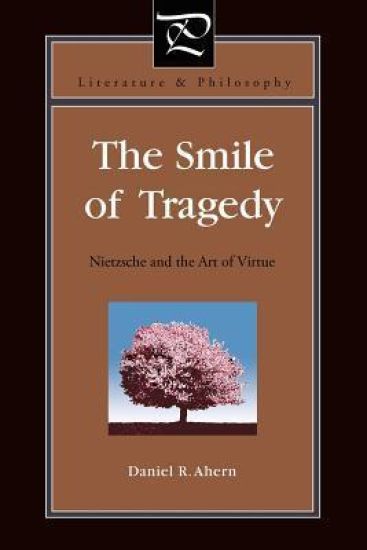
The Smile of Tragedy

The Smile of Tragedy

Daniel R. Ahern

Pennsylvania State University Press
2012
pokkari
In The Smile of Tragedy, Daniel Ahern examines Nietzsche’s attitude toward what he called “the tragic age of the Greeks,” showing it to be the foundation not only for his attack upon the birth of philosophy during the Socratic era but also for his overall critique of Western culture. Through an interpretation of “Dionysian pessimism,” Ahern clarifies the ways in which Nietzsche sees ethics and aesthetics as inseparable and how their theoretical separation is at the root of Western nihilism. Ahern explains why Nietzsche, in creating this precursor to a new aesthetics, rejects Aristotle’s medicinal interpretation of tragic art and concentrates on Apollinian cruelty as a form of intoxication without which there can be no art. Ahern shows that Nietzsche saw the human body as the vessel through which virtue and art are possible, as the path to an interpretation of “selflessness,” as the means to determining an order of rank among human beings, and as the site where ethics and aesthetics coincide.
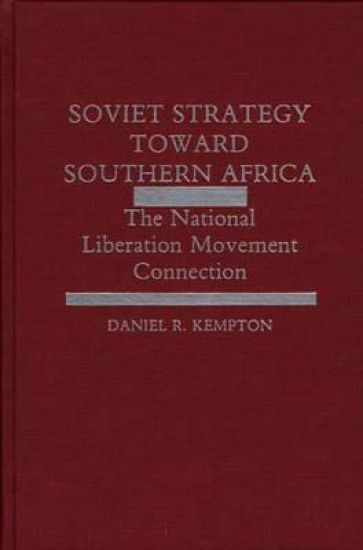
Soviet Strategy Toward Southern Africa

Soviet Strategy Toward Southern Africa

Daniel R. Kempton

Praeger Publishers Inc
1989
sidottu
This study is the first significant work to examine Soviet involvement with national liberation movements (NLMs) in Africa as a separate subcategory of Soviet foreign policy in the developing world. The text compares and contrasts actual Soviet behavior with declared policy. Daniel R. Kempton presents three case studies: the African National Congress (ANC) in South Africa, The Movimento Popular de Libertacao de Angola (MPLA) and the Zimbabwe African People's Union (ZAPU). These cases trace the development of the Soviet Union's ties to the national liberation movements, the amount and types of assistance provided, and the impact of the relationship on the national liberation movements. General analysts of international relations, analysts of Soviet foreign policy and Africanists will find this a valuable resource. The author contends that during the 1960s and 1970s the Soviet Union pursued a common strategy toward all three national liberation movements. Although the strategy was applied flexibly to take into account the idiosyncracies of the individual liberation struggles, in each case the Soviet Union pushed the national liberation movement to adopt the Soviet political model. The Soviet view was that the adoption of this model would eventually lead to the development of relatively more stable and dependable allies. Since 1980, however, in each case there is significant evidence that the Soviet Union has altered markedly, if not abandoned, its previous strategy.
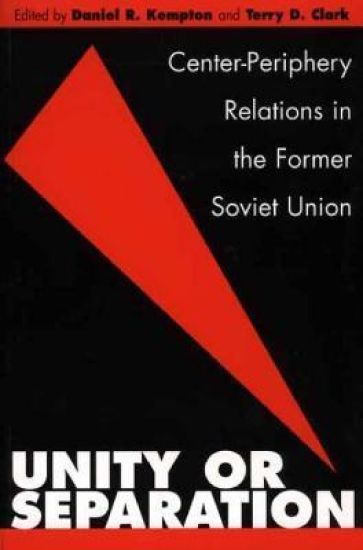
Unity or Separation

Unity or Separation

Daniel R. Kempton; Terry D. Clark

Praeger Publishers Inc
2001
nidottu
Many analysts initially believed that the process of Soviet disintegration would inevitably open a Pandora's box of ethnic nationalism and regional self-determination. But, despite obvious setbacks such as Chechnya, the developments of the last decade have shown that while forces of disintegration remain a very real threat, the fifteen successor states have managed to stay largely intact. One explanation for this somewhat unexpected success is the varied strategies of center-periphery relations adopted by the post-Soviet states, tailored to meet the unique of circumstances faced by each former republic of the Soviet Union. The contributors to this up-to-date volume examine the specific cases of success and failure in center-periphery relations in the former USSR, and offer some provocative overall conclusions about the progress made and the impact on the process of democratization.The cases examined in this volume are drawn from Russia, Lithuania, Ukraine, Uzbekistan, among others. These case studies demonstrate that realtions between national and local governments have been evolving differently in each of the successor states in the but in each case there has been a conscious attempt to create stacble center-periphery relations, which give a degree of autonomy to minority groups while still providing for a stable state and democratic development. This book will be of interest to scholars and students of the former Soviet Union and those interested in federalization and center-periphery.
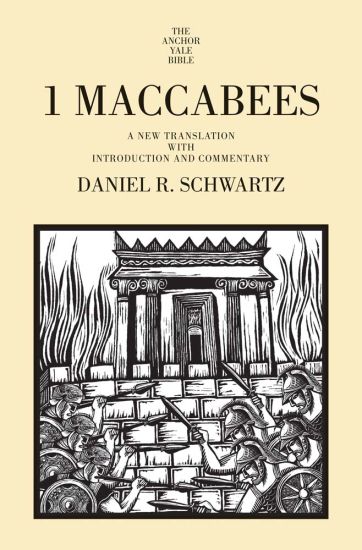
1 Maccabees

1 Maccabees

Daniel R. Schwartz

YALE UNIVERSITY PRESS
2022
sidottu
A new translation and commentary on I Maccabees that offers a fresh interpretation of the author’s values and purpose First Maccabees, composed in the second century BCE, chronicles four decades of clashes between Hellenistic Syria and Judea, from Antiochus Epiphanes’s ascent to the throne in 175 BCE to the Hasmoneans’ establishment of an independent Judean state, ruled by Simon and his sons. In this volume, Daniel R. Schwartz provides a new translation of the Greek text and analyzes its historical significance. In dialogue with contemporary scholarship, the introduction surveys the work’s themes, sources, and transmission, while the commentary addresses textual details and issues of historical reconstruction, often devoting special attention to the lost Hebrew original and its associations. Schwartz demonstrates that 1 Maccabees, despite its Hebraic biblical style and its survival within the Christian canon, deviates from biblical and Judaic works by marginalizing God, evincing scorn for martyrs, and ascribing to human power and valor crucial historical roles. This all fits its mandate: justification of the Hasmonean dynasty, especially the Simonides.
Reading Joyce’s Ulysses

Reading Joyce’s Ulysses

Daniel R. Schwarz

Palgrave Macmillan
1991
nidottu
Reissued to commemorate the 100th anniversary of Bloomsday, Reading Joyce's 'Ulysses' includes a new preface taking account of scholarly and critical development since its original publication. It shows how the now important issues of post-colonialism, feminism, Irish Studies and urban culture are addressed within the text, as well as a discussion of how the book can be used by both beginners and seasoned readers. Schwarz not only presents a powerful and original reading of Joyce's great epic novel, but discusses it in terms of a dialogue between recent and more traditional theory. Focusing on what he calls the odyssean reader, Schwarz demonstrates how the experience of reading Ulysses involves responding both to traditional plot and character, and to the novel's stylistic experiments.
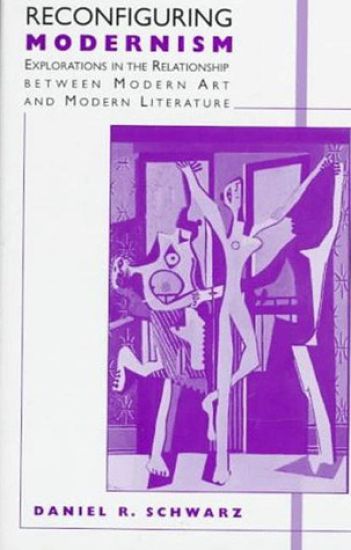
Reconfiguring Modernism

Reconfiguring Modernism

Daniel R. Schwarz

Palgrave Macmillan
1997
sidottu
Reconfiguring Modernism explores the relationship between modern literature and modern art. Spanning the high modernist period between the late-nineteenth century and World War 2, the cultural interrelationships between painters such as Manet, Gauguin, Cezanne, and Picasso, and writers such as James, Conrad, Eliot and Joyce are explored. The influence of African, Asian and Pacific cultures on European modernism is also examined. Schwarz considers texts - visual and written - of the modern period as a contoured textual field without absolute borders, crucial to our understanding of modernism in the last years of the twentieth century.
Imagining the Holocaust

Imagining the Holocaust

Daniel R. Schwarz

St Martin's Press
2001
nidottu
In "Imagining the Holocaust," Daniel R. Schwarz examines widely read Holocaust narratives which have shaped the way we understand and respond to the events of that time. He begins with first person narratives-- Wiesel's "Night" and Levi's "Survival at Auschwitz" --and then turns to searingly realistic fictions such as Borowski's "This Way to the Gas Chamber, Ladies and Gentlemen," before turning to the Kafkaesque parables of Appelfeld and the fantastic cartoons of Spiegleman's "Maus" books. Schwarz argues that as we move further away from the original events, the narratives authors use to render the Holocaust horror evolve to include fantasy and parable, and he shows how diverse audiences respond differently to these highly charged and emotional texts.
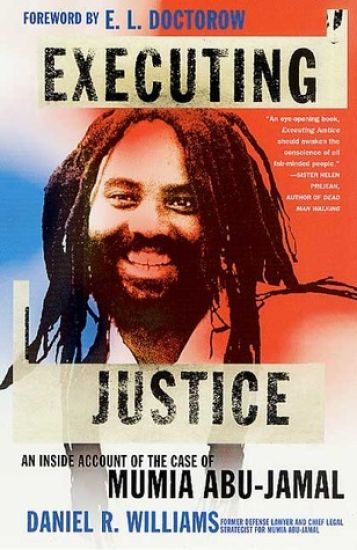
Executing Justice: An Inside Account of the Case of Mumia Abu-Jamal
Daniel R. Williams, former lead attorney for Mumia Abu-Jamal, tells the full story of the trial and ongoing struggle for Abu-Jamal's freedom, and interrogates the United States's commitment to capital punishment. Mumia Abu-Jamal is an award-winning journalist and author of three well-received books and many essays. He is also a death-row inmate, awaiting execution in Pennsylvania for allegedly killing a police officer in 1981. For many around the world, he is an inspired leader and the centerpiece to a revived progressive movement critical of our justice system and escalating global economic inequities. For others, he is a cold-blooded killer who has duped millions, including a vast array of Hollywood celebrities, writers, intellectuals and world political leaders, into believing that he is a political prisoner falsely imprisoned. Whatever the outlook, he and his case have become a flashpoint in the ever-raging debate over capital punishment in this country and a symbol of what is wrong with our criminal justice system. Here, for the first time, the story of Mumia Abu-Jamal's trial and his struggle to gain his freedom has been told. Executing Justice takes us inside the courtroom where a fierce and skilled prosecutor wove a damning narrative of a young black radical who brutally murdered a young white police officer in the red-light district of Philadelphia, and then later boasted about the killing. It was, the prosecutor said, the strongest murder case he's ever tried. Daniel R. Williams, defense lawyer and chief legal strategist for Mumia Abu-Jamal, invites us to ask: why has this case engendered such enormous attention and aroused the passions of people worldwide? Executing Justice is the story of how the death penalty really works in this country--not from the perspective of appellate judges, academics, or politicians who pontificate about the pros and cons of capital punishment, but from ground zero, within the pit of the courtroom where the war over life and death is fought. It is also a story of one of the most remarkable trials in our history. Above all, Executing Justice is an honest, at times confessional, book that seeks not to preach, but to raise questions about what we expect from our legal system and the depth of our commitment to capital punishment as a form of executing justice. In a new chapter for the paperback, Williams tells of his experiences since this controversial book was first published.
The Impact of Judicial-Selection Method on State-Supreme-Court Policy
This unique empirical study investigates how the method of judicial selection significantly affects state-supreme-court policies in several important areas of law—business, criminal procedure, and family law. After examining different theories and surveying the research about judicial selection, this comparative study of policies in six states—Connecticut, New Jersey, Pennsylvania, Rhode Island, Virginia, West Virginia—challenges current assumptions. The author finds that appointed judges prefer the interests of the individual over those of the state in criminal-procedure cases and are the most innovative in business law; that elected judges prefer the interests of the state over the individual; and that legislatively selected judges acquiesce to the policy preferences of other branches of government and are the most inactive in terms of policy initiation. For students and teachers in law, political science, and history; for lawyers and judges; for interest groups concerned about state policy; and for policymakers and other professionals concerned with American government and public administration.
Toward Universal Religion

Toward Universal Religion

Daniel R. Chandler

Praeger Publishers Inc
1996
sidottu
Using the 1893 and the 1993 World's Parliament of Religions as a focus for probing intercultural religious communication, this study describes more than a century's preoccupation with a provocative phenomenon called universal religion. It presents 12 enduringly significant speakers whose rhetorical effectiveness, combined with their concepts of universal religion, forge an intercultural synthesis combining Eastern religions and Western thought. This volume will interest scholars and students of both religion and rhetoric as well as the general public. It provides a deeper appreciation of such well-known communicators as Emerson and Thoreau, as well as an introduction to the significant contributions of thinkers such as Roy, Sen, Besant, Vivekananda, Tagore, Radhakrishnan, Gandhi, Jenkins Lloyd Jones, John Haynes Holmes, and Preston Bradley.The 1893 Parliament of The World's Religions and the 1993 World's Parliament of Religions are described by contemporary historians as watersheds in human history and turning points in humanity's spiritual progress. These parliaments are the two occasions when the world's religious leaders have gathered, and the events symbolize a growing preoccupation with an emerging universal religion evolving through interreligious communication. The 1893 Parliament is recognized for commencing interreligious dialogue and encouraging comparative religion; the 1993 Parliament is remembered for networking the worldwide religious and spiritual communities. This volume describes a little-known but highly important minority movement in which a comparatively few communicators in India and the United States have progessively synthesized Eastern religion and Western thought. The work examines these speakers and their speeches by placing this distinctive rhetorical discourse within their historical times and cultural contexts; specifying the concepts about universal religion proposed by each speaker; and indicating their contributions to an emerging and evolving religion that is universal.
Reading Joyce’s Ulysses

Reading Joyce’s Ulysses

Daniel R. Schwarz

Palgrave Macmillan
1991
nidottu
Reissued to commemorate the 100th anniversary of Bloomsday, Reading Joyce's 'Ulysses' includes a new preface taking account of scholarly and critical development since its original publication. It shows how the now important issues of post-colonialism, feminism, Irish Studies and urban culture are addressed within the text, as well as a discussion of how the book can be used by both beginners and seasoned readers. Schwarz not only presents a powerful and original reading of Joyce's great epic novel, but discusses it in terms of a dialogue between recent and more traditional theory. Focusing on what he calls the odyssean reader, Schwarz demonstrates how the experience of reading Ulysses involves responding both to traditional plot and character, and to the novel's stylistic experiments.
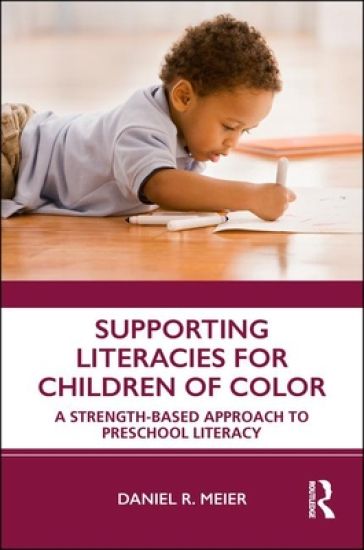
Supporting Literacies for Children of Color
A comprehensive theory-to-practice guidebook, Supporting Literacies for Children of Color argues for a new strength-based view of teaching to support the literacy talents and abilities of preschool-aged children of Color. The early childhood field is at a critical juncture in preschool literacy education as educators confront an ever-changing array of curricular approaches and assessment measures while still trying to meet the social, cultural, language, and literacy needs of individual children. By integrating parent and teacher literacy perspectives, as well as calling on the author’s own decades of teaching, this book offers practical tools and strategies for culturally responsive pedagogy and demonstrates effective methods for using oral language and multilingualism to celebrate and deepen the literacy capabilities of children of Color. Featuring examples of children’s literacy processes and products both at home and in preschools to illustrate effective instructional strategies, as well as boxes noting important ideas and strategies in each major section, this text will guide students and educators toward creating a supportive learning environment for children of Color.
Supporting Literacies for Children of Color
A comprehensive theory-to-practice guidebook, Supporting Literacies for Children of Color argues for a new strength-based view of teaching to support the literacy talents and abilities of preschool-aged children of Color. The early childhood field is at a critical juncture in preschool literacy education as educators confront an ever-changing array of curricular approaches and assessment measures while still trying to meet the social, cultural, language, and literacy needs of individual children. By integrating parent and teacher literacy perspectives, as well as calling on the author’s own decades of teaching, this book offers practical tools and strategies for culturally responsive pedagogy and demonstrates effective methods for using oral language and multilingualism to celebrate and deepen the literacy capabilities of children of Color. Featuring examples of children’s literacy processes and products both at home and in preschools to illustrate effective instructional strategies, as well as boxes noting important ideas and strategies in each major section, this text will guide students and educators toward creating a supportive learning environment for children of Color.
Language, Mind, and Power

Language, Mind, and Power

Daniel R. Boisvert; Ralf Thiede

Routledge
2020
sidottu
Language is a natural resource: Power and vulnerability are associated with access to language, just as to food and water. In this new book, a linguist and philosopher elucidate why language is so powerful, illuminate its very real social and political implications, and make the case for linguistic equality—equality among languages and equality in access to/knowledge of language and its use—as a human right and tool to prevent violence and oppression. Students and instructors will find this accessible, interdisciplinary text invaluable for courses that explore how language reflects power structures in linguistics, philosophy/ethics, and cognitive science/psychology.
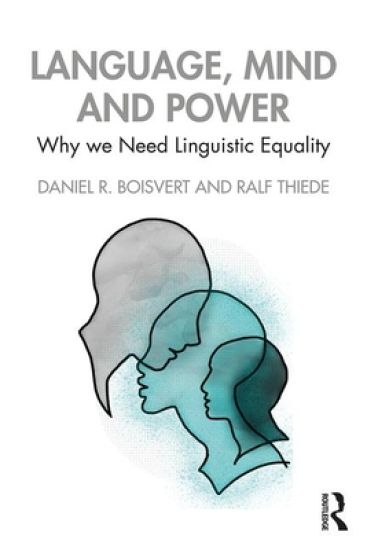
Language, Mind, and Power

Language, Mind, and Power

Daniel R. Boisvert; Ralf Thiede

Routledge
2020
nidottu
Language is a natural resource: Power and vulnerability are associated with access to language, just as to food and water. In this new book, a linguist and philosopher elucidate why language is so powerful, illuminate its very real social and political implications, and make the case for linguistic equality—equality among languages and equality in access to/knowledge of language and its use—as a human right and tool to prevent violence and oppression. Students and instructors will find this accessible, interdisciplinary text invaluable for courses that explore how language reflects power structures in linguistics, philosophy/ethics, and cognitive science/psychology.