
Kirjahaku
Etsi kirjoja tekijän nimen, kirjan nimen tai ISBN:n perusteella.
1000 tulosta hakusanalla Darwin Porter; Danforth Prince


She was perfect in every sense of the word. 22 years ago, I was 15 years old and scared in a new High School. She was a Senior and lovingly confident. I say that not with a mature sense, but rather with a teenage, na ve sense. She was remarkable and so confusing to me at the same time. My first crush wrapped up in a green sports jacket. We were in Choir together and just looking at her sing made me speechless. I didn't understand these new feelings I was having, even though they felt ooh, so right. I never spoke a word to her and her the same. She had a boyfriend and freshman didn't talk to upperclassman... it's just the way it was then. Little did I know she would soon become my first crush of my long, tumultuous teenage life. I soon began to want to go to the school just to see her sing and hopefully catch a glimpse of her outside of the Choir hallway. She was mysterious and yet so lovely... and as quickly as I grew accustomed to seeing her and crushing on her, was as quickly as she Graduated and left my life. Fast forward 22 years. These poems represent the account of a simple teenage love long ago and the subsequent meeting and attempt at a relationship years after the High School experience. The poems are presented here in a time line fashion as they were originally written. As the relationship progressed and eventually hit it's downturn, the Poems directly reflect this as well. We tried, and failed miserably... years of life had taken it's toll on our innocence and us in general. She still, to this day, is difficult for me to discuss... our relationship that failed years later took away my childhood innocence and robbed me of the first crush years prior. It's difficult to take sometimes and of course, forgetting about it isn't an option. I love her... always have and always will. Hope you enjoy this life retrospect of this special section to my life that I hold very close and dear to my heart.

Welcome to "burn". the Poetic time after all of those other times. All pieces contained within take place within modern day and are reflected as such. No more personal history lessons and no more Poems from long ago. The honesty and confessional Poetic flow certainly do not disappoint in this Chapbook... 32 Poetic pieces that will relate and awake your inner core and possibly help you heal a bad memory or broken Heart. To begin to heal is to begin to understand... to love... to burn

Includes poems that use multiple viewpoints - from Darwin himself, to his beloved wife Emma, and even, at one point, the orangutang at London Zoo - and illuminates the development of Darwin's thought, the drama of the discovery of evolution, and the fluctuating emotions of Darwin the husband, and the naturalist and the tender father.
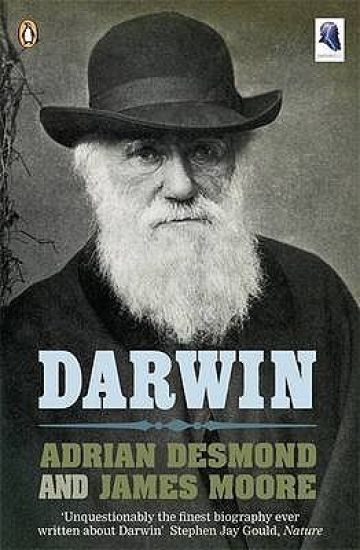
This biography of Charles Darwin attempts to capture the private unknown life of the real man - the gambling and gluttony at Cambridge, his gruelling trip round the globe, his intimate family life, worries about persecution and thoughts about God. Central to all of this, his pioneering efforts on the theory of evolution now that recent studies have overturned the commonplace views of Darwin that have held for more than a century.
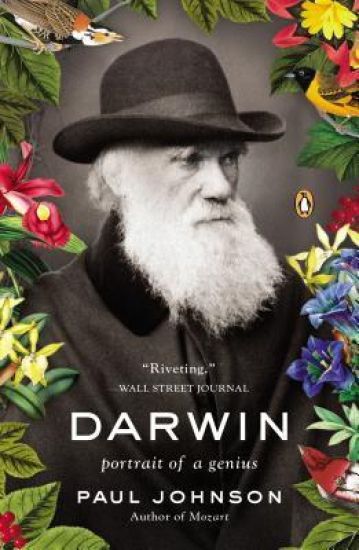
A riveting (The Wall Street Journal) biography of one of the most influential and controversial scientists in Western history Acclaimed historian and biographer Paul Johnson turns his keen eye on Charles Darwin, the towering figure whose work continues to spur scientific debate. With his publication of On the Origin of Species, Darwin forever changed our concept of the world. While Johnson praises Darwin s extraordinary skills as a natural scientist and his monumental achievements, he does not sidestep Darwin s tragic failures as an anthropologist. Johnson argues that by applying his theory of natural selection to humans, Darwin provided a platform for the burgeoning eugenics movement. Lay readers and academics alike will enjoy this concise and unflinching exploration of Charles Darwin, a genius whose discoveries even the flawed ones add significant dimension to our understanding of his mind, the era in which he lived, and his everlasting impact on our world."

Darwin's theory that our ancestors were apes caused a furore in the scientific world and outside it when The Origin of Species was published in 1859. Arguments still rage about the implications of his evolutionary theory, and scepticism about the value of Darwin's contribution to knowledge is widespread. In this analysis of Darwin's major insights and arguments, Jonathan Howard reasserts the importance of Darwin's work for the development of modern biology. ABOUT THE SERIES: The Very Short Introductions series from Oxford University Press contains hundreds of titles in almost every subject area. These pocket-sized books are the perfect way to get ahead in a new subject quickly. Our expert authors combine facts, analysis, perspective, new ideas, and enthusiasm to make interesting and challenging topics highly readable.
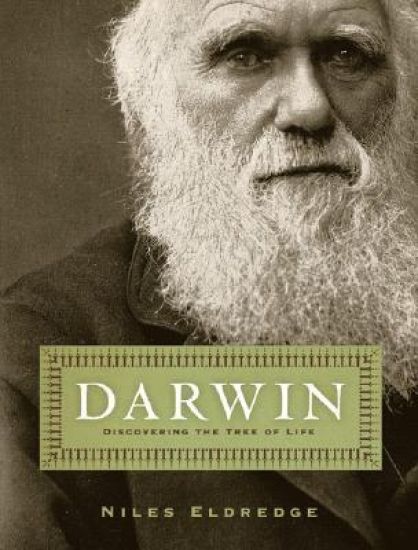
Charles Darwin's ideas resonate deeply in Western culture today, and his theory still lies at the heart of modern scientific evolutionary research. As other nineteenth-century figures fade, Darwin's theory of evolution still provokes controversy, spilling over into curriculum battles at state and local school boards in the United States and around the world. In exploring the everyday artifacts of Darwin's life, his notebooks, and early manuscripts, Niles Eldredge "a candid, no-punches-pulled interpreter of the core ideas of evolutionary biology" (Science News) provides a rare glimpse into the mind of this highly intuitive, creative scientist. The celebration of Charles Darwin's 200th birthday in 2009 begins in November 2005 with the opening of a major exhibition at the American Museum of Natural History in New York, curated by Eldredge, that will travel across the nation. More than a companion book to the exhibit, Darwin is a rich and inspiring reconstruction of Darwin's life through his writings and discoveries.
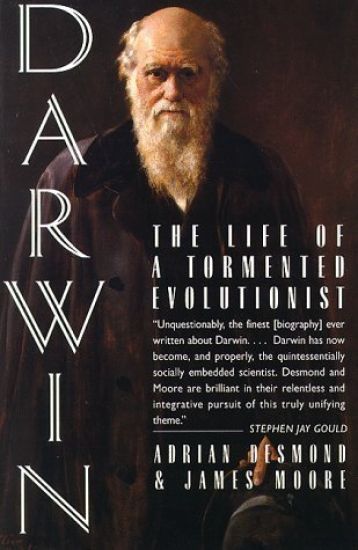
Hailed as the definitive biography, this monumental work explains the character and paradoxes of Charles Darwin and opens up the full panorama of Victorian science, theology, and mores. The authors bring to life Darwin's reckless student days in Cambridge, his epic five-year voyage on the Beagle, and his grueling struggle to develop his theory of evolution. Adrian Desmond and James Moore's gripping narrative reveals the great personal cost to Darwin of pursuing inflammatory truths--telling the whole story of how he came to his epoch-making conclusions.
The impact of Charles Darwin’s work on Western civilization has been broad and deep. As much as anyone in the modern era, he changed human thought, and his influence is still felt in virtually all aspects of our lives. This new edition, larger and more varied than the previous ones, includes more of Darwin's own work and also presents the most recent research and scholarship on all aspects of Darwin’s legacy. The biological sciences, as well as social thought, philosophy, ethics, religion, and literature, have all been shaped and reshaped by evolutionary concepts. Excerpts from the most important books and articles of recent years confirm this Darwinian heritage. New work by Richard Dawkins, Edward O. Wilson, Kevin Padian, Eugene C. Scott, Steven Pinker, Daniel Dennett, Michael Ruse, Frans de Waal, Noretta Koertge, George C. Williams, George Levine, Stephen Jay Gould, Gillian Beer, Ernst Mayr, and many others illuminates this exciting intellectual history. A wide-ranging new introduction by the editor provides context and coherence to this rich body of engaging material, much of which will be shaping human thought well into the new century. This edition will be useful to scientists and historians alike: "The Norton Darwin explains Darwinian evolution and illustrates the social and intellectual conflicts of the past two centuries better than any other book that I am aware of." (Charles Taylor, Professor of Biology, Ecology, and Evolution, University of California, Los Angeles) And it will be of great value to the humanities and social sciences as well: "The edition provides the sharpest and most exciting access to Darwin we have ever had. It shows all of us interested in the heart of our intellectual heritage how that heritage is sustained, manipulated, and honored." (James R. Kincaid, Aerol Arnold Professor of English, University of Southern California) A Selected Bibliography and an Index are included.

In this invaluable book, Tim Lewens shows in a clear and accessible manner how important Darwin is for philosophy and how his work has shaped and challenged the very nature of the subject.Beginning with an overview of Darwin’s life and work, the subsequent chapters discuss the full range of fundamental philosophical topics from a Darwinian perspective. These include natural selection; the origin and nature of species; the role of evidence in scientific enquiry; the theory of Intelligent Design; evolutionary approaches to the human mind; the implications of Darwin’s work for ethics and epistemology; and the question of how social and political thought needs to be updated in the light of a Darwinian understanding of human nature. A concluding chapter assesses the philosophical legacy of Darwin’s thought.Darwin is essential reading for anyone in the humanities, social sciences and sciences seeking a philosophical introduction to Darwin, or anyone simply seeking a philosophical companion to Darwin’s own writings.

In this invaluable book, Tim Lewens shows in a clear and accessible manner how important Darwin is for philosophy and how his work has shaped and challenged the very nature of the subject.Beginning with an overview of Darwin’s life and work, the subsequent chapters discuss the full range of fundamental philosophical topics from a Darwinian perspective. These include natural selection; the origin and nature of species; the role of evidence in scientific enquiry; the theory of Intelligent Design; evolutionary approaches to the human mind; the implications of Darwin’s work for ethics and epistemology; and the question of how social and political thought needs to be updated in the light of a Darwinian understanding of human nature. A concluding chapter assesses the philosophical legacy of Darwin’s thought.Darwin is essential reading for anyone in the humanities, social sciences and sciences seeking a philosophical introduction to Darwin, or anyone simply seeking a philosophical companion to Darwin’s own writings.

Darwin
Cambridge University Press
2010
pokkari
Charles Darwin can easily be considered one of the most influential scholars of his time. His thoughts, ideas, research and writings have had a far reaching impact and influence on modern thought in the arts, on society, and in science. With contributions from leading scholars, this collection of essays explores how Darwin's work grew out of the ideas of his time, and how its influence spread to contemporary thinking about creationism, the limits of human evolution and the diversification of living species and their conservation. A full account of the legacy of Darwin in contemporary scholarship and thought. With contributions from Janet Browne, Jim Secord, Rebecca Stott, Paul Seabright, Steve Jones, Sean Carroll, Craig Moritz and John Dupré. This book derives from a highly successful series of public lectures, revised and illustrated for publication under the editorship of Professor William Brown and Professor Andrew Fabian of the University of Cambridge.

Darwin is a dynamic and vibrant city with a character all of its own. It is Australia's northern most capital city and the only capital city situated in the tropics. Despite only being settled by Europeans in 1869 Darwin's history is short but eventful. Since then the destruction of Darwin from the World War II bombing raids and Cyclone Tracy in 1974 dominate its history, but there are so many other stories to tell.The evolution of Darwin's physical and social landscape can be traced through photographs. From colonial outpost to Australia's World War II frontline to today's gateway to South East Asia the photographs of each period illustrate a rich, diverse and distinctive history and highlight just how much Darwin has changed and reinvented itself.Forged in adversity Darwin's characted and strength lies in the resilience of its people who know that when faced with extraordinary challenges they can survive, rebuild and flourish.
The definitive biography of Charles Darwin—now in one abridged and fully updated volume Based on the two-volume National Book Critics Circle Award–winning biography hailed as “the definitive Darwin biography” (Newsday) • “a wonderful and well-rounded portrait” (The Washington Post) • and “magnificent” and “irresistible” (The Sunday Times) Janet Browne’s award-winning, two-volume biography of Charles Darwin has been described by many reviewers as the definitive biography of the father of evolution. Now, Browne has skillfully distilled and fully revised the work into a concise yet comprehensive one-volume biography that offers significant new interpretations of Darwin and the scientific and political legacy of his discoveries. Few men shook the Victorian world like Darwin did, and his story is in many ways that of the nineteenth century. His theory of evolution was born in the age of empire and had its greatest effect in the age of capitalism. It was to change the course of science, culture, and history, and deeply influence literature, art, philosophy, religion, politics, and economics. This magisterial biography follows Darwin from his early life and adventures on HMS Beagle to the tumult of becoming one of the first scientific celebrities with the publication of the Origin of Species. Through personal letters and archives, Browne describes the processes that brought the idea of evolution by natural selection into British society and beyond, especially Darwin’s relationship with Alfred Russel Wallace, who simultaneously proposed the same theory, and with the many people who helped and supported Darwin, including his wife Emma Wedgwood. Combining the best elements of social and intellectual biography, Browne places Darwin in cultural context and integrates his ideas with his private life. Vivid, revealing, and compellingly readable, Darwin is the indispensable biography of a gentleman naturalist who would become one of the most important, influential, and controversial scientists of all time.
This illustrated biography series combines non-fiction and fiction to introduce readers to famous historical characters. Each book begins with a diary, told from the point of view of a child who works for the famous person. At the end of each book there is an illustrated reference chapter. At ten years old, James becomes an assistant to Charles Darwin on the Beagle's second voyage, helping him collect and contain creatures that fly, scuttle, leap and hide from the naturalist. James' diary tells of an exciting moment in 19th-century history; it's a young boy's insight into the actions and thoughts of one of the world's most famous and controversial scientists.
Offers an introduction that presents Darwin's theory. This title includes excerpts from Darwin's correspondence, commenting on the work in question, and its significance, impact, and reception.