Kirjahaku
Etsi kirjoja tekijän nimen, kirjan nimen tai ISBN:n perusteella.
1000 tulosta hakusanalla David Bates
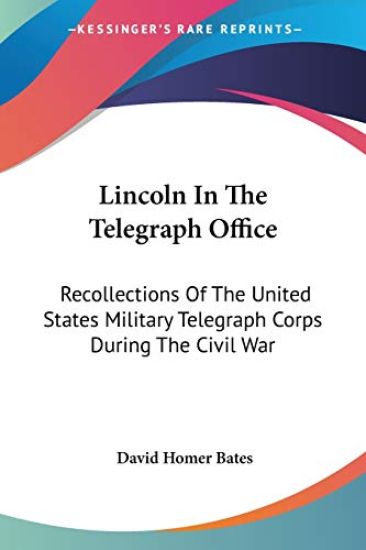
Lincoln in the Telegraph Office: Recollections of the United States Military Telegraph Corps During the Civil War
David Homer Bates
Literary Licensing, LLC
2014
nidottu
Lincoln in the Telegraph Office (Abridged, Annotated)
David Homer Bates
Independently Published
2016
pokkari
All aspects of the course are dealt with, along with the associated scientific background, mathematical calculations and drawings required. Although prior knowledge of the subject as provided in Book 1 is assumed, important principles are repeated so that this book can be read independently of the companion volume.
This book provides the apprentice or trainee carpenter and joiner with the basic technical knowledge necessary to complete the first half of a City and Guilds Course in Carpentry and Joinery. It will also be a useful reference to any persons studying for examinations, or simply wishing to further their knowledge in one of the associated areas, such as wood machining, cabinet making or general building construction. Dealing with the basic skills and techniques employed in the present day construction industry, the text assumes little prior knowledge of the subject, but lays before the reader a simple, straight forward and readable out of the skills, tools, materials and methods likely to be used or encountered in the workshop, on site or during studies at home or in college.
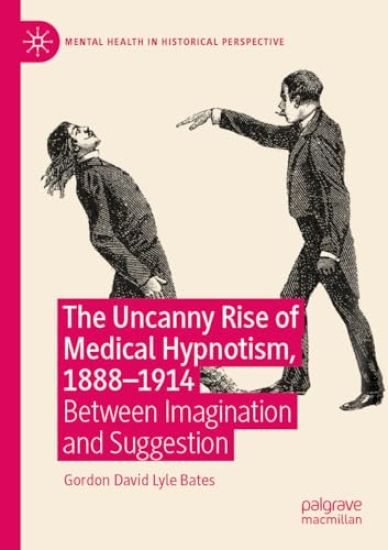
The Uncanny Rise of Medical Hypnotism, 1888–1914
Gordon David Lyle Bates
Springer International Publishing AG
2023
sidottu
This book explores the improbable rise of medical hypnotism in Victorian Britain and its subsequent assimilation and neglect. It follows the careers of the ‘New Hypnotists’: Charles Lloyd Tuckey, John Milne Bramwell, George Kingsbury and Robert Felkin. This loosely knit group all trained with the Suggestion School of Nancy and published books on hypnotism. They had to confront the many public and medical prejudices against the trance state which had persisted after the scandalous disgrace of John Elliotson and medical mesmerism, fifty years before. Hypnotism was a highly contested technology and in the 1890s the debates about safety and utility were fought in the national newspapers as well as the medical journals. The new hypnotists took on the might of the medical institutions personified by Ernest Hart, Editor of the British Medical Journal. However their timing was propitious, as the rise of faith-healing forced the medical profession to confront the non-physical therapeutic aspects of the doctor-patient relationship. The hypnotic discourse was shaped by these developments, but also by the fascination of the general public, novelists, occultists, psychic investigators, educationalists and spiritualists in the myriad possibilities of the trance state. Despite growing interest in the prehistory of British psychology and talking therapies, and the recent challenges to the primacy of Freudian histories, there are few accounts of the development of British ‘eclectic therapy’. This book uses the New Hypnotists as a lens to examine Victorian medicine and society, exploring their role in establishing the term ‘psychotherapy,’ and legitimising medical hypnotism, a precursor of psychological therapies.
The Uncanny Rise of Medical Hypnotism, 1888–1914
Gordon David Lyle Bates
Springer International Publishing AG
2024
nidottu
This book explores the improbable rise of medical hypnotism in Victorian Britain and its subsequent assimilation and neglect. They had to confront the many public and medical prejudices against the trance state which had persisted after the scandalous disgrace of John Elliotson and medical mesmerism, fifty years before.
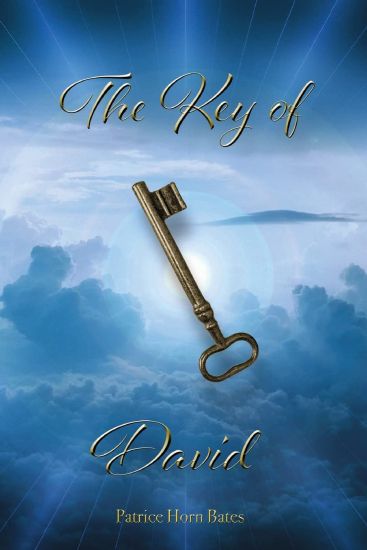
Suppose you had one billion dollars in the bank but never used it. So it goes with many Christians-they possess untold riches in Christ but are unwilling to learn of or access the inheritance freely given to them. The Key of David's purpose is to testify to the truth of God's Word and Spirit and to exhort God's people to receive all He has for them, for which Jesus paid the ultimate price. Please join me on a spiritual excursion that, prayerfully, will enlighten, encourage, and empower you through the anointing of the Holy Spirit to accomplish everything God has called you to do "How blessed I was to be engaged in the exciting spiritual journey of Patrice Bates through my reading of her book, 'The Key of David.' I believe that her quest for the fullness of God operating in her life will reward many others as her writings bring layer upon layer of powerful truths and principles to the table for them to glean from. This book is one to read again and again to absorb all of its spiritual richness." -Benny Thomas Author, Teacher Benny Thomas Ministries"Patrice Bates has poured herself into a book that is as much a legal case for the Lordship of Christ as it is a call to go deeper with God. If you like personal testimony of Christ's impact on one's life backed by scripture, you will enjoy the book very much." -Chester Moore Award-winning author, journalist, and radio/podcast host
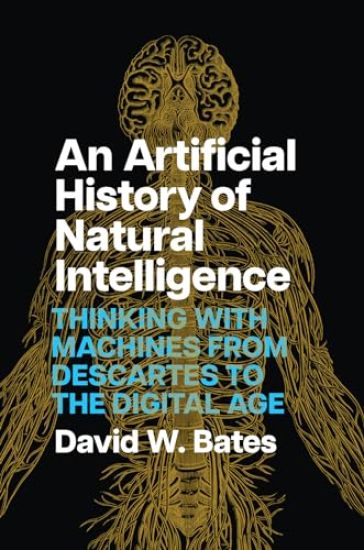
An Artificial History of Natural Intelligence
David W. Bates
THE UNIVERSITY OF CHICAGO PRESS
2024
sidottu
A new history of human intelligence that argues that humans know themselves by knowing their machines. We imagine that we are both in control of and controlled by our bodies—autonomous and yet automatic. This entanglement, according to David W. Bates, emerged in the seventeenth century when humans first built and compared themselves with machines. Reading varied thinkers from Descartes to Kant to Turing, Bates reveals how time and time again technological developments offered new ways to imagine how the body’s automaticity worked alongside the mind’s autonomy. Tracing these evolving lines of thought, An Artificial History of Natural Intelligence offers a new theorization of the human as a being that is dependent on technology and produces itself as an artificial automaton without a natural, outside origin.
An Artificial History of Natural Intelligence
David W. Bates
THE UNIVERSITY OF CHICAGO PRESS
2026
nidottu
A new history of human intelligence that argues that humans know themselves by knowing their machines. We imagine that we are both in control of and controlled by our bodies—autonomous and yet automatic. This entanglement, according to David W. Bates, emerged in the seventeenth century when humans first built and compared themselves with machines. Reading varied thinkers from Descartes to Kant to Turing, Bates reveals how time and time again technological developments offered new ways to imagine how the body’s automaticity worked alongside the mind’s autonomy. Tracing these evolving lines of thought, An Artificial History of Natural Intelligence offers a new theorization of the human as a being that is dependent on technology and produces itself as an artificial automaton without a natural, outside origin.
William the Conqueror
In Enlightenment Aberrations, David W. Bates shows that error was a complex, important, and by no means entirely negative concept in Enlightenment thought, one that had a decisive influence in revolutionary debates on political identity and national history. What can it mean to write a history of error? In Bates's view all philosophy, insofar as its project is the search for truth, begins in error. If truth is posited as a goal to be attained, not as a given of some kind, then error assumes a central role in the quest for truth. Going beyond both liberal celebrations and postmodern critiques of Enlightenment reason, Bates reveals just how crucial the problematic relation between human "wandering" and the mystery of truth was in eighteenth-century thought. The author draws on a wide range of Enlightenment thinkers, including Etienne Bonnot de Condillac, Jean d'Alembert, Marie-Jean-Antoine-Nicolas Caritat, Marquis de Condorcet, Jean-Jacques Rousseau, and Charles Bonnet, showing how they wrestled with the "risk and promise" of error. He then demonstrates how the concept of error and its dialectical relationship to truth played out in the political culture of the French Revolution, particularly in the Terror. In the final chapters, Bates looks at the post-revolutionary transformations of the Enlightenment discourse of error and its subsequent history in modern European thought.
A Campaign of Quiet Persuasion
Jan Bates Wheeler; David Coleman
Louisiana State University Press
2013
sidottu
In 1960, the College Entrance Examination Board became an unexpected participant in the movement to desegregate education in the South. Working with its partner, Educational Testing Services, the College Board quietly integrated its Scholastic Aptitude Test (SAT) centers throughout the Deep South. Traveling from state to state, taking one school district and even one school at a time, two College Board staff members, both native southerners, waged ""a campaign of quiet persuasion"" and succeeded, establishing a roster of desegregated test centers within segregated school districts while the historic battle for civil rights raged around them. In the context of the larger struggle for equal opportunities for southern black students, their work addressed a small but critical barrier to higher education.Shedding light on this remarkable story for the first time, Jan Bates Wheeler tells how the College Board staff members - Ben Cameron and Ben Gibson - succeeded. Their candid and thoughtfully written records of conversations and confrontations, untouched for nearly fifty years, reveal the persistence required to reach a goal many thought unachievable and even foolhardy. Indeed, their task placed them in the unusual position of advocating for school desegregation on a day-to-day basis as part of their jobs. This positioned Cameron and Gibson squarely in opposition to prevailing laws, customs, and attitudes - an ill-advised stance for any nascent business venture, particularly one experiencing competition from a new, rival testing organisation purported to accommodate openly those same laws, customs, and attitudes. Cameron and Gibson also accepted the personal danger involved in confrontations with racist school officials. The officials who cooperated with the pair assumed even greater risk, and in order to minimize that threat, Cameron and Gibson pledged not to publicize their efforts. Even years after their work had ended, the two men refused to write about their campaign for fear of compromising the people who had helped them. Their concerns, according to Wheeler, kept this remarkable story largely untold until now.
Complementing Book 1of the same title, this text takes the student up to the City and Guilds full Craft Certificate level. All aspects of the course are dealt with, along with the associated scientific background, mathematical calculations and drawings required. Although prior knowledge of the subject as provided in Book 1 is assumed , important principles are repeated so that this book can be read independently of the companion volume. Extensively illustrated, each chapter begins with clearly defined objectives and concludes with a series or questions and assignments. The text will prove invaluable as a general workbook for those following advanced woodworking courses, including CITB students and self-employed carpenters, joiner and builders. It is useful supplementary reading for those taking courses in brickwork and cabinetmaking, for trainee woodworking machinists and construction technicians as well as for students of City and Guilds Foundation courses.
Muhammad Ali burst onto the boxing scene over half a century ago, dominating the sport throughout the sixties and seventies. Yet, his effect on the sport is still prevalent. He evolved into a true pop culture icon whose image remains everywhere. Labeled the "Louisville Lip" by the press, the then Cassius Clay carved up opponents with his quick wit and sharp tongue as easily as and thoroughly as with his rapid, razor-sharp punching. Throughout his career, Ali's highly animated rhyming recitations delivering accurate pre-fight prognostications were as anticipated as his performances in the ring. Ali was the "Poet Laureate of Pugilism." It is in that spirit that author David A. Bates has created "ODES ON ALI" ('A Tribute To The Greatest") covering Ali's professional boxing career from his pro debut to the fight in which he captured the heavyweight title for the third and final time. Each fight is recalled in a lyrically rhyming poetry style reminiscent of Ali's own rhyming recitations. A concise biographical portrayal that is an informatively accurate, highly entertaining, read, "ODES ON ALI" was created to be a wonderful walk down memory lane for Ali fans old and new as well as those who might still wonder what the fuss was about.
Harris, O'Boyle, and Warbrick: Law of the European Convention on Human Rights
David Harris; Michael O'Boyle; Ed Bates; Carla M. Buckley
Oxford University Press
2023
nidottu
Now in its fifth edition, Harris, O'Boyle, and Warbrick: Law of the European Convention on Human Rights remains an indispensable resource for undergraduates, postgraduates, and practitioners alike. The new edition builds on the strengths of previous editions, providing an up-to-date, clear, and comprehensive account of Strasbourg case law and its underlying principles. It sets out and critically analyses each Convention article (including those addressed by relevant Protocols), and thoroughly examines the system of supervision. The book also addresses the pressures and challenges facing the Strasbourg system in the twenty-first century. Digital formats This fifth edition is available for students and institutions to purchase in a variety of formats. The e-book offers a mobile experience and convenient access along with functionality tools, navigation features, and links that offer extra learning support: www.oxfordtextbooks.co.uk/ebooks