Kirjahaku
Etsi kirjoja tekijän nimen, kirjan nimen tai ISBN:n perusteella.
1000 tulosta hakusanalla David Boyd

It's 1969 and Denny is on her way to the annual Thanksgiving dinner at the Wright's plush campus house. Denny is more nervous than usual because she has recently begun an affair with Dr Ernest Wright, a psychology professor who happens to be her boss. Needless to say, Ernest's wife Nancy doesn't suspect dowdy Denny of seducing her husband and continues to treat her more like a servant than a friend. To add to the tension, the Wright's only daughter is having a secret affair with Ernest's protege, and the youngest son, Ben, is as delicate and insufferable as only a poetry-writing fifteen-year-old can be. But this year the guests will include Nancy's best friend Anne and her new husband, the celebrated novelist Jonah Boyd, and this fateful holiday will turn out to be like no other.



American Studies in Honor of William Kenneth Boyd
David Kelly Jackson
Literary Licensing, LLC
2011
nidottu

The 18th century was a wealth of knowledge, exploration and rapidly growing technology and expanding record-keeping made possible by advances in the printing press. In its determination to preserve the century of revolution, Gale initiated a revolution of its own: digitization of epic proportions to preserve these invaluable works in the largest archive of its kind. Now for the first time these high-quality digital copies of original 18th century manuscripts are available in print, making them highly accessible to libraries, undergraduate students, and independent scholars.Rich in titles on English life and social history, this collection spans the world as it was known to eighteenth-century historians and explorers. Titles include a wealth of travel accounts and diaries, histories of nations from throughout the world, and maps and charts of a world that was still being discovered. Students of the War of American Independence will find fascinating accounts from the British side of conflict. ++++The below data was compiled from various identification fields in the bibliographic record of this title. This data is provided as an additional tool in helping to insure edition identification: ++++British LibraryT060233Anonymous. By Sir David Dalrymple. Drop-head title. With a final leaf of author's postscript soliciting articles for a 'Biographia Scotica'. Also issued as part of: Dalrymple's 'Biographia Scotica', London, 1790. London?, 1787]. 26, 2]p., plate: port.; 4
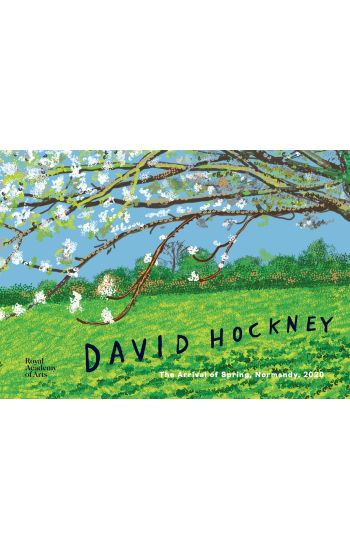
At the beginning of 2020, just as global Covid-19 restrictions were coming into force, the artist David Hockney was at his house, studio and garden in Normandy. From there, he witnessed the arrival of spring, and recorded the blossoming of the surrounding landscape on his iPad, a medium he has been using for over a decade. Working outdoors was an antidote to the anxiety of the moment for Hockney – 'We need art, and I do think it can relieve stress,' he says. This uplifting publication – produced to accompany a major exhibition at the Royal Academy of Arts – includes 116 of his new iPad paintings and shows to full effect Hockney's singular skill in capturing the exuberance of nature.

Everyone knows that the planet is in trouble, but is there a solution? This timely book identifies the most effective ways individuals can be more green in four key areas: home, travel, food, and consumerism. It also describes how citizens can ensure that governments take the actions necessary to make sustainable lifestyles the norm instead of the exception. Environmental lawyer David Boyd and celebrated ecologist David Suzuki provide vital tips for choosing a home, creating a healthy indoor environment, and decreasing energy and water use ? and utility bills. They discuss what readers can do to drive and fly less, profile the most environmentally friendly transportation choices, and explain how to purchase carbon credits, among other suggestions. In addition, they offer simple changes individuals can make in their diet to eat fresher, tastier, healthier food. Included too is invaluable advice about how to buy fewer things and avoid toxic consumer products.

This book investigates representations of the Central Intelligence Agency (CIA) in Hollywood films, and the synergies between Hollywood product, U.S. military/defense interests and U.S. foreign policy.As probably the best known of the many different intelligence agencies of the US, the CIA is an exceptionally well known national and international icon or even "brand," one that exercises a powerful influence on the imagination of people throughout the world as well as on the creative minds of filmmakers. The book examines films sampled from five decades - the 1960s, 1970s, 1980s, 1990s and 2000s - and explores four main issues: the relative prominence of the CIA; the extent to which these films appeared to be overtly political; the degree to which they were favorable or unfavorable to the CIA; and their relative attitude to the "business" of intelligence. A final chapter considers the question: do these Hollywood texts appear to function ideologically to "normalize" the CIA? If so, might this suggest the further hypothesis that many CIA movies assist audiences with reconciling two sometimes fundamental opposites: often gruesome covert CIA activity for questionable goals and at enormous expense, on the one hand, and the values and procedures of democratic society, on the other.This interdisciplinary book will be of much interest to students of the CIA/Intelligence Studies, media and film studies, US politics and IR/Security Studies in general.

This book investigates representations of the Central Intelligence Agency (CIA) in Hollywood films, and the synergies between Hollywood product, U.S. military/defense interests and U.S. foreign policy.As probably the best known of the many different intelligence agencies of the US, the CIA is an exceptionally well known national and international icon or even "brand," one that exercises a powerful influence on the imagination of people throughout the world as well as on the creative minds of filmmakers. The book examines films sampled from five decades - the 1960s, 1970s, 1980s, 1990s and 2000s - and explores four main issues: the relative prominence of the CIA; the extent to which these films appeared to be overtly political; the degree to which they were favorable or unfavorable to the CIA; and their relative attitude to the "business" of intelligence. A final chapter considers the question: do these Hollywood texts appear to function ideologically to "normalize" the CIA? If so, might this suggest the further hypothesis that many CIA movies assist audiences with reconciling two sometimes fundamental opposites: often gruesome covert CIA activity for questionable goals and at enormous expense, on the one hand, and the values and procedures of democratic society, on the other.This interdisciplinary book will be of much interest to students of the CIA/Intelligence Studies, media and film studies, US politics and IR/Security Studies in general.
While governments assert that Canada is a world leader in sustainability, Unnatural Law provides extensive evidence to refute this claim. A comprehensive assessment of the strengths and weaknesses of Canadian environmental law, the book provides a balanced, critical examination of Canada's record, focusing on laws and policies intended to protect water, air, land, and biodiversity.Three decades of environmental laws have produced progress in a number of important areas, such as ozone depletion, protected areas, and some kinds of air and water pollution. However, Canada's overall record remains poor. In this vital and timely study, David Boyd explores the reasons why some laws and policies foster progress while others fail. He ultimately concludes that the root cause of environmental degradation in industrialized nations is excessive consumption of resources. Unnatural Law outlines the innovative changes in laws and policies that Canada must implement in order to respond to the ecological imperative of living within the Earth's limits.The struggle for a sustainable future is one of the most daunting challenges facing humanity in the 21st century. Everyone – academics, lawyers, students, policy-makers, and concerned citizens – interested in the health of the Canadian and global environments will find Unnatural Law an invaluable source of information and insight. For more information on Unnatural Law visit David Boyd's site, www.unnaturallaw.com.
While governments assert that Canada is a world leader in sustainability, Unnatural Law provides extensive evidence to refute this claim. A comprehensive assessment of the strengths and weaknesses of Canadian environmental law, the book provides a balanced, critical examination of Canada's record, focusing on laws and policies intended to protect water, air, land, and biodiversity.Three decades of environmental laws have produced progress in a number of important areas, such as ozone depletion, protected areas, and some kinds of air and water pollution. However, Canada's overall record remains poor. In this vital and timely study, David Boyd explores the reasons why some laws and policies foster progress while others fail. He ultimately concludes that the root cause of environmental degradation in industrialized nations is excessive consumption of resources. Unnatural Law outlines the innovative changes in laws and policies that Canada must implement in order to respond to the ecological imperative of living within the Earth's limits.The struggle for a sustainable future is one of the most daunting challenges facing humanity in the 21st century. Everyone – academics, lawyers, students, policy-makers, and concerned citizens – interested in the health of the Canadian and global environments will find Unnatural Law an invaluable source of information and insight. For more information on Unnatural Law visit David Boyd's site, www.unnaturallaw.com.
The right to a healthy environment is the subject of extensive philosophical debates that revolve around a key question: Should rights to clean air, water, and soil be entrenched in law?This pioneering book answers this by moving beyond theoretical debate to measure the practical effects of enshrining the right in constitutions. David Boyd analyzes 193 constitutions and the laws and court decisions of more than 100 nations in Europe, Latin America, Asia, and Africa. He reveals that nations with constitutional protections have stronger environmental laws, enhanced enforcement, greater government accountability, and better access to justice, information, and public participation in decision making than nations without such provisions. As a result, they demonstrate superior environmental performance and have smaller ecological footprints.Boyd not only demonstrates that constitutionalizing environmental protection has the power to make sustainability a priority, he tells inspiring stories about the difference the right to a healthy environment is making in people's lives.

Canada has abundant natural wealth -- beautiful landscapes, vast forests, and thousands of rivers and lakes. The land defines Canadians as a people, yet the country has one of the worst environmental records in the industrialized world.Building on his previous book, The Environmental Rights Revolution (2012), David R. Boyd, one of Canada's leading environmental lawyers, describes how recognizing the constitutional right to a healthy environment could have a transformative impact by empowering citizens, holding governments and industry accountable, and improving Canada's green record. The overwhelming majority of the world's nations now recognize environmental rights through laws, constitutions, treaties, or court decisions. Boyd explores Canada's history of failed efforts to do the same within this international context and offers three pathways to constitutional recognition of the right to a healthy environment.This important and provocative book provides a blueprint for renewed leadership in protecting human health, the well-being of the planet, and the interests of future generations.
Canada has abundant natural wealth -- beautiful landscapes, vast forests, and thousands of rivers and lakes. The land defines Canadians as a people, yet the country has one of the worst environmental records in the industrialized world.Building on his previous book, The Environmental Rights Revolution (2012), David R. Boyd, one of Canada's leading environmental lawyers, describes how recognizing the constitutional right to a healthy environment could have a transformative impact by empowering citizens, holding governments and industry accountable, and improving Canada's green record. The overwhelming majority of the world's nations now recognize environmental rights through laws, constitutions, treaties, or court decisions. Boyd explores Canada's history of failed efforts to do the same within this international context and offers three pathways to constitutional recognition of the right to a healthy environment.This important and provocative book provides a blueprint for renewed leadership in protecting human health, the well-being of the planet, and the interests of future generations.
Despite Canada's enduring image as a natural paradise, every year thousands of Canadians become ill or die prematurely as a result of exposure to environmental hazards. Canadians understand that their health is inextricably linked to the health of the environment and are deeply concerned about the impacts of toxic substances on themselves and their children.In Cleaner, Greener, Healthier, David R. Boyd sets out to remedy Canada's environmental health problems. He begins by assessing the environmental burden of disease, identifies its unequal distribution along racial and socio-economic lines, and estimates the associated economic costs. He then compares Canadian environmental laws and policies with those in the United States, Australia, and the European Union, delivering a provocative diagnosis of the root causes of Canada's second-rate standards. Finally, drawing on strategies that protect citizens in other countries, Boyd prescribes legal remedies that will enable Canada to catch up with the world's environmental leaders while delivering substantial health and economic benefits.
Despite Canada's enduring image as a natural paradise, every year thousands of Canadians become ill or die prematurely as a result of exposure to environmental hazards. Canadians understand that their health is inextricably linked to the health of the environment and are deeply concerned about the impacts of toxic substances on themselves and their children.In Cleaner, Greener, Healthier, David R. Boyd sets out to remedy Canada's environmental health problems. He begins by assessing the environmental burden of disease, identifies its unequal distribution along racial and socio-economic lines, and estimates the associated economic costs. He then compares Canadian environmental laws and policies with those in the United States, Australia, and the European Union, delivering a provocative diagnosis of the root causes of Canada's second-rate standards. Finally, drawing on strategies that protect citizens in other countries, Boyd prescribes legal remedies that will enable Canada to catch up with the world's environmental leaders while delivering substantial health and economic benefits.


Mystery, Malevolence & Murder: Collected Stories - Volume One: Collected Stories - Volume One
David T. Boyd
Another Shore Press, LLC
2011
nidottu