Kirjojen hintavertailu. Mukana 11 342 296 kirjaa ja 12 kauppaa.

Kirjahaku

Etsi kirjoja tekijän nimen, kirjan nimen tai ISBN:n perusteella.

1000 tulosta hakusanalla David Carr

Boogie Woogie USA: 5 Boogie Etudes for the Intermediate Pianist
This work has been selected by scholars as being culturally important and is part of the knowledge base of civilization as we know it.This work is in the public domain in the United States of America, and possibly other nations. Within the United States, you may freely copy and distribute this work, as no entity (individual or corporate) has a copyright on the body of the work.Scholars believe, and we concur, that this work is important enough to be preserved, reproduced, and made generally available to the public. To ensure a quality reading experience, this work has been proofread and republished using a format that seamlessly blends the original graphical elements with text in an easy-to-read typeface.We appreciate your support of the preservation process, and thank you for being an important part of keeping this knowledge alive and relevant.
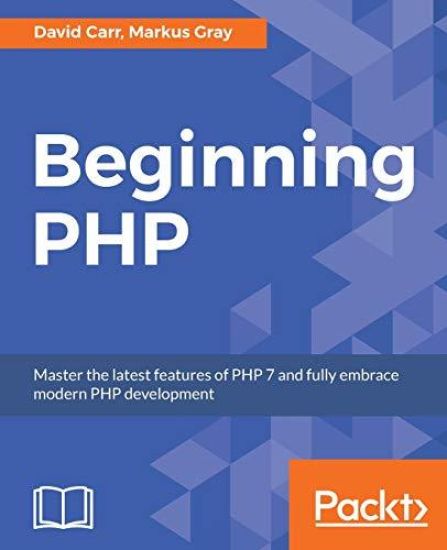
Beginning PHP

Beginning PHP

David Carr; Markus Gray

Packt Publishing Limited
2018
nidottu
Learn all the fundamentals of PHP with a book that blends theory with practice to build up the skills you need for modern web development. Key Features Brush up on basic PHP 7 syntax and work with variables, data types, arrays, and loops Master advanced concepts like building your own frameworks and creating your own applications Apply your newly learned PHP skills to a variety of real-life business scenarios Book DescriptionPHP is the preferred server-side scripting language for tech giants such as Facebook, Wikipedia, and Tumblr despite full-stack JavaScript gaining popularity with upcoming developers. This is because PHP performs better when dealing with heavy computations on the back end. In this book, you’ll learn everything you need to get up and running with the latest version of PHP, including package management with tools such as composer, secure database operations, and a whole host of other best practices that will help you stay a step ahead of traditional programmers. What you will learn Understand the fundamentals of PHP and work with classes and inheritance Learn about database operations and package management with composer Tackle common security concerns and pitfalls using authentication and validation Build effective PHP applications and frameworks for your business needs Who this book is forIf you’re already familiar with another programming language and want to learn about the fundamentals of PHP programming, you’ll find the flow of this book to be an ideal fit. Having a prior understanding of HTML, MySQL, CSS, and JavaScript will be beneficial, but is not mandatory.
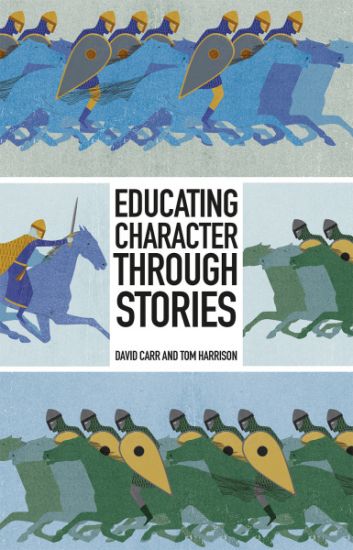
Educating Character Through Stories

Educating Character Through Stories

David Carr; Tom Harrison

Imprint Academic
2015
pokkari
What could be the point of teaching such works of bygone cultural and literary inheritance as Cervantes' Don Quixote and Shakespeare’s The Merchant of Venice in schools today? This book argues that the narratives and stories of such works are of neglected significance and value for contemporary understanding of human moral association and character. However, in addition to offering detailed analysis of the moral educational potential of these and other texts, the present work reports on a pioneering project, recently pursued by the Jubilee Centre for Character and Virtues, concerned precisely with the use of these and other stories for moral and character education in schools. The success of the 'Knightly Virtues’ project is an inspiring story in its own right and should therefore be of enormous interest to all schools, teachers and parents rightly concerned with this all-important aspect of their children’s educational development.
Explorations in Phenomenology

Explorations in Phenomenology

David Carr; E.S. Casey

Kluwer Academic Publishers
1974
nidottu
Contrary to popular belief, professional philosophers want and need to be heard. Lacking a large and general public in this country, they turn to audiences of peers and rivals. But these audiences are found either in giant, unfocused professional bodies, or in restrictive groups of specialists. In this respect, the Society for Phenomenology and Existential Philosophy can claim a unique role among academic organizations in this country. Now in its tenth year, it has become one of the most important forums in America for the open exchange of ideas. The Society has grown considerably since its founding, and its annual meetings attract scholars in philosophy and other disciplines from across the country and abroad. But these meetings differ markedly from others: too large to be dominated by any single clique or doctrine, they are at the same time small enough to encourage lively discussion within its organized sessions and not just in the corridors outside. The Society derives its focus from the two closely allied philosophical "directions" indicated in its title. Yet from the beginning it has included in its meetings a sizeable number of contributors who are not identified with or even sympathetic to these directions, but are at least willing to engage in a dialogue with those who are. Furthermore, the Society has accomplished to a limited degree something rare indeed in American intellectual life: an interdisciplinary ex- 2 INTRODUCTION change.
The Aztecs

The Aztecs

David Carrasco

Oxford University Press Inc
2012
nidottu
This Very Short Introduction employs the disciplines of history, religious studies, and anthropology as it illuminates the complexities of Aztec life. Readers meet a people highly skilled in sculpture, astronomy, city planning, poetry, and philosophy, who were also profoundly committed to cosmic regeneration through the thrust of the ceremonial knife and through warfare. Davíd Carrasco looks beyond Spanish accounts that have colored much of the Western narrative to let Aztec voices speak about their origin stories, the cosmic significance of their capital city, their methods of child rearing, and the contributions women made to daily life and the empire. Carrasco discusses the arrival of the Spaniards, contrasts Aztec mythical traditions about the origins of their city with actual urban life in Mesoamerica, and outlines the rise of the Aztec empire. He also explores Aztec religion, which provided both justification for and alternatives to warfare, sacrifice, and imperialism, and he sheds light on Aztec poetry, philosophy, painting, and especially monumental sculpture and architecture. He concludes by looking at how the Aztecs have been portrayed in Western thought, art, film, and literature as well as in Latino culture and arts. ABOUT THE SERIES: The Very Short Introductions series from Oxford University Press contains hundreds of titles in almost every subject area. These pocket-sized books are the perfect way to get ahead in a new subject quickly. Our expert authors combine facts, analysis, perspective, new ideas, and enthusiasm to make interesting and challenging topics highly readable.
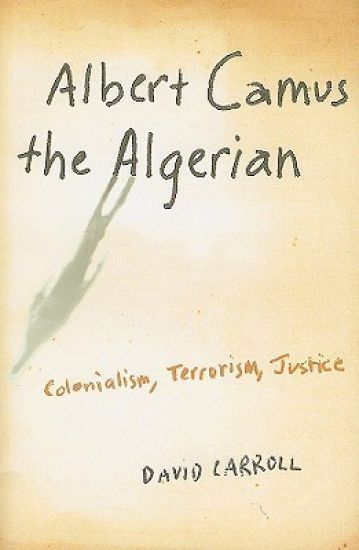
Albert Camus the Algerian

Albert Camus the Algerian

David Carroll

Columbia University Press
2007
sidottu
In these original readings of Albert Camus' novels, short stories, and political essays, David Carroll concentrates on Camus' conflicted relationship with his Algerian background and finds important critical insights into questions of justice, the effects of colonial oppression, and the deadly cycle of terrorism and counterterrorism that characterized the Algerian War and continues to surface in the devastation of postcolonial wars today. During France's "dirty war" in Algeria, Camus called for an end to the violence perpetrated against civilians by both France and the Algerian National Liberation Front (FLN) and supported the creation of a postcolonial, multicultural, and democratic Algeria. His position was rejected by most of his contemporaries on the Left and has, ironically, earned him the title of colonialist sympathizer as well as the scorn of important postcolonial critics. Carroll rescues Camus' work from such criticism by emphasizing the Algerian dimensions of his literary and philosophical texts and by highlighting in his novels and short stories his understanding of both the injustice of colonialism and the tragic nature of Algeria's struggle for independence. By refusing to accept that the sacrifice of innocent human lives can ever be justified, even in the pursuit of noble political goals, and by rejecting simple, ideological binaries (West vs. East, Christian vs. Muslim, "us" vs. "them," good vs. evil), Camus' work offers an alternative to the stark choices that characterized his troubled times and continue to define our own. "What they didn't like, was the Algerian, in him," Camus wrote of his fictional double in The First Man. Not only should "the Algerian" in Camus be "liked," Carroll argues, but the Algerian dimensions of his literary and political texts constitute a crucial part of their continuing interest. Carroll's reading also shows why Camus' critical perspective has much to contribute to contemporary debates stemming from the global "war on terror." About the Author David Carroll is professor of French and past director of the Critical Theory Institute, former chair of the Department of French and Italian, and past director of the European Studies Program at the University of California, Irvine. His books include French Literary Fascism: Nationalism, Anti-Semitism, and the Ideology of Culture; Paraesthetics: Foucault, Lyotard, Derrida; and The Subject in Question: The Languages of Theory and the Strategies of Fiction. He is also the editor of a collection of essays entitled The States of "Theory" and is currently working on a book entitled Crises in French Identity: From the Dreyfus Affair to the Present.
Albert Camus the Algerian

Albert Camus the Algerian

David Carroll

Columbia University Press
2008
pokkari
In these original readings of Albert Camus' novels, short stories, and political essays, David Carroll concentrates on Camus' conflicted relationship with his Algerian background and finds important critical insights into questions of justice, the effects of colonial oppression, and the deadly cycle of terrorism and counterterrorism that characterized the Algerian War and continues to surface in the devastation of postcolonial wars today. During France's "dirty war" in Algeria, Camus called for an end to the violence perpetrated against civilians by both France and the Algerian National Liberation Front (FLN) and supported the creation of a postcolonial, multicultural, and democratic Algeria. His position was rejected by most of his contemporaries on the Left and has, ironically, earned him the title of colonialist sympathizer as well as the scorn of important postcolonial critics. Carroll rescues Camus' work from such criticism by emphasizing the Algerian dimensions of his literary and philosophical texts and by highlighting in his novels and short stories his understanding of both the injustice of colonialism and the tragic nature of Algeria's struggle for independence. By refusing to accept that the sacrifice of innocent human lives can ever be justified, even in the pursuit of noble political goals, and by rejecting simple, ideological binaries (West vs. East, Christian vs. Muslim, "us" vs. "them," good vs. evil), Camus' work offers an alternative to the stark choices that characterized his troubled times and continue to define our own. "What they didn't like, was the Algerian, in him," Camus wrote of his fictional double in The First Man. Not only should "the Algerian" in Camus be "liked," Carroll argues, but the Algerian dimensions of his literary and political texts constitute a crucial part of their continuing interest. Carroll's reading also shows why Camus' critical perspective has much to contribute to contemporary debates stemming from the global "war on terror."
The Catholic Case Against War

The Catholic Case Against War

David Carroll Cochran

UNIVERSITY OF NOTRE DAME PRESS
2024
sidottu
The Catholic Case against War demonstrates how the Catholic mantra "Never again war!" reflects a set of powerfully realistic teachings on war and peace. Over the last five decades, the Catholic Church has emerged as a powerful critic of war and as an advocate for its alternatives. At the same time, researchers of armed conflict have produced a considerable body of scholarship on war and its prevention. The Catholic Case against War compares these seemingly disparate lines of thought and finds a remarkable harmony between the two. Drawing on years of Vatican documents and papal statements, political scientist David Carroll Cochran clearly presents the key elements of the Church's case against war. Far from a naïve, optimistic call for peace, these teachings are consistent with the empirical research on the realities of contemporary warfare. The result is a look not only at the explicit moral case against war developed by the Vatican but also at its remarkable realism and relevance to world conflict today.
The Catholic Case Against War

The Catholic Case Against War

David Carroll Cochran

UNIVERSITY OF NOTRE DAME PRESS
2024
nidottu
The Catholic Case against War demonstrates how the Catholic mantra "Never again war!" reflects a set of powerfully realistic teachings on war and peace. Over the last five decades, the Catholic Church has emerged as a powerful critic of war and as an advocate for its alternatives. At the same time, researchers of armed conflict have produced a considerable body of scholarship on war and its prevention. The Catholic Case against War compares these seemingly disparate lines of thought and finds a remarkable harmony between the two. Drawing on years of Vatican documents and papal statements, political scientist David Carroll Cochran clearly presents the key elements of the Church's case against war. Far from a naïve, optimistic call for peace, these teachings are consistent with the empirical research on the realities of contemporary warfare. The result is a look not only at the explicit moral case against war developed by the Vatican but also at its remarkable realism and relevance to world conflict today.
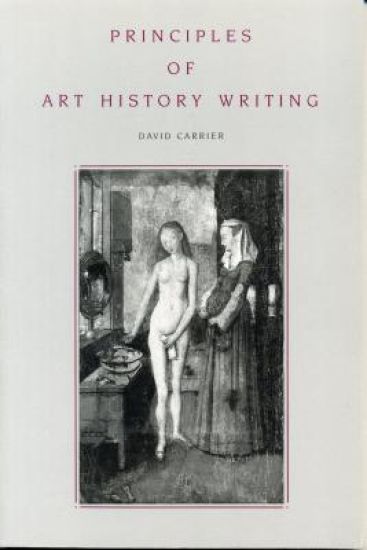
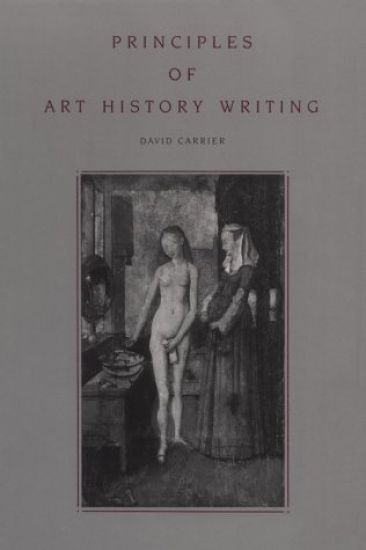
Principles of Art History Writing

Principles of Art History Writing

David Carrier

Pennsylvania State University Press
1991
sidottu
Traces the different ways in which those writing about art history represent the same artistic works. The author uses four case studies to identify and explain changing styles of restoration and the history of interpretation, through the works of Piero, Caravaggio and Van Eyck.
Principles of Art History Writing

Principles of Art History Writing

David Carrier

Pennsylvania State University Press
1993
pokkari
Principles of Art History Writing traces the changes in the way in which writers about art represent the same works. These differ in such deep ways as to raise the question of whether those at the beginning of the process even saw the same things as those at the end did. Carrier uses four case studies to identify and explain changing styles of restorations and the history of interpretations of selected works by Piero, Caravaggio, and van Eyck.
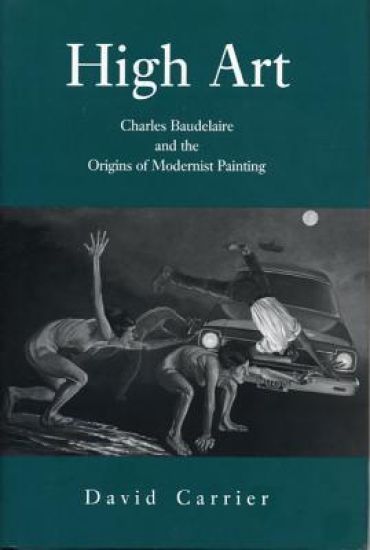
High Art

High Art

David Carrier

Pennsylvania State University Press
1996
sidottu
The great poet Charles Baudelaire (1821–1867) was also an extremely influential art critic. High Art relates the philosophical issues posed by Baudelaire's art writing to the theory and practice of modernist and postmodernist painting. Baudelaire wrote in an age of transition, David Carrier argues, an era divided by the Revolution of 1848, the historical break that played for him a role now taken within modernism by the political revolts of 1968. Moving from the grand tradition of Delacroix to the images of modern life made by Constantin Guys, this movement from "high" to "low," from the unified world of correspondences to the fragmented images of contemporary city life, motivates Baudelaire's equivalent to the post-1968 turn away from formalist art criticism. Viewed from the perspective of the 1990s, Carrier argues, the issues raised by Baudelaire's criticism and creative writing provide a way of understanding the situation of art writing in our own time.
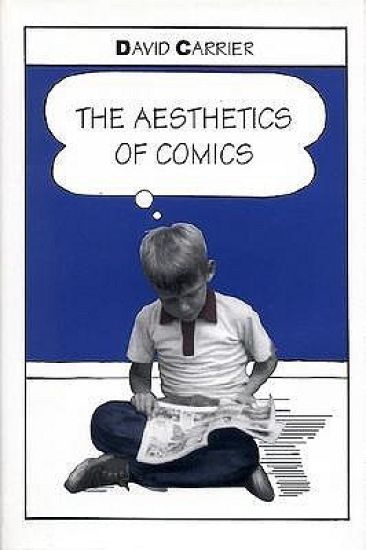
The Aesthetics of Comics

The Aesthetics of Comics

David Carrier

Pennsylvania State University Press
2002
pokkari
From Gary Larson’s The Far Side to George Herriman’s Krazy Kat, comic strips have two obvious defining features. They are visual narratives, using both words and pictures to tell stories, and they use word balloons to represent the speech and thought of depicted characters. Art historians have studied visual artifacts from every culture; cultural historians have recently paid close attention to movies. Yet the comic strip, an art form known to everyone, has not yet been much studied by aestheticians or art historians. This is the first full-length philosophical account of the comic strip.Distinguished philosopher David Carrier looks at popular American and Japanese comic strips to identify and solve the aesthetic problems posed by comic strips and to explain the relationship of this artistic genre to other forms of visual art. He traces the use of speech and thought balloons to early Renaissance art and claims that the speech balloon defines comics as neither a purely visual nor a strictly verbal art form, but as something radically new. Comics, he claims, are essentially a composite art that, when successful, seamlessly combine verbal and visual elements.Carrier looks at the way an audience interprets comics and contrasts the interpretation of comics and other mass-culture images to that of Old Master visual art. The meaning behind the comic can be immediately grasped by the average reader, whereas a piece of museum art can only be fully interpreted by scholars familiar with the history and the background behind the painting. Finally, Carrier relates comics to art history. Ultimately, Carrier’s analysis of comics shows why this popular art is worthy of philosophical study and proves that a better understanding of comics will help us better understand the history of art.
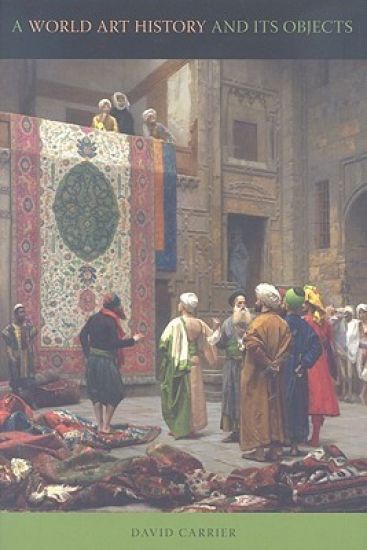
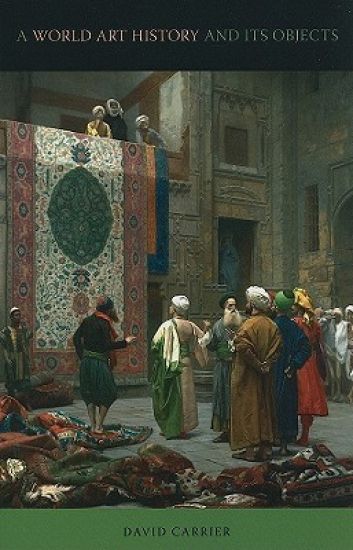
A World Art History and Its Objects

A World Art History and Its Objects

David Carrier

Pennsylvania State University Press
2008
sidottu
Is writing a world art history possible? Does the history of art as such even exist outside the Western tradition? Is it possible to consider the history of art in a way that is not fundamentally Eurocentric? In this highly readable and provocative book, David Carrier, a philosopher and art historian, does not attempt to write a world art history himself. Rather, he asks the question of how an art history of all cultures could be written-or whether it is even possible to do so. He also engages the political and moral issues raised by the idea of a multicultural art history. Focusing on a consideration of intersecting artistic traditions, Carrier negotiates the way meaning and understanding shift or are altered when a visual object from one culture, for example, is inserted into the visual tradition of another culture. A World Art History and Its Objects proposes the use of temporal narrative as a way to begin to understand a multicultural art history.
A World Art History and Its Objects

A World Art History and Its Objects

David Carrier

Pennsylvania State University Press
2010
pokkari
Is writing a world art history possible? Does the history of art as such even exist outside the Western tradition? Is it possible to consider the history of art in a way that is not fundamentally Eurocentric? In this highly readable and provocative book, David Carrier, a philosopher and art historian, does not attempt to write a world art history himself. Rather, he asks the question of how an art history of all cultures could be written—or whether it is even possible to do so. He also engages the political and moral issues raised by the idea of a multicultural art history. Focusing on a consideration of intersecting artistic traditions, Carrier negotiates the way meaning and understanding shift or are altered when a visual object from one culture, for example, is inserted into the visual tradition of another culture. A World Art History and Its Objects proposes the use of temporal narrative as a way to begin to understand a multicultural art history.
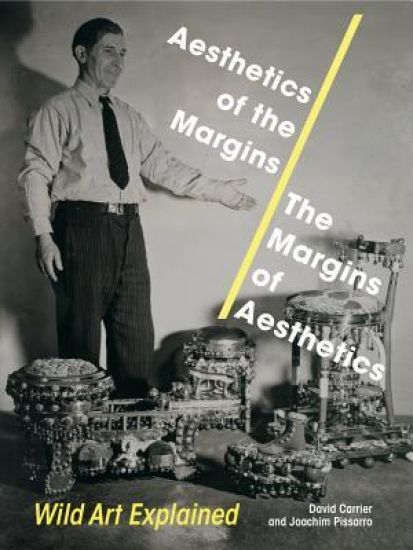
Aesthetics of the Margins / The Margins of Aesthetics

Aesthetics of the Margins / The Margins of Aesthetics

David Carrier; Joachim Pissarro

Pennsylvania State University Press
2018
sidottu
“Wild Art” refers to work that exists outside the established, rarified world of art galleries and cultural channels. It encompasses uncatalogued, uncommodified art not often recognized as such, from graffiti to performance, self-adornment, and beyond. Picking up from their breakthrough book on the subject, Wild Art, David Carrier and Joachim Pissarro here delve into the ideas driving these forms of art, inquire how it came to be marginalized, and advocate for a definition of “taste,” one in which each expression is acknowledged as being different while deserving equal merit.Arguing that both the “art world” and “wild art” have the same capacity to produce aesthetic joy, Carrier and Pissarro contend that watching skateboarders perform Christ Air, for example, produces the same sublime experience in one audience that another enjoys while taking in a ballet; therefore, both mediums deserve careful reconsideration. In making their case, the two provide a history of the institutionalization of “taste” in Western thought, point to missed opportunities for its democratization in the past, and demonstrate how the recognition and acceptance of “wild art” in the present will radically transform our understanding of contemporary visual art in the future.Provocative and optimistic, Aesthetics of the Margins / The Margins of Aesthetics rejects the concept of “kitsch” and the high/low art binary, ultimately challenging the art world to become a larger and more inclusive place.
Rosalind Krauss and American Philosophical Art Criticism
Rosalind Krauss is, without visible rival, the most influential American art writer since Clement Greenberg. Together with her colleagues at ^IOctober^R, the journal she co-founded, she has played a key role in the introduction of French theory into the American art world. In the 1960s, though first a follower of Greenberg, she was inspired by her readings of French structuralist and post-structuralist materials, revolted against her mentor's formalism, and developed a succession of radically original styles of art history writing. Offering a complete survey of her career and work, ^IRosalind Krauss and American Philosophical Art Criticism: From Formalism to Beyond Postmodernism^R comprises the first book-length study of its subject.Written in the lucid style of analytic philosophy, this accessible commentary offers a consideration of her arguments as well as discussions of alternative positions. Tracing Krauss's development in this way provides the best method of understanding the changing styles of American art criticism from the 1960s through the present, and thus provides an invaluable source of historical and aesthetic knowledge for artists and art scholars alike.
Daily Life of the Aztecs

Daily Life of the Aztecs

Davíd Carrasco; Scott Sessions

Greenwood Press
2011
sidottu
Examine the fascinating details of the daily lives of the ancient Aztecs through this innovative study of their social history, culture, and continuing influence, written from the perspective of the history of religions.Utilizing insights from the discipline known as the history of religions, as well as new discoveries in archaeology, pictorial manuscripts, and ritual practices, Daily Life of the Aztecs, Second Edition weaves together a narrative describing life from the bottom of the Aztec social pyramid to its top. This new and surprising interpretation of the Aztecs puts a human face on an ancient people who created beautiful art and architecture, wrote beautiful poetry, and loved their children profoundly, while also making war and human sacrifice fundamental parts of their world.The book describes the interaction between the material and the imaginative worlds of the Aztecs, offering insights into their communities, games, education, foodways, and arts, as well as the sacrificial rituals they performed. The authors also detail the evolution of the Aztec state and explores the continuity and changes in Aztec symbols, myths, and ritual practices into the present day.
Controlling High Blood Pressure

Controlling High Blood Pressure

David Carroll

Ballantine Books Inc.
2000
nidottu
Of the countless ailments that rack the human machine,high blood pressure is one of the easiest to preventand one of the most responsive to treatment.Who gets high blood pressure? Should you panic if you or someone you love develops hypertension? How can you help yourself, even if you're in a high-risk group?High blood pressure is commonly the result of an unhealthy lifestyle, and it can almost always be controlled--without debilitating medications--simply by eating the right foods, taking the proper herb and vitamin supplements, getting the correct types of exercise, and practicing such stress-reducing techniques as meditation, visualization, tai chi, and yoga. This book gives you a firm grip on all these tools. Start using them today to build yourself a healthy, circulation-friendly life.FEATURING:- A triple-threat healing program that not only revitalizes your circulation system but also boosts your overall health- A thirty-day food regimen--ninety full menus for breakfast, lunch, and dinner, plus many recipes for delicious foods to eat as you control hypertension