Kirjojen hintavertailu. Mukana 12 242 520 kirjaa ja 12 kauppaa.

Kirjahaku

Etsi kirjoja tekijän nimen, kirjan nimen tai ISBN:n perusteella.

1000 tulosta hakusanalla David Doyle

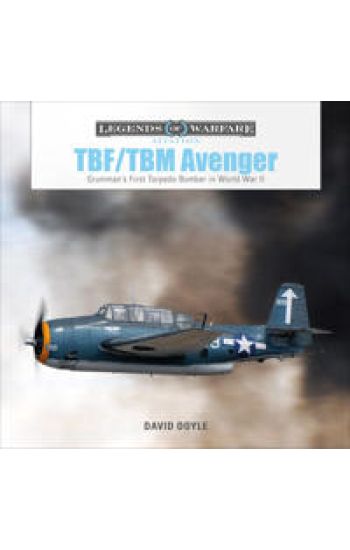
TBF/TBM Avenger

TBF/TBM Avenger

David Doyle

Schiffer Publishing Ltd
2020
sidottu
The Grumman-designed TBF Avenger was unquestionably the most successful torpedo bomber in the US fleet during WWII. Developed just prior to the US entry in WWII, the type made its combat debut at the Battle of Midway. Demand for the large carrier-borne aircraft, which could drop conventional bombs and depth charges in addition to torpedoes, soon outstripped Grumman's capacity. To supply the needed aircraft to the US Navy, the US Marines, and the Royal Navy, the Eastern Aircraft Division of General Motors was contracted to build duplicate aircraft, which were designated TBM. With numerous adaptations, both the TBF and TBM continued to serve militaries well after WWII. Through carefully researched photos, many of which have never before been published and which are reproduced in remarkable clarity, the history and details of this iconic aircraft are revealed and put the reader in the skies with this historic aircraft.
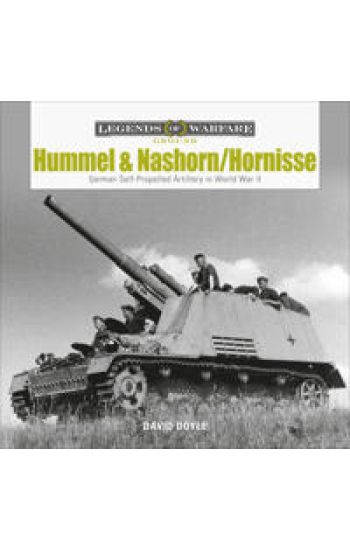
Hummel and Nashorn/Hornisse

Hummel and Nashorn/Hornisse

David Doyle

Schiffer Publishing Ltd
2020
sidottu
The Hummel ("bumblebee") and Nashorn ("rhinoceros") are two of Nazi Germany's most widely recognized self-propelled artillery pieces. The Hummel, with its heavy field howitzer, was indispensable as heavy field artillery despite its open-top fighting compartment. The Nashorn, also known as the Hornisse ("hornet"), utilized the same chassis but mounted the formidable 88 mm antitank gun, becoming one of the most feared pieces of antitank artillery, or Panzerjäger ("tank hunter"). This book chronicles the development and use of these vehicles from concept to combat. Through dozens of archival photos, many never before published, as well as detailed photographs of some of the finest existent examples of surviving vehicles, these iconic armored fighting vehicles are explored, and their history is explained.
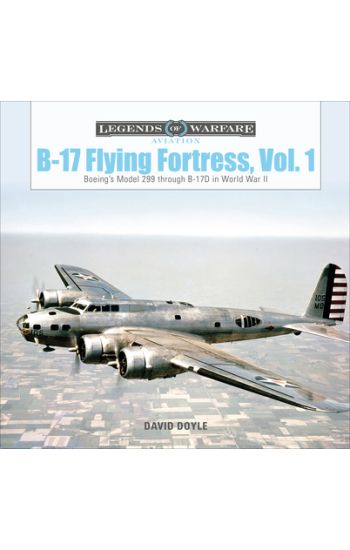
B-17 Flying Fortress, Vol. 1

B-17 Flying Fortress, Vol. 1

David Doyle

Schiffer Publishing Ltd
2020
sidottu
The B-17 Flying Fortress is one of the most iconic aircraft in aviation history. Through a broad range of photos gathered from around the world, this book, the first of a two-volume series, chronicles the design, development, and wartime use of the early models of the Flying Fortress, from the ill-fated experimental model 299 through the B-17D, including the famous "Swoose." These early models are distinguished by their narrow fuselage, art deco styling, and a small, "shark fin" tail. A second volume will continue the B-17 story with the large-tail later models, B-17E through B-17H. The story of these iconic WWII aircraft is told through carefully researched photos, many of which have never before been published, and which are reproduced in remarkable clarity. Large, clear photos, coupled with descriptive and informative captions, unlock the secrets of this aircraft.
M18 Hell-Cat

M18 Hell-Cat

David Doyle

Schiffer Publishing Ltd
2020
sidottu
The M18 was developed in an era when the United States fought tanks not with other tanks, but with specialized tank destroyers. With a powerful aircraft-style radial engine pushing it at up to 50 miles per hour, and mounting a potent 76 mm cannon, the Buick-built M18 Hellcat, or “Hell-Cat” as Buick's publicists named it, provided US troops with a powerful shoot-and-scoot answer to heavily armored German tanks. Further experiments were conducted to increase its armament or adapt it to other uses, such as the M39 armored utility vehicle. Through dozens of archival images, many never before published, as well as detailed photographs of some of the finest existent examples of these vehicles, this iconic tank hunter is explored, and its history is explained. Part of the Legends of Warfare series.
Panzerkampfwagen III

Panzerkampfwagen III

David Doyle

Schiffer Publishing Ltd
2020
sidottu
The Panzerkampfwagen III, or Panzer III as it is more commonly known, was a fixture in German armor formations during WWII. Initially developed to combat armored vehicles, in time the type evolved into an infantry support tank. Although production of the Panzer III ended in 1943, the type remained in service through the end of the war. Through over 160 photos, this volume chronicles the design, development, and deployment of this ubiquitous German tank. This material is arranged in nine chapters, each focusing on a specific production model, or Ausfrüng, of the tank. Comprehensive tables reveal the details of the performance and technical specifications of each variant. A concise, easy-to-read text and detailed captions expose the secrets of this iconic tank.
Liberty Ships

Liberty Ships

David Doyle

Schiffer Publishing Ltd
2020
sidottu
The history of the design, development, and deployment of the Liberty ship. Although not a weapon in the traditional sense of the word, arguably no item in the Allied arsenal contributed as much to the defeat of the Axis during WWII as did the Liberty ships. The 2,710 Liberty ships placed into service between 1941 and 1945 provided a vital link in the supply chain not only of US but also Allied forces during WWII. The basic design itself was obsolete even before the first one slid down the builder’s ways, but it had the advantage of being relatively easy to produce, and simple to operate and maintain. Thus, the vessels were mass-produced by no fewer than eighteen shipyards. Building time, initially 244 days, dropped to forty-two days per ship, although as a publicity stunt the Robert E. Peary was launched four days and fifteen and a half hours after the keel was laid.
SB2C Helldiver

SB2C Helldiver

David Doyle

Schiffer Publishing Ltd
2020
sidottu
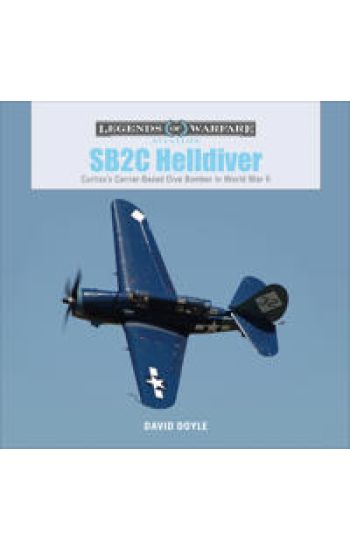
While initally labeled as a troublesome aircraft, the Curtiss SB2C Helldiver went on to be noted for striking more Japanese targets than any other US Navy dive-bomber. Despite this, the Helldiver was to be the last of a long line of US Navy dive bombers. The development, production, and combat use of the many variations of the Helldiver are examined, including experimental variants that did not progress beyond the prototype stage. Profusely illustrated with war-era photographs, both black-and-white and color, which are augmented with beautiful color photos of the only remaining flyable example, this book provides the reader with a concise yet thorough study of this legendary aircraft. Part of the Legends of Warfare series.
M24 Chaffee, Vol. 2

M24 Chaffee, Vol. 2

David Doyle

Schiffer Publishing Ltd
2020
sidottu
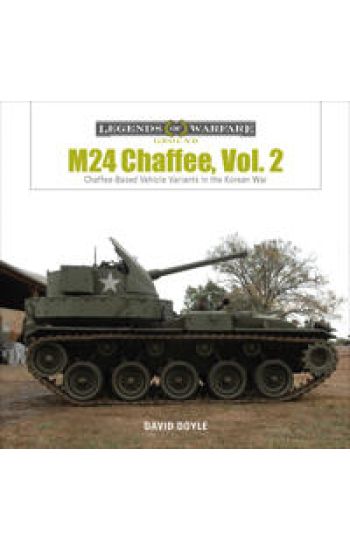
The M24 Chaffee was the finest light tank developed by the US during WWII. Utilizing the M24 chassis—developed by Cadillac—the US Army procured a family of fighting vehicles, including the M19 Twin 40 mm Gun Motor Carriage, the M37 105 mm Howitzer Motor Carriage, and the M41 155 mm Howitzer Motor Carriage, all of which are covered in this second volume on the Chaffee. While all of these motor carriages were too late to see combat in WWII, all were widely used during the Korean War, with many at the front of the fighting. This book chronicles the development and use of these vehicles from concept to combat. Through dozens of archival photos, many never before published, as well as detailed photographs of some of the finest existent examples of these vehicles, this iconic tank hunter is explored and its history is explained.
LVT(4) Amtrac

LVT(4) Amtrac

David Doyle

Schiffer Publishing Ltd
2020
sidottu
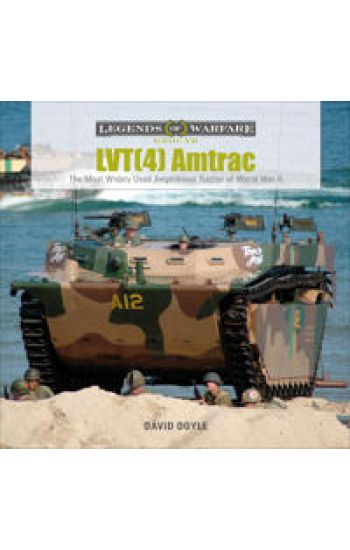
Originally developed as a swamp rescue vehicle by millionaire philanthropists Donald and John Roebling, the LVT (Landing Vehicle, Tracked), or "Alligator," was widely used in the Allied island-hopping campaign in the Pacific during World War II. Powered by a mammoth aircraft-type engine, the LVT(4) could cross treacherous coral reefs, deep water, and swamps to land troops ashore. The LVT(4) also introduced the rear ramp, which when lowered allowed troops to rush out, rather than clamber over the tall sides as on previous models. Produced by Food Machinery Corporation (FMC), railway equipment manufacturer St. Louis Car Company, and automobile maker Graham-Paige, over 8,000 LVT(4)s were built during the war; today only a few remain. Through dozens of archival photos as well as detailed photographs of some of the finest existent examples of these vehicles, this iconic landing vehicle is explored, and its history is explained.
US Landing Craft of World War II, Vol. 2

US Landing Craft of World War II, Vol. 2

David Doyle

Schiffer Publishing Ltd
2020
sidottu
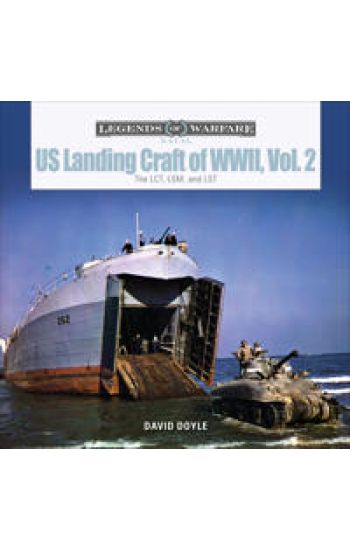
This second of two volumes on American landing craft of World War II focuses on the larger LCT, LSM, LCS(L)(3), and LST vessels that transported tanks and heavy equipment to the shores of North Africa and Normandy and throughout the Pacific. The need for massive numbers of landing craft capable of disgorging huge numbers of troops and equipment was predicted by the US Army in 1940. Later, the British army estimated that over 2,000 of such vessels would be required for the assault on Europe. The US launched a building campaign to produce these seagoing craft, turning primarily to shipyards and manufacturers located along the American rivers. Ultimately many of these continued to serve the nation's need through Vietnam. Some were even heavily laden with rocket launchers and used for close-in support for troops going ashore.
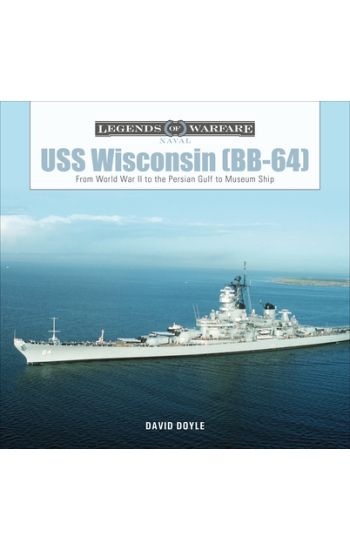
USS Wisconsin (BB-64)

USS Wisconsin (BB-64)

David Doyle

Schiffer Publishing Ltd
2020
sidottu
Carrying the highest hull number ever assigned to a commissioned US battleship, the Wisconsin was the last of the four Iowa-class battleships—along with the Iowa, New Jersey, and Missouri. The Wisconsin fought through the final year of WWII, saw extensive service during the Korean War, and then was recalled to arms to liberate Kuwait during the Gulf War in 1991. During the latter war, Wisconsin not only loosed its massive 16-inch cannons but launched Tomahawk cruise missiles deep into enemy territory. Finally released from Navy service, the battleship today is a floating museum moored near downtown Norfolk, Virginia. This book, through more than 250 photos, documents the battleship from design and construction, through combat during each of its wars, to its preservation today.
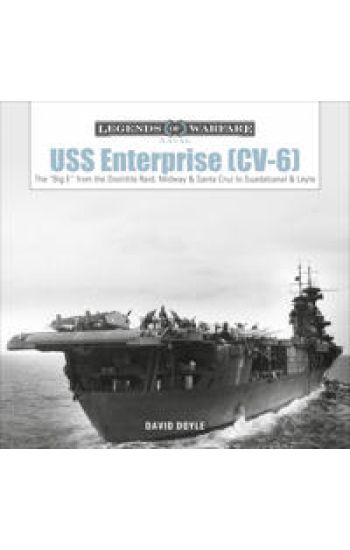
USS Enterprise (CV-6)

USS Enterprise (CV-6)

David Doyle

Schiffer Publishing Ltd
2020
sidottu
A concise history of the design, development, and deployment of USS Enterprise (CV-6). Though it barely missed being caught and destroyed at Pearl Harbor on December 7, 1941, the US Navy's USS Enterprise (CV-6) aircraft carrier took part in every major action of the Pacific War, from the Doolittle Raid to the battles of Midway, Santa Cruz, and Guadalcanal to the Philippine Sea and Leyte. Affectionately known as the "Big E," as well as the "fightingest ship in the Navy," the Enterprise racked up one of the most impressive tallies of damage to the enemy of any Allied warship during WWII. Explores Enterprise's design and construction, wartime activities, and ultimate postwar decommissioning and scrappingCarefully researched photos, many of which have never before been published. The clarity and large size of many of the photos, coupled with descriptive and informative captions, put the reader on the deck of this historic warship throughout its famed history.
B-29/B-50 Superfortress, Vol. 2

B-29/B-50 Superfortress, Vol. 2

David Doyle

Schiffer Publishing Ltd
2020
sidottu
The largest and most advanced US aircraft to see combat in WWII, the B-29 Superfortress was also the most expensive weapons system of the war, even exceeding the cost of developing the atomic bomb. Not surprisingly, the aircraft remained a part of the US arsenal in the following years and again saw combat in Korea. The evolution of the B-29 into the B-50 is covered in this book—the second of two volumes—as is the B-50's part as an early nuclear deterrent. Not only is the production of these aircraft illustrated, so are the host of adaptations, from mother ship to X-planes to weather and refueling aircraft. This volume chronicles the design, development, and deployment of these later versions through photos gathered from around the world.
C-130 Hercules

C-130 Hercules

David Doyle

Schiffer Publishing Ltd
2020
sidottu
The Lockheed C-130 Hercules has been in continuous production for over six decades, longer than any other military aircraft in the world, and no end of production is yet in sight. The Hercules has been a part of US combat operations since Vietnam, and the airframe, which began life as a simple transport, has been adapted to a variety of roles, including gunship, electronic warfare, refueling, and rescue. This book chronicles the development and use of the Hercules from concept to combat. Through dozens of archival photos, many never before published, as well as detailed photographs of some of the finest existent examples, these iconic aircraft are explored, and their history explained.
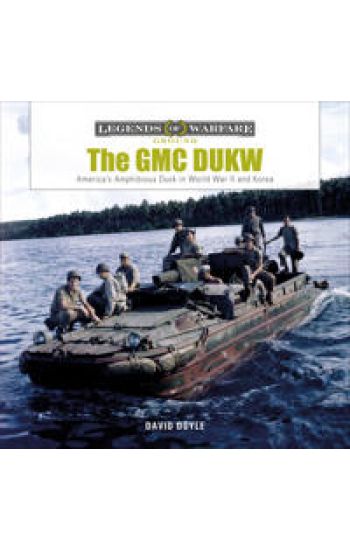
The GMC DUKW

The GMC DUKW

David Doyle

Schiffer Publishing Ltd
2021
sidottu
The General Motors Corporation DUKW was without a doubt the most successful amphibious military vehicle ever constructed. This is due in large part to the enormous amount of scientific and engineering talent that was devoted to the project. Included in the design team were America's Cup winner Rod Stephens, adventurer and environmentalist Dennis Puleston, and scientist and engineer Palmer C. Putnam. The DUKW was so successful and so widely used that Gen. Dwight Eisenhower described it as "one of the most valuable pieces of equipment produced by the United States during the war." This book chronicles the development and use of these vehicles from concept to combat in WWII and Korea. Through dozens of archival photos, many never before published, as well as detailed photographs of some of the finest existent examples of surviving vehicles, these iconic armored fighting vehicles are explored, and their history is explained.
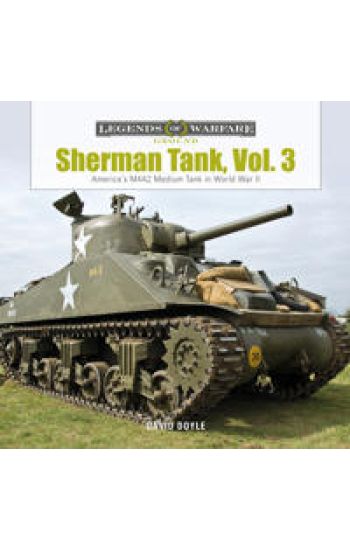
Sherman Tank, Vol. 3

Sherman Tank, Vol. 3

David Doyle

Schiffer Publishing Ltd
2021
sidottu
Powered by twin General Motors diesel engines, the M4A2 Sherman was the standard tank of the US Marine Corps during WWII. In such service, having a common fuel with many of the landing craft simplified logistics. The M4A2 was also supplied in large numbers to Russia as well as the British. The M4A2 was used in some of the most severe tank combat of the war, both on Pacific islands and on the Eastern Front. This book chronicles the development and use of these vehicles from concept to combat. Through dozens of archival photos, many never before published, as well as detailed photographs of some of the finest existent examples of surviving vehicles, these iconic armored fighting vehicles are explored, and their history is explained.
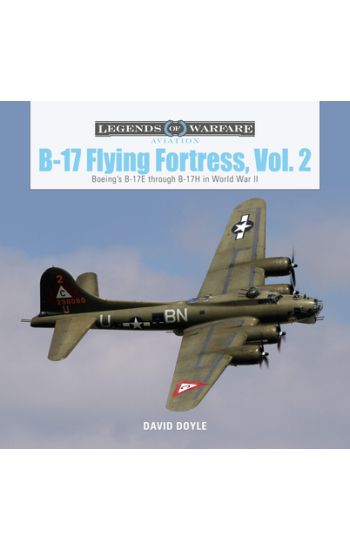
B-17 Flying Fortress, Vol. 2

B-17 Flying Fortress, Vol. 2

David Doyle

Schiffer Publishing Ltd
2021
sidottu
The Boeing B-17 Flying Fortress is one of the most iconic aircraft in aviation history. Through a broad range of photos gathered from around the world, this book—the second of two volumes—chronicles the design, development, and wartime use of the late models of the Flying Fortress, from the first truly combat-capable model, the B-17E, to the lifesaving B-17H. These B-17 versions featured the so-called "large" tail and were famously used in the devastating strategic-bombing campaign against Germany. As a special feature, detailed coverage of the famed "Memphis Belle" is included. Combine volumes 1 and 2 for the complete photographic reference on the Flying Fortress.
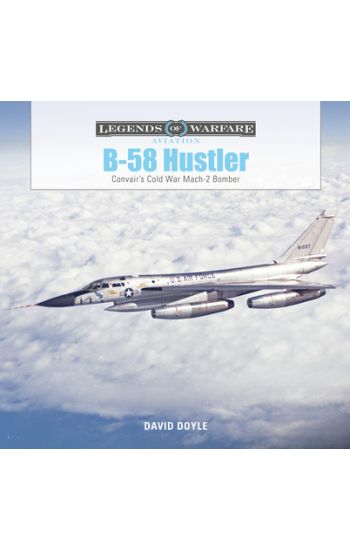
B-58 Hustler

B-58 Hustler

David Doyle

Schiffer Publishing Ltd
2021
sidottu
Chronicles the design, development, and wartime use of the iconic Mach 2 Convair B-58 Hustler. The Convair B-58 Hustler, with its distinctive delta wing shape, would become the world's first supersonic bomber, and the first aircraft to fly to Mach 2. With development beginning in 1949, the B-58, which could not carry conventional weapons, would become part of the US nuclear arsenal during the height of the Cold War. Although these bombers were initially considered difficult to operate, in time the hand-chosen crews who flew them came to love and respect the aircraft. Throughout the 1960s, crews flying the B-58 set numerous speed and distance records. These planes were tremendously expensive to operate, and it was budget issues that forced the early retirement of the bomber. Today there are only a handful of remaining examples, all of which are on display in the US.Illustrated with rare archival photographs, including previously unpublished images. Written by prolific military author David Doyle, this book is part of the very popular Legends of Warfare: Aviation series.
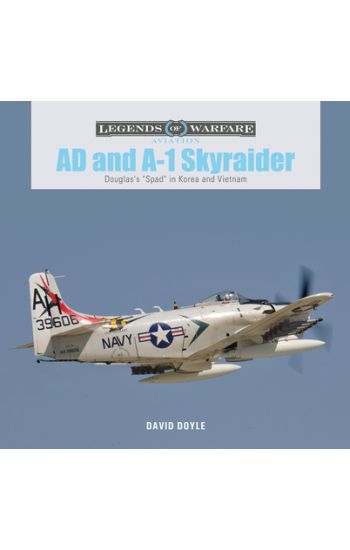
AD and A-1 Skyraider

AD and A-1 Skyraider

David Doyle

Schiffer Publishing Ltd
2021
sidottu
Design work on the Skyraider began at the behest of the US Navy late in WWII. Production began in 1946, and the type made its combat debut in the hands of naval aviators during the Korean War. In the following years, the rugged airframe and powerful engine meant that the type could be adapted into ever-expanding roles of attack, reconnaissance, weather, and electronic-countermeasure types. Though regarded by many as obsolete, in Vietnam the Skyraider again saw combat, now in the hands of not only US Navy and Marine pilots, but also USAF and Republic of Vietnam airmen. Capable of flying low and slow while armed with a massive array of ordnance, the Skyraider not only took on the role of attack aircraft but was also used as air cover for troops on the ground. Its impressive payload earned it the nickname of the "flying dump truck," while its reliance on a massive radial engine in an otherwise jet age caused others to refer to the Skyraider as the "Spad," in homage to the WWI fighter.
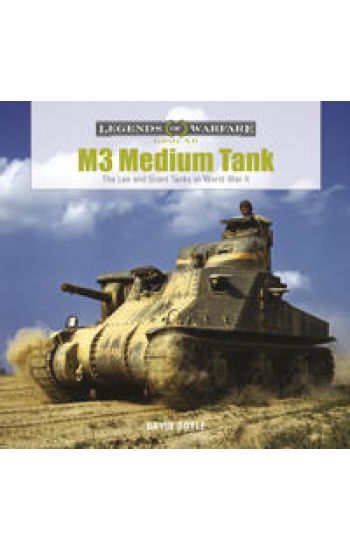
M3 Medium Tank

M3 Medium Tank

David Doyle

Schiffer Publishing Ltd
2021
sidottu
An illustrated look at the M3 Lee and M3 Grant medium tanks during WWII. The M3 Lee was America's first mass-produced combat tank. Its unusual configuration of hull-mounted 75 mm gun and turret-mounted 37 mm cannon was a result of the rush to get the vehicle in production following Nazi Germany's rapid advances in Europe. Following heavy British tank losses in France, the Commonwealth turned to the US to bolster their tank stocks, and the M3 was adapted, through the use of a different turret style, to fill this need. Later, as more-advanced tanks became available, notably the M4 Sherman, the M3s were adapted to fill other roles. This book chronicles the development and use of these vehicles from concept to combat. Through dozens of archival photos, many never before published, as well as detailed photographs of some of the finest existent examples of surviving vehicles, these iconic armored fighting vehicles are explored, and their history is explained.