Kirjojen hintavertailu. Mukana 11 342 296 kirjaa ja 12 kauppaa.

Kirjahaku

Etsi kirjoja tekijän nimen, kirjan nimen tai ISBN:n perusteella.

1000 tulosta hakusanalla David E. McClean

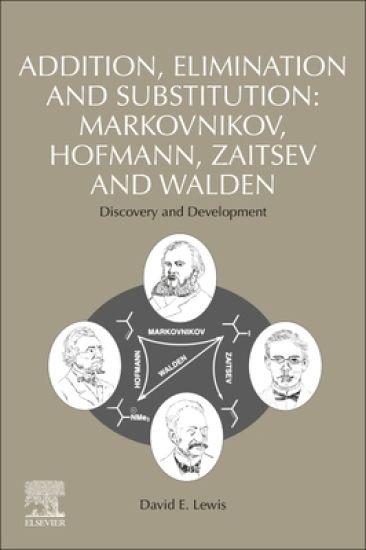
Addition, Elimination and Substitution: Markovnikov, Hofmann, Zaitsev and Walden
Addition, Elimination and Substitution: Markovnikov, Hofmann, Zaitsev and Walden: Discovery and Development discusses foundational reactions in organic chemistry and their major protagonists, contributions to synthesis, and history. Hofmann, Zaitsev, and Markovnikov are introduced, along with their major discoveries and contributions to organic chemistry. The history of controversies around Markovnikov’s Rule are addressed. The book introduces Walden’s original demonstration of configuration inversion, then discusses bimolecular elimination reactions, regioselective addition reactions, regiospecific alkene synthesis, and the development of modern reactions with configuration inversion. With its unique perspective, focus, and comprehensive coverage, this book belongs on the shelf of every organic chemist.
Honor Killing

Honor Killing

David E. Stannard

Penguin USA
2006
pokkari
Traces the racially charged rape, kidnapping, and murder trials that kindled social and political transformations in 1930s Hawaii, recounting how the wife of a naval officer in Honolulu accused six islanders of gang rape and how her mother, infuriated by the case's subsequent hung jury, arranged the murder of one of the suspects. Reprint. 25,000 first printing.
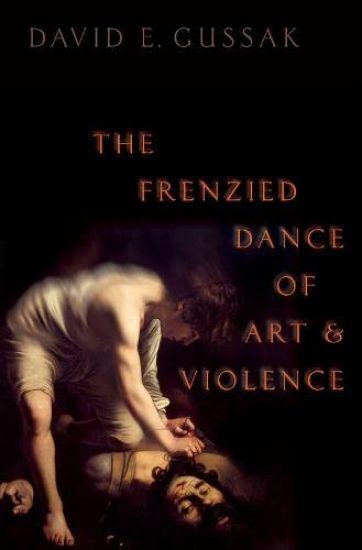
The Frenzied Dance of Art and Violence

The Frenzied Dance of Art and Violence

David E. Gussak

OXFORD UNIVERSITY PRESS INC
2022
sidottu
Some artists have an inclination towards violence, with art helping to mitigate or redirect their destructive energy. For others, their art helps them gain power over or make sense of violent environs. Finally, for some violent perpetrators, art simply mirrors and even perpetuates their psychopathic cycles. Through it all, The Frenzied Dance of Art and Violence explores - and seeks to understand - these interrelated paths of destruction and creation. To inform this dynamic, Dr. David E. Gussak relies on various psychological and sociological perspectives of violence and aggression. Beginning with brief psychobiographies of violent artists, such as Caravaggio, Cellini, Pollock, and Dali, and those whose work emerged from violence, such as Goya, Beckmann, Picasso, and Vann Nath, among others, Gussak illustrates a potent dual nature of art-making: as a way to mitigate violent inclinations and as a tool to regain control amidst turmoil. From here, the book provides an in-depth look at our society's fascination with the products of violent perpetrators in the form of murderabilia, as the art of serial killers such as Gacy, Manson, and Rolling finds its way to art collections, feeding into perpetrators' narcissism and psychopathy. The book concludes with Gussak's reflections from his thirty years as an art therapist working with violent offenders on how art can be used as a therapeutic tool to assuage violence and aggression and promote peace in volatile situations. The Frenzied Dance of Art and Violence is a far-reaching and thought-provoking examination of the competing and complex impulses motivating artwork and those who make it.
Indigenous Governance

Indigenous Governance

David E. Wilkins

OXFORD UNIVERSITY PRESS INC
2024
sidottu
After decades of federal dominance and dependence, Native governments now command attention as they exercise greater degrees of political, economic, and cultural power. Given the weight and importance of many issues confronting Native peoples today, these governments arguably matter even more to their peoples and to the broader society than ever before. Native governments have become critically important as the chief providers of basic services and the authors of solutions to collective problems in their societies. As major actors within the realm of democratic politics, they increasingly wield their powers to educate and advocate regarding Indigenous concerns. For many communities (including non-Native neighbors) they are the largest spenders and employers. They have also become adept at negotiating intergovernmental agreements that protect their peoples and resources while strengthening their unique political status. Native peoples and governments are also navigating the devastating and lingering health and economic impact of COVID-19; the profound environmental problems that have been exacerbated by climate change; and jurisdictional conflicts with local, state, and federal actors. Indigenous Governance is a comprehensive, critical examination of Native political systems: the senior political sovereigns on the North American continent in terms of their origin, development, structures, and operation. Author David E. Wilkins provides the recognition and respect due Indigenous governments, while offering a considered critique of their shortcomings as imperfect, sovereign institutions. This appraisal will highlight their history, evolution, internal and intergovernmental issues, and diverse structures.
Indigenous Governance

Indigenous Governance

David E. Wilkins

OXFORD UNIVERSITY PRESS INC
2024
nidottu
After decades of federal dominance and dependence, Native governments now command attention as they exercise greater degrees of political, economic, and cultural power. Given the weight and importance of many issues confronting Native peoples today, these governments arguably matter even more to their peoples and to the broader society than ever before. Native governments have become critically important as the chief providers of basic services and the authors of solutions to collective problems in their societies. As major actors within the realm of democratic politics, they increasingly wield their powers to educate and advocate regarding Indigenous concerns. For many communities (including non-Native neighbors) they are the largest spenders and employers. They have also become adept at negotiating intergovernmental agreements that protect their peoples and resources while strengthening their unique political status. Native peoples and governments are also navigating the devastating and lingering health and economic impact of COVID-19; the profound environmental problems that have been exacerbated by climate change; and jurisdictional conflicts with local, state, and federal actors. Indigenous Governance is a comprehensive, critical examination of Native political systems: the senior political sovereigns on the North American continent in terms of their origin, development, structures, and operation. Author David E. Wilkins provides the recognition and respect due Indigenous governments, while offering a considered critique of their shortcomings as imperfect, sovereign institutions. This appraisal will highlight their history, evolution, internal and intergovernmental issues, and diverse structures.
Documents of Native American Political Development

Documents of Native American Political Development

David E. Wilkins

Oxford University Press Inc
2018
sidottu
Before Europeans arrived in what is now known as the United States, over 600 diverse Native nations lived on the same land. This encroachment and subsequent settlement by Americans forcibly disrupted the lives of all indigenous peoples and brought about staggering depopulation, loss of land, and cultural, religious, and economic changes. These developments also wrought profound changes in indigenous politics and longstanding governing institutions. David E. Wilkins' two-volume work Documents of Native American Political Development traces how indigenous peoples have maintained and continued to exercise a significant measure of self-determination contrary to presumptions that such powers had been lost, surrendered, or vanquished. Volume One provided materials from the 1500s to 1933. This collection of primary source and other documents begins in 1933 and spans the subsequent eight decades. Broadly, the volume organizes this period into the following distinctive eras: indigenous political resurgence and reorganization (1934 to 1940s); indigenous termination/relocation (1940s to 1960s); indigenous self-determination (1960s to 1980s); and indigenous self-governance (1980s to present). Wilkins presents documents including the governing arrangements Native nations created and adapted that are comparable to formal constitutions; international and interest group records; statements by prominent Native and non-Native individuals; and sources featuring important innovations that display the political acumen of Native nations. The documents are arranged chronologically, and Wilkins provides concise, introductory essays to each document, placing them within the proper context. Each introduction is followed by a brief list of suggestions for further reading. This continued examination of fascinating and relatively unknown indigenous history, from a number of influential legal and political writings to the formal constitutions crafted since the American intervention of the Indian Reorganization Act of 1934, will be an invaluable resource for scholars and students of the history, law, and political development of Native peoples.
Which Sin to Bear?

Which Sin to Bear?

David E. Chinitz

Oxford University Press Inc
2016
nidottu
Which Sin To Bear? mines Langston Hughes's creative work, newspaper columns, letters, and unpublished papers to reveal a writer who faced a daunting array of dicey questions and intimidating obstacles, and whose triumphs and occasional missteps are a fascinating and telling part of his legacy. David E. Chinitz explores Hughes's efforts to negotiate the problems of identity and ethics he faced as an African American professional writer and intellectual, tracing his early efforts to fashion himself as an "authentic" black poet of the Harlem Renaissance and his later imagining of a new and more inclusive understanding of authentic blackness. He also examines Hughes's lasting yet self-critical commitment to progressive politics in the mid-century years and shows how, in spite of ambivalence-and, at times, anguish-Hughes was forced to engage in ethical compromises to achieve his personal and social goals.
Rock 'N' Film

Rock 'N' Film

David E. James

Oxford University Press Inc
2017
nidottu
For two decades after the mid-1950s, biracial popular music played a fundamental role in progressive social movements on both sides of the Atlantic. Balancing rock's capacity for utopian popular cultural empowerment with its usefulness for the capitalist media industries, Rock 'N' Film explores how the music's contradictory potentials were reproduced in various kinds of cinema, including major studio productions, minor studios' exploitation projects,independent documentaries, and the avant-garde.These include Rock Around the Clock and other 1950s jukebox musicals; the films Elvis made before being drafted, especially King Creole, as well as the formulaic comedies in which Hollywood abused his genius in the 1960s; early documentaries such as The T.A.M.I. Show that presented James Brown and the Rolling Stones as the core of a black-white, US-UK cultural commonality; A Hard Day's Night that marked the British Invasion; Dont Look Back, Monterey Pop,Woodstock, and other Direct Cinema documentaries about the music of the counterculture; and avant-garde films about the Rolling Stones by Jean-Luc Godard, Kenneth Anger, and Robert Frank. After the turn of the decade, notably Gimme Shelter, in which the Stones appeared to be complicit in the Hells Angels' murder of a young black man, 1960s' music-and films about it-reverted to separate black and white traditions based respectively on soul and country. These produced blaxploitation and Lady Sings the Blues on the one hand, and bigoted representations of Southern culture in Nashville on the other. Ending with the deaths of their stars, both films impliedthat rock 'n' roll had died or even, as David Bowie proclaimed, that it had committed suicide. But in his documentary about Bowie, Ziggy Stardust and the Spiders from Mars, D.A. Pennebaker triumphantly re-affirmed the community of musicians and fans in glam rock.In analyzing this history, David E. James adapts the methodology of histories of the classic film musical to show how the rock 'n' roll film both displaced and recreated it.
The Puritan Way of Death

The Puritan Way of Death

David E. Stannard

Oxford University Press Inc
1979
nidottu
The Puritan Way of Death is more than a book about Puritans or about death. It is also about family, community, and identity in the modern world. Even before publication, eminent historians, sociologists, and religious scholars in the United States and Europea-among them, Gordon Wood, Philippe Ariès, William Clebsch, and Robert Nisbet-hailed it as a "pathbreaking, provocative, and exciting" work, a "terse, urbane, learned, clear, humane" volume.
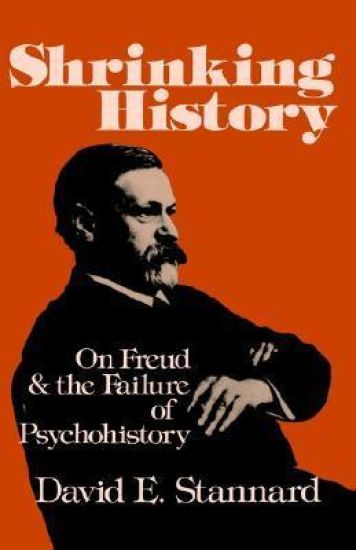
Shrinking History

Shrinking History

David E. Stannard

Oxford University Press Inc
1980
sidottu
Studies the burgeoning field of psychohistory - from Freud, its primogenitor, to its present-day academic practitioners - and argues that little, if any, psychohistory is good history. The author systematically points out the pitfalls, sheer irrationality, and ultimately ahistorical nature of this mode of historical inquiry.
Shrinking History

Shrinking History

David E. Stannard

Oxford University Press Inc
1980
nidottu
Studies the burgeoning field of psychohistory - from Freud, its primogenitor, to its present-day academic practitioners - and argues that little, if any, psychohistory is good history. The author systematically points out the pitfalls, sheer irrationality, and ultimately ahistorical nature of this mode of historical inquiry.
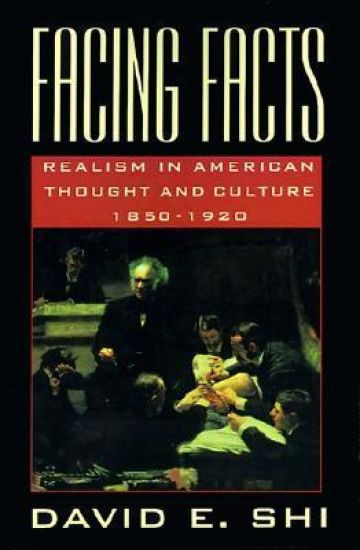
Facing Facts

Facing Facts

David E. Shi

Oxford University Press Inc
1996
nidottu
"A true poem," Walt Whitman proclaimed in 1852, "is the daily newspaper"--and American culture was never the same again. Like a blast of cold air in a stuffy drawing room, Whitman's campaign to give artistic representation to gritty reality shocked the genteel artistic elite of the 1850s; but the brassy poet's efforts helped generate a revolution in American life and thought. Four decades later, Willa Cather could declare that the "public demands realism, and they will have it." In Facing Facts, David Shi provides the most comprehensive history to date of the rise of realism in American culture. He vividly captures the character and sweep of this all-encompassing movement--ranging from Winslow Homer to the rise of the Ash Can school, from Whitman to Henry James to Theodore Dreiser. He begins with a look at the idealist atmosphere of the antebellum years, when otherwordly themes were considered the only fit subject for art (Hawthorne wrote that "the grosser life is a dream, and the spiritual life is a reality"). Whitman's assault on these standards coincided with sweeping changes in American society: the bloody Civil War, the aggressive advance of a modern scientific spirit, the popularity of photography, the expansion of cities, capitalism, and the middle class--all worked to shake the foundations of genteel idealism and sentimental romanticism. Both artists and the public developed an ever-expanding appetite for hard facts, and for art that accurately depicted them. As Shi proceeds through the nineteenth century, he traces the realist revolution in each major area of arts and letters, combining an astute analysis of the movement's essential themes with incisive portraits of its leading practitioners. Here we see Oliver Wendell Holmes, Jr., shaken to stern realism by the horrors of the Civil War; the influence of Walt Whitman on painter Thomas Eakins and architect Louis Sullivan, a leader of the Chicago school; the local-color verisimilitude of Louisa May Alcott and Sarah Orne Jewett; and the impact of urban squalor on intrepid young writers such as Stephen Crane. In the process of surveying nineteenth-century cultural history, Shi provides fascinating insights into the specific concerns of the realist movement--in particular, the nation's growing obsession with gender roles. Realism, he writes, was in many respects an effort to revive masculine virtues in the face of declining virility. During the twentieth century, a new modernist sensibility challenged the now-orthodox tenets of realism: "Is it not time," one critic asked, "that we renounce the heresy that it is the function of art to record a fact?" Shi examines why so many Americans answered yes to this question, under influences ranging from psychoanalysis to the First World War. Nuanced, detailed, and comprehensive, Facing Facts provides the definitive account of the realist phenomenon, revealing why it played so great a role in American cultural history, and why it retains its perennial fascination.
Making Data Talk

Making Data Talk

David E Nelson; Bradford W Hesse; Robert T Croyle

Oxford University Press Inc
2009
sidottu
The demand for health information continues to increase, but the ability of health professionals to provide it clearly remains variable. The aim of this book is (1) to summarize and synthesize research on the selection and presentation of data pertinent to public health, and (2) to provide practical suggestions, based on this research summary and synthesis, on how scientists and other public health practitioners can better communicate data to the public, policy makers, and the press in typical real-world situations. Because communication is complex and no one approach works for all audiences, the authors emphasize how to communicate data "better" (and in some instances, contrast this with how to communicate data "worse"), rather than attempting a cookbook approach. The book contains a wealth of case studies and other examples to illustrate major points, and actual situations whenever possible. Key principles and recommendations are summarized at the end of each chapter. This book will stimulate interest among public health practitioners, scholars, and students to more seriously consider ways they can understand and improve communication about data and other types of scientific information with the public, policy makers, and the press. Improved data communication will increase the chances that evidence-based scientific findings can play a greater role in improving the public's health.
Frederick William IV and the Prussian Monarchy 1840-1861
This is the first full-scale study in English of the reign of Frederick William IV, King of Prussia from 1840 to 1861, and arguably the most important German monarch in the century between the death of Frederick the Great and the accession of William II. Although Frederick William has long been criticized as a Romantic reactionary who was utterly out of touch with his times, this study reaches different conclusions, arguing that he was in fact a modern and in many ways, 'successful' monarch. The book is not a biography in the traditional sense. Rather, it focuses on the structures, institutions and transformations of the monarchial system in Prussia during a time of revolutionary change. It thus represents a contribution to our understanding of the structures of the nineteenth-century European state, and the strategies by which conservative elites were able to adjust themselves to new circumstances.
The Measure of Things

The Measure of Things

David E. Cooper

Clarendon Press
2002
sidottu
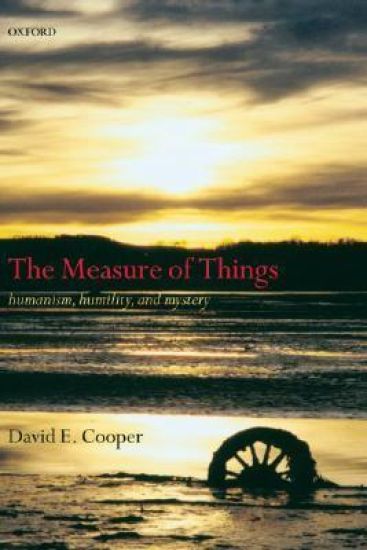
Philosophers, both western and eastern, have long been divided between 'humanists', for whom 'man is the measure of things', and their opponents, who claim that there is a way, in principle knowable and describable, that the world anyway is, independent of human perspectives and interests. The early chapters of The Measure of Things chart the development of humanism from medieval times, through the Renaissance, Enlightenment and Romantic periods, to its most sophisticated, twentieth-century form, 'existential humanism'. Cooper does not identify this final position with that of any particular philosopher, though it is closely related to those of Heidegger, Merleau-Ponty and the later Wittgenstein. Among the earlier figures discussed are William of Ockham, Kant, Herder, Nietzsche and William James. Having rejected attempts by contemporary advocates of modest or non-metaphysical realism to dissolve the opposition between humanism and its 'absolutist' rival, Cooper moves on to an adjudication of that rivality. Prompted by the pervasive rhetoric of hubris that the rivals direct against one another, he argues, in an original manner, that the rival positions are indeed guilty of lack of humility. Absolutists - whether defenders of 'The Given' or scientific realists - exaggerate our capacity to ascend out of our 'engaged' perspectives to an objective account of the world. Humanists, conversely, exaggerate our capacity to live without a sense of our subjection to a measure independent of our own perspectives. The only escape, Cooper maintains, from the impasse reached when humanism and absolutism are both rejected, lies in a doctrine of mystery. There is a reality independent of 'the human contribution', but it is necessarily ineffable. Drawing in a novel way upon the Buddhist conception of 'emptiness' and Heidegger's later writings, the final chapters defend the notion of mystery, distinguish the doctrine advanced from that of transcendental idealism, and propose that it is only through appreciation of mystery that measure and warrant may be provided for our beliefs and conduct.
Quantum Symmetries on Operator Algebras

Quantum Symmetries on Operator Algebras

David E. Evans; Yasuyuki Kawahigashi

Oxford University Press
1998
sidottu
In the last 20 years, the study of operator algebras has developed from a branch of functional analysis to a central field of mathematics with applications and connections with different areas in both pure mathematics (foliations, index theory, K-theory, cyclic homology, affine Kac--Moody algebras, quantum groups, low dimensional topology) and mathematical physics (integrable theories, statistical mechanics, conformal field theories and the string theories of elementary particles). The theory of operator algebras was initiated by von Neumann and Murray as a tool for studying group representations and as a framework for quantum mechanics, and has since kept in touch with its roots in physics as a framework for quantum statistical mechanics and the formalism of algebraic quantum field theory. However, in 1981, the study of operator algebras took a new turn with the introduction by Vaughan Jones of subfactor theory and remarkable connections were found with knot theory, 3-manifolds, quantum groups and integrable systems in statistical mechanics and conformal field theory. The purpose of this book, one of the first in the area, is to look at these combinatorial-algebraic developments from the perspective of operator algebras; to bring the reader to the frontline of research with the minimum of prerequisites from classical theory.
Biocoordination Chemistry

Biocoordination Chemistry

David E. Fenton

Oxford University Press
1995
nidottu
The role of the transition metals in biological systems is of great interest to chemists: the chemical properties of these metals often define the biological function of the proteins and systems these metals are found in. In this introductory text students are introduced to a number of topics: the transport and storage of metals: their functions is dioxygen interactions, electron transfer, and enzyme activity; the therapeutic uses of coordination compounds: and the role that small-molecule models can play in advancing our knowledge of the structure and function of transition metals contained in metallobiosites.
The Measure of Things

The Measure of Things

David E. Cooper

Oxford University Press
2007
nidottu
Philosophers, both western and eastern, have long been divided between 'humanists', for whom 'man is the measure of things', and their opponents, who claim that there is a way, in principle knowable and describable, that the world anyway is, independent of human perspectives and interests. The early chapters of The Measure of Things chart the development of humanism from medieval times, through the Renaissance, Enlightenment and Romantic periods, to its most sophisticated, twentieth-century form, 'existential humanism'. Cooper does not identify this final position with that of any particular philosopher, though it is closely related to those of Heidegger, Merleau-Ponty and the later Wittgenstein. Among the earlier figures discussed are William of Ockham, Kant, Herder, Nietzsche and William James. Having rejected attempts by contemporary advocates of modest or non-metaphysical realism to dissolve the opposition between humanism and its 'absolutist' rival, Cooper moves on to an adjudication of that rivality. Prompted by the pervasive rhetoric of hubris that the rivals direct against one another, he argues, in an original manner, that the rival positions are indeed guilty of lack of humility. Absolutists - whether defenders of 'The Given' or scientific realists - exaggerate our capacity to ascend out of our 'engaged' perspectives to an objective account of the world. Humanists, conversely, exaggerate our capacity to live without a sense of our subjection to a measure independent of our own perspectives. The only escape, Cooper maintains, from the impasse reached when humanism and absolutism are both rejected, lies in a doctrine of mystery. There is a reality independent of 'the human contribution', but it is necessarily ineffable. Drawing in a novel way upon the Buddhist conception of 'emptiness' and Heidegger's later writings, the final chapters defend the notion of mystery, distinguish the doctrine advanced from that of transcendental idealism, and propose that it is only through appreciation of mystery that measure and warrant may be provided for our beliefs and conduct.
A Philosophy of Gardens

A Philosophy of Gardens

David E. Cooper

Oxford University Press
2008
nidottu
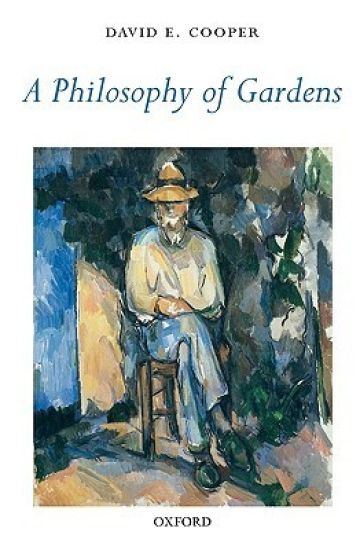
Why do gardens matter so much and mean so much to people? That is the intriguing question to which David Cooper seeks an answer in this book. Given the enthusiasm for gardens in human civilization ancient and modern, Eastern and Western, it is surprising that the question has been so long neglected by modern philosophy. Now at last there is a philosophy of gardens. Not only is this a fascinating subject in its own right, it also provides a reminder that the subject-matter of aesthetics is broader than the fine arts; that ethics is not just about moral issues but about 'the good life'; and that environmental philosophy should not focus only on 'wilderness' to the exclusion of the humanly shaped environment. David Cooper identifies garden appreciation as a special human phenomenon distinct from both from the appreciation of art and the appreciation of nature. He explores the importance of various 'garden-practices' and shows how not only gardening itself, but activities to which the garden especially lends itself, including social and meditative activities, contribute to the good life. And he distinguishes the many kinds of meanings that gardens may have, from representation of nature to emotional expression, from historical significance to symbolization of a spiritual relationship to the world. Building on the familiar observation that, among human beings' creations, the garden is peculiarly dependent on the co-operation of nature, Cooper argues that the garden matters as an epiphany of an intimate co-dependence between human creative activity in the world and the 'mystery' that allows there to be a world for them at all. A Philosophy of Gardens will open up this subject to students and scholars of aesthetics, ethics, and cultural and environmental studies, and to anyone with a reflective interest in things horticultural.
A Philosophy of Gardens

A Philosophy of Gardens

David E. Cooper

Clarendon Press
2006
sidottu
Why do gardens matter so much and mean so much to people? That is the intriguing question to which David Cooper seeks an answer in this book. Given the enthusiasm for gardens in human civilization ancient and modern, Eastern and Western, it is surprising that the question has been so long neglected by modern philosophy. Now at last there is a philosophy of gardens. Not only is this a fascinating subject in its own right, it also provides a reminder that the subject-matter of aesthetics is broader than the fine arts; that ethics is not just about moral issues but about 'the good life'; and that environmental philosophy should not focus only on 'wilderness' to the exclusion of the humanly shaped environment. David Cooper identifies garden appreciation as a special human phenomenon distinct from both from the appreciation of art and the appreciation of nature. He explores the importance of various 'garden-practices' and shows how not only gardening itself, but activities to which the garden especially lends itself, including social and meditative activities, contribute to the good life. And he distinguishes the many kinds of meanings that gardens may have, from representation of nature to emotional expression, from historical significance to symbolization of a spiritual relationship to the world. Building on the familiar observation that, among human beings' creations, the garden is peculiarly dependent on the co-operation of nature, Cooper argues that the garden matters as an epiphany of an intimate co-dependence between human creative activity in the world and the 'mystery' that allows there to be a world for them at all. A Philosophy of Gardens will open up this subject to students and scholars of aesthetics, ethics, and cultural and environmental studies, and to anyone with a reflective interest in things horticultural.