Latin America represents one of the most dynamic business regions in the world. Innovation Support in Latin America and Europe explores the need for training innovation professionals, identifies appropriate strategies and best practice for ensuring its delivery, and reflects the outcomes of a major innovation and knowledge transfer project. Academics, business professionals, policy makers, and trade representatives, all contribute to review the literature and existing practices of innovation, and explore the often misunderstood and contested terrain that surrounds innovation theory, policy and practice. In this book you will find a comparative insight into Latin American and European approaches to innovation management and innovation in practice, and an examination of how innovative ideas are exploited for a specifically Latin American context. With chapters which offer insights from both academics and practitioners, the text offers a refreshing, contemporary and trans-national perspective and a clear, concise and enriching discussion on the interplay between research, policy and practice. Innovation Support in Latin America and Europe will appeal to academics and researchers, higher level students, policy makers and business leaders, particularly those with any interest in Latin America.
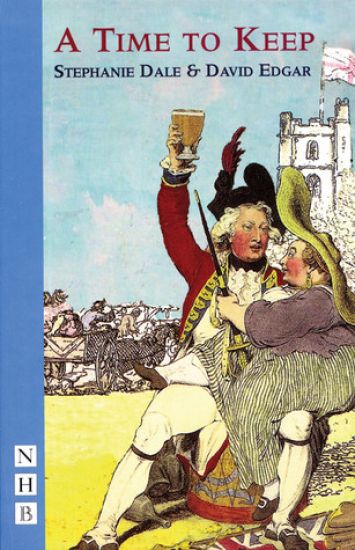
A large-scale historical romp in the terrain between Jane Austen and Charles Dickens. Set against the backdrop of the threatened Napoleonic invasion of 1804, David Edgar and Stephanie Dale's play A Time to Keep is the story of an unlikely but passionate romance between a well-born but feisty young woman and the youngest son of a family of notorious smugglers. With over 100 characters, from George III and his court to the criminal classes, the play is a rollicking example of the community play, originally written for the Dorchester Community Players but easily adaptable for smaller (and larger!) companies alike.
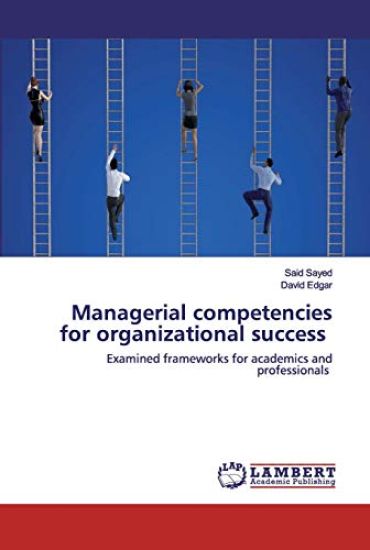
Merely in the last two decades, the prominence of managerial competencies was appreciated and academics commenced reviewing the essential competencies to be successful and operative executives. There are merely insufficient practical studies on this topic and those are generally in the areas of universities, banks, and multinational enterprises. The managerial competencies and their impact on management capabilities on dissimilar management positions might differ through organizations, business professionals, and academics, however these papers targets to draw overall frameworks for the competencies required to be successful organizations and executives. It also purposes to outline the influence of those competencies on dissimilar levels of management.
This work has been selected by scholars as being culturally important and is part of the knowledge base of civilization as we know it.This work is in the public domain in the United States of America, and possibly other nations. Within the United States, you may freely copy and distribute this work, as no entity (individual or corporate) has a copyright on the body of the work.Scholars believe, and we concur, that this work is important enough to be preserved, reproduced, and made generally available to the public. To ensure a quality reading experience, this work has been proofread and republished using a format that seamlessly blends the original graphical elements with text in an easy-to-read typeface.We appreciate your support of the preservation process, and thank you for being an important part of keeping this knowledge alive and relevant.
Combining a rich blend of research, best practice and policy, Strategic Information Systems Management is the eagerly awaited new introduction to the interconnected world we live and work in. A top-ranked team of global experts combine both industrial and scholarly perspectives, bringing a wealth of experience to make this the complete introduction for 21st century business. This textbook is essential reading for all Information Systems modules with a strategic focus and for broader Strategic Management, Information Management and professional courses. Contributions come from these global experts: David Avison ESSC, France; Peter Baloh, Ljubljana University, Slovenia & University of Washington, USA; Alexis Barlow Glasgow Caledonian University, UK; Egon Berghout University of Groningen, Netherlands; Colin Combe, Glasgow Caledonian University, UK; Thomas Connolly, University of the West of Scotland, UK; David Coss, Virginia Commonwealth University, USA; Kevin Desouza, University of Washington, USA; Gurpreet Dhillon, Virginia Commonwealth University, USA; David Duncan, Wolters Kluwer, UK; Peter Duncan, Glasgow Caledonian University, UK; David Edgar, Glasgow Caledonian University, UK; Guy Fitzgerald, Brunel University, UK; Stuart Fitz-Gerald, Kingston University, UK; Arnoud Franken, Cranfield University, UK; Tom Fuller, Deloitte Touche Tohmatsu, UK; Robert Galliers, Bentley University, USA; Merlin Gardner, Deloitte Touche Tohmatsu, UK; Kevin Grant, Glasgow Caledonian University, UK; Ray Hackney, Brunel University, UK; Feng Li, University of Newcastle, UK; Laszlo Nemeth, Dex, Hungary; Sue Newell, Bentley University, USA; David Paton, Deloitte MCS Limited, UK; Philip Powell, Birkbeck, University of London, UK; Vivien Reid, Glasgow Caledonian University, UK; Mark Stansfield, University of the West of Scotland, UK; Anne Wiggins, UNCTAD, Switzerland; John Wright, NHS Ayrshire and Arran, UK.
By attempting to suspend moral, ideological, or psychological assumptions, a phenomenological interpretation of literature hopes to reach "the things themselves," the essential phenomena of being, space, and time, as they are constituted, by consciousness, in words. Although there has been a tradition of phenomenological criticism in Europe for the last twenty years, David Halliburton is the first to write a general study of an American author from this particular point of view. The book begins with a methodological chapter that sets out the assumptions and procedures of the approach. This is followed by analyses of Poe's major works, exploring such special problems as Poe's treatment of the material world, including technology; the interrelation of body and consciousness; poetic voice; attitudes toward women; and the will to affirmation, plenitude, and unity. The center of interest is neither Poe's biography nor environment but always the meaning of Poe's words. Because these works are shaped by a single imagination and because they are experienced in time, as a process, each work has its own "way of going." The aim of the interpretation is to find this way and go along with it; to live each work dynamically, as it "happens," while tracing its interaction with other works. Originally published in 1973. The Princeton Legacy Library uses the latest print-on-demand technology to again make available previously out-of-print books from the distinguished backlist of Princeton University Press. These editions preserve the original texts of these important books while presenting them in durable paperback and hardcover editions. The goal of the Princeton Legacy Library is to vastly increase access to the rich scholarly heritage found in the thousands of books published by Princeton University Press since its founding in 1905.
The contribution of Edgar H. Schein to the field of management, organisation studies and applied behavioural science is both extensive and deep. For almost 70 years, he has creatively and systematically shaped theory and practice in areas including organisation development and change, career dynamics, the cultural dynamics of complex systems, leadership, process consultation and the clinical inquiry/research paradigm. He has written extensively on the process of organisational change and framed the construct of the clinical approach to research. With such an extensive corpus over such a long period, Schein has been termed a “transcendent thought leader” and it is in this spirit that a volume exploring his work offers a contribution how scholars and practitioners can come to understand their engagement in organisations. This singular volume adopts a reflective perspective on the work of Edgar Schein as a social scientist and shows how he developed his craft as an engaged organisational scholar-practitioner through reflexive attention to his experience in working with managers and organisations and generating knowledge out of action. The intended contribution is both to present Schein’s work to students and scholars of organisation studies and to offer a reflexive methodological framework to engage scholar-practitioner in any field.The Open Access version of this book, available at http://www.taylorfrancis.com, has been made available under a Creative Commons Attribution-Non Commercial-No Derivatives (CC-BY-NC-ND) 4.0 license.
Edgar is a chill alien from Elsewhere. He likes wearing t-shirts, carrying a backpack, and exploring this planet called Earth-he really digs it. Are you an Edgar?
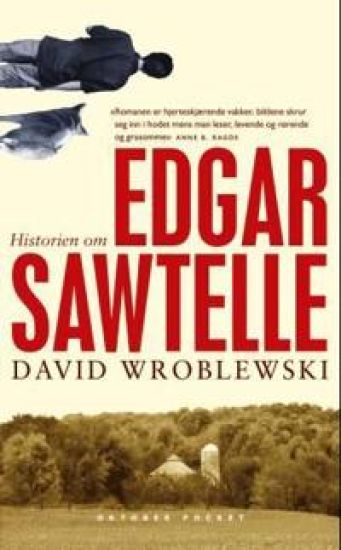
Familien Sawtelle har i tre generasjoner drevet hundeoppdrett på den lille gården sin i Wisconsin. Midt på 1970-tallet består familien av 14 år gamle Edgar, faren Gar og moren Trudy. Edgar er født stum, men har lært seg et tegnspråk som også hundene forstår. Livet på gården er harmonisk, inntil farens bror Claude dukker opp. Snart er Edgar på flukt i villmarken med tre årsgamle hunder.
Now filmed by Steven Spielberg, starring Mark Rylance as the Pope. The extraordinary story of how the Vatican's imprisonment of a six-year-old Jewish boy helped to bring about the collapse of the popes' worldly power in Italy. Bologna: nightfall, June 1858.A knock sounds at the door of the Jewish merchant Momolo Mortara. Two officers of the Inquisition burst inside and seize Mortara's six-year-old son, Edgardo. As the boy is wrenched from his father's arms, his mother collapses.The reason for his abduction: the boy had been secretly `baptized' by a family servant. According to papal law, the child is therefore a Catholic who can be taken from his family and delivered to a special monastery where his conversion will be completed. With this terrifying scene, prize-winning historian David I.Kertzer begins the true story of how one boy's kidnapping became a pivotal event in the collapse of the Vatican as a secular power. The book evokes the anguish of a modest merchant's family, the rhythms of daily life in a Jewish ghetto, and also explores, through the revolutionary campaigns of Mazzini and Garibaldi and outside leaders like Napoleon III, the emergence of Italy as a modern national state. Moving and informative, The Kidnapping of Edgardo Mortara reads as both a thriller and an authoritative account of a moment that changed Europe forever.
'I flat-out loved The Story of Edgar Sawtelle. I don’t re-read many books, because life is too short. I will be re-reading this one.' Stephen King An International Bestseller Born mute, speaking only in sign, Edgar Sawtelle leads an idyllic life on his family’s farm in remote northern Wisconsin, where they raise and train an extraordinary breed of dog. But when tragedy mysteriously strikes, Edgar is forced to flee into the vast neighbouring wilderness, accompanied by three yearling dogs. He comes of age in the wild, struggling for survival, until the day Edgar is forced to choose between leaving forever and returning home to learn the truth behind what has happened. Filled with breathtaking scenes – the elemental north woods, the sweep of seasons, an iconic barn, a fateful vision rendered in the falling rain – The Story of Edgar Sawtelle is a meditation on the limits of language and what lies beyond, a brilliantly inventive retelling of an ancient story, and an epic tale of devotion, betrayal and courage.
An Oprah's Book Club Pick#1 New York Times Bestseller"A mystery, a thriller, a ghost story, and a literary tour de force . . . an authentic epic, long and lush, full of back story and observed detail . . . the author exercises a certain magic that catches and holds our attention, a magic that is undeniably his own."--Los Angeles Times Book ReviewBorn mute, speaking only in sign, Edgar Sawtelle leads an idyllic life on his family's farm in remote northern Wisconsin, where they raise and train an extraordinary breed of dog. But when tragedy mysteriously strikes, Edgar is forced to flee into the vast neighboring wilderness, accompanied by three yearling dogs. He comes of age in the wild, struggling for survival, until the day Edgar is forced to choose between leaving forever and returning home to learn the truth behind what has happened.Filled with breathtaking scenes--the elemental north woods, the sweep of seasons, an iconic American barn, a fateful vision rendered in the falling rain--The Story of Edgar Sawtelle is a meditation on the limits of language and what lies beyond, a brilliantly inventive retelling of an ancient story, and an epic tale of devotion, betrayal, and courage in the American heartland.