Kirjojen hintavertailu. Mukana 11 699 587 kirjaa ja 12 kauppaa.

Kirjahaku

Etsi kirjoja tekijän nimen, kirjan nimen tai ISBN:n perusteella.

1000 tulosta hakusanalla David G. Bauer

Sampling Theory

Sampling Theory

David G. Hankin; Michael S. Mohr; Kenneth B. Newman

Oxford University Press
2019
nidottu
Sampling theory considers how methods for selection of a subset of units from a finite population (a sample) affect the accuracy of estimates of descriptive population parameters (mean, total, proportion). Although a sound knowledge of sampling theory principles would seem essential for ecologists and natural resource scientists, the subject tends to be somewhat overlooked in contrast to other core statistical topics such as regression analysis, experimental design, and multivariate statistics. This introductory text aims to redress this imbalance by specifically targeting ecologists and resource scientists, and illustrating how sampling theory can be applied in a wide variety of resource contexts. The emphasis throughout is on design-based sampling from finite populations, but some attention is given to model-based prediction and sampling from infinite populations.^l Sampling Theory is an introductory textbook suitable for advanced undergraduates, graduate students, professional researchers, and practitioners in the fields of ecology, evolution, conservation biology, and natural resource sciences (including fisheries, wildlife, rangeland, ecology and forestry).

The Fear of Invasion

The Fear of Invasion

David G. Morgan-Owen

Oxford University Press
2020
nidottu
The Fear of Invasion presents a new interpretation of British preparation for War before 1914. It argues that protecting the British Isles from invasion was the foundation upon which all other plans for the defence of the Empire were built up. Home defence determined the amount of resources available for other tasks and the relative focus of the Army and Navy, as both played an important role in preventing an invasion. As politicians were reluctant to prepare for offensive British participation in a future war, home defence became the means by which the government contributed to an ill-defined British 'grand' strategy. The Royal Navy formed the backbone of British defensive preparations. However, after 1905 the Navy came to view the threat of a German invasion of the British Isles as a far more credible threat than is commonly realised. As the Army became more closely associated with operations in France, the Navy thus devoted an ever-greater amount of time and effort to safeguarding the vulnerable east coast. In this manner preventing an invasion came to exert a 'very insidious' effect on the Navy by the outbreak of War in 1914. This book explains how and why this came to pass, and what it can tell us about the role of government in forming strategy.
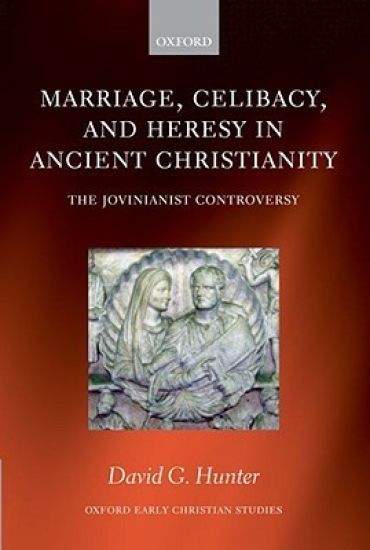
Marriage, Celibacy, and Heresy in Ancient Christianity

Marriage, Celibacy, and Heresy in Ancient Christianity

David G. Hunter

Oxford University Press
2007
sidottu
Marriage, Celibacy, and Heresy in Ancient Christianity is the first major study in English of the 'heretic' Jovinian and the Jovinianist controversy. David G. Hunter examines early Christian views on marriage and celibacy in the first three centuries and the development of an anti-heretical tradition. He provides a thorough analysis of the responses of Jovinian's main opponents, including Pope Siricius, Ambrose, Jerome, Pelagius, and Augustine. In the course of his discussion Hunter sheds new light on the origins of Christian asceticism, the rise of clerical celibacy, the development of Marian doctrine, and the formation of 'orthodoxy' and 'heresy' in early Christianity.
Roots of War

Roots of War

David G. Winter

Oxford University Press Inc
2017
sidottu
Ever since Thucydides pondered reasons for the outbreak of the Peloponnesian War, writers, philosophers, and social scientists have all tried to identify and catalog factors that promote conflict escalation. Historians emphasize path-dependencies: the future grows out of the past, hence tomorrow's wars are rooted in yesterday's conflicts. Political scientists attend to changes in power balance or domestic political forces. All of these causes, however, are constructed by human beings and involve the memories, emotions, and motives of both the leaders and the led. In July 1914, the long peace of the great European powers was shattered when the Sarajevo assassinations quickly escalated to a world war that few ever anticipated. In contrast, at the height of the Cold War, the Cuban Missile Crisis could have easily plunged us into a thermonuclear world war, but was ultimately peacefully resolved. Why? In Roots of War: Wanting Power, Seeing Threat, Justifying Force, author David G. Winter identifies the three psychological factors that contributed to the differences in these historical outcomes: the desire for power (power motivation), exaggerated perception of the opponent's threat, and justification for using military power and force. As Winter illustrates, several different lines of research establish how these three factors lead to escalation and war: the role of power motivation is demonstrated by comparative content analysis of documents (i.e. diplomatic communications, leaders' speeches, and media coverage) from crises that escalated to war versus similar events that did not; case studies of several American and British wars; and analysis of "new wars" (i.e. civil unrest, state-sponsored violence, and terrorism). Drawing on this research, Roots of War is a powerful testament to the roles of power and the preservation of peace, and demonstrates their enormous influence in diplomatic interventions in the past and present-day.
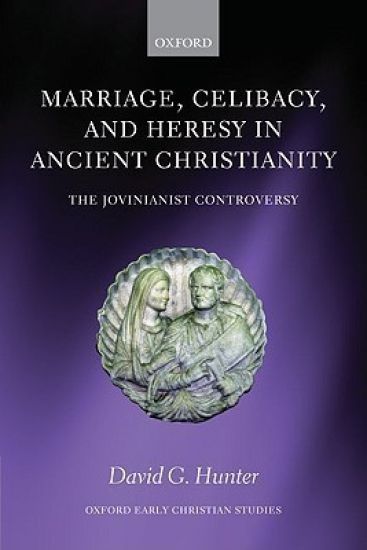
Marriage, Celibacy, and Heresy in Ancient Christianity

Marriage, Celibacy, and Heresy in Ancient Christianity

David G. Hunter

Oxford University Press
2009
nidottu
Marriage, Celibacy, and Heresy in Ancient Christianity is the first major study in English of the 'heretic' Jovinian and the Jovinianist controversy. David G. Hunter examines early Christian views on marriage and celibacy in the first three centuries and the development of an anti-heretical tradition. He provides a thorough analysis of the responses of Jovinian's main opponents, including Pope Siricius, Ambrose, Jerome, Pelagius, and Augustine. In the course of his discussion Hunter sheds new light on the origins of Christian asceticism, the rise of clerical celibacy, the development of Marian doctrine, and the formation of 'orthodoxy' and 'heresy' in early Christianity.
Investment Science

Investment Science

David G. Luenberger

Oxford University Press
2013
sidottu
Investment Science, Second Edition, provides thorough and highly accessible mathematical coverage of the fundamental topics of intermediate investments, including fixed-income securities, capital asset pricing theory, derivatives, and innovations in optimal portfolio growth and valuation of multi-period risky investments. Eminent scholar and teacher David G. Luenberger, known for his ability to make complex ideas simple, presents essential ideas of investments and their applications, offering students the most comprehensive treatment of the subject available.
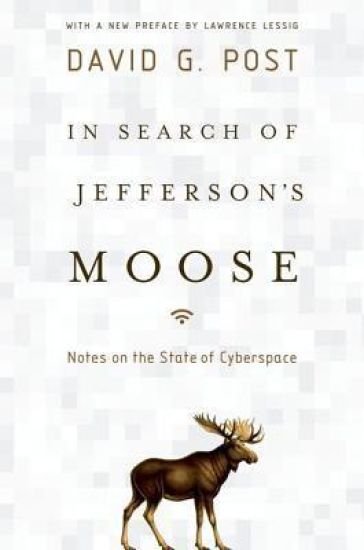
In Search of Jefferson's Moose

In Search of Jefferson's Moose

David G. Post

Oxford University Press Inc
2012
nidottu
In 1787, Thomas Jefferson, then the American Minister to France, had the "complete skeleton, skin & horns" of an American moose shipped to him in Paris and mounted in the lobby of his residence as a symbol of the vast possibilities contained in the strange and largely unexplored New World. Taking a cue from Jefferson's efforts, David Post, one of the nation's leading Internet scholars, here presents a pithy, colorful exploration of the still mostly undiscovered territory of cyberspace--what it is, how it works, and how it should be governed. What law should the Internet have, and who should make it? What are we to do, and how are we to think, about online filesharing and copyright law, about Internet pornography and free speech, about controlling spam, and online gambling, and cyberterrorism, and the use of anonymous remailers, or the practice of telemedicine, or the online collection and dissemination of personal information? How can they be controlled? Should they be controlled? And by whom? Post presents the Jeffersonian ideal--small self-governing units, loosely linked together as peers in groups of larger and larger size--as a model for the Internet and for cyberspace community self-governance. Deftly drawing on Jefferson's writings on the New World in Notes on the State of Virginia, Post draws out the many similarities (and differences) between the two terrains, vividly describing how the Internet actually functions from a technological, legal, and social perspective as he uniquely applies Jefferson's views on natural history, law, and governance in the New World to illuminate the complexities of cyberspace. In Search of Jefferson's Moose is a lively, accessible, and remarkably original overview of the Internet and what it holds for the future.
Paying for Medicare

Paying for Medicare

David G. Smith

AldineTransaction
1991
sidottu
** Paying for Medicare received the American Risk and Insurance Association's Elizur Wright Award for itsoutstanding contribution to risk management and insurance literature.The Prospective Payment System and the Medicare Fee Schedule, two of the most effectively sustained and successful efforts at policy innovation in history continue to shape decisions about Medicare and cost containment efforts.Smith shows how particular policy alternatives were developed; why chosen or rejected; and how provider interests and American political institutions have shaped their design and implementation.
Paying for Medicare

Paying for Medicare

David G. Smith

AldineTransaction
1992
nidottu
** Paying for Medicare received the American Risk and Insurance Association's Elizur Wright Award for itsoutstanding contribution to risk management and insurance literature.The Prospective Payment System and the Medicare Fee Schedule, two of the most effectively sustained and successful efforts at policy innovation in history continue to shape decisions about Medicare and cost containment efforts.Smith shows how particular policy alternatives were developed; why chosen or rejected; and how provider interests and American political institutions have shaped their design and implementation.
Bombs Away

Bombs Away

David G. Havlick

University of Chicago Press
2018
sidottu
When viewed from space, the Korean Peninsula is crossed by a thin green ribbon. On the ground, its mix of dense vegetation and cleared borderlands serves as home to dozens of species that are extinct or endangered elsewhere on the peninsula. This is Korea’s demilitarized zone—one of the most dangerous places on earth for humans, and paradoxically one of the safest for wildlife. Although this zone was not intentionally created for conservation, across the globe hundreds of millions of acres of former military zones and bases are being converted to restoration areas, refuges, and conservation lands. David G. Havlick has traveled the world visiting these spaces of military-to-wildlife transition, and in Bombs Away he explores both the challenges—physical, historical, and cultural—and fascinating ecological possibilities of military site conversions. Looking at particular international sites of transition—from Indiana’s Big Oaks National Wildlife Refuge to Cold War remnants along the former Iron Curtain—Havlick argues that these new frontiers of conservation must accomplish seemingly antithetical aims: rebuilding and protecting ecosystems, or restoring life, while also commemorating the historical and cultural legacies of warfare and militarization. Developing these ideas further, he shows that despite the ecological devastation often wrought by military testing and training, these activities need not be inconsistent with environmental goals, and in some cases can even complement them—a concept he calls ecological militarization. A profound, clear explication of landscapes both fraught and fecund, marked by death but also reservoirs of life, Bombs Away shows us how “military activities, conservation goals, and ecological restoration efforts are made to work together to create new kinds of places and new conceptions of place.”
Searching for God in Britain and Beyond

Searching for God in Britain and Beyond

David G. Reagles

McGill-Queen's University Press
2021
sidottu
When writer and media personality Malcolm Muggeridge unexpectedly converted to Christianity in the 1960s, fans around the world flocked to his devotional writings and television programs about his spiritual journey. Because Muggeridge was critical of institutional Christianity and initially refused to join a church, he inspired a special affinity in those who were disillusioned with mainstream religious authority. Readers from around the world sent him deeply personal letters describing their spiritual and religious lives, revealing their anxieties, doubts, and hopes about the future of Christianity.In Searching for God in Britain and Beyond David Reagles draws on nearly two thousand of these remarkable fan letters to explore the thoughts and feelings of ordinary Christians in a time of cultural and religious upheaval. In these candid letters, Muggeridge’s correspondents wrestled with their experiences of faith and doubt, the value of institutional religion, uncertainties about permissiveness in society, the proper role of Christian social activism, and the forces of secularism. For these fans and skeptics alike, reading and writing were a vital means of working out their religious identities and convictions amid the supposed decline of Christendom.Searching for God in Britain and Beyond provides a rare and fascinating glimpse into the inner worlds of ordinary Christians in the 1960s and 1970s, revealing how the secularization of postwar society felt to average people.
How to Ace That Macroeconomics Exam

How to Ace That Macroeconomics Exam

David G Frazer

Tellwell Talent
2020
pokkari
No frills, no fluff, no stress. Everything you need to know to Ace that Macroeconomics Exam I have studied or taught economics for 13 years and wished that I had a summarized version of the oversized text/prep books available. Having successfully taught dozens of students how to get an A in economics exams, I gathered my notes and created the summarized textbook of students dreams...no frills, no fluff, no stress...everything you need to know to get that A.So, whether you're in a time crunch and need to quickly learn all of necessary concepts needed to get an A, or already prepared and seeking a quick way to revise all of the key concepts, this book nails down all the necessary concepts, graphs, graphs change and explanations necessary to get top marks and previous AP exam questions to test your knowledge after every topic.For G. 11,12, AP, IB, SAT2 and 1st year college macroeconomics students.
Southern Soul-Blues

Southern Soul-Blues

David G. Whiteis

University of Illinois Press
2013
sidottu
Attracting passionate fans primarily among African American listeners in the South, southern soul draws on such diverse influences as the blues, 1960s-era deep soul, contemporary R & B, neosoul, rap, hip-hop, and gospel. Aggressively danceable, lyrically evocative, and fervidly emotional, southern soul songs often portray unabashedly carnal themes, and audiences delight in the performer-audience interaction and communal solidarity at live performances. Examining the history and development of southern soul from its modern roots in the 1960s and 1970s, David Whiteis highlights some of southern soul's most popular and important entertainers and provides first-hand accounts from the clubs, show lounges, festivals, and other local venues where these performers work. Profiles of veteran artists such as Denise LaSalle, the late J. Blackfoot, Latimore, and Bobby Rush--as well as contemporary artists T. K. Soul, Ms. Jody, Sweet Angel, Willie Clayton, and Sir Charles Jones--touch on issues of faith and sensuality, artistic identity and stereotyping, trickster antics, and future directions of the genre. These revealing discussions, drawing on extensive new interviews, also acknowledge the challenges of striving for mainstream popularity while still retaining the cultural and regional identity of the music and maintaining artistic ownership and control in the age of digital dissemination.
Southern Soul-Blues

Southern Soul-Blues

David G. Whiteis

University of Illinois Press
2013
nidottu
Attracting passionate fans primarily among African American listeners in the South, southern soul draws on such diverse influences as the blues, 1960s-era deep soul, contemporary R & B, neosoul, rap, hip-hop, and gospel. Aggressively danceable, lyrically evocative, and fervidly emotional, southern soul songs often portray unabashedly carnal themes, and audiences delight in the performer-audience interaction and communal solidarity at live performances. Examining the history and development of southern soul from its modern roots in the 1960s and 1970s, David Whiteis highlights some of southern soul's most popular and important entertainers and provides first-hand accounts from the clubs, show lounges, festivals, and other local venues where these performers work. Profiles of veteran artists such as Denise LaSalle, the late J. Blackfoot, Latimore, and Bobby Rush--as well as contemporary artists T. K. Soul, Ms. Jody, Sweet Angel, Willie Clayton, and Sir Charles Jones--touch on issues of faith and sensuality, artistic identity and stereotyping, trickster antics, and future directions of the genre. These revealing discussions, drawing on extensive new interviews, also acknowledge the challenges of striving for mainstream popularity while still retaining the cultural and regional identity of the music and maintaining artistic ownership and control in the age of digital dissemination.
The Jewish Search for a Usable Past

The Jewish Search for a Usable Past

David G. Roskies

Indiana University Press
1999
sidottu
"Roskies has illuminated a path to further self-understanding of who Jews are and the type of bridges used to reach a usable past." —Lifestyles Magazine "[The author has] an exceptional gift for historical reconnection . . . The force of the shtetl, if not its romance, remains very much within him." —Irving Louis Horowitz, Congress Monthly " . . . fine new volume of essays . . . " —David Singer, Commentary "These studies, each a gem unto itself, together reveal how Jews cope with loss and catastrophe and illustrate that it is exactly by coping with loss and tragedy that Jews create a usable past and in, in the process, define their present and shape their future." —Choice After redrawing the map of modern Jewish memory, David G. Roskies takes the reader on a grand tour of major memory sites, each of which is built upon foundations of rebellion, rupture, and loss. Among them: chronicles of catastrophe from the Warsaw ghetto; a gallery of rabbis and zaddikim who are really rebels in disguise; a failed revolution recast into an Honor Row of magnificent tombstones; and a Holy Land where the search for a sacred space is led by those least likely ever to find it. The creativity with which Jews have coped with loss and catastrophe in modern times is richly revealed in this lively account.
The Politics of Religious Apostasy

The Politics of Religious Apostasy

David G. Bromley

Praeger Publishers Inc
1998
sidottu
The current controversy surrounding new religions has brought to the forefront the role of apostates. These individuals leave highly controversial movements and assume roles in other organizations as public opponents against their former movements. This volume examines the motivations of the apostates, how they are recruited and play out their roles, the kinds of narratives they construct to discredit their previous groups, and the impact of apostasy on the outcome of conflicts between movements and society.
Postimperialism and World Politics

Postimperialism and World Politics

David G. Becker; Richard L. Sklar

Praeger Publishers Inc
1999
sidottu
Postimperialism is a theory of political and social change inspired by the explosive growth of transnational corporate enterprise during the latter 20th century. Its foundations are derived from two primary sources: political theories of the modern business corporation and class-analytical theories of society. However, the postimperialist theory of class formation is predicated on power relations, a departure from conventional class analysis that renders the theory applicable universally to countries at different stages of economic development. Postimperialist thinkers contend that the formation of a global bourgeoisie, resulting from transnational class coalescence, coincides with the evolution of institutions and public policies that are compatible with socialist as well as capitalist principles.This book provides theoretical contributions to postimperialist theory as well as case studies of both individual countries (Britain, Cuba, the United States) and regions of the world (Africa, postcommunist Europe). It also contains historical analyses of the origins of postimperialist thought in Mexico and the United States. Topics considered include the transfer of cultural and ideological values, multilateral legal responses to transnational oligopolies, the problems of predatory corporate behavior and perceived neoimperial threats, working-class responses to the challenges of transnational enterprise, the effects of resistance to market-based economic reforms, opposition to imperial spheres of influence, and postimperialism's contributions to theories of international politics.
Real-World Nuclear Deterrence

Real-World Nuclear Deterrence

David G. Coleman; Joseph M. Siracusa

Praeger Publishers Inc
2006
sidottu
The threat of nuclear weapons did not fade away with the collapse of the Soviet Union. Rather, the geopolitical disorders of the post-Cold War era and the rise of global terrorism have ensured that they remain conspicuously present on the world stage as a serious international concern. With the eight or nine nuclear powers maintaining about 27,000 nuclear weapons in their arsenals to this day, it is clear that they are here to stay for the foreseeable future. The primary mission of these nuclear forces has been and remains deterrence. Using plain language rather than policy jargon, this historically focused book shows how nuclear deterrence has worked rather than how it should. It then shows how the growing threat of nuclear proliferation threatens to create a far more complicated international situation largely because of the attendant proliferation of state nuclear deterrents.By drawing on a wide array of new sources from international archives and the latest in international scholarship, Coleman and Siracusa put some of the most important and enduring problems of nuclear deterrence over the past sixty years into global context. Nuclear deterrence in the real world often operates very differently from how it should according to the prevailing theories, and Coleman and Siracusa take a fresh look at how nuclear weapons policy has been made, finding that it often has had surprisingly little to do with what works and what does not. By studying in depth how governments here and abroad have confronted and dealt with some of the most important issues in nuclear weapons policy, for example, How many nuclear weapons are enough? and What is it that will deter? they find that the making of nuclear weapons policy is a complex, fluid bargaining process subject to the tides of politics, budgets, threat perception, ideology, technology, parochial service rivalries, flawed information, and sometimes just plain wishful thinking.