Kirjahaku
Etsi kirjoja tekijän nimen, kirjan nimen tai ISBN:n perusteella.
1000 tulosta hakusanalla David Healey
This provocative history of bipolar disorder illuminates how perceptions of illness, if not the illnesses themselves, are mutable over time. Beginning with the origins of the concept of mania-and the term maniac-in ancient Greek and Roman civilizations, renowned psychiatrist David Healy examines how concepts of mental afflictions evolved as scientific breakthroughs established connections between brain function and mental illness. Healy recounts the changing definitions of mania through the centuries, explores the effects of new terminology and growing public awareness of the disease on culture and society, and examines the rise of psychotropic treatments and pharmacological marketing over the past four decades. Along the way, Healy clears much of the confusion surrounding bipolar disorder even as he raises crucial questions about how, why, and by whom the disease is diagnosed. Drawing heavily on primary sources and supplemented with interviews and insight gained over Healy's long career, this lucid and engaging overview of mania sheds new light on one of humankind's most vexing ailments.
Drug Trial Secrets
David Healy; Joanna Le Noury; Dee Mangin; Julie Wood
James Lorimer Company Ltd
2019
nidottu
Drug Trial Secrets tells the story of the most famous clinical drug trial of all time, the only trial to lead to a fraud charge, as well as the biggest drug company fine in history. GlaxoSmithKline paid for Study 329, the clinical trial of their antidepressant Paxil (paroxetine) in the 1990s, and the resulting research was published in the Journal of the American Association of Child Adolescent Psychiatry. The article claimed the drug was effective and safe, even though GSK knew from the research that Paxil didn't work for children and was harmful. In 2004, New York State charged the company with fraud because of this publication. It wouldn't be until 2012 when the Department of Justice also charged GSK with fraud and failure to report safety data that GSK settled and paid a giant $3 billion fine. But perhaps the most important result was that independent researchers were given access to the full, original records of the clinical trial and relating documents. David Healy and his co-authors spent thousands of hours re-analyzing the raw data, and in this book they describe exactly how GSK and the medical professionals who claimed authorship of the journal article manipulated the data to produce the false result they wanted. They also document the battle they finally won to get the British Medical Journal to publish a re-write of the original study, thirteen years later! A gripping true-crime narrative, Drug Trial Secrets will leave readers with many questions about the reliability of drug company trials and research by medical professionals funded by drug companies.
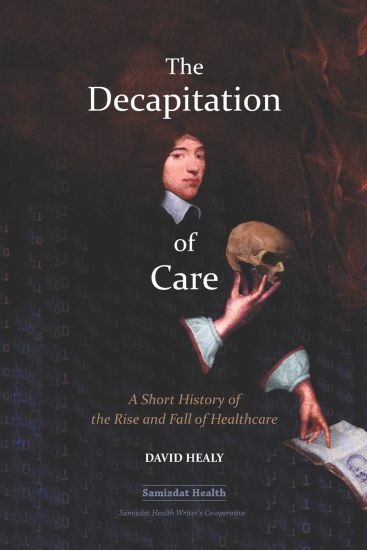
The Decapitation of Care: A Short History of the Rise and Fall of Healthcare
David Healy
Samizdat Health Writer's Co-Operative
2020
nidottu
Before 1990, we brought our health problems to doctors and got "care". Today health services bring us problems with our bones, lipids, breathing, glucose, blood pressure, and even our moods. The managers of health services require staff to keep to guidelines, which means giving us medicines in order to reduce the risks we pose the services rather than to help us. In the 1980s few of us were on more than one drug. Now many of us are on five or more drugs every day of the year and those of us over sixty-five may be on ten or more. We have reached a crisis point-life expectancy is now falling. To restore Healthcare, we need to be able to restore validity to our judgements about the adverse effects of treatments
La decapitación del cuidado: Una breve historia del auge y caída de la atención médica
David Healy
Samizdat Health Writer's Co-Operative
2020
nidottu
Clay is universally recognized as a medium of creative expression, and it also has great potential for therapeutic application. These two properties are celebrated together in this text that explores the history, theory and techniques of claywork in eliciting therapeutic outcomes.
The Psychopharmacologists. An interview-based book about the process of therapeutic innovation in clinical psychiatry. David Healy's method is to interview key individuals involved in the discovery and deployment of drugs that have proved useful to psychiatry, and to draw them together within a model of the mechanism and clinical discovery that he uses as an overall framework. These are historical accounts but highly relevant to the clinical psychiatrist of today, emphasising the importance of research, and of the marketing strategies of pharmaceutical companies in formulating disease entities as well as treatments for them.
Life Expectancy in the West has been falling since 2015. Linked to this, the climate of healthcare has become toxic. This crisis, as urgent as global climate change, has its roots in the same factors that drive climate change. Shipwreck of the Singular looks at our changing environment through a healthcare lens rather than an economic one. One advantage to this is that each of us is better placed to put right what is going wrong in the climate of healthcare than we are to tackle the global climate. In tackling what needs changing in health, we may solve our wider climate crisis. This book does not come with recommendations from people of distinction, or experts who have turned a blind eye to developments that have landed us in the mess we now have. The people best placed to grasp what is going wrong and force our 'betters' to justify the distinctions that have been bestowed on them are those whose lives have been touched by what is going wrong in healthcare. Shipwreck shows you how we got to the point of peril we are now at. It points to a Care that needs courage. A book won't get us there. It needs you to engage and engage others.
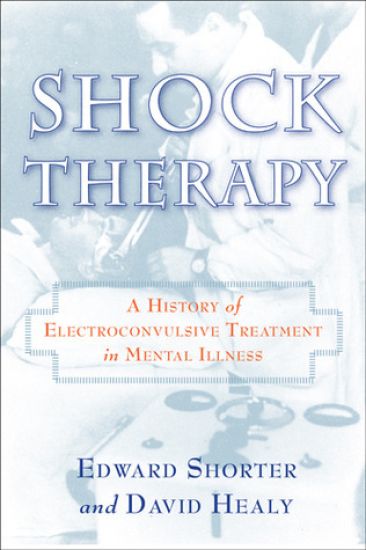
Shock therapy is making a comeback today in the treatment of serious mental illness. Despite its reemergence as a safe and effective psychiatric tool, however, it continues to be shrouded by a longstanding negative public image, not least due to films such as the classic One Flew over the Cuckoo's Nest, where the inmate of a psychiatric clinic (played by Jack Nicholson) is subjected to electro-shock to curb his rebellious behavior. Beyond its vilification in popular culture, the stereotype of convulsive therapy as a dangerous and inhumane practice is fuelled by professional posturing and public misinformation. Electroconvulsive therapy, or ECT, has in the last thirty years been considered a method of last resort in the treatment of debilitating depression, suicidal ideation, and other forms of mental illness. Yet, ironically, its effectiveness in treating these patients would suggest it as a frontline therapy, bringing relief from acute symptoms and saving lives. In this book, Edward Shorter and David Healy trace the controversial history of ECT and other "shock" therapies. Drawing on case studies, public debates, extensive interviews, and archival research, the authors expose the myths about ECT that have proliferated over the years. By showing ECT's often life-saving results, Shorter and Healy endorse a point of view that is hotly contested in professional circles and in public debates, but for the nearly half of all clinically depressed patients who do not respond to drugs, this book brings much needed hope.
Starting with their award winning profiles of Fred Astaire in 1980, Joan Kramer and David Heeley documented the lives and careers of many Hollywood legends, establishing a reputation for finding the un-findable, persuading the reluctant, and maintaining unique relationships long after the end credits rolled. These were recognized as high-quality, definitive film portraits, which revitalized the genre and made it a mainstay of television programming.This is their insiders' view of the famous and the powerful: Katharine Hepburn, James Stewart, Johnny Carson, Frank Sinatra, Lew Wasserman, Ronald Reagan, Paul Newman, Joanne Woodward, Jane Fonda, Richard Dreyfuss, Audrey Hepburn, and Bette Davis, among others. Kramer and Heeley's behind the scenes stories of the productions and the personalities involved are amusing, sometimes moving, often revealing, and have never been told before.
It is estimated that forty-five to fifty percent of all Americans will suffer a mental disorder at some time during their lives. Increasingly, the treatment for these disorders is management with one or more psychiatric drugs, often prescribed by general practitioners. In Pillaged Ronald William Maris evaluates the psychiatric medications commonly used to treat several major types of psychiatric disorders - including depression and mood disorders, bipolar disorders, anxiety disorders, and psychotic disorders - asking “do they work as advertised?” and, more importantly, “are they safe?”Answers to these questions are more ambiguous than we might think, Maris explains, because drug manufacturers tend to minimize the adverse effects of their products. Furthermore, the underlying neurobiological theories of how psychiatric drugs work are complex, poorly understood, and often conflicting. Still Americans spend tens of billions of dollars a year on antidepressants and antipsychotics alone.While Maris questions the rampant prescribing of psychiatric medications especially in young people, Pillaged does not suggest that anyone cavalierly discontinue potentially beneficial psychiatric medications without the advice of a qualified mental health professional. The book acknowledges that psychiatric medications are often necessary in treating some psychiatric conditions, but it reminds readers of medication’s potential for degrading one’s quality of life, contributing to self-destructive behaviors, and even leading to death in a vulnerable minority of patients. Maris advocates an open and honest discussion of data on psychiatric drugs, their effects, and their dangers, and he reminds readers of available alternative, nondrug treatments for psychiatric disorders. By reviewing the history and effects of medications for mental disorders, Maris hopes to educate health care consumers and prescribers to make careful, informed decisions about the treatment of psychiatric disorders.
Setting the Standard
Christopher Tollefson; Fred Gale; David Haley
University of British Columbia Press
2008
sidottu
Setting the Standard chronicles the emergence and implicationsof an ambitious experiment in civil-society-led global governance: theForest Stewardship Council. Drawing on a pioneering case study of thisnegotiation process, this book explores the challenges associated withimplementing the FSC's global vision on the ground. Indeed, theestablishment of an FSC standard for British Columbia was achieved onlyafter difficult and protracted negotiations at the regional, national,and global levels. This important work also undertakes a detailedcomparative analysis of FSC standards and standard-setting processeselsewhere and grapples with the broader implications for globalgovernance and regulatory theory.
Setting the Standard
Christopher Tollefson; Fred Gale; David Haley
University of British Columbia Press
2009
pokkari
Setting the Standard chronicles the emergence and implicationsof an ambitious experiment in civil-society-led global governance: theForest Stewardship Council. Drawing on a pioneering case study of thisnegotiation process, this book explores the challenges associated withimplementing the FSC's global vision on the ground. Indeed, theestablishment of an FSC standard for British Columbia was achieved onlyafter difficult and protracted negotiations at the regional, national,and global levels. This important work also undertakes a detailedcomparative analysis of FSC standards and standard-setting processeselsewhere and grapples with the broader implications for globalgovernance and regulatory theory.
Policies for Sustainably Managing Canada's Forests
Martin K. Luckert; David Haley; George Hoberg
University of British Columbia Press
2011
sidottu
With more than three quarters of Canada's forests under provincial control, provincial forest policies are crucial for encouraging the sustainable management of the nation's forests. Forest tenures, which allow private companies to manage public forest resources, are the key policy tool that provinces use to balance the requirements of sustainable management with the economic concerns of the forest industry.By offering an up-to-date comparative examination of contemporary provincial forestry policies, this book provides forest managers, policy-makers, scholars, and students with the information and concepts to critically examine Canada's complex forest tenure systems. The authors look at tenure, stumpage fees, and other forest practices to assess how well different provincial schemes achieve the goals of sustainable forest management. They identify a number of essential policy attributes that could be used to guide tenure reform, consider potential barriers that could prevent meaningful change, and offer much-needed practical guidance on overcoming these obstacles.
Policies for Sustainably Managing Canada's Forests
Martin K. Luckert; David Haley; George Hoberg
University of British Columbia Press
2012
pokkari
With more than three quarters of Canada's forests under provincial control, provincial forest policies are crucial for encouraging the sustainable management of the nation's forests. Forest tenures, which allow private companies to manage public forest resources, are the key policy tool that provinces use to balance the requirements of sustainable management with the economic concerns of the forest industry.By offering an up-to-date comparative examination of contemporary provincial forestry policies, this book provides forest managers, policy-makers, scholars, and students with the information and concepts to critically examine Canada's complex forest tenure systems. The authors look at tenure, stumpage fees, and other forest practices to assess how well different provincial schemes achieve the goals of sustainable forest management. They identify a number of essential policy attributes that could be used to guide tenure reform, consider potential barriers that could prevent meaningful change, and offer much-needed practical guidance on overcoming these obstacles.
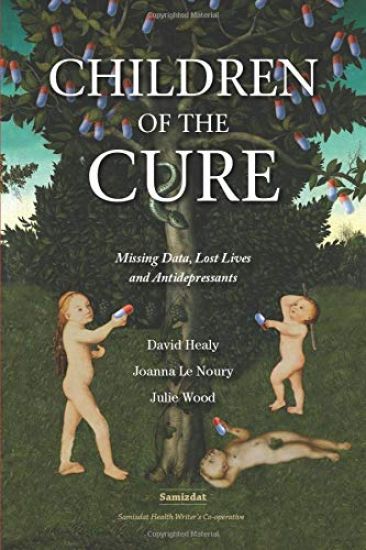
Children of the Cure: Missing Data, Lost Lives and Antidepressants
Joanna Le Noury; Julie Wood; David Healy
Samizdat Health Writer's Co-Operative Inc.
2020
nidottu
Children of the Cure tells the story of the only Medical Study that has two publications in the academic literature-telling precisely the opposite story-and how no one is bothered by this. Study 329 was a clinical study that began in 1994 giving a new antidepressant to teenagers. It has become the most famous clinical trial ever, leading to a fraud charge, a $3 billion fine, and a Black Box Warning. Despite now knowing that all trials of antidepressants done in children are negative, sales of these drugs to children and adolescents continue to increase dramatically. This book is written by three members of the team-David Healy, Joanna Le Noury and Julie Wood-who have been behind writing the study and creating the website that hosts a set of documents pharmaceutical companies never expected you would get to see.