
Kirjahaku
Etsi kirjoja tekijän nimen, kirjan nimen tai ISBN:n perusteella.
1000 tulosta hakusanalla David Hendrix


Romance for All Seasons
David H Hendrickson; Ron Collins; Susan J Kroupa
Thunder Valley Ink
2025
pokkari






Hendrix Letter Tracing for Kids Trace my Name Workbook: Tracing Books for Kids ages 3 - 5 Pre-K & Kindergarten Practice Workbook
Yolie Davis
Createspace Independent Publishing Platform
2018
nidottu
HENDRIX Name Tracing Workbook - Preschoolers Kindergarten Practice Workbook - Toddlers Writing Notebook - Learn How to Write HENDRIX - Preschoolers Activities Teaching your child the basics of writing is a difficult task especially if he or she is full of energy and finds it more difficult to focus. In order to give him a push in the first years of school or kindergartner, we are presenting a revolutionary way of teaching your baby the basics of the alphabet: the name tracing workbook for children. Why our workbook? The name tracing workbook has been designed specifically to teach children the basic of spelling and writing. By learning to write his own name, your child will develop the abilities and skills needed in the first years of schools while having fun. The 100 pages activity book is the perfect choice if you are searching to invest in your child's education from the beginning so don't hesitate and get him the only workbook he needs LEARNING THE FIRST LETTERS teaching your toddler the first letters and how to spell his or her name is difficult, which is why we have designed a special workbook that will make the learning process easier and a lot more fun, adding to the baby's educational fund. PERSONALIZED WORKING: the name is the first word any child should learn how to spell, but it is almost impossible to find special help for that task. HENDRIX Name Tracing Workbook is divided in 12 themed chapters that will teach your toddler how to spell his or her name in a fun and interactive way. WHAT IT CONTAINS: HENDRIX Name Tracing Workbook counts no less than 100 pages divided in 12 themed sheets that propose recognition activities, letter tracing practice and letter games, that are sure to teach your child the basics of writing and spelling. FOR TODDLERS: HENDRIX Name Tracing Workbook is made especially for children aged 3 to 6 so your son or daughter will be well prepared for both kindergarten and first grade Learning the alphabet will be a piece of cake if your kid will already have the foundation letter tracing so why not give him a head start in school. THE PERFECT GIFT: offering a present to a toddler that is both fun and parents-approved is an almost impossible task, but the name tracing workbook has it all: it is educational, personalized and made especially for youngsters ages 3 to 6 so, if you're trying to bring a smile on a kid's face, this is it

Über die Zweitrangigkeit des Zeugnisses Anderer bei David Hume
Christoph Hendrichs
Grin Publishing
2014
pokkari

Piles of Inspiration Everywhere explores the physical space where renowned artist Barkley Hendricks worked and lived. A collaboration between photographer David Katzenstein and Susan Hendricks, this book invites readers into the space Barkely and Susan shared for 35 years, offering readers a bold, detailed study of the artist’s life. The publication takes the reader on a journey into the otherwise publicly inaccessible home and studio of US artist Barkley L. Hendricks, showcasing the environment that both inspired and energised him by means of large double-page spread illustrations. Writings from the artist’s own journals, published alongside the stunning photographs of his personal surroundings, ultimately offer an unprecedented look into this groundbreaking artist’s life and creative process.
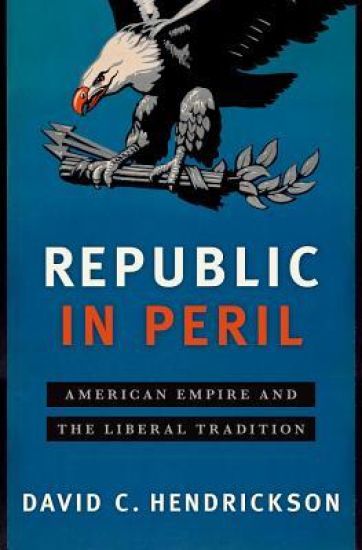
It has become a staple among critics of American foreign policy to refer to the United States's approach as "liberal imperialism." By this they mean that America's globalist agenda and its willingness to use force in theaters across the globe derives from its desire to evangelize the gospel of liberalism and thereby extend the reach of a US-dominated democratic capitalist order. These critics point to the presidency of Woodrow Wilson and trace how this agenda evolved over the next century. The dominance of liberal ideology, they argue, is so all-encompassing that virtually all of the main variants within the modern US foreign policy tradition, from anti-communism to neoliberalism to neoconservatism, fit under liberalism's umbrella. In Republic in Peril, the eminent foreign policy scholar David C. Hendrickson turns this thesis on its head. A trenchant critic of America's quest for global dominance, Hendrickson argues not only that liberalism is not the culprit, but is in fact where we should turn because it offers a powerful critique of both militarized interventionism and the US quest for full-spectrum global dominance. Covering all of the major episodes of the past century, he shows how the US has fully abandoned a tradition of republican liberalism that dates back to the Founders. The republican liberal tradition, which dominated US foreign policy for over a century, mandated non-intervention and the promotion of peace. This "golden rule" policy toward other nations served America well, he contends, and many of the pathologies that plague US foreign policy now--particularly its disastrous approach to the Middle East--can be traced to the desertion of the republican liberal tradition. He therefore advocates returning to the more collegial form of internationalism ("iso-internationalism") that preceded Wilsonianism. Combining both a rich historical overview of modern American foreign policy with a forceful indictment of the illiberal straitjacket in which US has bound itself, Republic in Peril provides a genuinely original defense of liberalism in the service of peaceful non-intervention--a position that contemporary critics of aggressive liberalism are sure to find surprising.
All businesses strive for excellence in today’s technology-based environment in which customers want solutions at the touch of a button. This highly regarded textbook provides in-depth coverage of the principles of operations and supply chain management and explains how to design, implement, and maintain processes for sustainable competitive advantage. This text offers a unique combination of theory and practice with a strategic, results-driven approach.Now in its fourth edition, Operations Management for Business Excellence has been updated to reflect major advances and future trends in supply chain management. A new chapter on advanced supply chain concepts covers novel logistics technology, information systems, customer proximity, sustainability, and the use of multiple sales channels. As a platform for discussion, the exploration of future trends includes self-driving vehicles, automation and robotics, and omnichannel retailing. Features include: A host of international case studies and examples to demonstrate how theory translates to practice, including Airbus, Hewlett Packard, Puma, and Toyota. A consistent structure to aid learning and retention: Each chapter begins with a detailed set of learning objectives and finishes with a chapter summary, a set of discussion questions and a list of key terms.Fully comprehensive with an emphasis on the practical, this textbook should be core reading for advanced undergraduate and postgraduate students of operations management and supply chain management. It would also appeal to executives who desire an understanding of how to achieve and maintain ‘excellence’ in business. Online resources include lecture slides, a glossary, test questions, downloadable figures, and a bonus chapter on project management.
All businesses strive for excellence in today’s technology-based environment in which customers want solutions at the touch of a button. This highly regarded textbook provides in-depth coverage of the principles of operations and supply chain management and explains how to design, implement, and maintain processes for sustainable competitive advantage. This text offers a unique combination of theory and practice with a strategic, results-driven approach.Now in its fourth edition, Operations Management for Business Excellence has been updated to reflect major advances and future trends in supply chain management. A new chapter on advanced supply chain concepts covers novel logistics technology, information systems, customer proximity, sustainability, and the use of multiple sales channels. As a platform for discussion, the exploration of future trends includes self-driving vehicles, automation and robotics, and omnichannel retailing. Features include: A host of international case studies and examples to demonstrate how theory translates to practice, including Airbus, Hewlett Packard, Puma, and Toyota. A consistent structure to aid learning and retention: Each chapter begins with a detailed set of learning objectives and finishes with a chapter summary, a set of discussion questions and a list of key terms.Fully comprehensive with an emphasis on the practical, this textbook should be core reading for advanced undergraduate and postgraduate students of operations management and supply chain management. It would also appeal to executives who desire an understanding of how to achieve and maintain ‘excellence’ in business. Online resources include lecture slides, a glossary, test questions, downloadable figures, and a bonus chapter on project management.
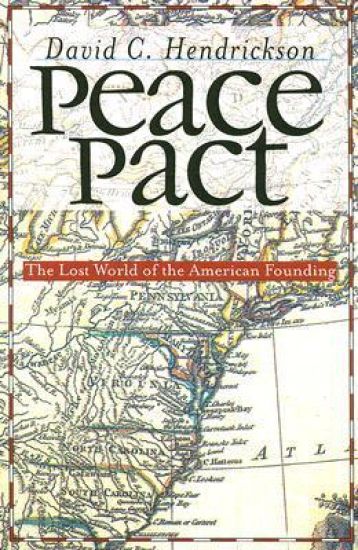
That New England might invade Virginia is inconceivable today. But interstate rivalries and the possibility of intersectional war loomed large in the thinking of the Framers who convened in Philadelphia in 1787 to put on paper the ideas that would bind the federal union together. At the end of the Constitutional Convention, Benjamin Franklin rejoiced that the document would "astonish our enemies, who are waiting to hear with confidence . . . that our States are on the point of separation, only to meet hereafter for the purpose of cutting one another's throats." Usually dismissed as hyperbole, this and similar remarks by other Founders help us to understand the core concerns that shaped their conception of the Union. By reexamining the creation of the federal system of the United States from a perspective that yokes diplomacy with constitutionalism, Hendrickson's study, according to Karl Walling, "introduces a new way to think about what is familiar to us."This ground breaking book, then, takes a fresh look at the formative years of American constitutionalism and diplomacy. It tells the story of how thirteen colonies became independent states and found themselves grappling with the classic problems of international cooperation, and it explores the intellectual milieu within which that problem was considered. The founding generation, Hendrickson argues, developed a sophisticated science of international politics relevant both to the construction of their own union and to the foreign relations of "the several states in the union of the empire." The centrality of this discourse, he contends, must severely qualify conventional depictions of early American political thought as simply "liberal" or "republican."Hendrickson also takes issue with conventional accounts of early American foreign policy as "unilateralist" or "isolationist" and insists that the founding generation belonged to and made distinguished contributions to the constitutional tradition in diplomacy, the antecedent of twentieth-century internationalism. He describes an American system of states riven by deep sectional animosities and powerful loyalties to colonies and states (often themselves described as "nations") and explains why in such a milieu the creation of a durable union often appeared to be a quixotic enterprise. The book culminates in a consideration of the making of the federal Constitution, here styled as a peace pact or experiment in international cooperation.Peace Pact is an important book that promises to revolutionize our understanding of the era of revolution and constitution-making. Written in a lucid and accessible style, the book is an excellent introduction to the American founding and its larger significance in American and world history.
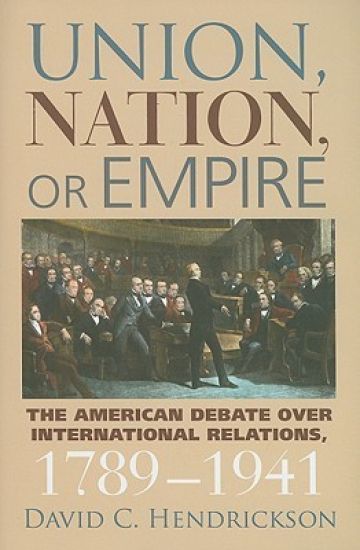
Most overviews of American history depict an isolationist country finally dragged kicking and screaming onto the world stage by the attack on Pearl Harbor. David Hendrickson shows that Americans instead conducted often-raucous debates over international relations in the long epoch customarily seen as isolationist - debates that form the ideological origins of today's foreign policy arguments. ""Union, Nation, or Empire"" is a sequel to Hendrickson's acclaimed ""Peace Pact"", in which he identified a 'unionist paradigm' that defined America's political understanding in 1787. His new book examines how that paradigm was transformed under the impact of the great wars that followed. Skillfully drawn portraits of American statesmen, from Hamilton and Jefferson to Wilson and the two Roosevelts, Hendrickson reveals 'union, nation, and empire' as fundamental categories of political discourse that have shaped our engagement with the world since 1776. Hendrickson argues that the ongoing debate over union, nation, and empire in American history encompasses and illuminates the great questions of international relations - such as whether democracies are as prone to war as monarchies, whether trade promotes peace, or whether empire is compatible with free institutions. Setting these debates in the context of historical events, from the birth of our federal government to America's entry into World War II, he shows the significance of the federal union in our history and demonstrates that internationalism has deep roots in America's past. His assessment of the unionist tradition, in counterpoint to rival ideologies of nationalism and imperialism, includes new insights into the causes of the Civil War and shows how after that conflict the building blocks of the original paradigm were reconstructed to shape the internationalist persuasion in the twentieth century. Deftly combining intellectual, constitutional, and diplomatic history, this gracefully written work revives the compelling rhetoric of yesterday's statesmen to offer readers a lucid narrative of American international thought. It challenges accepted interpretations of our role in the world as it restores the federal union to its proper place in the understanding of American statecraft.

The unit process approach, common in the field of chemical engineering, was introduced about 1962 to the field of environmental engineering. An understanding of unit processes is the foundation for continued learning and for designing treatment systems. The time is ripe for a new textbook that delineates the role of unit process principles in environmental engineering. Suitable for a two-semester course, Water Treatment Unit Processes: Physical and Chemical provides the grounding in the underlying principles of each unit process that students need in order to link theory to practice. Bridging the gap between scientific principles and engineering practice, the book covers approaches that are common to all unit processes as well as principles that characterize each unit process. Integrating theory into algorithms for practice, Professor Hendricks emphasizes the fundamentals, using simple explanations and avoiding models that are too complex mathematically, allowing students to assimilate principles without getting sidelined by excess calculations. Applications of unit processes principles are illustrated by example problems in each chapter. Student problems are provided at the end of each chapter; the solutions manual can be downloaded from the CRC Press Web site. Excel spreadsheets are integrated into the text as tables designated by a "CD" prefix. Certain spreadsheets illustrate the idea of "scenarios" that emphasize the idea that design solutions depend upon assumptions and the interactions between design variables. The spreadsheets can be downloaded from the CRC web site. The book has been designed so that each unit process topic is self-contained, with sidebars and examples throughout the text. Each chapter has subheadings, so that students can scan the pages and identify important topics with little effort. Problems, references, and a glossary are found at the end of each chapter. Most chapters contain downloadable Excel spreadsheets integrated into the text and appendices with additional information. Appendices at the end of the book provide useful reference material on various topics that support the text. This design allows students at different levels to easily navigate through the book and professors to assign pertinent sections in the order they prefer. The book gives your students an understanding of the broader aspects of one of the core areas of the environmental engineering curriculum and knowledge important for the design of treatment systems.
Revisions in Need of Revising: What Went Wrong in the Iraq War
David C. Hendrickson; Robert W. Tucker; Strategic Studies Institute
Lulu.com
2014
nidottu
David C. Hendrickson and Robert W. Tucker examine the contentious debate over the Iraq war and occupation, focusing on the critique that the Bush administration squandered an historic opportunity to reconstruct the Iraqi state because of various critical blunders in planning. Though they conclude that critics have made a number of telling points against the Bush administration's conduct of the Iraq war, they argue that the most serious problems facing Iraq and its American occupiers-criminal anarchy and lawlessness, a raging insurgency, and a society divided into rival and antagonistic groups-were virtually inevitable consequences that flowed from the act of war itself. Military and civilian planners were culpable in failing to plan for certain tasks, but the most serious problems had no good solution. The authors draw attention to a variety of lessons, including the danger that the imperatives of "force protection" may sacrifice the broader political mission of U.S. forces...
Enhance your skills in expert module development, deployment, security, DevOps, and cloudKey FeaturesA step-by-step guide to get you started with PowerShell Core 6.0Harness the capabilities of PowerShell Core 6.0 to perform simple to complex administration tasksLearn core administrative concepts such as scripting, pipelines, and DSCBook DescriptionBeginning with an overview of the different versions of PowerShell, Learn PowerShell Core 6.0 introduces you to VSCode and then dives into helping you understand the basic techniques in PowerShell scripting. You will cover advanced coding techniques, learn how to write reusable code as well as store and load data with PowerShell.This book will help you understand PowerShell security and Just Enough Administration, enabling you to create your own PowerShell repository. The last set of chapters will guide you in setting up, configuring, and working with Release Pipelines in VSCode and VSTS, and help you understand PowerShell DSC. In addition to this, you will learn how to use PowerShell with Windows, Azure, Microsoft Online Services, SCCM, and SQL Server. The final chapter will provide you with some use cases and pro tips.By the end of this book, you will be able to create professional reusable code using security insight and knowledge of working with PowerShell Core 6.0 and its most important capabilities.What you will learnGet to grips with Powershell Core 6.0Explore basic and advanced PowerShell scripting techniquesGet to grips with Windows PowerShell SecurityWork with centralization and DevOps with PowerShellImplement PowerShell in your organization through real-life examplesLearn to create GUIs and use DSC in productionWho this book is forIf you are a Windows administrator or a DevOps user who wants to leverage PowerShell to automate simple to complex tasks, then this book is for you. Whether you know nothing about PowerShell or just enough to get by, this guide will give you what you need to go to take your scripting to the next level. You’ll also find this book useful if you’re a PowerShell expert looking to expand your knowledge in areas such as PowerShell Security and DevOps.