
Kirjahaku
Etsi kirjoja tekijän nimen, kirjan nimen tai ISBN:n perusteella.
1000 tulosta hakusanalla David Ireland


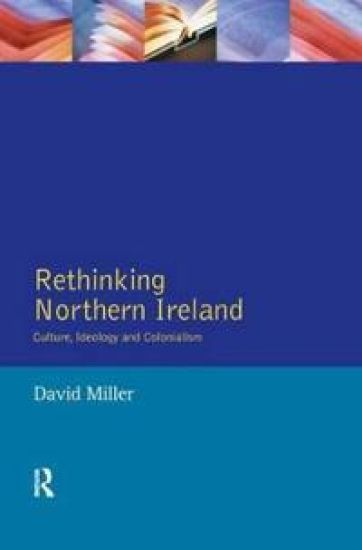
Rethinking Northern Ireland provides a coherent and critical account of the Northern Ireland conflict. Most writing on Northern Ireland is informed by British propaganda, unionist ideology or currently popular 'ethnic conflict' paradigm which allows analysts to wallow in a fascination with tribal loyalty. Rethinking Northern Ireland sets the record straight by reembedding the conflict in Ireland in the history of an literature on imperialism and colonialism. Written by Irish, Scottish and English women and men it includes material on neglected topics such as the role of Britain, gender, culture and sectarianism. It presents a formidable challenge to the shibboleths of contemporary debate on Northern Ireland. A just and lasting peace necessitates thorough re-evaluation and Rethinking Northern Ireland provides a stimulus to that urgent task.
Ireland, Poor Ireland: A Dangerous Man and the Woman He Adored
David T. Morgan
Createspace Independent Publishing Platform
2012
nidottu
Ireland's Winter & Other Poems
David M. Wolf
Createspace Independent Publishing Platform
2015
nidottu

Ireland Adult Activity book: Ireland Inspired Puzzles, Word Games, Riddles and More
David O. Malley
Fun Art Publishing
2021
nidottu
This book asks the crucial question of how it came to pass that on the 25 May 2018, the Irish electorate voted by a landslide in favour of changing its abortion legislation that, for the previous thirty-five years, had been one of the most restrictive regimes in Europe. The author shows how, alongside traditional campaigning tactics such as street demonstrations, door-to-door canvassing, and the distribution of pro-choice merchandise and information leaflets, a key strategy of pro-choice advocacy groups was to encourage first-person abortion story-sharing by women in their efforts to repeal the Eighth Amendment, which had effectively banned abortion provision in the country. The book argues that a normalizing of abortion talk took place in the lead-up to the referendum, with women speaking publicly in unprecedented numbers about their abortion histories. These women storytellers were mirroring certain pro-choice movements in other contexts, where a new ‘sound it loud, say it proud’narrative around abortion experiences has emerged as a central contemporary strategy for destigmatizing abortion discourse.Students and scholars across a range of disciplines, including law, gender studies, sociology, and human geography, will find this book of interest.
Ireland in the Life and Work of C.S. Lewis
David Clare
Springer International Publishing AG
2025
sidottu
Even after he achieved world-wide fame through books such as The Lion, The Witch and The Wardrobe and The Screwtape Letters, the Belfast-born author C.S. Lewis – often regarded as uncomplicatedly English by critics and the general public – proudly and regularly described himself as Irish. What’s more, he frequently incorporated Irish elements into his work. This includes, for example, numerous allusions to Irish mythology, the repeated employment of Hiberno-English and Ulster Scots words and expressions, and a preference for tropes frequently found in Irish (and sometimes specifically Ulster Protestant) writing.
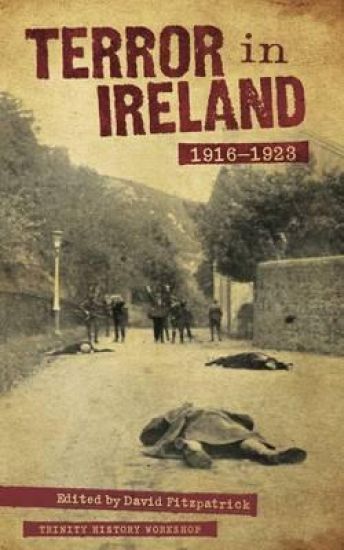
The practice of terror in revolutionary Ireland remains a highly controversial topic, which seldom receives either balanced or dispassionate treatment. This collection of essays is designed to illuminate the varied origins, forms and consequences of terror, whether practised by republicans or forces of the Crown. It is the fifth production of the Trinity History Workshop, an informal group of academic historians, research students, and undergraduates associated with Trinity College, Dublin. The Workshop’s reputation was established in 1986 by its first collection, Ireland and the First World War, subsequently reissued by The Lilliput Press. The current volume is dedicated to the memory of a distinguished former member, the late Peter Hart, whose studies of both revolutionary and counter-revolutionary terror continue to arouse lively and sometimes intemperate debate. Several chapters emerged from papers delivered at a one-day conference in Trinity College in November 2010, while others have been specially commissioned for this book. The contributors, including gifted postgraduate and undergraduate students as well as prominent historians, tackle many facets of terror, such as ‘Bloody Sunday’, the Kilmichael Ambush and the Sack of Balbriggan. Scholars, students, political activists and all those interested in the Irish Revolution will find both provocation and enlightenment in this book. Its purpose is not to assign blame to one party or another, but to offer varied perspectives on one of the most contentious periods of Irish history. The book is enhanced by illustrations, maps and charts.
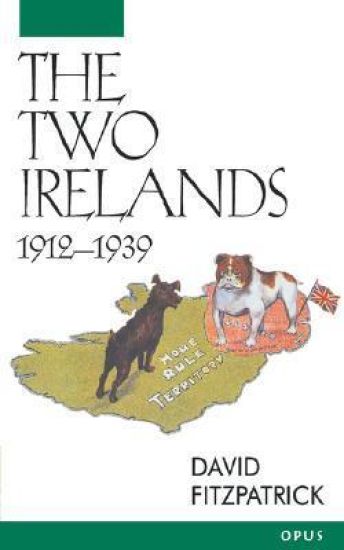
The partition of Ireland created two states embodying rival ideologies and representing two hostile peoples. This book concerns the revolution which prompted partition, and the legacies of that revolution for the Irish Free State and Northern Ireland. Though less bloody than the nationalist uprising after 1916, Unionist defiance against Home Rule proved equally effective in wresting concessions from a hostile British government. Despite their mutual antagonism, the two revolutionary movements were strikingly similar in their reliance on fraternal solidarity and intolerance of dissent. Both new states were immediately engulfed by civil war, resulting in the ruthless suppression of dissident southern repulicans and northern Catholics. The power of each revolutionary elite was consolidated at the expense of alienating substantial minorities, although republican opponents of the Free State (unlike northern Catholics) eventually joined the democratic process. This is the first sustained attempt to integrate the political history of the two Irelands in the era of revolution and partition. It provides an unexpected and provocative slant on each individual history.

In recent years, Ireland has enjoyed a newfound prosperity as Europe's most affluent nation. But tucked away in a far corner of the so-called "Celtic Tiger," that other enduring and authentic country-that small, hidden place of simple magic and romance-still exists. Acclaimed travel writer David Yeadon and his wife, Anne, set out to find it. On the Beara Peninsula of southwest Ireland, the Yeadons discovered their own "little lost world," an enticing Brigadoon of soaring mountain ranges and spectacular coastal scenery, far removed from the touristic hullabaloo of Dublin, Killarney, and the Ring of Kerry. Here is the fabled "Old Ireland," alive and well with music seisuins, hooley dances, and seanachai storytellers-a haven for searchers, healers, artists, and poets hardy enough to have braved the same narrow and winding mountain roads that keep the package-tour coaches out. Bursting with color and life, At the Edge of Ireland is an intrepid wanderer's celebration of a magical, unspoiled, and unforgettable Eire.
The Dependent Empire and Ireland, 1840-1900
David Fieldhouse; Frederick Madden
Greenwood Press
1991
sidottu
This volume--the fifth in a series providing key documents for the constitutional history of the British Empire and Commonwealth from the twelfth century to the twentieth--deals with those dependencies of the Crown where for various reasons it was considered premature to concede fully representative, let alone responsible, government, and also with Ireland where the union with Britain made in 1800 was coming under increasing strain. It covers the years from 1840 to 1900, in parallel with the companion volume IV which dealt with the four main settler colonies. The documents in this volume illustrate the ways in which Britain attempted to devise forms of government it was thought would be, at least in the short term, more suitable for dependencies which had few British settlers who might successfully operate a representative system--and where the majority of indigenous peoples needed protection against such a minority. There was, however, a desire that such colonies should be as self-governing and self-sufficient as possible, but a commitment to trusteeship operated against any rule-of-thumb concession of the sort of constitutions granted contemporaneously to settler colonies. The first section of this volume focuses on British imperial authority and the means whereby it attempted to exercise supervision over the scattered parts of the dependent empire (the so-called British settlements; protectorates under extra-territorial jurisdiction; the use of chartered companies). India is the subject of the second section: documents are here included illustrating the transfer of power from a chartered company back to the Crown and the hesitant moves toward quasi-representation on the Indian councils. A third section is concerned with the collapse of the old representative system in the West Indian colonies and the experiment with a responsive government in Jamaica. The fourth section shows what happened to the original Crown colonies and to new ones acquired in this period, together with adjacent spheres of influence and protectorates. There is then a section dealing with a group of special cases--the Ionian Islands, Cyprus, and Egypt, while the final section deals with the unique problems of Ireland and the attempts made to devolve a measure of internal self-government on John Bull's other Island to appease growing nationalist and inter-sectarian tensions.
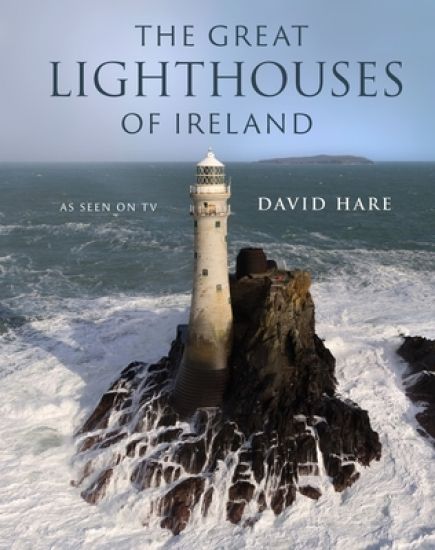
The Great Lighthouses of Ireland is a collection of striking images and fascinating stories about the lighthouses around Ireland’s coast and the extraordinary men and women who lived and worked in them. The book, published to accompany the TV series of the same name, has an encyclopaedic range of subjects, including history, biography, engineering and science, art, wildlife and social history. Stories include the raid on the Fastnet by the IRA, Ireland’s nuclear-powered lighthouse and the heroic rescue of the Daunt Rock lightship. With more than 300 stunning images and archive documents, this beautiful book brings to life the romance and history of the lighthouses that inspire such fascination.
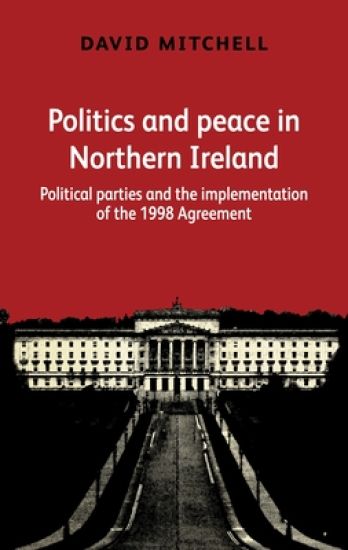
Politics and peace in Northern Ireland analyses the complex and contradictory process of implementing the Good Friday Agreement. Using the lens of security dilemma theory, it begins with an original overview of the conflict, the Agreement and post-1998 politics. The book then explores post-Agreement Northern Ireland through the eyes of each of the four main political parties, showing how they tried to shape the course of peace implementation, and how implementation, in turn, shaped the fates and fortunes of the parties.Drawing on extensive original research, this book explains the promise and limits of the Agreement. It shows how and why the two sides' mutual insecurities repeatedly derailed peace implementation, and reflects on the likely direction of parties and politics in the future. This clearly written and up-to-date book will be of interest to scholars and students of recent Northern Irish history, ethnic conflict and peace-making.