Kirjojen hintavertailu. Mukana 11 244 527 kirjaa ja 12 kauppaa.

Kirjahaku

Etsi kirjoja tekijän nimen, kirjan nimen tai ISBN:n perusteella.

1000 tulosta hakusanalla David L Goetz

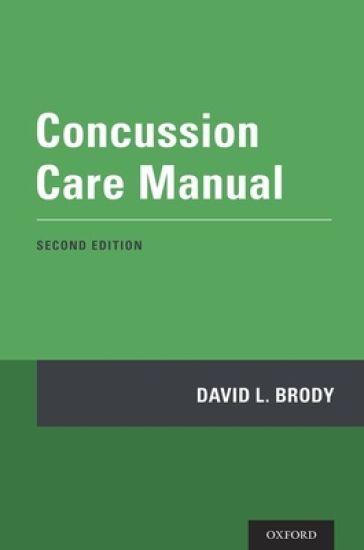
Concussion Care Manual

Concussion Care Manual

David L. Brody

Oxford University Press Inc
2019
nidottu
It is hard to find a medical condition that has as much media attention as concussion. With growing interest in concussion care by the NFL, NHL, NBA, and many other sports organizations, the military, and by regular patients, the number of concussion care providers has rapidly increased. Concussion Care Manual, Second Edition is the perfect step-by-step concussion management guide for clinicians, coaches, and even parents of athletic children. This pocket-sized volume discusses how to manage a variety of complexities associated with concussions including proper diagnosis, management strategies, headaches, anxiety and depression, PTSD, dizziness, fatigue, and changes to mood, balance, personality, and sleep. This book also covers the essential elements on how to set up and run a concussion clinic, focusing on the administrative need-to-know. A much-needed list of references, scales, and resources are provided at the end of the book for further investigation. New to the Second Edition… -Fully revised based on the most up-to-date research in the field across disciplines - Evidence-based, this new edition summarizes what works and what doesn't from recent clinical trials and real world concussion care experience -Provides step by step guidance on how to provide appropriate active management when treating concussion
Loving Stones

Loving Stones

David L. Haberman

Oxford University Press Inc
2020
sidottu
Loving Stones is a study of devotees' conceptions of and worshipful interactions with Mount Govardhan, a sacred mountain located in the Braj region of north-central India that has for centuries been considered an embodied form of Krishna. It is often said that worship of Mount Govardhan "makes the impossible possible." In this book, David L. Haberman examines the perplexing paradox of an infinite god embodied in finite form, wherein each particular form is non-different from the unlimited. He takes on the task of interpreting the worship of a mountain and its stones for a culture in which this practice is quite alien. This challenge involves exploring the interpretive strategies that may explain what seems un-understandable, and calls for theoretical considerations of incongruity, inconceivability, and other realms of the impossible. This aspect of the book includes critical consideration of the place and history of the pejorative concept of idolatry (and its twin, anthropomorphism) in the comparative study of religions. Loving Stones uses the worship of Mount Govardhan as a site to explore ways in which scholars engaged in the difficult work of representing other cultures struggle to make "the impossible possible."
Loving Stones

Loving Stones

David L. Haberman

Oxford University Press Inc
2020
nidottu
Loving Stones is a study of devotees' conceptions of and worshipful interactions with Mount Govardhan, a sacred mountain located in the Braj region of north-central India that has for centuries been considered an embodied form of Krishna. It is often said that worship of Mount Govardhan "makes the impossible possible." In this book, David L. Haberman examines the perplexing paradox of an infinite god embodied in finite form, wherein each particular form is non-different from the unlimited. He takes on the task of interpreting the worship of a mountain and its stones for a culture in which this practice is quite alien. This challenge involves exploring the interpretive strategies that may explain what seems un-understandable, and calls for theoretical considerations of incongruity, inconceivability, and other realms of the impossible. This aspect of the book includes critical consideration of the place and history of the pejorative concept of idolatry (and its twin, anthropomorphism) in the comparative study of religions. Loving Stones uses the worship of Mount Govardhan as a site to explore ways in which scholars engaged in the difficult work of representing other cultures struggle to make "the impossible possible."
The Importance of Work in an Age of Uncertainty

The Importance of Work in an Age of Uncertainty

David L. Blustein

Oxford University Press Inc
2019
sidottu
Work plays an essential role in how we engage with the world, reflecting our desire to be productive, creative, and connected to others. By exploring the inner experiences of people at work, people seeking work, and people transitioning in and out of work, this book provides a rich and complex picture of the contemporary work experience. Drawing from extensive interviews with working people across the US, as well as insights from psychological research on work and careers, the book provides compelling evidence that the nature of work in the US is eroding-- and with powerful psychological and social consequences. From this conclusion, the book also illustrates the rationale and roadmap for a renewed agenda toward full employment and toward fair and dignified jobs for all who want to work. The emotional insights complement the conclusions of the best science and policy analyses on working, culminating in a powerful call for policies that attend to the real lives of individuals in 21st century America. By weaving these various sources together, Blustein delineates a conception of working that conveys its complexity, richness, and capacity for both joy and despair.
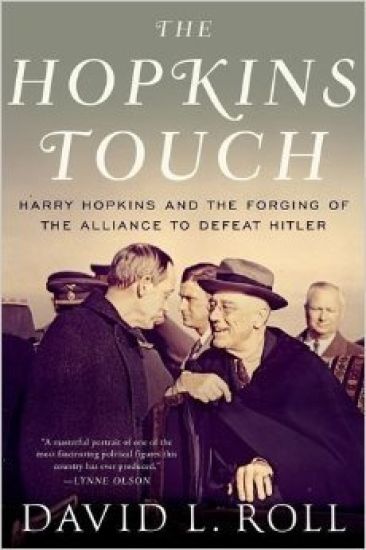
The Hopkins Touch

The Hopkins Touch

David L. Roll

Oxford University Press Inc
2015
nidottu
The Hopkins Touch offers the first portrait in over two decades of the most powerful man in Roosevelt's administration. In this impressive biography, David Roll shows how Harry Hopkins, an Iowa-born social worker who had been an integral part of the New Deal's implementation, became the linchpin in FDR's--and America's--relationships with Churchill and Stalin, and spoke with an authority second only to the president's. Hopkins could take the political risks his boss could not, and proved crucial to maintaining personal relations among the Big Three. Beloved by some--such as Churchill, who believed that Hopkins "always went to the root of the matter"--and trusted by most--including the paranoid Stalin--there were nevertheless those who resented the influence of "the White House Rasputin." Based on newly available sources, The Hopkins Touch is an absorbing, substantial work that offers a fresh perspective on the World War II era and the Allied leaders, through the life of the man who kept them on point until the war was won.
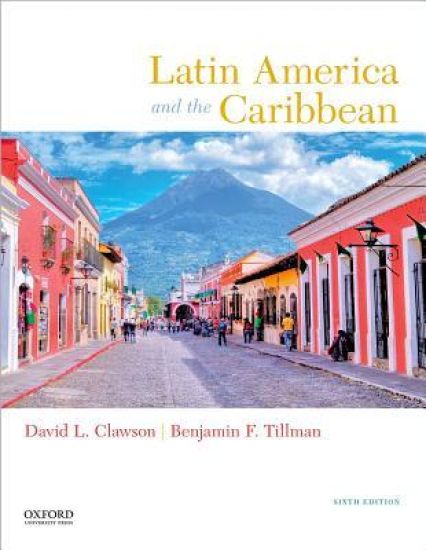
Latin America and the Caribbean

Latin America and the Caribbean

David L. Clawson; Benjamin F. Tillman

Oxford University Press
2017
nidottu
Respected by scholars for its currency, clarity, authority, and rich visual and map program, Latin America and the Caribbean: Lands and Peoples elucidates the commonalities in this highly diverse, rapidly changing region, making it more comprehensive than ever for students and instructors. The sixth edition has been meticulously updated in order to take into account recent changes in the region and to more strongly emphasize environmental concerns.
Braddock's Defeat

Braddock's Defeat

David L. Preston

Oxford University Press Inc
2018
nidottu
On July 9, 1755, British regulars and American colonial troops under the command of General Edward Braddock, commander in chief of the British Army in North America, were attacked by French and Native American forces shortly after crossing the Monongahela River and while making their way to besiege Fort Duquesne in the Ohio Valley, a few miles from what is now Pittsburgh. The long line of red-coated troops struggled to maintain cohesion and discipline as Indian warriors quickly outflanked them and used the dense cover of the woods to masterful and lethal effect. Within hours, a powerful British army was routed, its commander mortally wounded, and two-thirds of its forces casualties in one the worst disasters in military history. David Preston's gripping and immersive account of Braddock's Defeat, also known as the Battle of the Monongahela, is the most authoritative ever written. Using untapped sources and collections, Preston offers a reinterpretation of Braddock's Expedition in 1754 and 1755, one that does full justice to its remarkable achievements. Braddock had rapidly advanced his army to the cusp of victory, overcoming uncooperative colonial governments and seemingly insurmountable logistical challenges, while managing to carve a road through the formidable Appalachian Mountains. That road would play a major role in America's expansion westward in the years ahead and stand as one of the expedition's most significant legacies. The causes of Braddock's Defeat are debated to this day. Preston's work challenges the stale portrait of an arrogant European officer who refused to adapt to military and political conditions in the New World and the first to show fully how the French and Indian coalition achieved victory through effective diplomacy, tactics, and leadership. New documents reveal that the French Canadian commander, a seasoned veteran named Captain Beaujeu, planned the attack on the British column with great skill, and that his Native allies were more disciplined than the British regulars on the field. Braddock's Defeat establishes beyond question its profoundly pivotal nature for Indian, French Canadian, and British peoples in the eighteenth century. The disaster altered the balance of power in America, and escalated the fighting into a global conflict known as the Seven Years' War. Those who were there, including George Washington, Thomas Gage, Horatio Gates, Charles Lee, and Daniel Morgan, never forgot its lessons, and brought them to bear when they fought again-whether as enemies or allies-two decades hence. The campaign had awakened many British Americans to their provincial status in the empire, spawning ideas of American identity and anticipating the social and political divisions that would erupt in the American Revolution.
Mechanical Circulatory Support

Mechanical Circulatory Support

David L. Joyce; Lyle D. Joyce

Oxford University Press Inc
2020
sidottu
Mechanical Circulatory Support: Principles and Applications offers innovative approaches to complex clinical scenarios and represents the current state-of-the-art for managing patients on mechanical circulatory support devices. Topics are presented in a concise fashion, making it a practical resource for care givers who need a user's manual in the heat of the moment during patient care as well as a reference for a better understanding of the unique components of every device available for human use. This book provides a comprehensive, up-to-date analysis of the most relevant issues facing health care providers in the management of advanced heart failure. With content that features patient selection strategies, implantation techniques, device specific considerations, and management of clinical challenges in the post-operative setting, this textbook offers evidence-based answers to the complex questions facing nurses, perfusionists, advanced practice providers, and physicians.
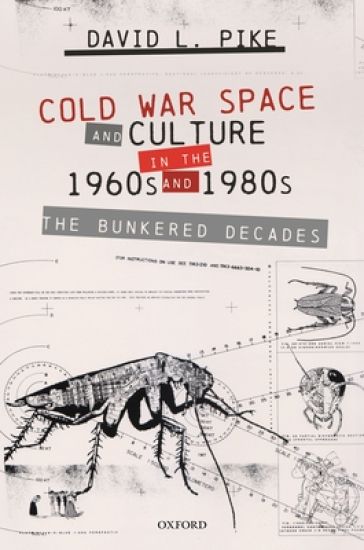
Cold War Space and Culture in the 1960s and 1980s

Cold War Space and Culture in the 1960s and 1980s

David L. Pike

Oxford University Press
2021
sidottu
Cold War Space and Culture in the 1960s and 1980s: The Bunkered Decades studies the two periods in which Americans were actively encouraged to excavate their own backyards while governments the world over exhausted their budgets on fortified super-shelters and megaton bombs. The dreams and nightmares inspired by the spectre of nuclear destruction were expressed in images and forms from comics, movies, and pulp paperbacks to policy documents, protest movements, and survivalist tracts. Illustrated with photographs, artwork, and movie and television stills of real and imagined fallout shelters and other bunker fantasies, award-winning author David L. Pike's continues his decades-long exploration of the meanings of modern undergrounds. Ranging widely across disciplines, this volume finds unexpected connections between cultural icons and forgotten texts, plumbs the bunker's stratifications of class, region, race, and gender, and traces the often unrecognized through-lines leading from the 1960s and the less-studied 1980s into the present. Although the Cold War ended over 30 years ago, its legacy looms large in anxieties around security, borders, and all manners of imminent apocalypse. Treating the bunker in its concrete presence and in its flightiest fantasies while attending equally to its uniquely American desires and pathologies and to its global impact, Cold War Space and Culture in the 1960s and 1980s proposes a new way to understand the outsized afterlife of the bunkered decades.
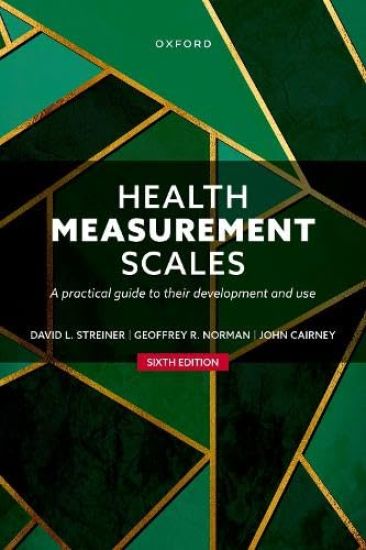
Health Measurement Scales

Health Measurement Scales

David L. Streiner; Geoffrey R. Norman; John Cairney

Oxford University Press
2024
nidottu
Health Measurement Scales is the ultimate guide to appraising, developing, and validating measurement scales that are used in the health sciences. Written in a clear and practical style, this guide enables clinicians and researchers to both develop scales to measure subjective states and non-tangible health outcomes, as well as evaluate and differentiate among existing tools. Topics presented in the order that scales are constructed: how the individual items are developed, biases that can affect responses, various response options, how to select the best items in the set, how to combine them into a scale; and finally how to determine the reliability and validity of the scale. Fully updated to reflect recent developments in the field and the latest survey methods. The new edition contains updated information on generalizability theory and item response theory, and integration of qualitative research methods into scale design and testing. Including guidelines, appendices and checklists, this useful book is a must-read for any practitioner dealing with any kind of subjective measurement.
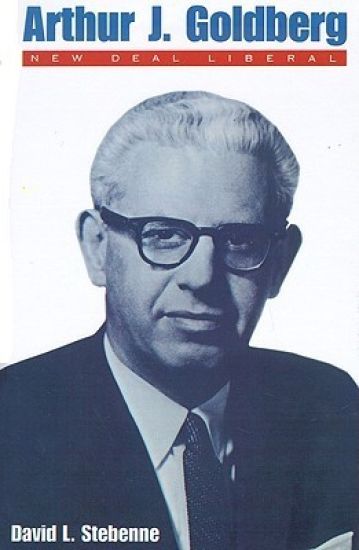
Arthur J. Goldberg

Arthur J. Goldberg

David L. Stebenne

Oxford University Press Inc
1996
sidottu
This is a solid, well-detailed account of Arthur J. Goldberg, who played a leading role in American political life from the Second World War to the end of the 1960s. A prominent and defining figure in the American labour movement, Goldberg became Secretary of Labor under the Kennedy Administration before being named a justice to the Supreme Court. He was also ambassador to the United Nations under Johnson's presidency.
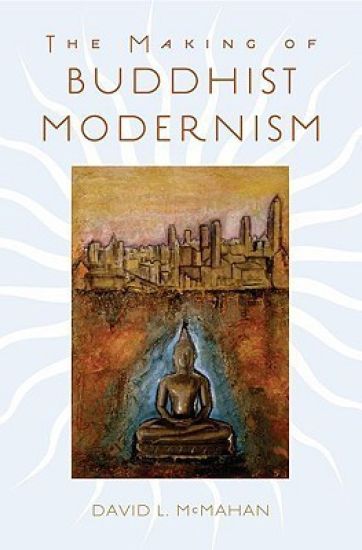
The Making of Buddhist Modernism

The Making of Buddhist Modernism

David L. McMahan

Oxford University Press Inc
2008
sidottu
In this book, David McMahan offers the first comprehensive attempt to chart the development of "modern Buddhism." His position is critical but empathetic: while he presents modern Buddhism as a construction of numerous parties with varying interests, he does not reduce it to a mistake, a misrepresentation, or a fabrication. Rather, he presents modern Buddhism as a complex historical process constituted by a variety of responses - sometimes trivial, often profound - to some of the most important concerns of the modern era.
The Faiths of the Founding Fathers

The Faiths of the Founding Fathers

David L. Holmes

Oxford University Press Inc
2006
sidottu
An in-depth examination of the spiritual beliefs of America's founding fathers provides an account of the religious culture of the late colonial era and looks at individual beliefs of men and women who played a significant role in American history.
Oxford American Handbook of Surgery

Oxford American Handbook of Surgery

David L. Berger

Oxford University Press Inc
2009
nidottu
The Oxford American Handbook of Surgery is the essential ready reference guide for medical students, residents, and practicing surgeons. By authors from Harvard Medical Schools Department of Surgery, the Handbook covers the entire range of surgical specialties plus principles of surgery, surgical pathology, and anesthesiology. Clinical pearls, highlighted definitions, and checklists aid the student and house officer in understanding and using information integral to the discipline of surgery.
Five to Rule Them All

Five to Rule Them All

David L. Bosco

Oxford University Press Inc
2009
sidottu
From the Berlin Airlift to the Iraq War, the UN Security Council has stood at the heart of global politics. Part public theater, part smoke-filled backroom, the Council has enjoyed notable successes and suffered ignominious failures, but it has always provided a space for the five great powers to sit down together. Five to Rule Them All tells the inside story of this remarkable diplomatic creation. Drawing on extensive research, including dozens of interviews with serving and former ambassadors on the Council, the book chronicles political battles and personality clashes as it opens the closed doors of its meeting room. What emerges here is a revealing portrait of the most powerful diplomatic body in the world. When the five permanent members are united, David Bosco points out, the Council can wage war, impose blockades, redraw borders, unseat governments, and levy sanctions. There are almost no limits to its authority. Yet the Council exists in a world of realpolitik. Its members are, above all, powerful states with their own diverging interests. Time and again, the Council's performance has dashed the hope that its members would somehow work together to establish a more peaceful world. But if these lofty hopes have been unfulfilled, the Council has still served an invaluable purpose: to prevent conflict between the Great Powers. In this role, the Council has been an unheralded success. As Bosco reminds us, massacres in the Balkans and chaos in Iraq are human tragedies, but conflicts between the world's great powers in the nuclear age would be catastrophic. In this lively, fast-moving, and often humorous narrative, Bosco illuminates the role of the Security Council in the postwar world, making a compelling case for the enduring importance of the five who rule them all.
Constitutional Fictions

Constitutional Fictions

David L Faigman

Oxford University Press Inc
2008
sidottu
David Faigman's Constitutional Fictions is the first book-length examination of the role of fact-finding in constitutional cases. Because the role of facts is central to the day-to-day realities of constitutional law, Faigman provides an extraordinarily important analysis of a subject that has been largely ignored by constitutional scholars. To show how contemporary facts play into constitutional analysis, Faigman examines some of the most controversial subjects of the late twentieth century, including physician-assisted suicide, abortion, sexual predators, free speech, and privacy. The Constitutional is popularly thought of as a static document that embodies fundamental values and foundational principles of governance. However, the values and principles that the Constitution embodies must be applied to the circumstances and challenges of changing times. Constitutional Fictions explains how contemporary facts should be incorporated into constitutional decisions, thus allowing the Constitution to endure for the ages
The Criminology of Place

The Criminology of Place

David L. Weisburd; Elizabeth R. Groff; Sue-Ming Yang

Oxford University Press Inc
2012
sidottu
The study of crime has focused primarily on why particular people commit crime or why specific communities have higher crime levels than others. In The Criminology of Place, David Weisburd, Elizabeth Groff, and Sue-Ming Yang present a new and different way of looking at the crime problem by examining why specific streets in a city have specific crime trends over time. Based on a 16-year longitudinal study of crime in Seattle, Washington, the book focuses our attention on small units of geographic analysis-micro communities, defined as street segments. Half of all Seattle crime each year occurs on just 5-6 percent of the city's street segments, yet these crime hot spots are not concentrated in a single neighborhood and street by street variability is tremendous. Weisburd, Groff, and Yang set out to explain why. The Criminology of Place shows how much essential information about crime is inevitably lost when we focus on larger units like neighborhoods or communities. Reorienting the study of crime by focusing on small units of geography, the authors identify a large group of possible crime risk and protective factors for street segments and an array of interventions that could be implemented to address them. The Criminology of Place is a groundbreaking book that radically alters traditional thinking about the crime problem and what we should do about it. "This is a very important book for policy-makers, practitioners and academics. The authors carefully and systematically build their case that effective crime prevention efforts must be focused first on a small number of high crime problem places. The detail of their arguments transforms hotspot policing and prevention in the same way keyhole surgery has transformed medical care. Their case is persuasive and, above all, evidence based" -- Peter Neyroud CBE QPM, University of Cambridge and Former Chief Constable and Chief Executive of the National Policing Improvement Agency
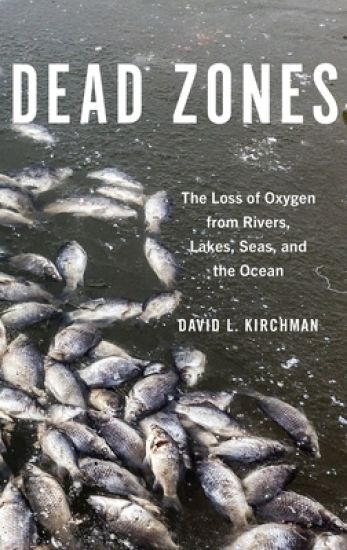
Dead Zones

Dead Zones

David L. Kirchman

Oxford University Press Inc
2021
sidottu
Dead zones are on the rise... Human activity has caused an increase in uninhabitable, oxygen-poor zones--also known as "dead zones"--in our waters. Oxygen is the third most abundant element in the universe, and it is a necessity for nearly all life on Earth. Yet many rivers, estuaries, coastal waters, and parts of the open ocean lack enough of it. In this book, David L. Kirchman explains the impacts of dead zones and provides an in-depth history of oxygen loss in water. He details the role the agricultural industry plays in water pollution, showcasing how fertilizers contaminate water supplies and kickstart harmful algal blooms in local lakes, reservoirs, and coastal oceans. Algae decomposition requires so much oxygen that levels drop low enough to kill fish, destroy bottom-dwelling biota, reduce biological diversity, and rearrange food webs. We can't undo the damage completely, but we can work together to reduce the size and intensity of dead zones in places like the Gulf of Mexico, Chesapeake Bay, and the Baltic Sea. Not only does Kirchman clearly outline what dead zones mean for humanity, he also supplies ways we can reduce their deadly impact on human and aquatic life. Nutrient pollution in some regions has already begun to decline because of wastewater treatment, buffer zones, cover crops, and precision agriculture. More needs to be done, though, to reduce the harmful impact of existing dead zones and to stop the thousands of new ones from cropping up in our waters. Kirchman provides insight into the ways changing our diet can reduce nutrient pollution while also lowering greenhouse gasses emitted by the agricultural industry. Individuals can do something positive for their health and the world around them. The resulting book allows readers interested in the environment--whether students, policymakers, ecosystem managers, or science buffs--to dive into these deadly zones and discover how they can help mitigate the harmful effects of oxygen-poor waters today.
Is the International Legal Order Unraveling?

Is the International Legal Order Unraveling?

David L. Sloss

OXFORD UNIVERSITY PRESS INC
2023
sidottu
This book grows out of the work of a study group convened by the American Branch of the International Law Association. The group had a mandate to examine threats to the rules-based international order and possible responses. The several chapters in the book-all of which are written by distinguished international law scholars--generally support the conclusion that the rules-based international order confronts significant challenges, but it is not unraveling--at least, not yet. Climate change is the biggest wild card in trying to predict the future. If the world's major powers--especially the United States and China--cooperate with each other to combat climate change, then other threats to the rules-based order should be manageable. If the world's major powers fail to address the climate crisis by 2040 or 2050, the other threats addressed in this volume may come to be seen as trivial in comparison. The book consists of fourteen chapters, plus an introduction. Three chapters address specific threats to the rules-based international order: climate change, autonomous weapons, and cyber weapons. Eight chapters address particular substantive areas of international law: jus ad bellum, jus in bello, trade law, investment law, anti-bribery law, human rights law, international criminal law, and migration law. The remaining chapters provide a range of perspectives on the past evolution and likely future development of the rules-based international order as a whole.