Kirjojen hintavertailu. Mukana 11 627 383 kirjaa ja 12 kauppaa.

Kirjahaku

Etsi kirjoja tekijän nimen, kirjan nimen tai ISBN:n perusteella.

1000 tulosta hakusanalla David Levine

Messianic Judaism Class, Student Book

Messianic Judaism Class, Student Book

Rabbi Jim Appel; Rabbi Jonathan Bernis; Rabbi David Levine

Olive Press Publisher
2011
pokkari
Is God tugging your heart to learn more about the Jewish roots of the Christian faith and the Jewishness of the Bible?This is a class that will cover all the basics while also feeding and blessing your soul at the same time.It is written by Rabbi Jim Appel who has been teaching this course in ongoing Tuesday night sessions for more than two decades.There are many astounding revelations and "Aha " moments for the students. Your attitude toward your Savior and His Word will never be the same after studying this course After all, He was born and lived as a Jew and all His disciples and apostles were Jewish.
Better You, Better Dog, Better Life

Better You, Better Dog, Better Life

Tricia Montgomery; Ernie Ward; David Levine

47 Journals LLC
2019
pokkari
Who better to get fit with than your best friend, your dog. Based on principles of MOTIVATION, NUTRITION, PHYSICAL ACTIVITY, and BUILDING COMMUNITY, let our experts guide you to an optimal lifestyle that benefits you and your dog. Tricia Montgomery is the founder of K9 Fit Club and an expert at motivating people like you to break down barriers to better health through physical activity and better nutrition. Veterinarian Dr. Ernie Ward shows you how to take food for you and your dog to a healthy optimum. Physical therapist Dr. David Levine provides the expertise to get you and your dog on a healthy road to physical activity. Together, these nationally recognized experts detail for you the best path to gain total control of your health accompanied by your faithful friend. Your dog deserves the best, and so do you. Get started in only 30 days
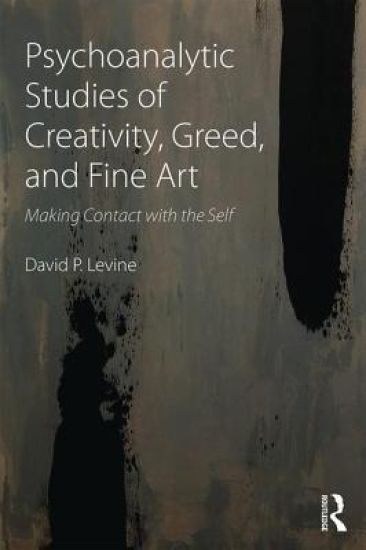
Psychoanalytic Studies of Creativity, Greed, and Fine Art
Throughout the history of psychoanalysis, the study of creativity and fine art has been a special concern. Psychoanalytic Studies of Creativity, Greed and Fine Art: Making Contact with the Self makes a distinct contribution to the psychoanalytic study of art by focusing attention on the relationship between creativity and greed. This book also focuses attention on factors in the personality that block creativity, and examines the matter of the self and its ability to be present and exist as the essential element in creativity. Using examples primarily from visual art David Levine explores the subjects of creativity, empathy, interpretation and thinking through a series of case studies of artists, including Robert Irwin, Ad Reinhardt, Susan Burnstine, and Mark Rothko. Psychoanalytic Studies of Creativity, Greed and Fine Art explores the highly ambivalent attitude of artists toward making their presence known, an ambivalence that is evident in their hostility toward interpretation as a way of knowing. This is discussed with special reference to Susan Sontag’s essay on the subject of interpretation.Psychoanalytic Studies of Creativity, Greed and Fine Art contributes to a long tradition of psychoanalytically influenced writing on creativity including the work of Deri, Kohut, Meltzer, Miller and Winnicott among others. It will be of interest to psychoanalysts, psychoanalytic psychotherapists, historians and theorists of art.
Psychoanalytic Studies of Creativity, Greed, and Fine Art
Throughout the history of psychoanalysis, the study of creativity and fine art has been a special concern. Psychoanalytic Studies of Creativity, Greed and Fine Art: Making Contact with the Self makes a distinct contribution to the psychoanalytic study of art by focusing attention on the relationship between creativity and greed. This book also focuses attention on factors in the personality that block creativity, and examines the matter of the self and its ability to be present and exist as the essential element in creativity. Using examples primarily from visual art David Levine explores the subjects of creativity, empathy, interpretation and thinking through a series of case studies of artists, including Robert Irwin, Ad Reinhardt, Susan Burnstine, and Mark Rothko. Psychoanalytic Studies of Creativity, Greed and Fine Art explores the highly ambivalent attitude of artists toward making their presence known, an ambivalence that is evident in their hostility toward interpretation as a way of knowing. This is discussed with special reference to Susan Sontag’s essay on the subject of interpretation.Psychoanalytic Studies of Creativity, Greed and Fine Art contributes to a long tradition of psychoanalytically influenced writing on creativity including the work of Deri, Kohut, Meltzer, Miller and Winnicott among others. It will be of interest to psychoanalysts, psychoanalytic psychotherapists, historians and theorists of art.
Profound Ignorance

Profound Ignorance

David Lawrence Levine

Lexington Books
2015
sidottu
Returning from the battle of Potidaea, Socrates reenters the city only to find it changed, with new leadership in the making. Socrates assumes the mask of physician in order to diagnose the city’s condition in the persons of the young and charismatic Charmides and his ambitious and formidable guardian Critias. Beneath the cloak of their self-presentations, Doctor Socrates discovers a profound and communicable disease: their incipient tyranny, “the greatest sickness of the soul.” He thereby is able to “foresee” their future and their role in the oligarchy (The Thirty Tyrants) that overthrows the democracy at the end of the Peloponnesian War. The unusual diagnostic instrument of this physician of the city: the question of sophrosyne (customarily translated as moderation). The analysis of the soul of this popular favorite uncovers a distorted development with little prospect of self-knowledge, and that of the guardian, a profound disabling ignorance, deluded and perverted by his presumed practical wisdom. Alongside on the bench sits Socrates whose ignorance, by contrast, shows itself to be enabling, measured and prospective. In this way, the profound ignorance of the tyrant and the profound ignorance of the philosopher are made to mutually illuminate one another. In the process, Levine brings us to see Plato’s extended apologia or defense of Socrates as “a teacher of tyrants” and his counter-indictment of the city for its unthinking acceptance of its leaders. Moreover, in the face of modern skepticism, we are brought to see how such “value judgments” are possible, how Plato conceives the prospects for practical judgment (phron?sis). In addition we witness the care with which Plato presents his penetrating diagnoses even amidst compromised circumstances. Levine, further, is at pains to situate the specific dialogic issues in their larger significance for the philosophic tradition. Lastly, the author’s inviting style encourages the reader to think along with Socrates. The question of tyranny is always relevant. The question of our ignorance is always immediate. The conversation about sophrosyne needs to be resumed.
Profound Ignorance

Profound Ignorance

David Lawrence Levine

Lexington Books
2017
nidottu
Returning from the battle of Potidaea, Socrates reenters the city only to find it changed, with new leadership in the making. Socrates assumes the mask of physician in order to diagnose the city’s condition in the persons of the young and charismatic Charmides and his ambitious and formidable guardian Critias. Beneath the cloak of their self-presentations, Doctor Socrates discovers a profound and communicable disease: their incipient tyranny, “the greatest sickness of the soul.” He thereby is able to “foresee” their future and their role in the oligarchy (The Thirty Tyrants) that overthrows the democracy at the end of the Peloponnesian War. The unusual diagnostic instrument of this physician of the city: the question of sophrosyne (customarily translated as moderation). The analysis of the soul of this popular favorite uncovers a distorted development with little prospect of self-knowledge, and that of the guardian, a profound disabling ignorance, deluded and perverted by his presumed practical wisdom. Alongside on the bench sits Socrates whose ignorance, by contrast, shows itself to be enabling, measured and prospective. In this way, the profound ignorance of the tyrant and the profound ignorance of the philosopher are made to mutually illuminate one another. In the process, Levine brings us to see Plato’s extended apologia or defense of Socrates as “a teacher of tyrants” and his counter-indictment of the city for its unthinking acceptance of its leaders. Moreover, in the face of modern skepticism, we are brought to see how such “value judgments” are possible, how Plato conceives the prospects for practical judgment (phron?sis). In addition we witness the care with which Plato presents his penetrating diagnoses even amidst compromised circumstances. Levine, further, is at pains to situate the specific dialogic issues in their larger significance for the philosophic tradition. Lastly, the author’s inviting style encourages the reader to think along with Socrates. The question of tyranny is always relevant. The question of our ignorance is always immediate. The conversation about sophrosyne needs to be resumed.

The American College and the Culture of Aspiration, 1915–1940
Is higher education a right or a privilege? Who should go to college? What should they study there? These questions were hotly debated between the world wars, when an unprecedented boom in college enrollments forced Americans to struggle between their belief in the importance of educational opportunity and their desire to preserve the existing social structure. In The American College and the Culture of Aspiration, 1915–1940, David O. Levine offers the first in-depth history of higher education during this era, a period when colleges and universities became arbiters of social and economic mobility and a hierarchy of schools evolved to meet growing demands for occupational training and socialization.
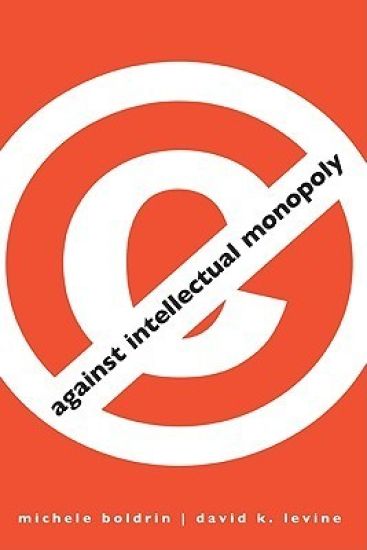
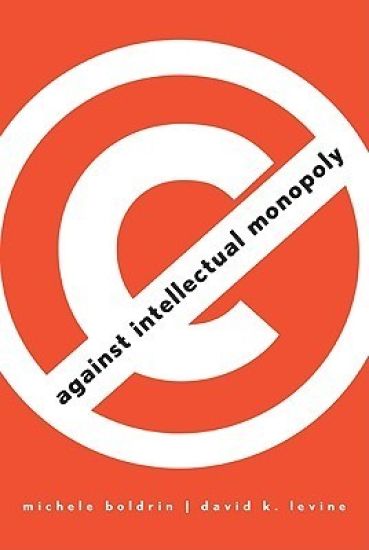
Against Intellectual Monopoly

Against Intellectual Monopoly

Boldrin Michele; Levine David K.

Cambridge University Press
2010
pokkari
'Intellectual property' - patents and copyrights - have become controversial. We witness teenagers being sued for 'pirating' music - and we observe AIDS patients in Africa dying due to lack of ability to pay for drugs that are high priced to satisfy patent holders. Are patents and copyrights essential to thriving creation and innovation - do we need them so that we all may enjoy fine music and good health? Across time and space the resounding answer is: No. So-called intellectual property is in fact an 'intellectual monopoly' that hinders rather than helps the competitive free market regime that has delivered wealth and innovation to our doorsteps. This book has broad coverage of both copyrights and patents and is designed for a general audience, focusing on simple examples. The authors conclude that the only sensible policy to follow is to eliminate the patents and copyright systems as they currently exist.
Against Intellectual Monopoly

Against Intellectual Monopoly

Boldrin Michele; Levine David K.

Cambridge University Press
2008
sidottu
'Intellectual property' - patents and copyrights - have become controversial. We witness teenagers being sued for 'pirating' music - and we observe AIDS patients in Africa dying due to lack of ability to pay for drugs that are high priced to satisfy patent holders. Are patents and copyrights essential to thriving creation and innovation - do we need them so that we all may enjoy fine music and good health? Across time and space the resounding answer is: No. So-called intellectual property is in fact an 'intellectual monopoly' that hinders rather than helps the competitive free market regime that has delivered wealth and innovation to our doorsteps. This book has broad coverage of both copyrights and patents and is designed for a general audience, focusing on simple examples. The authors conclude that the only sensible policy to follow is to eliminate the patents and copyright systems as they currently exist.
David's Secret Soccer Goals

David's Secret Soccer Goals

Caroline Levine

Jessica Kingsley Publishers
2004
pokkari
David is much like any other boy who loves playing soccer, but when the chance comes up to go and stay at Champions Soccer Camp, David has to face up to his biggest embarrassment, wetting the bed. David stands up bravely to his sister's taunts and a nervous visit to the doctor, but will he be able to control his bed wetting in time for Camp?David's Secret Soccer Goals is a warm and sensitive look inside the mind of a boy with bed wetting problems. It delicately highlights the fears and worries that a child in this position can go through, whilst also giving practical advice on how to deal positively with the situation.
Levine's Guide to SPSS for Analysis of Variance

Levine's Guide to SPSS for Analysis of Variance

Sanford L. Braver; David P. MacKinnon; Melanie Page

Psychology Press
2003
nidottu
A greatly expanded and heavily revised second edition, this popular guide provides instructions and clear examples for running analyses of variance (ANOVA) and several other related statistical tests of significance with SPSS. No other guide offers the program statements required for the more advanced tests in analysis of variance. All of the programs in the book can be run using any version of SPSS, including versions 11 and 11.5. A table at the end of the preface indicates where each type of analysis (e.g., simple comparisons) can be found for each type of design (e.g., mixed two-factor design). Providing comprehensive coverage of the basic and advanced topics in ANOVA, this is the only book available that provides extensive coverage of SPSS syntax, including the commands and subcommands that tell SPSS what to do, as well as the pull-down menu point-and-click method (PAC). Detailed explanation of the syntax, including what is necessary, desired, and optional helps ensure that users can validate the analysis being performed. The book features the output of each design along with a complete explanation of the related printout. The new edition was reorganized to provide all analysis related to one design type in the same chapter. It now features expanded coverage of analysis of covariance (ANCOVA) and mixed designs, new chapters on designs with random factors, multivariate designs, syntax used in PAC, and all new examples of output with complete explanations. The new edition is accompanied by downloadable resources with all of the book's data sets, as well as exercises for each chapter. This book is ideal for readers familiar with the basic concepts of the ANOVA technique including both practicing researchers and data analysts, as well as advanced students learning analysis of variance.
Levine's Guide to SPSS for Analysis of Variance

Levine's Guide to SPSS for Analysis of Variance

Sanford L. Braver; David P. MacKinnon; Melanie Page

Psychology Press Ltd
2016
sidottu
A greatly expanded and heavily revised second edition, this popular guide provides instructions and clear examples for running analyses of variance (ANOVA) and several other related statistical tests of significance with SPSS. No other guide offers the program statements required for the more advanced tests in analysis of variance. All of the programs in the book can be run using any version of SPSS, including versions 11 and 11.5. A table at the end of the preface indicates where each type of analysis (e.g., simple comparisons) can be found for each type of design (e.g., mixed two-factor design). Providing comprehensive coverage of the basic and advanced topics in ANOVA, this is the only book available that provides extensive coverage of SPSS syntax, including the commands and subcommands that tell SPSS what to do, as well as the pull-down menu point-and-click method (PAC). Detailed explanation of the syntax, including what is necessary, desired, and optional helps ensure that users can validate the analysis being performed. The book features the output of each design along with a complete explanation of the related printout. The new edition was reorganized to provide all analysis related to one design type in the same chapter. It now features expanded coverage of analysis of covariance (ANCOVA) and mixed designs, new chapters on designs with random factors, multivariate designs, syntax used in PAC, and all new examples of output with complete explanations. The new edition is accompanied by downloadable resources with all of the book's data sets, as well as exercises for each chapter. This book is ideal for readers familiar with the basic concepts of the ANOVA technique including both practicing researchers and data analysts, as well as advanced students learning analysis of variance.