Kirjojen hintavertailu. Mukana 12 428 195 kirjaa ja 12 kauppaa.

Kirjahaku

Etsi kirjoja tekijän nimen, kirjan nimen tai ISBN:n perusteella.

1000 tulosta hakusanalla David Lodge

The Campus Trilogy: Changing Places; Small World; Nice Work
"A trio of dazzling novels in a comic mode that the author has now made completely his own...a cause for celebration." -The New York Times Book Review David Lodge's three delightfully sophisticated campus novels, now gathered together in one volume, expose the world of academia at its best-and its worst. In Changing Places, we meet Philip Swallow, British lecturer in English at the University of Rummidge, and the flamboyant American Morris Zapp of Euphoric State University, who participate in a professorial exchange program at the close of the tumultuous sixties. Ten years later in Small World, older but not noticeably wiser, they are let loose on the international conference circuit-along with a memorable and somewhat oversexed cast of dozens. And in Nice Work, the leftist feminist Dr. Robyn Penrose at Rummidge University is assigned to shadow the director of a local engineering firm, sparking a collision of ideologies and lifestyles that seems unlikely to foster anything other than mutual antipathy.
A Man of Parts

A Man of Parts

David Lodge

PENGUIN BOOKS
2012
nidottu
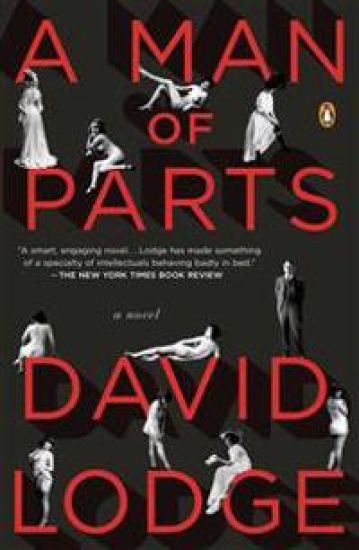
A riveting novel about the remarkable life--and many loves--of author H. G. Wells H. G. Wells, author of The Time Machine and War of the Worlds, was one of the twentieth century's most prophetic and creative writers, a man who immersed himself in socialist politics and free love, whose meteoric rise to fame brought him into contact with the most important literary, intellectual, and political figures of his time, but who in later years felt increasingly ignored and disillusioned in his own utopian visions. Novelist and critic David Lodge has taken the compelling true story of Wells's life and transformed it into a witty and deeply moving narrative about a fascinating yet flawed man. Wells had sexual relations with innumerable women in his lifetime, but in 1944, as he finds himself dying, he returns to the memories of a select group of wives and mistresses, including the brilliant young student Amber Reeves and the gifted writer Rebecca West. As he reviews his professional, political, and romantic successes and failures, it is through his memories of these women that he comes to understand himself. Eloquent, sexy, and tender, the novel is an artfully composed portrait of Wells's astonishing life, with vivid glimpses of its turbulent historical background, by one of England's most respected and popular writers.
Jane Austen: Emma

Jane Austen: Emma

David Lodge

Red Globe Press
1991
nidottu
David Lodge's Emma was one of the first Macmillan Casebooks and has proved one of the most popular. Three new essays have been added in this new edition, reflecting new critical approaches such as feminism and deconstruction. The new material complements the classic studies by critics such as Arnold Kettle and Lionel Trilling. A revised and extended introduction puts the changing interpretation of Jane Austen's novel in historical context and, together with an updated Bibliography, directs the student to useful further reading.
Language of Fiction

Language of Fiction

David Lodge

Routledge
2002
sidottu
"The Language of Fiction" was the first book of criticism by the novelist David Lodge. In it he established a fresh approach to the appreciation of literature that focuses the reader's attention on the significance of language. This edition has a new foreword from David Lodge and includes in its entirety the comprehensive afterword from the 1984 edition.
The Language of Fiction

The Language of Fiction

David Lodge

Routledge
2002
nidottu
Language of Fiction was the first book of criticism by the renowned novelist and critic David Lodge. His uniquely informed perspective - he was already the author of three successful novels at the time of its first publication in 1966 - and lucid exposition meant that the work proved a landmark of literary criticism, not least because it succeeded in communicating a radically new vision of English literature to a readership that reached well beyond the bounds of the academy. Now reissued with a new foreword, this major work from the pen of one of England's finest living writers is essential reading for all those who care about the creation and appreciation of literature.
Small World

Small World

David Lodge

Grand Central Publishing
1991
nidottu
Veteran rivals for an exclusive academic chair (recently endowed with $100,000 a year) do scholarly battle with each other in what the Washington Post Book World called a delectable comedy of bad manners . . . infused with a rare creative exuberance. From the author of the award-winning Changing Places.
The Novelist at the Crossroads

The Novelist at the Crossroads

David Lodge

CRC Press Inc
2026
sidottu
‘A superb demonstration of the fact that a serious professional criticism can be focused close a genuine creative career, that the two activities are not distinct but lie in one field. That field requires all the resources of intelligence, moral humanity and logic: and these are the qualities that come out in this book in full measure. ‘ Malcolm Bradbury, New Society‘We are conscious of ourselves as unique, historic individuals, living together in societies by virtue of certain common assumptions and methods of communication; we are conscious that our sense of identity, of happiness and unhappiness, is defined by small things as well as large; we seek to adjust our lives, individually and communally, to some order or system of values which, however, we know is always at the mercy of chance and contingency. It is this sense of reality which realism imitates; and it seems likely that the latter will survive as long as the former.’ – David Lodge, The Novelist at the CrossroadsThe Novelist at the Crossroads contains some of the sharpest and most insightful pieces of David Lodge’s literary criticism, spanning the topics of fiction and Catholicism, modernism and utopia. From the titular essay, where Lodge defends a critical pluralism, to the concluding chapter where he identifies three types of critic – the ‘academic’, the ‘creative writer’ and the ‘freelancer’ - the essays exhibit Lodge’s acknowledgement of human beings as fragile yet resourceful and are shot through with a characteristic liberal humanism. The most revealing parts of the book, however, are Lodge’s critical appraisals of writers as diverse as Graham Greene, Muriel Spark, William Burroughs, Samuel Beckett , HG Wells and John Updike. The book also includes Lodge’s short story, The Man Who Wouldn’t Get Up.
The Novelist at the Crossroads

The Novelist at the Crossroads

David Lodge

CRC Press Inc
2026
nidottu
‘A superb demonstration of the fact that a serious professional criticism can be focused close a genuine creative career, that the two activities are not distinct but lie in one field. That field requires all the resources of intelligence, moral humanity and logic: and these are the qualities that come out in this book in full measure. ‘ Malcolm Bradbury, New Society‘We are conscious of ourselves as unique, historic individuals, living together in societies by virtue of certain common assumptions and methods of communication; we are conscious that our sense of identity, of happiness and unhappiness, is defined by small things as well as large; we seek to adjust our lives, individually and communally, to some order or system of values which, however, we know is always at the mercy of chance and contingency. It is this sense of reality which realism imitates; and it seems likely that the latter will survive as long as the former.’ – David Lodge, The Novelist at the CrossroadsThe Novelist at the Crossroads contains some of the sharpest and most insightful pieces of David Lodge’s literary criticism, spanning the topics of fiction and Catholicism, modernism and utopia. From the titular essay, where Lodge defends a critical pluralism, to the concluding chapter where he identifies three types of critic – the ‘academic’, the ‘creative writer’ and the ‘freelancer’ - the essays exhibit Lodge’s acknowledgement of human beings as fragile yet resourceful and are shot through with a characteristic liberal humanism. The most revealing parts of the book, however, are Lodge’s critical appraisals of writers as diverse as Graham Greene, Muriel Spark, William Burroughs, Samuel Beckett , HG Wells and John Updike. The book also includes Lodge’s short story, The Man Who Wouldn’t Get Up.
The Language of Fiction

The Language of Fiction

David Lodge

Routledge
2015
sidottu
Language of Fiction was the first book of criticism by the renowned novelist and critic David Lodge. His uniquely informed perspective - he was already the author of three successful novels at the time of its first publication in 1966 - and lucid exposition meant that the work proved a landmark of literary criticism, not least because it succeeded in communicating a radically new vision of English literature to a readership that reached well beyond the bounds of the academy. Now reissued with a new foreword, this major work from the pen of one of England's finest living writers is essential reading for all those who care about the creation and appreciation of literature.
Twentieth Century Literary Criticism
Twentieth Century Literary Criticism is a major anthology of key representative works by fifty leading modern literary critics writing before the structuralist revolution. It is a companion volume to Modern Criticism and Theory (Longman 1988), also edited by David Lodge, which anthologises contemporary criticism as it has developed through structuralism and post-structuralist theory. Together these volumes provide the most comprehensive survey available of traditional and radical literary theory in action.The critics collected together in this volume have been drawn from England, America and Europe, and each essay has been prefaced by an editor's introduction which suggests the historical and methodological significance of the piece and gives bibliographical and biographical information. This writers collected are:M. H. Abrams, W. B. Yeats, Sigmund Freud,Henry James, Ezra Pound, T. S Eliot, Virginia Woolf, T.E. Hulme, I. A. Richards, D. H. Lawrence, E. M. Forster, William Empson, G. Wilson Hight, C. G. Jung, Maud Bodkin, Christopher Caudwell, L. C. Knights, John Crowe Ransom, Edmund Wilson, Paul Valéry, D. W. Harding, Lionel Trilling, Cleanth Brooks, Yvor Wiinters, Erich Auerbach, W. K. Wimsatt and Monroe C. Beardsley, George Orwell, Jean-Paul Sartre, Mark Schorer, Francis Fergusson, Northrop Frye, C. S. Lewis, Leslie Fielder, Alain Robbe-Grillet, George Lukács, Richard Hoggart, Walter J. Ong, Norman O. Brown, Ian Watt, Claude Lévi-Strauss, René Welleck, Wayne Booth, Raymond Williams, R. S. Crane, Marshall McLuhan, George Steiner, Susan Sontag, W. H. Auden, Frank Kermode.
Varying Degrees of Success

Varying Degrees of Success

David Lodge

Vintage Publishing
2022
pokkari
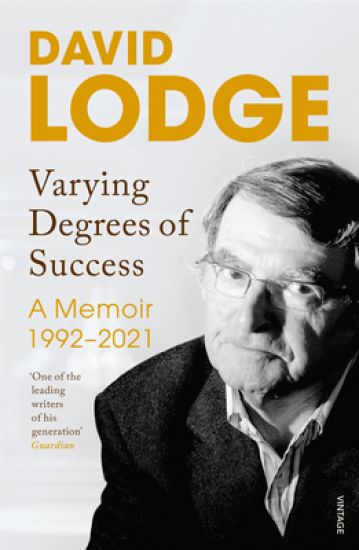
In a career spanning six decades, David Lodge has been one of Britain's best-loved and most versatile writers. With Varying Degrees of Success he completes a trilogy of memoirs which describe his life from birth in 1935 to the present day, and together form a remarkable autobiography. He describes the highs and lows of being a professional creative writer in several different genres, his extensive travels around the world, and the hope and desire of writers to make a significant and positive impression on their readers and audiences. Varying Degrees of Success provides the reader with a privileged insight into the working practices and the creative life of a major British novelist.'Continuously engaging... Glimpses of the ambition and energy required to fuel the final stretch of his near 60-year career as the most dependable of novelist-critics' New Statesman'Lodge is the best British novelist never to have won the Man Booker prize' The Times
Changing Places

Changing Places

David Lodge

Vintage Publishing
2025
pokkari
The first of the hilarious novels in the campus trilogy, Changing Places is a funny and wise tale of academic ill-manners - David Lodge at his comic best.When Philip Swallow and Professor Morris Zapp participate in their universities' Anglo-American exchange scheme, the Fates play a hand, and each academic finds himself enmeshed in the life of his counterpart on the opposite side of the Atlantic. Nobody is immune to the exchange: students, colleagues, even wives are swapped as events spiral out of control. And soon both sundrenched Euphoric State university and rain-kissed university of Rummidge are a hotbed of intrigue, lawlessness and broken vows...‘One of the funniest but – much more importantly – one of the most truthful of postwar British novelists’ Jonathan Coe
Quite A Good Time to be Born

Quite A Good Time to be Born

David Lodge

Vintage Publishing
2016
pokkari
'I drew my first breath on the 28th of January 1935, which was quite a good time for a future writer to be born in England...â?? The only child in a lower-middle-class London family, David Lodge inherited his artistic genes from his musician father and his Catholic faith from his Irish-Belgian mother.
Picturegoers

Picturegoers

David Lodge

Vintage Publishing
2016
pokkari
In his astutely observed first novel, David Lodge ushers in a congregation of characters whose hopes, confusions and foibles play out alongside the celluloid fantasies of the silver screen.
Writer's Luck

Writer's Luck

David Lodge

Vintage
2019
pokkari
‘A wonderfully candid and insightful account of a writer’s life’ William BoydLuck, good or bad, plays an important part in a writer’s career. In 1976 Lodge was pursuing a ‘twin-track career’ as novelist and academic but the balancing act was increasingly difficult, and he became a full-time writer just before he published his bestselling novel Nice Work. Readers of Lodge’s novels will be fascinated by the insights this book gives – not only into his professional career but also more personal experience, such as his growing scepticism of his Catholic religion and the challenges of parenting. Anyone who is interested in learning about the creative process and about the life of a writer will find Writer’s Luck a candid and entertaining guide.
Secret Thoughts

Secret Thoughts

David Lodge

Harvill Secker
2017
nidottu
Helen Reed, a novelist in her early forties, still grieving for her husband who died suddenly a year before, is a visiting teacher of creative writing at a university where Ralph Messenger, a cognitive scientist with a special interest in Artificial Intelligence and an incorrigible womaniser, is director of a prestigious research institute. He is an atheist and a materialist; she is a Catholic who has lost her faith but still yearns for the consolations of religion. Ralph is attracted to Helen and she, in spite of her principles, to him. They argue about the nature of human consciousness, and the different ways it is examined in science and literature, as she resists with weakening resolution Ralph's efforts to seduce her. David Lodge has distilled the story of his acclaimed novel Thinks... to create a witty and absorbing drama about a moral, emotional and intellectual struggle between two exceptional people.
The Modes of Modern Writing

The Modes of Modern Writing

David Lodge

Bloomsbury Academic
2015
nidottu
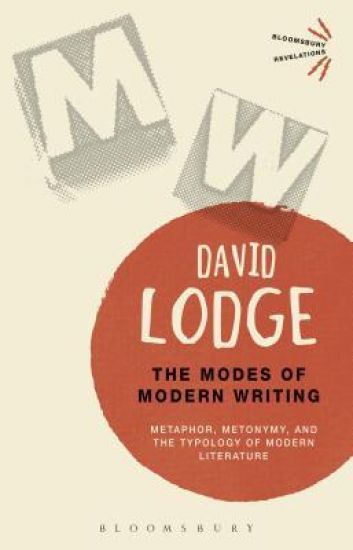
The Modes of Modern Writing tackles some of the fundamental questions we all encounter when studying or reading literature, such as: what is literature? What is realism? What is relationship between form and content? And what dictates the shifts in literary fashions and tastes? In answering these questions, the book examines texts by a wide range of modern novelists and poets, including James Joyce, T.S.Eliot, Ernest Hemingway, George Orwell, Virginia Woolf, Samuel Beckett and Philip Larkin, and draws on the work of literary theorists from Roman Jakobson to Roland Barthes. Written in Lodge’s typically accessible style this is essential reading for students and lovers of literature at any level. The Bloomsbury Revelations edition includes a new Foreword/Afterword by the author.
Readers

Readers

David Lodge; Tom Phillips

Bodleian Library
2010
sidottu
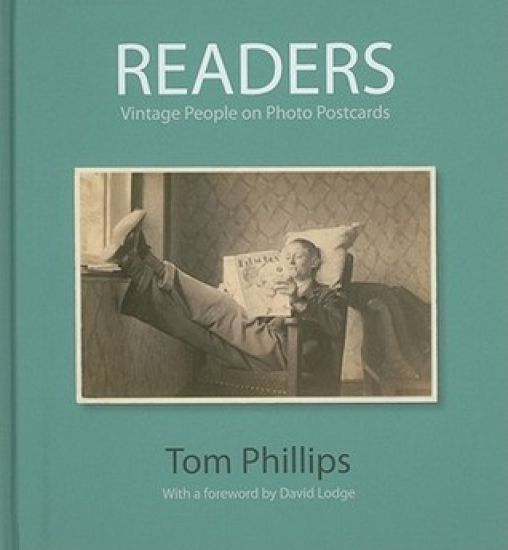
To celebrate the acquisition of the Tom Phillips archive, the Bodleian Library has asked the artist to assemble and design a series of books drawing on his themed collection of over 50,000 photographic postcards. These encompass the first half of the twentieth century, a period in which, thanks to the ever cheaper medium of photography, ‘ordinary’ people could afford to own their portraits. Readers shows people reading (or pretending to read) a wide variety of material from the Bible to Film Fun, either in the photographer’s studio, in their own home or holidaying on the beach. This book contains 200 images chosen with the eye of a leading artist from a visually rich vein of social history. Their covers will also feature a thematically linked painting, especially created for each title, from Tom Phillips’ signature work, A Humument.