Kirjojen hintavertailu. Mukana 11 244 527 kirjaa ja 12 kauppaa.

Kirjahaku

Etsi kirjoja tekijän nimen, kirjan nimen tai ISBN:n perusteella.

1000 tulosta hakusanalla David M Pack

Evaluations of Police Suitability and Fitness for Duty

Evaluations of Police Suitability and Fitness for Duty

David M. Corey; Mark Zelig

Oxford University Press Inc
2020
nidottu
Forensic mental health assessment (FMHA) has grown into a specialization informed by research and professional guidelines. This series presents up-to-date information on the most important and frequently conducted forms of FMHA. The 20 topical volumes address best approaches to practice for particular types of evaluation in the criminal, civil and juvenile/family areas. Each volume contains a thorough discussion of the relevant legal and psychological concepts, followed by a step-by-step description of the assessment process from preparing for the evaluation to writing the report and testifying in court. Volumes include the following helpful features: - Boxes that zero in on important information for use in evaluations - Tips for best practice and cautions against common pitfalls - Highlighting of relevant case law and statutes - Separate list of assessment tools for easy reference - Helpful glossary of key terms for the particular topic In making recommendations for best practice, authors consider empirical support, legal relevance, and consistency with ethical and professional standards. These volumes offer invaluable guidance for anyone involved in conducting or using forensic evaluations. A majority of police departments across the country conduct psychological evaluations of their police applicants and many also conduct periodic evaluations of incumbent police officers. With a small percentage of psychologists conducting these evaluations, and an even smaller number who have passed through board certification in forensic psychology or police and public safety psychology, there is a pressing need for education and training resources for practitioners seeking to develop competency in this area of practice. Evaluations of Police Suitability and Fitness for Duty, fills a gap in the literature, and explains the legal, procedural, ethical, and clinical foundations for these types of evaluations untethered to any single assessment instrument. Throughout the text, authors David M. Corey and Mark Zelig distinguish between enforceable, standards-based requirements and aspirational best practices. The book starts with a review of the most prominent federal laws and regulations, professional practice guidelines, and ethical standards pertinent to these evaluations. From there, applied chapters provide detailed procedural guidance, including advice for obtaining informed consent, providing disclosure to the involved parties, conducting clinical and collateral interviews, selecting written assessment instruments, integrating assessment findings to reach determinations of suitability and fitness, and preparing written reports and testimony for various audiences and uses.
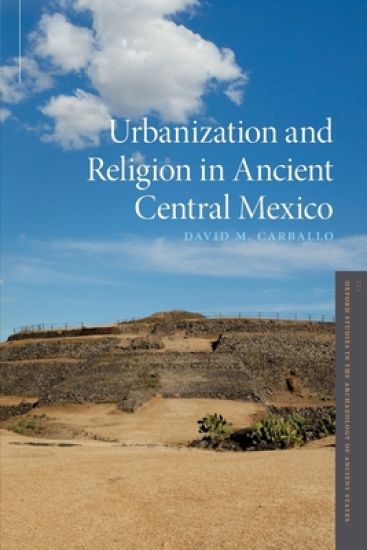
Urbanization and Religion in Ancient Central Mexico

Urbanization and Religion in Ancient Central Mexico

David M. Carballo

Oxford University Press Inc
2018
nidottu
Urbanization and Religion in Ancient Central Mexico examines the ways in which urbanization and religion intersected in pre-Columbian central Mexico, with a primary focus on the later Formative period and the transition to the Classic period. The major societal transformations of this interval occurred approximately two-thousand years ago and over a millennium before Mexico's best known early civilization, the Aztecs. David M. Carballo presents a synthesis of data from regional archaeological projects and key sites such as Teotihuacan and Cuicuilco, while relying on his own excavations at the site of La Laguna as the central case study. A principal argument is that cities and states developed hand in hand with elements of a religious tradition of remarkable endurance and that these processes were fundamentally entangled. Prevalent religious beliefs and ritual practices created a cultural logic for urbanism, and as populations urbanized they became socially integrated and differentiated following this logic. Nevertheless, religion was used differently over time and by groups and individuals across the spectra of urbanity and social status. The book provides a materially informed history of religion, with the temporal depth that archaeology can provide, and an archaeology of cities that considers religion seriously as a generative force in societal change.
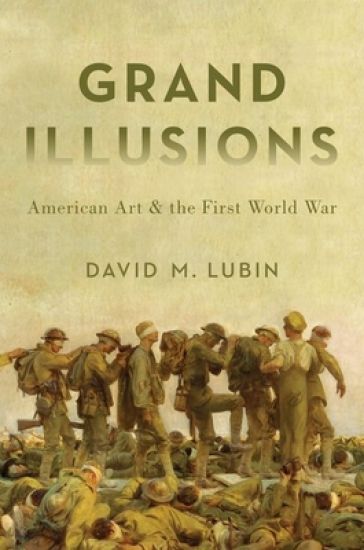
Grand Illusions

Grand Illusions

David M. Lubin

Oxford University Press Inc
2018
nidottu
A vivid, engaging account of the artists and artworks that sought to make sense of America's first total war, Grand Illusions takes readers on a compelling journey through the major historical events leading up to and beyond US involvement in WWI to discover the vast and pervasive influence of the conflict on American visual culture. David M. Lubin presents a highly original examination of the era's fine arts and entertainment to show how they ranged from patriotic idealism to profound disillusionment. In stylishly written chapters, Lubin assesses the war's impact on two dozen painters, designers, photographers, and filmmakers from 1914 to 1933. He considers well-known figures such as Marcel Duchamp, John Singer Sargent, D. W. Griffith, and the African American outsider artist Horace Pippin while resurrecting forgotten artists such as the mask-maker Anna Coleman Ladd, the sculptor Gertrude Vanderbilt Whitney, and the combat artist Claggett Wilson. The book is liberally furnished with illustrations from epoch-defining posters, paintings, photographs, and films. Armed with rich cultural-historical details and an interdisciplinary narrative approach, David Lubin creatively upends traditional understandings of the Great War's effects on the visual arts in America.
Notes for Violists

Notes for Violists

David M. Bynog

Oxford University Press Inc
2021
sidottu
Notes for Violists: A Guide to the Repertoire offers historical and analytical information about thirty-five of the best-known pieces for the instrument, making it an essential resource for professional, amateur, and student violists alike. With engaging prose supported by fact-filled analytical charts, the book offers rich biographical information and insightful analyses that help violists gain a more complete understanding of pieces like Béla Bartók's Concerto for Viola and Orchestra, Rebecca Clarke's Sonata for Viola and Piano, Robert Schumann's Märchenbilder for Viola and Piano, op. 113, Carl Stamitz's Concerto for Viola and Orchestra in D Major, Igor Stravinsky's Élégie for Viola or Violin Unaccompanied, and thirty other masterpieces. This comprehensive guide to key pieces from the viola repertoire from the eighteenth through the twentieth century covers concertos, chamber pieces, and works for solo viola by a wide range of composers, including Bach, Telemann, Mozart, Hoffmeister, Walton, and Hindemith. Author David M. Bynog not only offers clear structural analyses of these compositions but also situates them in their historical contexts as he highlights crucial biographical information on composers and explores the circumstances of the development and performance of each work. By connecting performance studies with scholarship, this indispensable handbook for students and professionals allows readers to gain a more complete picture of each work and encourages them to approach other compositions in a similarly analytical manner.
Notes for Violists

Notes for Violists

David M. Bynog

Oxford University Press Inc
2021
nidottu
Notes for Violists: A Guide to the Repertoire offers historical and analytical information about thirty-five of the best-known pieces for the instrument, making it an essential resource for professional, amateur, and student violists alike. With engaging prose supported by fact-filled analytical charts, the book offers rich biographical information and insightful analyses that help violists gain a more complete understanding of pieces like Béla Bartók's Concerto for Viola and Orchestra, Rebecca Clarke's Sonata for Viola and Piano, Robert Schumann's Märchenbilder for Viola and Piano, op. 113, Carl Stamitz's Concerto for Viola and Orchestra in D Major, Igor Stravinsky's Élégie for Viola or Violin Unaccompanied, and thirty other masterpieces. This comprehensive guide to key pieces from the viola repertoire from the eighteenth through the twentieth century covers concertos, chamber pieces, and works for solo viola by a wide range of composers, including Bach, Telemann, Mozart, Hoffmeister, Walton, and Hindemith. Author David M. Bynog not only offers clear structural analyses of these compositions but also situates them in their historical contexts as he highlights crucial biographical information on composers and explores the circumstances of the development and performance of each work. By connecting performance studies with scholarship, this indispensable handbook for students and professionals allows readers to gain a more complete picture of each work and encourages them to approach other compositions in a similarly analytical manner.
The Fundamental Processes in Ecology

The Fundamental Processes in Ecology

David M. Wilkinson

Oxford University Press
2023
sidottu
This thought-provoking book introduces a way to study ecosystems that is resonant with current thinking in the fields of earth system science, geobiology, and planetology. Instead of organizing the subject around a hierarchical series of entities (e.g. genes, individuals, populations, species, communities, and the biosphere), the book provides an alternative process-based approach and proposes a truly planetary view of ecological science. It demonstrates how the idea of fundamental ecological processes can be developed at the systems level, specifically their involvement in control and feedback mechanisms. This enables the reader to reconsider fundamental ecological processes such as energy flow, guilds, trade-offs, carbon cycling, and photosynthesis, and to put them in a global (and even planetary) context. In so doing, the book places a much stronger emphasis on microorganisms. Since publication of the first edition in 2006, ever growing societal concern about environmental sustainability has ensured that the earth system science/Gaian approach has steadily gained traction. Its integration with ecology is now more important than ever if ecological science is to effectively contribute to the massive problems and future challenges associated with global environmental change. The Fundamental Processes in Ecology is an accessible text for senior undergraduates, graduate student seminar courses, and researchers in the fields of ecology, environmental sustainability, earth system science, evolutionary biology, palaeontology, history of life, astrobiology, planetology, climatology, geology, and physical geography.
The Fundamental Processes in Ecology

The Fundamental Processes in Ecology

David M. Wilkinson

Oxford University Press
2023
nidottu
This thought-provoking book introduces a way to study ecosystems that is resonant with current thinking in the fields of earth system science, geobiology, and planetology. Instead of organizing the subject around a hierarchical series of entities (e.g. genes, individuals, populations, species, communities, and the biosphere), the book provides an alternative process-based approach and proposes a truly planetary view of ecological science. It demonstrates how the idea of fundamental ecological processes can be developed at the systems level, specifically their involvement in control and feedback mechanisms. This enables the reader to reconsider fundamental ecological processes such as energy flow, guilds, trade-offs, carbon cycling, and photosynthesis, and to put them in a global (and even planetary) context. In so doing, the book places a much stronger emphasis on microorganisms. Since publication of the first edition in 2006, ever growing societal concern about environmental sustainability has ensured that the earth system science/Gaian approach has steadily gained traction. Its integration with ecology is now more important than ever if ecological science is to effectively contribute to the massive problems and future challenges associated with global environmental change. The Fundamental Processes in Ecology is an accessible text for senior undergraduates, graduate student seminar courses, and researchers in the fields of ecology, environmental sustainability, earth system science, evolutionary biology, palaeontology, history of life, astrobiology, planetology, climatology, geology, and physical geography.
Profile Analysis

Profile Analysis

David M. Green

Oxford University Press Inc
1988
sidottu
This book reviews recent research on the ability of human listeners to discern changes in the shape of complex acoustic spectra--what is known as auditory profile analysis. It also discusses in a systematic way issues surrounding the discrimination of a change in acoustic intensity and the physiological mechanisms responsible for these discrimination processes. The author concludes with two new theories that provide a way of understanding more complex auditory skills, such as those involved in listening to music and speech. This book will be of interest to psychoacousticians, psychophysicists, physiological psychologists, and experimental psychologists.
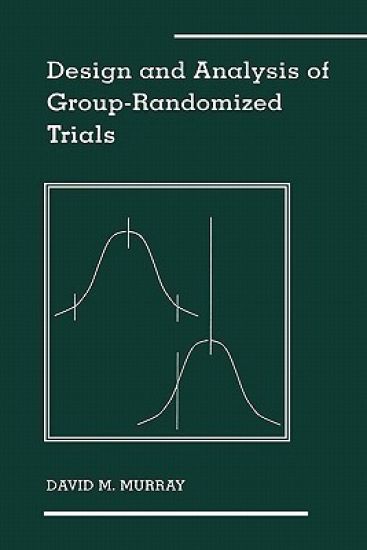
Design and Analysis of Group-Randomized Trials

Design and Analysis of Group-Randomized Trials

David M. Murray

Oxford University Press Inc
1998
sidottu
This is the first comprehensive text on the design and analysis of group-randomized trials. It It collects information previously scattered among journals and texts in a variety of disciplines, and, in addition, presents much new material not available elsewhere. The book has been written to help those involved in these trials improve their ability to plan, fund, conduct, analyse, and interpret them, and to give students a detailed understanding of the field. Group-randomized trials are comparative studies in which the units of assignment are identifiable groups and the units of observation are members of those groups. The positive intraclass correlation expected among the members of each group poses unique and challenging issues for the design and analysis of these trials and separates them from the traditional clinical trial. After reviewing the underlying issues, Murray presents the research designs that are most widely used in group-randomized trials, together with their strengths, weaknesses, and appropriate applications. He describes the many approaches to analysis that are now available, presents mixed-model regression analyses appropriate to each design, and illustrates them using data from the Minnesota Heart Health Program. He also covers methods for estimating sample size, detectable difference, and power. This volume is not limited only to a conceptual treatment of the issues and solutions. It offers a review of the practical applications in a series of case studies, examples, and problems.
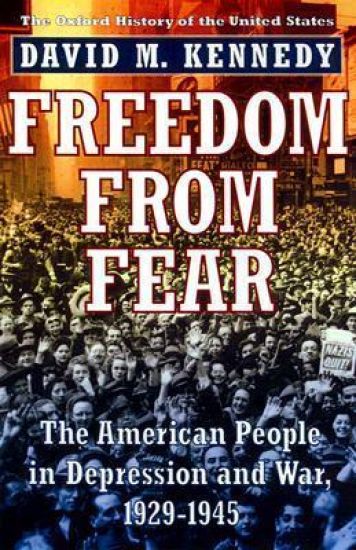
Freedom from Fear

Freedom from Fear

David M. Kennedy

Oxford University Press Inc
2001
nidottu
Between 1929 and 1945, two great travails were visited upon the American people: the Great Depression and World War II. Freedom from Fear tells the story of how Americans endured, and eventually prevailed, in the face of those unprecedented calamities. The Depression was both a disaster and an opportunity. As David Kennedy vividly demonstrates, the economic crisis of the 1930s was far more than a simple reaction to the alleged excesses of the 1920s. For more than a century before 1929, America's unbridled industrial revolution had gyrated through repeated boom and bust cycles, wastefullly consuming capital and inflicting untold misery on city and countryside alike. Nor was the fabled prosperity of the 1920s as uniformly shared ag legend portrays. Countless Americans, especially if they were farmers, African Americans, or recent immigrants, eked out thread bare lives on the margins of national life. For them the Depression was but another of the ordeals of fear and insecurity with which they were sadly familiar. Franklin Roosevelt's New Deal wrung from the trauma of the 1930s a lasting legacy of economic and social reform, in cluding the Social Security Act, new banking and financial laws, regulatory legistlation, and new opportunities for organized labour. Taken together, those reforms gave a measure of security to millons of Americans who had never had much of it, and with a fresh sense of having a stake in their country. Freedom from Fear tells the story of the New Deal's achievments, without slighting its shortcomings, contraditions and failures. It is a story rinch in drama and peopled with unforgettable personalities, including the incandescent but enigmatic figure of Roosevelt himself. Even as the New Deal was coping with the Depression, a still more fearsome menace was developing abroad--Hitler's thirst for war in Europe, coupled with the imperial ambitions of Japan in Asia. The same generation of Americans who battled the Depression evenutally had to shoulder the arms in another conflict that wreaked world wide destruction, ushered in the nuclear age and forever changed their own way of life and their country's relationship to the rest of the world. Freedom from Fear explains how the nation agonized over its role in World War II, how it fought the war, why the United States won, and why the consequences of victory were sometimes sweet, sometimes ironic. In a compelling narrative, Kenney analyses the determinants of American strategy, the painful choices faced by commanders and statesmen, and the agonies inflicted on the millions of ordinary Americans who were compelled to swallow their fears and face battle as best they could. Freedom from Fear is a comprehensive and colourful account of the most convulsive period in American history, excepting only the Civil War - a period that formed the crucible in which modern America was formed.
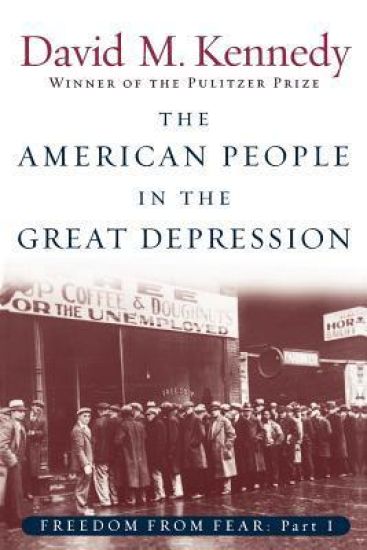
Freedom From Fear: Part 1: The American People in the Great Depression
On October 24, 1929, America met the greatest economic devastation it had ever known. In this first instalment of his Pulitzer Prize-winning Freedom from Fear, Kennedy tells how America endured, and eventually prevailed, in the face of that unprecedented calamity. Kennedy vividly demonstrates that the economic crisis of the 1930s was more than a reaction to the excesses of the 1920s. For more than a century before the Crash, America's unbridled industrial revolution had gyrated through repeated boom and bust cycles, consuming capital and inflicting misery on city and countryside alike. Nor was the alleged prosperity of the 1920s as uniformly shared as legend portrays. Countless Americans eked out threadbare lives on the margins of national life. Roosevelt's New Deal wrenched opportunity from the trauma of the 1930s and created a lasting legacy of economic and social reform, but it was afflicted with shortcomings and contradictions as well. With an even hand Kennedy details the New Deal's problems and defeats, as well as its achievements. He also sheds fresh light on its incandescent but enigmatic author, Franklin D. Roosevelt. Marshalling unforgettable narratives that feature prominent leaders as well as lesser-known citizens, The American People in the Great Depression tells the story of a resilient nation finding courage in an unrelenting storm.
Freedom From Fear: Part 2: The American People in World War II

Freedom From Fear: Part 2: The American People in World War II

David M. Kennedy

Oxford University Press Inc
2004
nidottu
Even as the New Deal was coping with the Depression, a new menace was developing abroad. Exploiting Germany's own economic burdens, Hitler reached out to the disaffected, turning their aimless discontent into loyal support for his Nazi Party. In Asia, Japan harbored imperial ambitions of its own. The same generation of Americans who battled the Depression eventually had to shoulder arms in another conflict that wreaked worldwide destruction, ushered in the nuclear age, and forever changed their way of life and their country's relationship to the rest of the world. The American People in World War II--the second installment of Kennedy's Pulitzer Prize-winning Freedom from Fear--explains how the nation agonized over its role in the conflict, how it fought the war, why the United States emerged victorious, and why the consequences of victory were sometimes sweet, sometimes ironic. In a compelling narrative, Kennedy analyzes the determinants of American strategy, the painful choices faced by commanders and statesmen, and the agonies inflicted on the millions of ordinary Americans who were compelled to swallow their fears and face battle as best they could. The American People in World War II is a gripping narrative and an invaluable analysis of the trials and victories through which modern America was formed.
Writing on the Tablet of the Heart

Writing on the Tablet of the Heart

David M. Carr

Oxford University Press Inc
2005
sidottu
This book explores a new model for the production, revision, and reception of Biblical texts as Scripture. Building on recent studies of the oral/written interface in medieval, Greco-Roman and ancinet Near Eastern contexts, David Carr argues that in ancient Israel Biblical texts and other texts emerged as a support for an educational process in which written and oral dimensions were integrally intertwined. The point was not incising and reading texts on parchment or papyrus. The point was to enculturate ancient Israelites - particularly Israelite elites - by training them to memorize and recite a wide range of traditional literature that was seen as the cultural bedorck of the people: narrative, prophecy, prayer, and wisdom.
Your Money or Your Life

Your Money or Your Life

David M. Cutler

Oxford University Press Inc
2005
nidottu
The problems of medical care confront us daily: a bureaucracy that makes a trip to the doctor worse than a trip to the dentist, doctors who can't practice medicine the way they choose, more than 40 million people without health insurance. "Medical care is in crisis," we are repeatedly told, and so it is. Barely one in five Americans thinks the medical system works well. Enter David M. Cutler, a Harvard economist who served on President Clinton's health care task force and later advised presidential candidate Bill Bradley. One of the nation's leading experts on the subject, Cutler argues in Your Money or Your Life that health care has in fact improved exponentially over the last fifty years, and that the successes of our system suggest ways in which we might improve care, make the system easier to deal with, and extend coverage to all Americans. Cutler applies an economic analysis to show that our spending on medicine is well worth it--and that we could do even better by spending more. Further, millions of people with easily manageable diseases, from hypertension to depression to diabetes, receive either too much or too little care because of inefficiencies in the way we reimburse care, resulting in poor health and in some cases premature death. The key to improving the system, Cutler argues, is to change the way we organize health care. Everyone must be insured for the medical system to perform well, and payments should be based on the quality of services provided not just on the amount of cutting and poking performed. Lively and compelling, Your Money or Your Life offers a realistic yet rigorous economic approach to reforming health care--one that promises to break through the stalemate of failed reform.
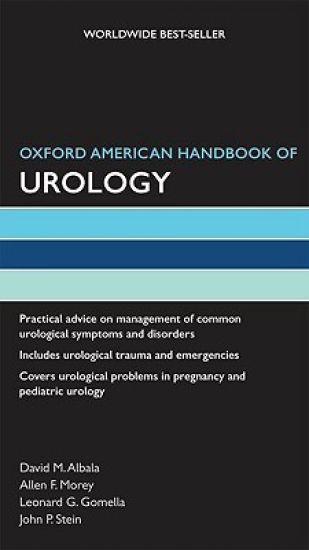
Oxford American Handbook of Urology

Oxford American Handbook of Urology

David M. Albala; Leonard G. Gomella; Allen F. Morey; John P. Stein

Oxford University Press Inc
2010
nidottu
The Oxford American Handbook of Urology provides authoritative, point-of-care guidance on all aspects of the field, covering both benign and malignant conditions, as well as medical and surgical management. Incorporating diagnosis and treatment advice from established, published guidelines as well as drawing from the experience of four seasoned urologists, the book's concise and accessible format quickly guides the reader to desired information on common signs and symptoms, incontinence, cancer, infections and infertility plus key information on trauma, urologic emergencies, and pediatric urology. It is an invaluable resource for medical students and residents as well as a useful reference for practitioners.
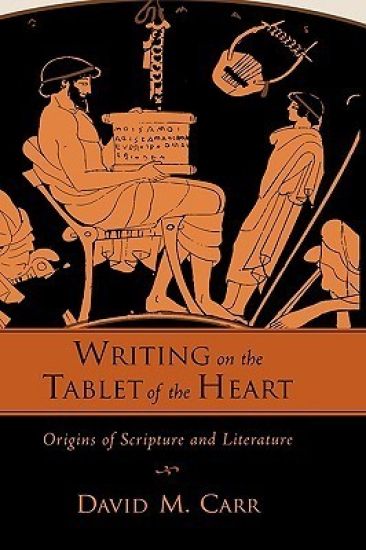
Writing on the Tablet of the Heart

Writing on the Tablet of the Heart

David M. Carr

Oxford University Press Inc
2009
nidottu
This book explores a new model for the production, revision, and reception of Biblical texts as Scripture. Building on recent studies of the oral–written interface in medieval, Greco-Roman and ancient Near Eastern contexts, David Carr argues that in ancient Israel Biblical texts and other texts emerged as a support for an educational process in which written and oral dimensions were integrally intertwined. The point was not incising and reading texts on parchment or papyrus. The point was to enculturate ancient Israelites -- particularly Israelite elites - by training them to memorize and recite a wide range of traditional literature that was seen as the cultural bedrock of the people: narrative, prophecy, prayer, and wisdom. Generally, mastery was exercised through remarkably exact recall and reproduction of the tradition - whether through oral performance or through production of written "performances." Crises like exile, however, could prompt the creation of radically new versions of the classic tradition, incorporating verbal recall of ancient tradition with various extensions, recontextualizations and supplements. This educational process took place on a one-to-one basis and focused on the cultivation of an educated elite. A major change took place with the arrival of the Hellenistic empires in the fourth and following centuries. This, says Carr, led to the emergence of a democratized Jewish "school" as well as the marking off of the standard Israelite texts as an "anti-canon" to the Hellenistic canon of educational texts that were used in the Greek schools of the Eastern Mediterranean.
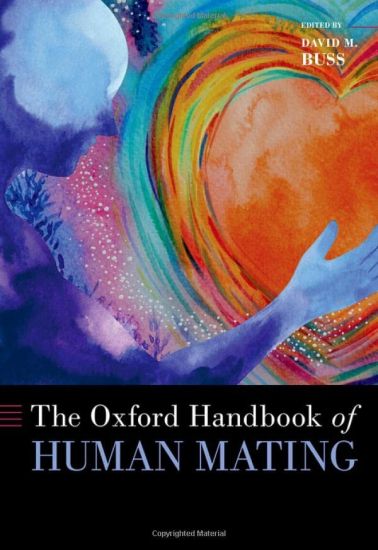
The Oxford Handbook of Human Mating

The Oxford Handbook of Human Mating

David M. Buss

OXFORD UNIVERSITY PRESS INC
2023
sidottu
The scientific study of human mating has mushroomed over the past three decades, and this growth in turn has generated a proliferation of evolving literature revealing fresh discoveries about mate attraction, mate choice, mate retention, marital satisfaction, jealousy, infidelity, intimate partner violence, breakups, internet dating, cyberstalking, and sexual coercion. In The Oxford Handbook of Human Mating, editor David M. Buss showcases contributions from "the best and the brightest" scientists in the field, providing up-to-date summaries of theories and empirical evidence of the science of human mating strategies. Much of the research in the field is guided by sexual selection theory. Over 150 years after Darwin's proposal of sexual selection theory, it has become the most important overarching theoretical framework for the scientific study of the mating strategies of all sexually reproducing species, including humans. A mountain of research centered around Darwin's classic book has documented the many complexities of human mate competition and mate choice; how these processes differ between the sexes; and how they differ as a function of sex ratio, mate value, social contexts, ovulation cycles, personality characteristics, and cultural norms and mating rituals. Thus, the science is now ripe for a collection of work by eminent scholars in the field. David M. Buss is a leading researcher and pioneer in the study of human mating strategies, and he applies his expertise to the curation of this volume, which includes major sections covering theories of human mating; mate selection and mate attraction; mate competition; sexual conflict in mating; human pair bonding; the endocrinology of mating; and mating in the modern world.
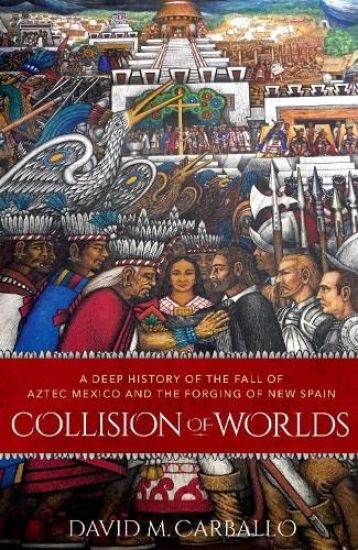
Collision of Worlds

Collision of Worlds

David M. Carballo

OXFORD UNIVERSITY PRESS INC
2022
nidottu
Mexico of five centuries ago was witness to one of the most momentous encounters between human societies, when a group of Spaniards led by Hernando Cortés joined forces with tens of thousands of Mesoamerican allies to topple the mighty Aztec Empire. It served as a template for the forging of much of Latin America and initiated the globalized world we inhabit today. The violent clash that culminated in the Aztec-Spanish war of 1519-21 and the new colonial order it created were millennia in the making, entwining the previously independent cultural developments of both sides of the Atlantic. Collision of Worlds provides a deep history of this encounter, one that considers temporal depth in the richly layered cultures of Mexico and Spain, from their prehistories to the urban and imperial societies they built in the fourteenth and fifteenth centuries. Leading Mesoamerican archaeologist David Carballo offers a unique perspective on these fabled events with a focus on the physical world of places and things, their similarities and differences in trans-Atlantic perspective, and their interweaving in an encounter characterized by conquest and colonialism, but also resilience on the part of Native peoples. An engrossing and sweeping account, Collision of Worlds debunks long-held myths and contextualizes the deep roots and enduring consequences of the Aztec-Spanish conflict as never before.
The End of Engagement

The End of Engagement

David M. McCourt

OXFORD UNIVERSITY PRESS INC
2024
sidottu
After the Cold War, America's leaders hoped Russia and China could be integrated into the rules-based international order and might even become more like the West. By the late 2010s, their optimism was dead. In The End of Engagement, David M. McCourt traces the intense personal, professional, and policy struggles over China and Russia in U.S. foreign policy since 1989. Drawing on 200 original interviews with America's China and Russia experts--from former policymakers and diplomats to prominent think tankers and academics--McCourt chronicles the rise and recent fall of "engagement" with Beijing and Moscow. While there are numerous explanations for why America moved away from engagement with China and Russia in the last decade, McCourt shows that none consider how important foreign policy knowledge communities have been in impacting policy. Adopting a unique, sociological perspective, this book offers an intimate look into the world of America's national security experts as they have struggled to make sense of changes in China and Russia and the remaining question of what comes next.