Kirjahaku
Etsi kirjoja tekijän nimen, kirjan nimen tai ISBN:n perusteella.
1000 tulosta hakusanalla David N. Rapp
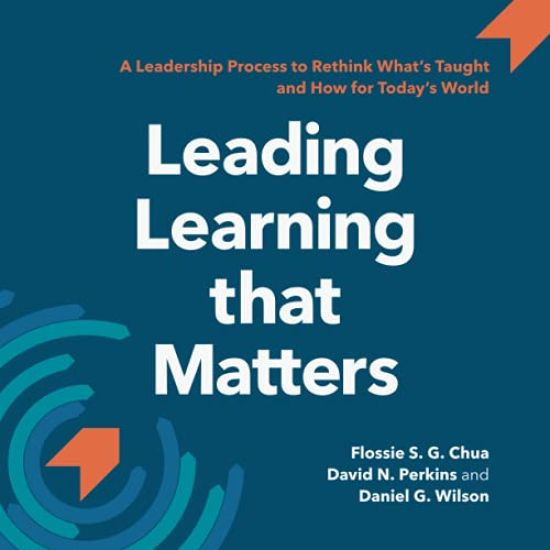
Leading Learning that Matters
David N Perkins; Daniel G Wilson; Flossie S G Chua
Chua, Perkins Wilson
2021
pokkari
How can school learning be expanded to matter more in learners' lives? How can school leaders shape an institution to stay true to its core commitments and thrive as a center of contemporary learning? Leading Learning that Matters offers a flexible process to help school leaders and their communities construct a vision of what learning really matters for the lives their learners are likely to live and then make that vision a daily reality in classrooms. This book, with ideas informed by research and tested in practice, will: - guide you through the four key dimensions of the Leading Learning that Matters (LLtM) process - creating shared vision, developing collaborative structures, supporting individual development, and sustaining progress - provide tips and tools for building and refining a vision of learning that matters for your students, and for organizing and tracking the progress of the LLtM process - show what Leading Learning that Matters looks like through pictures of practice from schools that have embarked on the LLtM process Leading Learning that Matters is for any school leader who wants to ensure that their school is preparing students to thrive in the contemporary world and is ready to explore what that looks like through a collaborative process.
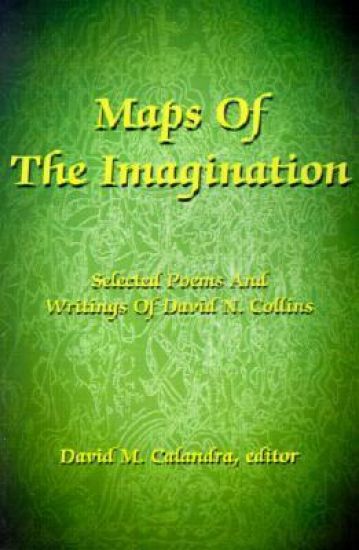
Maps Of The Imagination offers a phantasmagorical journey through the "psychedelic sixties" by a young poet/writer who offered a titillating rendition of the "next generation" beat poetry. A vivid and surreal trip to places your parents always warned you about.
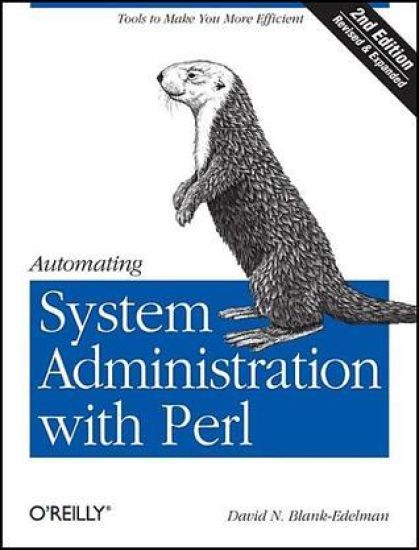
Automating System Administration with Perl 2e
David N Blank?edelman
O'Reilly Media, Inc, USA
2009
nidottu
If you do systems administration work of any sort, you have no choice: you have to deal with increasing demands on your time and the growing complexity of your environment. "Automating System Administration with Perl", the second edition of O'Reilly's popular "Otter Book", not only offers you the right tools for your job, but also suggests the best way to approach particular problems and securely automate pressing tasks. With this book in hand and Perl in your toolbox, you can do more with less - less effort, fewer resources, and less hassle. Thoroughly updated and expanded to cover the latest operating systems, technologies, and Perl modules, "Automating System Administration with Perl" will help you: manage user accounts; monitor filesystems and processes; work with configuration files in important formats such as XML and YAML; administer databases, including MySQL, MS-SQL, and Oracle with DBI; work with directory services like LDAP and Active Directory; script email protocols and spam control; effectively create, handle, and analyze log files; administer network name and configuration services, including NIS, DNS and DHCP; maintain, monitor, and map network services, using technologies and tools such as SNMP, nmap, libpcap, GraphViz and RRDtool; and, improve filesystem, process, and network security. To get you up to speed on technologies like XML/XPath, LDAP, SNMP, and SQL, this edition also features additional appendices, which readers found particularly helpful in the first edition. Packed with advice, "Automating System Administration with Perl" explains both why and how to manage your system administration challenges with Perl.
Principles of change control: A handbook for Quality and regulatory professionals
David N. Muchemu
Cgmp University Inc
2013
nidottu
(Book). You may not have heard of them, but you have certainly heard their songs From the lo-fidelity origins of early pioneers to today's dazzling technocrats, the role of the music producer is as murkily undefined as it is wholly essential. Sonic Alchemy: Visionary Music Producers and Their Maverick Recordings is an exploration of the influence of the often colorful, idiosyncratic and visionary music producers through popular music and the fascinatingly crucial role they have played in shaping the way we hear pop music today. Sonic Alchemy is nothing short of the secret history of the music producer.
Every week churches must address issues related to stewardship. With deep pastoral sensitivities and solid biblical knowledge, veteran pastor and author David Mosser draws one Scripture passage from each week in the three-year lectionary cycle to provide a brief reflection on how that passage can be used to teach and preach about stewardship. Mosser's inspirational and motivational reflections offer a clear connection between the lectionary Scripture passage and the matters of stewardship. The reflections offered here address a variety of issues related to stewardship, making this book an essential resource for all pastors, worship leaders, and stewardship committees.
Nineteenth-century European thought, especially in Germany, was increasingly dominated by a new historicist impulse to situate every event, person, or text in its particular context. At odds with the transcendent claims of philosophy and--more significantly--theology, historicism came to be attacked by its critics for reducing human experience to a series of disconnected moments, each of which was the product of decidedly mundane, rather than sacred, origins. By the late nineteenth century and into the Weimar period, historicism was seen by many as a grinding force that corroded social values and was emblematic of modern society's gravest ills. Resisting History examines the backlash against historicism, focusing on four major Jewish thinkers. David Myers situates these thinkers in proximity to leading Protestant thinkers of the time, but argues that German Jews and Christians shared a complex cultural and discursive world best understood in terms of exchange and adaptation rather than influence. After examining the growing dominance of the new historicist thinking in the nineteenth century, the book analyzes the critical responses of Hermann Cohen, Franz Rosenzweig, Leo Strauss, and Isaac Breuer. For this fascinating and diverse quartet of thinkers, historicism posed a stark challenge to the ongoing vitality of Judaism in the modern world. And yet, as they set out to dilute or eliminate its destructive tendencies, these thinkers often made recourse to the very tools and methods of historicism. In doing so, they demonstrated the utter inescapability of historicism in modern culture, whether approached from a Christian or Jewish perspective.
Charles Darwin's Origin of Species is one of the most widely cited books in modern science. Yet tackling this classic can be daunting for students and general readers alike because of Darwin's Victorian prose and the complexity and scope of his ideas. The "Origin" Then and Now is a unique guide to Darwin's masterwork, making it accessible to a much wider audience by deconstructing and reorganizing the Origin in a way that allows for a clear explanation of its key concepts. The Origin is examined within the historical context in which it was written, and modern examples are used to reveal how this work remains a relevant and living document for today. In this eye-opening and accessible guide, David Reznick shows how many peculiarities of the Origin can be explained by the state of science in 1859, helping readers to grasp the true scope of Darwin's departure from the mainstream thinking of his day. He reconciles Darwin's concept of species with our current concept, which has advanced in important ways since Darwin first wrote the Origin, and he demonstrates why Darwin's theory unifies the biological sciences under a single conceptual framework much as Newton did for physics. Drawing liberally from the facsimile of the first edition of the Origin, Reznick enables readers to follow along as Darwin develops his ideas. The "Origin" Then and Now is an indispensable primer for anyone seeking to understand Darwin's Origin of Species and the ways it has shaped the modern study of evolution.
Structural Macroeconometrics provides a thorough overview and in-depth exploration of methodologies, models, and techniques used to analyze forces shaping national economies. In this thoroughly revised second edition, David DeJong and Chetan Dave emphasize time series econometrics and unite theoretical and empirical research, while taking into account important new advances in the field. The authors detail strategies for solving dynamic structural models and present the full range of methods for characterizing and evaluating empirical implications, including calibration exercises, method-of-moment procedures, and likelihood-based procedures, both classical and Bayesian. The authors look at recent strides that have been made to enhance numerical efficiency, consider the expanded applicability of dynamic factor models, and examine the use of alternative assumptions involving learning and rational inattention on the part of decision makers. The treatment of methodologies for obtaining nonlinear model representations has been expanded, and linear and nonlinear model representations are integrated throughout the text. The book offers a rich array of implementation algorithms, sample empirical applications, and supporting computer code. Structural Macroeconometrics is the ideal textbook for graduate students seeking an introduction to macroeconomics and econometrics, and for advanced students pursuing applied research in macroeconomics. The book's historical perspective, along with its broad presentation of alternative methodologies, makes it an indispensable resource for academics and professionals.
How the specter of climate has been used to explain history since antiquityScientists, journalists, and politicians increasingly tell us that human impacts on climate constitute the single greatest threat facing our planet and may even bring about the extinction of our species. Yet behind these anxieties lies an older, much deeper fear about the power that climate exerts over us. The Empire of Climate traces the history of this idea and its pervasive influence over how we interpret world events and make sense of the human condition, from the rise and fall of ancient civilizations to the afflictions of the modern psyche.Taking readers from the time of Hippocrates to the unfolding crisis of global warming today, David Livingstone reveals how climate has been critically implicated in the politics of imperial control and race relations; been used to explain industrial development, market performance, and economic breakdown; and served as a bellwether for national character and cultural collapse. He examines how climate has been put forward as an explanation for warfare and civil conflict, and how it has been identified as a critical factor in bodily disorders and acute psychosis.A panoramic work of scholarship, The Empire of Climate maps the tangled histories of an idea that has haunted our collective imagination for centuries, shedding critical light on the notion that everything from the wealth of nations to the human mind itself is subject to climate’s imperial rule.
How the specter of climate has been used to explain history since antiquity Scientists, journalists, and politicians increasingly tell us that human impacts on climate constitute the single greatest threat facing our planet and may even bring about the extinction of our species. Yet behind these anxieties lies an older, much deeper fear about the power that climate exerts over us. The Empire of Climate traces the history of this idea and its pervasive influence over how we interpret world events and make sense of the human condition, from the rise and fall of ancient civilizations to the afflictions of the modern psyche. Taking readers from the time of Hippocrates to the unfolding crisis of global warming today, David Livingstone reveals how climate has been critically implicated in the politics of imperial control and race relations; been used to explain industrial development, market performance, and economic breakdown; and served as a bellwether for national character and cultural collapse. He examines how climate has been put forward as an explanation for warfare and civil conflict, and how it has been identified as a critical factor in bodily disorders and acute psychosis. A panoramic work of scholarship, The Empire of Climate maps the tangled histories of an idea that has haunted our collective imagination for centuries, shedding critical light on the notion that everything from the wealth of nations to the human mind itself is subject to climate’s imperial rule.
Life appointments make Supreme Court justices among the most powerful officials in the US government and allow even dysfunctional judges to stay on long after they should have departed. This historical treatment of their deaths, resignations and retirements also suggests specific reforms.
In this provocative work, David N. Stamos tackles the problem of determining exactly what a biological species is: in short, whether species are real and the nature of their reality. Although many have written on this topic, The Species Problem is the only comprehensive single-authored book on this central concern of biology. Stamos critically considers the evolution of the three major contemporary views of species: species nominalism, species as classes, and species as individuals. Finally, he develops his own solution to the species problem, a solution aimed at providing a universal species concept worthy of the Modern Synthesis. This book will be of interest to philosophers of biology and of science in general, to historians of biology, and to biologists concerned with one of the most significant (and practical) conceptual issues in their field.
Wily Elites and Spirited Peoples in Machiavelli's Republicanism
David N. Levy
Lexington Books
2014
sidottu
Niccolò Machiavelli, though best known as a teacher of princes, is also a teacher of republics. In his Discourses on Livy, he argues that republican liberty depends upon a contentious mixture of elitism and populism. Only the elite’s wily pursuit of domination, combined with the people’s spirited resistance to such domination, can produce that compromise between servitude and license known as liberty. The task of the founder and the statesman is to construct and maintain the appropriate “orders and modes” within which each party to the conflict can make its appropriate contribution. The elite, at its best, contributes prudence, military virtue, and the capacity to innovate, while the people contributes moral and political stability. David Levy explains and defends Machiavelli’s conception of liberty as conflict, and then uses that conception as the lens through which to understand his views on religion, war and imperialism, goodness and corruption, and the relation between republics and princes. Also discussed is Machiavelli’s own kind of wiliness: his artful and often ironic mode of writing. Levy shows that Machiavelli’s republican teaching as a whole remains persuasive today, and deserves careful consideration by all those concerned with the survival and the success of liberty. This book will be of interest both to beginning and more advanced students of Machiavelli, as well as to students of modern republicanism and of the history of ideas.